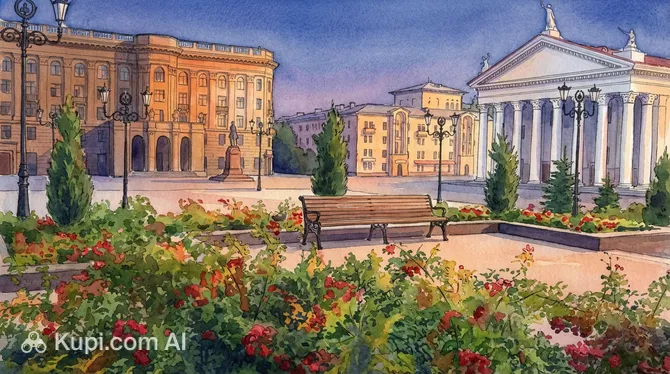
Volgograd is one of the most famous and historically significant cities in the Russian Federation. Stretching for dozens of kilometers along the western bank of the majestic Volga River, it serves as a major industrial, cultural, and tourist center in the southern part of the country. With a population exceeding 1 million people, the city possesses a unique linear layout and a grand scale that impresses visitors from the moment they arrive.
Volgograd. Illustration.
Source: Kupi.com AI
The city is renowned worldwide for its resilient spirit and monumental architecture. Formerly known as Tsaritsyn and later Stalingrad, it has witnessed eras of dramatic transformation. You can delve deeper into the fascinating epochs of the region by reading the history of Volgograd. Today, it is a modern metropolis where wide avenues and spacious parks coexist with solemn memorials dedicated to its heritage.
One of the main reasons travelers visit is to see the awe-inspiring Mamayev Kurgan memorial complex, dominated by the colossal "The Motherland Calls" statue, which offers panoramic views of the city and the river. Beyond its historical sites, Volgograd invites guests to enjoy leisurely walks along the expansive Central Embankment or to experience the unique Metrotram, a light rail system that operates partially underground like a subway. Whether you are interested in heritage or simply want to experience the atmosphere of a great river city, Volgograd offers a memorable journey.
Weather Overview
The city experiences a continental climate with distinct seasonal contrasts, so it is helpful to check the current weather in Volgograd when planning your itinerary. Generally, the region is characterized by hot, sunny summers and cold winters, ensuring a different experience depending on the time of year you choose to visit.
Summer is the warmest season, particularly in July and August, when average temperatures range from 25°C to 25.5°C. During these months, daily highs often exceed 31°C, and August is exceptionally dry with almost no recorded rainfall. Conversely, the winter months from December through February bring freezing conditions; January is typically the coldest month with an average temperature of -4.4°C and lows dropping to -7.4°C.
The transitional seasons of spring and autumn offer more moderate conditions. By May, the weather warms up to a pleasant average of 16.8°C, while September retains some summer warmth with averages around 17.5°C. Overall, you can expect hot, dry summers with occasional rain and cold winters with roughly 9 to 11 wet days per month.
Average monthly temperature
Average monthly precipitation
Interesting Facts
Beyond the main attractions, Volgograd holds many fascinating secrets and engineering marvels that often escape the casual observer's eye. From architectural gifts to structures that seem to defy gravity, here are some intriguing details about the city.
The colossal statue The Motherland Calls is an engineering wonder not just for its height, but for its stability. Surprisingly, the main sculpture is not anchored to its foundation; it stands freely, held in place solely by its immense weight of 8,000 tons and precise center of gravity calculations.
The Volgograd Planetarium serves as a unique historical symbol of post-war reconciliation. The entire building was presented as a gift from the workers of the German Democratic Republic to the Soviet people, and the statue "Peace" crowning its dome was the final work of the renowned sculptress Vera Mukhina.
Volgograd is famous for its "Dancing Bridge" across the Volga River. In 2010, the structure gained worldwide attention when wind resonance caused it to oscillate violently like a wave without collapsing. Special dampers have since been installed to stabilize it, making the crossing safe yet legendary.
Due to its geography, Volgograd is one of the longest cities in the world. It stretches for approximately 90 kilometers along the riverbank, which means traveling from the northernmost district to the southern tip can take longer than driving between two separate cities.
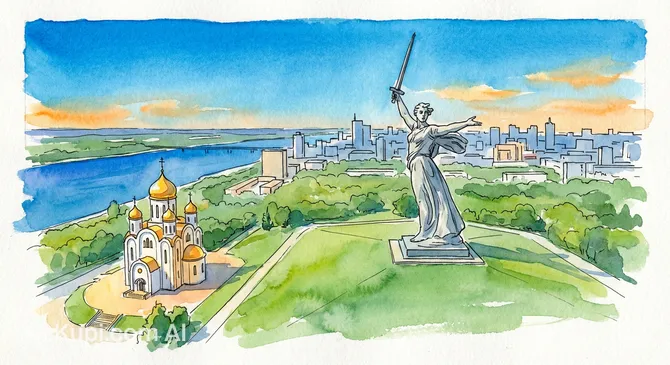
The Motherland Calls. Illustration.
Source: Kupi.com AI
Traveler photos:
How to Get There
Reaching this historic city is straightforward due to its status as a major transportation hub in southern Russia. Whether you prefer flying or taking a scenic train ride across the steppe, there are convenient options available. You can find more details and plan your specific route by reading all ways to reach the city.
The most direct way to arrive is via Gumrak (IATA: VOG). This is the city's main airport, located approximately 14.9 km from the center of Volgograd. It is a busy transport facility serving over a million passengers annually. A trip from the terminal to the downtown area typically takes about 45 minutes by taxi or bus, depending on traffic. It offers regular connections to major cities, making it the preferred choice for most tourists.
Alternatively, travelers can fly into Elista Airport (IATA: ESL), situated in the city of Elista. However, it is important to note that this airport is about 259.9 km away from Volgograd. Choosing this route would require a long ground transfer, likely taking around 6 to 7 hours, so it is generally considered only when direct flights to Volgograd are unavailable.
For clarity, here is a summary of the main airports:
Traveling by rail is also a very popular and scenic way to reach the region. The primary hub for arrivals is Volgograd-1 Railway Station, located in Volgograd. It is a major junction handling millions of passengers each year. Although the data indicates it is approximately 21.0 km from the specific city reference point, it serves as the central gateway for long-distance trains. Another significant stop within the city is Volgograd-2 Station, which is located 2.9 km from the reference point and handles a substantial volume of regional traffic. Both stations provide easy access to the city's public transport network.
For clarity, here is a summary of the available railway stations:
Station
Passenger traffic
Distance
Volgograd-1 Railway Station
4 mln
21 km
Volgograd-2 Station
500 000
3 km
Volzhsky Railway Station
—
21 km
Leninsk Railway Station
—
51 km
Kapustin Yar Station
80 000
97 km
Surovikino Station
—
123 km
Kalinino Station
—
127 km
Main Attractions
Volgograd is a city where history is etched into every street corner. While the towering Mamayev Kurgan is the most recognizable symbol, the city offers a wealth of other significant sites that tell the story of its dramatic past and vibrant present. From world-class museums to scenic riverside promenades, visitors will find a compelling mix of solemn memorials and lively public spaces.
One of the most visited cultural institutions is the Battle of Stalingrad Panorama Museum. Located near the Volga River, this striking complex is dedicated to the pivotal WWII battle that changed the course of history. Its centerpiece is a massive 360-degree painted canvas that immerses viewers in the heat of the combat on Mamayev Kurgan. Surrounding the museum, you can explore an open-air exhibition of military equipment, including tanks, airplanes, and artillery pieces, making it a fascinating stop for history enthusiasts.
Battle of Stalingrad Panorama Museum. Illustration.
Source: Kupi.com AI
Traveler photos:
Just steps away from the museum stands a powerful symbol of human resilience known as Pavlov's House. During the war, a small group of soldiers defended this ordinary apartment building for 58 days against heavy attacks. Today, it has been rebuilt as a residential home, but a portion of the original bullet-riddled brick wall has been preserved as a memorial. Directly across from it, you will see the haunting ruins of Gerhardt's Mill, a building intentionally left in its devastated state since 1943 to serve as a silent witness to the city's destruction.
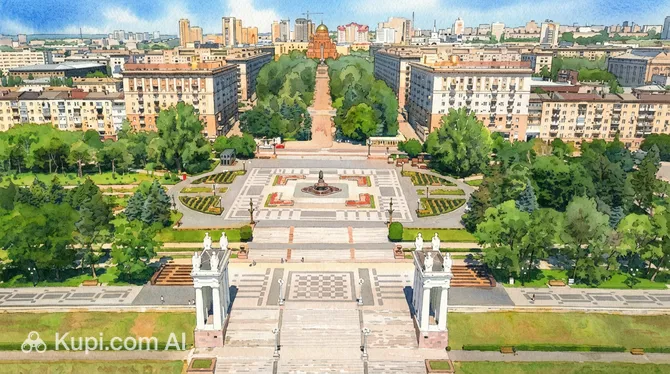
For a change of pace, take a stroll along the Alley of Heroes. This wide, pedestrian-friendly boulevard connects the central waterfront with the city's main square. Lined with poplar trees and flower beds, it is a popular place for locals and tourists to walk. The alley is marked by steles commemorating the heroes of the Soviet Union, blending the city's memorial character with a relaxed, park-like atmosphere perfect for an evening promenade.
Alley of Heroes. Illustration.
Source: Kupi.com AI
Traveler photos:
Leading down from the city center to the river is the grand Volgograd Embankment. Regarded as the ceremonial gateway to the city from the Volga, it features impressive white propylaea (columns) and a broad staircase. It is the heart of the city's social life, hosting concerts, festivals, and leisurely walks. The upper terrace offers beautiful views of the river, while the lower level is perfect for jogging or watching ships pass by, providing a refreshing break from the historical tours.
Local Cuisine
The culinary landscape of Volgograd is shaped significantly by its location on the banks of the mighty Volga River and its warm southern climate. The local cuisine is a hearty blend of traditional Russian flavors and southern abundance, with a strong emphasis on fresh river catch and locally grown vegetables. For gastronomic tourists, the city offers a unique opportunity to taste dishes that are difficult to find elsewhere in such quality and freshness.
Unsurprisingly, fish plays a central role in the local diet. You should definitely try dishes made from Volga zander (pike-perch) or sturgeon, which are often served baked, fried, or in a rich fish soup known as ukha. Another local specialty that has almost cult status is boiled crayfish. These freshwater delicacies are typically cooked with dill and spices and are considered the perfect accompaniment to a relaxed evening, especially when paired with local beverages.
Volgograd is also famous for a unique local product: mustard oil. The city's Sarepta district is a historic center for mustard production, and the local mustard oil has a distinct, nutty flavor that locals love to use in vegetable salads, particularly with the region's famous sweet tomatoes. Additionally, the city has a specific affection for Chicken Kiev. In Volgograd, you will find a distinct local variation of this famous cutlet, often made from minced meat rather than a whole breast, which is sold everywhere from street kiosks to proper restaurants.
The dining culture in the city is diverse, ranging from nostalgic establishments to modern gastronomic venues. The central streets and the embankment are lined with places where you can enjoy a meal with a view. For those who appreciate Caucasian cuisine, which is very popular in southern Russia, the restaurant Rustaveli offers excellent Georgian dishes in a cozy atmosphere. If you prefer European and Italian classics, Rimini is a well-regarded spot among locals and visitors alike.
Rustaveli. Illustration.
Source: Kupi.com AI
Traveler photos:
When it comes to drinks, the region has a strong brewing tradition. You can find a variety of local lagers produced by regional breweries that pair wonderfully with the salty dried fish often served as a snack. For a non-alcoholic option, fresh kvass is widely available, especially during the hot summer months. It is a refreshing fermented drink made from rye bread that perfectly quenches thirst in the steppe heat.
Travel Tips
Welcome to Volgograd, a city of immense scale and profound history. To ensure your journey through this legendary "Hero City" is as comfortable and seamless as possible, we have compiled a set of practical recommendations covering everything from navigating its unique layout to understanding local customs.
Dress for the Season and Terrain. Volgograd has a continental climate with significant temperature swings. In summer, the steppe heat can exceed 35°C, so a sunhat, sunglasses, and breathable fabrics are essential. In winter, thermal layers are necessary to withstand the freezing winds from the Volga. Most importantly, bring sturdy, comfortable walking shoes; visiting landmarks like Mamayev Kurgan involves climbing hundreds of steps and walking long distances.
Navigate the "Longest City" Wisely. Since the city stretches over 90 kilometers along the river, travel times can be longer than expected. The most efficient way to bypass traffic is the Metrotram (high-speed tram), which runs underground in the center. For door-to-door convenience, ride-hailing apps are widely used and affordable; they are often more reliable than hailing a taxi on the street. Public buses and marshrutkas (minibuses) are available but can be crowded.
Handle Finances with Cash. The local currency is the Russian Ruble (RUB). While card payments are common in supermarkets and restaurants, international cards may face acceptance issues depending on the issuing bank. It is highly recommended to carry sufficient cash for museums, small souvenir shops, and transport. Currency exchange is best done at official bank branches, which are plentiful in the city center.
Stay Healthy and Watch Out for "Moshka". Pharmacies are marked with a green cross and the word Apteka; many operate 24/7. A unique local phenomenon occurs in June: the season of moshka (biting midges). These tiny insects can be a nuisance near the water. Locals use a specific hack: mixing vanilla powder with water or lotion to repel them, as standard repellents often do not work well against them.
Bridge the Language Gap. English is not widely spoken outside of major hotels and tourist information centers. It is advisable to download an offline translation app and an offline map before you arrive. Learning a few basic phrases like Zdravstvuyte (Hello) and Spasibo (Thank you) will be warmly received by locals. Buying a local SIM card is easy at official mobile operator stores with your passport.
Observe Memorial Etiquette. Volgograd is a city deeply defined by its wartime history. When visiting memorials, especially the Hall of Military Glory or the Motherland Calls complex, maintain a solemn and respectful demeanor. It is customary to be quiet, remove hats (for men), and avoid eating or smoking near eternal flames or monuments.
Avoid Disrespectful Actions. Never attempt to climb on statues or military equipment displayed at memorials for a photo, as this is considered highly offensive and can lead to fines. Also, avoid joking loudly or making light of the history while at these sites, as the events commemorated here are deeply personal to many residents.
Respect Religious Dress Codes. If you plan to visit the Kazan Cathedral or other Orthodox churches, modest dress is required. Women are expected to cover their heads with a scarf and wear skirts or dresses that cover the knees, while men should remove their hats and avoid wearing shorts or tank tops inside the sanctuary.
By keeping these tips in mind, you will be well-prepared to explore the grandeur of Volgograd with confidence and respect. The city's residents are known for their resilience and hospitality, and a little preparation will go a long way in making your visit a truly enriching experience.
Entertainment & Nightlife
While Volgograd is primarily known for its daytime historical tours, the city transforms as the sun sets, offering a vibrant and diverse nightlife scene. The evening entertainment is largely concentrated in the Central District, particularly along the streets radiating from the Alley of Heroes and the Volga Embankment. Here, the atmosphere shifts from solemn remembrance to a relaxed southern vibe, where locals and tourists gather to enjoy the cool river breeze, live music, and good company.
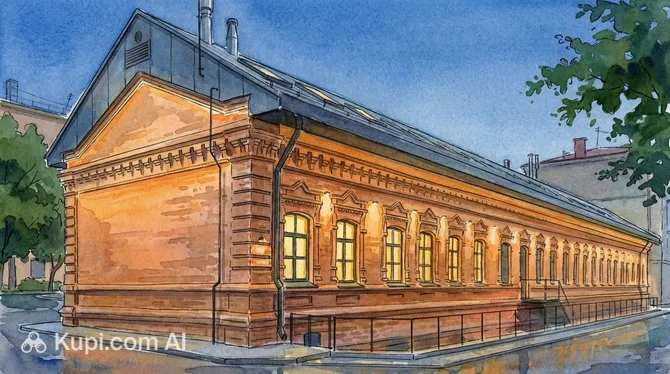
One of the most unique and trendy spots in the city is Loft 1890. Located in a beautifully restored 19th-century beer warehouse, this creative cluster has become a magnet for the city's artistic youth and hipsters. The red-brick courtyard hosts various establishments, including craft bars and lecture spaces. It is an excellent place to start your evening with a casual drink in a setting that perfectly blends historical architecture with modern industrial design.
Loft 1890. Illustration.
Source: Kupi.com AI
Traveler photos:
For those who prefer a lively bar atmosphere with a focus on craft beverages, Voronka No. 3 is a popular choice. This bar is well-regarded for its selection of drinks and its friendly, unpretentious vibe. The dress code in such places is generally casual; jeans and a smart shirt are perfectly acceptable. If you are looking for a place to dance or enjoy a more energetic night out, you might visit Milya, a night club that frequently hosts DJ sets and themed parties, attracting a crowd ready to stay up until the early hours.
When planning a night out, keep in mind that most bars stay open until 1:00 or 2:00 AM, while clubs operate until dawn, especially on weekends. Prices in Volgograd are generally lower than in Moscow, making nightlife quite affordable. A cocktail might cost around 400-600 RUB. In terms of safety, the central well-lit streets are secure for walking, but it is always advisable to use a taxi app (like Yandex Go) to get back to your hotel late at night rather than hailing a car from the street.
Beyond nightlife, the city offers plenty of entertainment during the day. Families and thrill-seekers can head to the Central Park of Culture and Recreation, which features modern rides, Ferris wheels, and landscaped walking paths. For a more educational yet fun experience, the Einstein Museum of Entertaining Science offers interactive exhibits that explain physical laws in a way that engages both children and adults.
Parks & Museums
While Volgograd is best known for its monumental war memorials, the city also boasts a variety of serene parks and diverse museums that offer a broader perspective on its culture and history. Beyond the famous battle sites, visitors can explore interactive exhibitions, stroll through landscaped gardens, and discover unique historical artifacts hidden in the city center.
A must-visit for history buffs is the Pamyat Museum (Memory Museum). Located in the basement of the historic Central Department Store, this site is famous as the place where Field Marshal Friedrich Paulus surrendered in 1943, effectively ending the Battle of Stalingrad. The museum preserves the original setting of the German headquarters, featuring holographic installations and authentic artifacts that transport you back to those decisive days.
Pamyat Museum. Illustration.
Source: Kupi.com AI
Traveler photos:
For a more modern educational experience, head to the Russia – My History multimedia park. This sprawling complex uses cutting-edge technology, including touch screens and projection domes, to tell the story of the country from ancient times to the present day. It is located in the floodplain of the Tsaritsa River, an area that has been revitalized into a pleasant recreational zone, making it a perfect spot for families to combine learning with a walk.
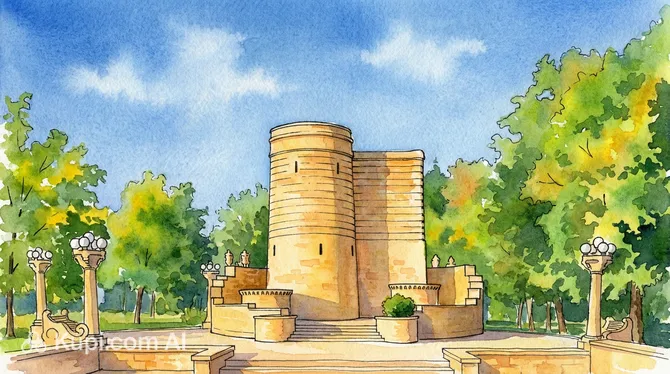
Those seeking a relaxing escape should visit the Volgograd–Baku Friendship Park. Situated next to the Europe City Mall, this beautifully landscaped area was created to celebrate the ties between Russia and Azerbaijan. It features elegant fountains, manicured flower beds, and architectural elements inspired by Baku, such as a replica of the Maiden Tower. It is a favorite place for locals to enjoy a quiet evening surrounded by greenery.
Volgograd–Baku Friendship Park. Illustration.
Source: Kupi.com AI
Traveler photos:
Another significant spot is the Gasitel Monument located on the riverbank. This open-air memorial features the specialized fire-fighting boat "Gasitel," which played a crucial role during the Civil War and the Battle of Stalingrad. The surrounding area has been developed into a comfortable promenade with benches and views of the Volga, offering a peaceful setting to reflect on the city's river heritage.
Finally, the city's central hub, the Square of the Fallen Fighters, serves as both a solemn memorial space and a central park area. Surrounded by historic buildings and the Intourist Hotel, it is the zero kilometer of Volgograd. The square is often the venue for parades and city celebrations, and its green alleys provide a shady respite in the heart of the bustling metropolis.
Getting Around
Navigating Volgograd is a unique experience due to the city's unusual geography; it stretches for nearly 90 kilometers along the Volga River. Consequently, the public transport system is designed to move people efficiently across these vast distances. The backbone of the local transit network is the famous Metrotram (Skorostnoy Tramvay), a unique light rail system that operates as a standard tram in the suburbs and goes underground like a subway in the city center. This hybrid system is not only a tourist attraction in itself but also the fastest way to travel between the northern districts and the downtown area without getting stuck in traffic.
Complementing the tram network is an extensive system of buses and trolleybuses that covers the entire city. Municipal buses are generally modern, large, and equipped with air conditioning, which is essential during the hot summer months. For reaching areas not served by the main lines, locals often rely on marshrutkas (minibuses). These are faster and stop on demand, but they can be crowded and offer less comfort than standard public transport. Additionally, due to the city's extreme length, the commuter train (Elektrichka) serves as a vital "city train," allowing you to traverse from the southern to the northern tip much faster than by road.
The payment system in Volgograd is modernized and convenient for visitors. The most cost-effective option for frequent travel is the Volna transport card, which offers discounted fares and can be purchased at kiosks and terminals throughout the city. However, for short visits, you do not necessarily need a special card; most buses, trams, and trolleybuses accept contactless bank cards and smartphones directly at the validator or with the conductor. Cash is also accepted, but paying with a card is typically slightly cheaper.
Transport generally operates from approximately 6:00 AM to 11:00 PM, though some popular routes may finish earlier or run slightly later. When boarding, it is important to validate your ticket or tap your card immediately to avoid fines, as ticket inspections are frequent. If you are using the Metrotram, you purchase a token or tap your card at the turnstile before entering the platform, similar to a metro system.
For those who prefer more direct and private transportation, taxi apps are the standard method for getting around. Services like Yandex Go are widely available, reliable, and reasonably priced, often making them a better choice than hailing a car on the street. Car-sharing services are also gaining popularity if you are comfortable driving in a new city. During the warmer months, electric scooters and bikes are available for rent via mobile apps along the central embankment and parks, offering a scenic way to explore the riverfront.
Accommodation
Where to Stay:
Volgograd offers a diverse range of accommodation options that cater to various budgets and preferences, reflecting its status as a major regional hub. Visitors can find everything from modern business hotels and renovated Soviet-era establishments to cozy hostels and private apartments. Whether you are looking for luxury service or a budget-friendly place to sleep after a day of sightseeing, the city has plenty of choices to ensure a comfortable stay.
For most tourists, the best area to stay is the Central District (Tsentralny Rayon). This location places you within walking distance of the main historical sights, museums, and transport links. Many travelers prefer hotels located near the Square of the Fallen Fighters, which serves as the city's "zero kilometer." Staying here means you are right in the heart of the action, surrounded by historic architecture and close to the central railway station.
Square of the Fallen Fighters. Illustration.
Source: Kupi.com AI
Traveler photos:
Another excellent location for accommodation is along the Volgograd Embankment. Hotels in this area often offer scenic views of the Volga River and easy access to the pedestrian promenade, which is perfect for evening strolls. This area is particularly lively in the summer, with plenty of cafes and restaurants nearby, making it a convenient base for those who want to combine sightseeing with leisure.
Booking Tips: It is highly recommended to book your accommodation well in advance if you plan to visit during early May. Volgograd is the center of Victory Day celebrations in Russia, and hotels are often fully booked weeks or even months ahead of May 9th. Summer is also a peak season, so securing your reservation early ensures better rates and availability.
Prices and Methods: The cost of accommodation in Volgograd is generally lower than in Moscow or St. Petersburg. You can expect to pay between 2,500 and 5,000 RUB per night for a comfortable mid-range hotel room, while hostels and budget options are significantly cheaper. Booking is easily done through major online travel platforms or directly via hotel websites, which often accept standard bank cards.
Nearby Cities
For those looking to explore the surroundings, Volgograd serves as an excellent base for day trips to several interesting nearby locations:
Just across the Volga River lies Volzhsky, a young and vibrant industrial city often referred to as Volgograd's satellite. It is connected to the regional capital by the massive Volga Hydroelectric Station dam, which offers spectacular views of the river during the crossing. Visitors often head here to enjoy its well-maintained parks, wide avenues, and a generally more relaxed pace compared to its larger neighbor.
Further north along the river is the historic merchant city of Kamyshin. Unlike the modern architecture of Volgograd, Kamyshin has preserved a charming historical center with 19th-century merchant buildings. The city is famous for its sweet watermelons and hosts an annual festival dedicated to this fruit. It also offers stunning panoramic views of the Volga, which is particularly wide in this area.
To the east, in the Astrakhan region but accessible for a trip, is Akhtubinsk. Known primarily as a major aviation center, it sits in a unique landscape where the steppe meets semi-desert terrain. It serves as a gateway for those wishing to explore the unique nature of the lower Volga floodplain and the nearby salt lakes, offering a stark contrast to the urban environment of Volgograd.
City
Population
Distance
Volzhsky
326 055
23 km
Dubovka
13 988
45 km
Leninsk
15 064
50 km
Kalach-na-Donu
23 947
72 km
Znamensk
26 927
90 km
These nearby destinations offer a glimpse into the diverse culture and landscapes of the region, ranging from industrial prowess to historical charm and unique natural environments.
Shopping & Souvenirs
Shopping:
Shopping in Volgograd offers a balanced mix of modern retail experiences and authentic local flavor. While the city features large, contemporary shopping complexes with familiar international and Russian brands, it also retains a strong connection to its regional heritage through bustling markets and specialty stores. Visitors can easily find everything from high-end fashion to unique gastronomic souvenirs that reflect the rich resources of the Volga region.
For those who prefer a one-stop destination, the city boasts several impressive malls. The most iconic is the Voroshilovsky Shopping Center ("Voroshilovsky Torgovy Tsentr"). Located in the heart of the city, this glass-fronted architectural landmark is not just a place to buy clothes and electronics; it is a popular meeting point for locals. Inside, you will find a wide array of boutiques, a cinema, and a food court with views of the cityscape.
Voroshilovsky Shopping Center. Illustration.
Source: Kupi.com AI
Traveler photos:
Another major retail hub is the Marmelad Shopping Mall. Situated slightly further from the historical center near the Mamaev Kurgan, it is one of the largest family-oriented entertainment and shopping complexes in the region. It houses a vast selection of stores, a large hypermarket, and extensive entertainment zones for children, making it a convenient stop for travelers stocking up on supplies or looking for a leisurely afternoon indoors.
If you prefer street shopping, the best area to explore is the city center, particularly along Lenin Avenue and the streets surrounding the Alley of Heroes. Here, nestled between historical buildings, you can find smaller shops selling books, jewelry, and local crafts. This area is also the primary spot for souvenir hunting, where numerous kiosks offer items related to the city's heroic history, such as miniature statues of "The Motherland Calls" and other military-themed memorabilia.
To experience the true taste of the region, a visit to the Central Market (Tsentralny Rynok) is essential. This is where the local culinary culture comes alive. The market is famous for its fish counters, offering fresh catch from the Volga and Don rivers, as well as the region's signature dried and smoked fish. It is also the best place to buy fresh fruits, vegetables, and farm products directly from local producers.
When it comes to souvenirs, Volgograd has several unique specialties worth bringing home. The most famous edible souvenir is mustard oil from the Sarepta district, known for its distinct nutty flavor and high quality. Another popular gift is the "Volgograd candy" from the local confectionery factory "Confil." Additionally, the region is close to Uryupinsk, the capital of goat down, so you can often find high-quality down shawls and scarves that are incredibly warm and lightweight.
Most major shops and malls operate daily from 10:00 AM to 10:00 PM. Payment methods are modern, with credit and debit cards being widely accepted in malls, supermarkets, and restaurants. However, if you plan to visit smaller markets or buy from street vendors, it is advisable to carry some cash in Russian Rubles. Tax-free shopping is technically available in Russia for eligible foreign tourists at participating retailers, but the system can be complex, so it is best to check for the "Tax Free" signage at the entrance of major stores.