Support

Jamestown

About

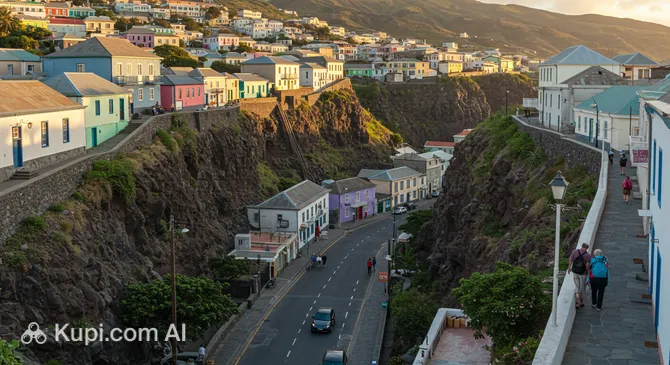
Jamestown is the captivating capital and historic heart of Saint Helena, a remote island in the South Atlantic Ocean. Uniquely situated in a narrow, steep-sided volcanic valley known as James Valley, this charming settlement serves as the island's primary port and main hub of activity. Its isolation and distinctive geography create an atmosphere that is both tranquil and deeply atmospheric, unlike any other capital city in the world.

Despite being the administrative center, Jamestown retains a cozy, village-like feel with a population of just over 700 residents. The town is remarkably well-preserved, and walking through its streets offers a glimpse into the past. Visitors eager to learn more about the island's colonial roots will find the history of Jamestown fascinating, as it was founded by the English East India Company in 1659 and features some of the best examples of Georgian architecture left in the world.

Jamestown. Source: Kupi.Binoculars

Among the city's most famous landmarks is Jacob's Ladder, a challenging staircase of 699 steps that stretches from the valley floor up to Ladder Hill, rewarding climbers with spectacular panoramic views. The town is also home to the Museum of Saint Helena, located near the base of the ladder, which houses an impressive collection of artifacts detailing the island's maritime and cultural heritage. A stroll down Main Street reveals colorful buildings, local shops, and the friendly spirit of the "Saints," as the locals are affectionately known.

Whether you are arriving by sea or simply exploring the island, Jamestown offers a warm welcome and a truly unique travel experience. Its blend of dramatic scenery, rich heritage, and relaxed pace makes it an essential destination for anyone venturing to this extraordinary corner of the globe.

Weather Overview

Jamestown enjoys a consistently mild and pleasant subtropical climate, making it a comfortable destination to visit at almost any time of year. Due to its location in a sheltered valley, the town is often warmer and drier than the surrounding highlands of Saint Helena. To ensure you are fully prepared for your trip, it is helpful to review the current weather in Jamestown before you travel.

The temperature remains remarkably stable, with average daily highs rarely straying far from the low-to-mid 20s. The warmest months are typically from January to April, where average temperatures peak around 24.2°C in March. The cooler season, from August to October, sees averages dip slightly to around 19.6°C. Rainfall is minimal year-round, though you might encounter occasional showers between March and July, with April generally seeing the highest number of wet days.

Interesting Facts

Beyond the main attractions, Jamestown holds many fascinating secrets and historical quirks that add depth to its colonial charm. For those willing to look closer, the city reveals unique details about its past and its connection to the wider world.

  • The city is home to St. James' Church, a historic building dating back to 1774. It is widely recognized as the oldest Anglican church in the Southern Hemisphere, standing as a testament to the island's long-standing religious heritage.

  • A hidden feature known as "The Run" flows silently beneath the bustling streets. This channeled stream travels underground below the Grand Parade and Main Street, guiding water from the valley deep into the ocean, remaining largely invisible to pedestrians walking above.

  • While the famous Jacob's Ladder is now a test of endurance for visitors, it was originally constructed in 1829 as an inclined plane railway. Its initial purpose was not for exercise, but to haul manure up to the farmlands and transport goods down to the port using a pulley system.

  • Although the exiled Emperor Napoleon Bonaparte is typically associated with Longwood House, he actually spent his first night on Saint Helena in Jamestown. He stayed at the Porteous House on Main Street, a site that still sparks interest among history enthusiasts visiting the capital.

How to Get There

Reaching the remote capital of Saint Helena is an adventure that has become significantly more accessible in recent years. While the island was historically isolated and only reachable by a long sea voyage, modern air links now connect this unique destination to the rest of the world. For a detailed overview of all travel options, including sea routes and local transport logistics, you can read more about how to get to Jamestown on our dedicated page.

The primary gateway for international visitors is Saint Helena Airport (IATA: HLE). Located approximately 8.6 km from the capital, the airport serves as the main entry point for the island. The drive from the airport to Jamestown is a scenic experience, winding through the island's dramatic landscapes. A journey by taxi or shuttle bus generally takes about 35 minutes. Despite being a relatively small hub with modest annual passenger traffic, it provides essential connections and a welcoming arrival experience for travelers.

For clarity, here is a summary of the main airport serving the city:

Airport Name City Passenger Traffic Km from City
Saint Helena Airport Jamestown Small 8.6

Since there are no railway networks on Saint Helena Island, air travel and occasional sea voyages remain the only means of entering the territory. Once in Jamestown, the compact nature of the city makes it easy to explore on foot, while taxis and rental cars are available for visiting other parts of the island.

Main Attractions

While the famous Jacob's Ladder and the local museum often steal the spotlight, Jamestown offers several other captivating sites that showcase its rich heritage and natural beauty. The city's compact layout allows visitors to easily explore these landmarks on foot, discovering the layers of history that define this remote capital.

The Castle of St. Helena stands as a prominent feature on the seafront, serving as the administrative headquarters for the island. Originally built by the East India Company in 1659 and reconstructed in the 1860s, this historic complex is still the seat of government today. Visitors can admire its colonial architecture and the grand entrance that has welcomed sailors and governors for centuries. It remains a working government building, but its exterior and courtyard are essential stops for architecture enthusiasts.

Directly adjacent to the government buildings lies the tranquil Castle Gardens. This lush, green oasis provides a delightful contrast to the steep, rocky valley walls that surround the town. The gardens are meticulously maintained and feature a variety of tropical plants, giant banyan trees, and colorful hibiscus flowers. It is a favorite spot for both locals and tourists to relax, enjoy a picnic, or simply escape the midday sun in a serene setting.

For those interested in military history and commanding views, a walk to Munden's Battery is highly recommended. Perched on the cliffs overlooking James Bay, this historic fortification was built to defend the harbor from naval attacks. The trail to the battery offers spectacular vantage points for photography and is an excellent location for spotting marine life in the clear waters below. The old cannons and stone walls stand as silent sentinels of the island's strategic past.

Nature lovers should not miss the Heart-Shaped Waterfall, located at the top of the James Valley. Although it is best viewed after heavy rainfall when the cascade is in full flow, the walk itself is a scenic journey through the island's interior landscapes. The waterfall flows over a distinctive heart-shaped rock face, creating one of Saint Helena's most iconic natural images and offering a refreshing retreat from the town center.

Local Cuisine

The culinary scene in Jamestown is a delightful reflection of Saint Helena’s diverse heritage, blending British, Malay, Chinese, and African influences into a unique style simply known as "Saint" food. The isolation of the island means that local ingredients take center stage, with a heavy emphasis on fresh seafood and locally grown produce. For visitors, dining here is less about haute cuisine and more about hearty, flavorful comfort food served with warm hospitality.

No trip to the capital is complete without trying the island's signature dish, Plo. This versatile one-pot meal is a curried rice dish that can be made with meat, poultry, or fish, often mixed with vegetables. It is the ultimate comfort food for locals and is frequently served at community gatherings. Another staple worth seeking out is Saint Helena Fishcakes. Unlike typical fishcakes, these are often made with fresh tuna or wahoo and spiced with chili, giving them a distinctive "bite" that sets them apart.

Given the island's location in the South Atlantic, seafood lovers will be in heaven. Freshly caught Wahoo, Tuna, and Grouper are menu regulars, often grilled simply or battered. For those with a sweet tooth, traditional treats like Coconut Fingers and pumpkin fritters offer a perfect ending to a meal. The food culture in Jamestown is relaxed and informal; you are more likely to find cozy family-run eateries and snack bars than fine dining establishments, adding to the town's authentic charm.

When it comes to drinks, the island has two famous exports. The first is the exclusive Saint Helena Coffee, grown in the island's volcanic soil and praised by Napoleon Bonaparte himself during his exile. It is rare and highly prized. For something stronger, adventurous travelers should try Tungi Spirit, a clear alcoholic beverage distilled from the fruit of the prickly pear (cactus) that grows wild across the island. It has a unique flavor profile and is a true taste of Saint Helena.

Most of the island’s dining options are concentrated in Jamestown, particularly along Main Street and the seafront. The atmosphere is unhurried, and it is common for restaurants to have limited opening hours, so planning ahead is wise. Visitors can also explore the local market to see the array of fresh fruits and vegetables that fuel this isolated community's kitchen.

Travel Tips

Welcome to Jamestown, one of the most remote and welcoming capital cities on Earth. To help you navigate this unique settlement on Saint Helena and make the most of your stay, we have compiled a list of essential practical tips that cover everything from packing the right gear to understanding local customs.

  1. Clothing and Gear: Given the subtropical climate and the town’s location in a steep valley, layers are key. Bring light, breathable clothing for the warm days, but pack a light jacket for cooler evenings or breezy boat trips. Most importantly, comfortable, sturdy walking shoes are essential; the pavements can be uneven, and if you plan to tackle Jacob's Ladder or hike the surrounding trails, you will need good grip. Don't forget high-factor sunscreen and a hat, as the sun can be surprisingly strong.
  2. Transportation: Jamestown is very compact and is best explored on foot; you can walk from the seafront to the top of town in about 20 minutes. There is no public railway or metro. For travel outside the capital, taxis are available, but it is advisable to book them in advance rather than hoping to hail one on the street. Car rentals are popular for exploring the wider island, but be prepared for narrow, winding roads with steep gradients.
  3. Finances: The local currency is the Saint Helena Pound (SHP), which is pegged at parity with the British Pound Sterling (GBP). British coins and notes are accepted everywhere, so bringing GBP is the easiest option. Credit and debit card acceptance is increasing but is not yet universal; many smaller shops and eateries operate on a cash-only basis. It is highly recommended to carry sufficient cash, as accessing funds via international cards can sometimes be limited to specific bank counter hours rather than 24/7 ATMs.
  4. Health and Safety: Jamestown is incredibly safe, with very low crime rates, allowing you to explore with peace of mind day or night. The General Hospital is located within the town and provides medical assistance for tourists. However, you should bring a supply of any specific prescription medications you require, as the local pharmacy may not stock every specialized brand. Always stay hydrated and be cautious near cliff edges when hiking above the valley.
  5. Communication: The official language is English, though locals speak with a distinct and charming dialect known as "Saint." You will have no trouble communicating, but listening to the local lingo is part of the fun. Mobile roaming can be expensive or non-existent depending on your provider; it is best to purchase a local SIM card from the Sure provider in town. Wi-Fi is available in hotels and some public spots, but speeds may be slower than what you are used to back home.
  6. Local Etiquette: The community in Jamestown is tight-knit and famously friendly. It is customary to greet everyone you pass on the street with a smile or a nod—this is known as the "Saint wave" when driving, but applies to pedestrians too. Politeness is highly valued here; taking the time to chat with shopkeepers or locals is appreciated and will enrich your experience.
  7. What to Avoid: Avoid expecting a fast-paced, 24/7 lifestyle. "Saint time" is a real concept; shops often close early in the afternoon (especially on Wednesdays and Saturdays) and remain closed on Sundays. Do not get frustrated if service is slower than in a big metropolis; instead, embrace the relaxed rhythm of island life.
  8. Activity Cycles: The town's energy often revolves around the arrival of the weekly flight or visiting cruise ships. On these days, Jamestown buzzes with extra activity, markets are livelier, and the atmosphere becomes even more festive. It is worth checking the flight and cruise schedules to time your visits to the market or seafront accordingly.

By keeping these practical tips in mind, you will be well-prepared to enjoy the warm hospitality and fascinating history of Jamestown. Relax, slow down, and let the unique charm of this South Atlantic gem create memories that will last a lifetime.

Entertainment & Nightlife

Entertainment and nightlife in Jamestown reflect the character of the island itself: intimate, friendly, and deeply rooted in community spirit. You will not find sprawling nightclub districts or neon-lit strips here. Instead, the evening scene revolves around cozy pubs, hotel bars, and social clubs where locals and visitors mingle effortlessly. The atmosphere is undeniably casual and welcoming, offering a rare chance to experience a capital city where everyone truly knows everyone.

The heart of the action is concentrated along Main Street and the Seafront area. On Friday and Saturday nights, these areas come alive as residents unwind after the work week. The vibe is relaxed, with no strict dress codes—jeans and a t-shirt are perfectly acceptable almost anywhere. Music is a big part of the culture, and you might be lucky enough to catch a local band playing country or reggae covers, which are popular genres on the island.

For a taste of authentic local life, The Standard is an essential stop. Located on Main Street, this historic pub is often considered the social hub of the town. It is the perfect place to enjoy a cold drink, chat with the "Saints," and hear stories about life on the island. Another legendary venue is Anne’s Place, situated just behind the Castle Gardens. Famous among the yachting community for decades, it offers a rustic, open-air atmosphere that feels like a home away from home for travelers from across the globe.

If you prefer being closer to the ocean, The Mule Yard at the seafront is a fantastic spot, especially when they host events or live music nights. Sipping a drink here with the sound of the Atlantic waves crashing nearby creates a memorable evening ambiance. While these venues are the highlights, it is worth noting that opening hours can be somewhat traditional. Bars may close earlier than in major international cities, so it is best to start your evening early, around sunset.

Practicalities are important for a night out in Jamestown. Cash is king at most establishments, so ensure you have enough Saint Helena Pounds or Sterling before heading out. Getting around is generally done on foot due to the town's small size, but if you are staying further up the valley or outside the town, you must arrange a taxi in advance. Taxis are not typically flagged down on the street late at night, and booking a ride home before you start your evening is a wise decision.

Safety is one of Jamestown's greatest assets. The town is incredibly safe for night walks, and the crime rate is very low. The biggest hazard you might face is uneven paving stones in the dim light, so watch your step. The local police are friendly and approachable should you need any assistance.

During the daylight hours, entertainment takes on a slower pace. Visitors can explore the Museum of Saint Helena to dive deeper into the island's history or enjoy a leisurely walk through the Castle Gardens. For those seeking a bit more activity, the town serves as the starting point for several walking trails, offering a mix of cultural education and physical exertion before the sun goes down and the pubs open their doors.

Parks & Museums

Jamestown is often described as a living museum, where history is etched into every stone and the narrow valley walls frame a settlement that has changed little over the centuries. While the city's unique geography limits the space for expansive parklands, it offers distinct cultural institutions and open-air areas where visitors can immerse themselves in the heritage of Saint Helena.

The cultural anchor of the capital is the Museum of Saint Helena. Housed in the beautifully restored 19th-century Old Power House at the foot of Jacob's Ladder, this facility is a treasure trove of island history. The exhibits are remarkably comprehensive, offering a deep dive into the events that shaped this remote community. Visitors can view authentic artifacts ranging from the island's maritime discovery to the exile of Napoleon Bonaparte. A highlight for many is the collection of intricate craftwork, including wood and bone carvings, made by Boer War prisoners stationed on the island, as well as relics recovered from historic shipwrecks in the surrounding waters.

For a unique look at the island's identity, a visit to the Saint Helena Philatelic Bureau is essential. The island's stamps are prized by collectors worldwide for their artistic beauty and rarity, and the bureau offers a fascinating insight into this significant local industry. Nearby, the Archives provide a different kind of historical journey. This resource is invaluable for those interested in genealogy, holding records that trace the diverse lineage of the "Saints" back through centuries of settlers, soldiers, and East India Company personnel.

For outdoor recreation, the Seafront serves as the city's primary open-air plaza. Here, the raw power of the South Atlantic Ocean meets the historic fortifications of the town. It is a vital recreational space where locals and visitors gather to breathe in the fresh sea air, watch fishing boats unload their catch at the wharf, and observe the seabirds circling the harbor. The area provides an unobstructed view of the horizon, making it the premier spot in Jamestown to watch the sunset.

While explored in more detail as a major attraction, the Castle Gardens remains the town's central green sanctuary. This compact botanical oasis offers a quick, shaded retreat from the tropical sun, perfect for a quiet moment or a brief rest amidst lush vegetation while exploring the surrounding historic sites.

Getting Around

Given the small size and unique geography of Jamestown, the city does not possess a complex urban transit network such as a metro, tram, or trolleybus system. The settlement is remarkably compact, essentially consisting of a single main street running through a narrow valley, meaning that for most visitors, walking is the primary and most efficient way to navigate the town itself. You can traverse the entire length of the capital on foot in a matter of minutes, enjoying the historic architecture along the way without the need for public transit vehicles.

There is, however, a public bus service that connects Jamestown with the other districts of the island. These buses are not designed for travel within the city limits but rather serve as a link to the interior and residential areas like Longwood, St Paul’s, and Alarm Forest. The service is limited, typically operating on a specific timetable suited to local working hours and shopping needs rather than a high-frequency tourist schedule. The buses are generally small to medium-sized vehicles capable of navigating the island's steep and winding roads.

The payment system for public transport is traditional and straightforward. There are no electronic travel cards, mobile apps, or validation machines. Fares are paid directly to the driver in cash upon boarding. It is essential to carry local currency (Saint Helena Pounds) or British Pounds Sterling in small denominations or coins, as drivers may not always have change for large notes. The cost of a ticket is very affordable, making it a budget-friendly option for those wishing to visit the outlying areas without renting a vehicle.

For tourists relying on the bus service, planning is crucial. Timetables are not always displayed at every stop, so it is highly recommended to obtain a current schedule from the Tourist Office near the seafront or check the local newspapers. Services are significantly reduced on weekends and public holidays, and there are typically no buses running late at night. If you plan to travel outside of Jamestown using the bus, ensure you know exactly when the return service departs, as missing the last bus may leave you stranded in the highlands.

Taxis serve as the most flexible alternative to the bus system. While you can find a taxi rank in Jamestown, usually near the Market or the Grand Parade, it is not common to simply hail a cab on the street as you might in a larger city. It is standard practice to book a taxi in advance via telephone, especially for evening trips or airport transfers. Taxis operate on a meter or fixed-rate system, and prices are generally reasonable, though higher than the bus.

Car rentals are a popular choice for visitors who want the freedom to explore beyond the capital at their own pace. Several local companies offer rental vehicles, which can be picked up in Jamestown. Due to the steep terrain and narrow roads, driving requires caution and confidence. Alternatively, for a unique historical perspective on transport, you can look at Jacob's Ladder. While it is now a fitness challenge rather than a mode of transport, it was originally built in the 19th century as an inclined plane railway to haul goods out of the valley, representing the city's most significant engineering feat in transport history.

Accommodation

Accommodation in Jamestown is characterized by its intimate scale and historic charm, reflecting the unique nature of this remote island capital. Unlike major tourist destinations filled with sprawling resort chains, the city offers a modest but high-quality selection of lodgings. The options primarily consist of boutique hotels housed in restored Georgian buildings, family-run guesthouses, and self-catering apartments. These establishments provide a cozy, home-away-from-home atmosphere where personal service and local hospitality are the norms.

The most convenient area to stay is undoubtedly along Main Street and the surrounding lower valley. Staying in this central zone places you within easy walking distance of the seafront, the museum, shops, and the majority of the island's restaurants. Given the steep geography of the valley, choosing accommodation in the heart of town saves visitors from the strenuous uphill walks required to reach the residential suburbs, making it the ideal base for those who wish to explore the capital on foot.

Travelers planning a trip to Jamestown should be aware that the total number of beds in the city is limited. During periods when the flights arrive or when a cruise ship is in port, availability can disappear quickly. It is highly recommended to book your accommodation well in advance—ideally as soon as your travel dates are confirmed. Relying on last-minute availability upon arrival is risky and not finding a room could be problematic in such a small community.

Regarding costs, the price range generally spans from budget-friendly guesthouse rooms to mid-range and upper-mid-range hotel suites. While some of the larger establishments have modernized their booking systems to appear on major online travel platforms, many smaller guesthouses and rentals still operate via direct email or through the local tourist office's listings. Prices are typically quoted in Saint Helena Pounds (SHP) or British Pounds (GBP), and it is worth confirming payment methods beforehand, as some smaller hosts may prefer cash or bank transfers over credit cards.

Nearby Cities

For those looking to explore the surroundings, Jamestown serves as an excellent base for day trips to several interesting nearby locations:

Longwood is perhaps the most historically significant settlement on the island, located just a short drive from the capital. It is world-renowned as the site of Longwood House, the final residence of Napoleon Bonaparte during his exile. Today, the house is a museum maintained by the French government, offering visitors a poignant look into the emperor's life. The area is also characterized by its lush greenery and cooler climate, providing a refreshing contrast to the heat of Jamestown's valley.

St Paul's district offers a mix of architectural grandeur and natural beauty. It is home to the Plantation House, a Georgian mansion that serves as the official residence of the Governor. The grounds are famous for inhabiting Jonathan, a Seychelles Giant Tortoise who holds the record as the oldest known living land animal. A visit here allows for relaxed walks among unique flora and a chance to see the island's administrative heart in a serene, pastoral setting.

Given the extreme isolation of Saint Helena in the South Atlantic, the concept of "nearby" neighbors is unique. While the local districts are minutes away, the nearest permanent settlement outside the island is located on the archipelago of Tristan da Cunha, thousands of kilometers across the ocean.

City Population Distance (km)
Edinburgh of the Seven Seas 250 2431

These nearby destinations offer a glimpse into the diverse culture and landscapes of the region.

Shopping & Souvenirs

Shopping in Jamestown offers a delightful step back in time, far removed from the frenetic pace of modern mega-malls and high-street chains. Instead of global brands, visitors will find a collection of independent, family-run businesses that serve the island's community. The experience is intimate and personal, often involving a friendly chat with the shopkeeper. While the variety of goods depends heavily on the arrival of the supply ship, browsing the local stores provides a unique insight into the island's resourceful and self-sufficient way of life.

The primary retail hub is concentrated along Main Street, the city's central artery. As you walk up from the seafront towards the valley interior, you will pass a variety of small outlets housed in charming Georgian buildings. This is where the majority of the town's commerce takes place, ranging from grocery stores and bakeries to stationery shops and boutiques. Napoleon Street, branching off near the top of the town, also hosts several smaller establishments worth exploring.

There are no shopping malls in Jamestown in the traditional sense. However, the island's commerce is dominated by a few long-standing merchant companies that operate large general stores, which function somewhat like department stores. Thorpe’s and Solomon’s (often referred to as "The Star") are the two main names you will see. These establishments sell a little bit of everything, from groceries and clothing to hardware and homeware, all under one roof. They are the lifelines of the island and interesting places to wander through to see what is currently in stock.

For a more traditional trading atmosphere, the Market is a must-visit landmark. Located in a historic building beneath the clock tower, this venue is the place to find fresh local produce. Due to the island's isolation, fresh fruit and vegetables are highly improved commodities, and the market creates a buzz of activity when goods are available. While it is primarily for food, you may occasionally find stalls selling local crafts or homemade preserves, especially on days when a cruise ship is in port.

When it comes to souvenirs, Jamestown offers several unique items that cannot be found anywhere else. The most prestigious purchase is Saint Helena Coffee, one of the rarest and most exclusive coffees in the world, grown in the island's volcanic soil. Another popular local product is Tungi Spirit, a clear liquor distilled from prickly pears. For lighter gifts, look for jewelry made from local seeds (such as Job's Tears) or intricate lace and wood carvings. Philatelists should visit the post office or bureau to buy the island's beautiful and highly collectible stamps.

Understanding local opening hours is crucial for any shopper here. Business hours are generally from 9:00 AM to 5:00 PM on Mondays, Tuesdays, Thursdays, and Fridays. However, Wednesday is traditionally a half-day, with most shops closing at 1:00 PM. Saturdays are also busy in the morning but tend to wind down by the afternoon, and almost everything is closed on Sundays. It is best to plan your shopping errands for weekday mornings to ensure everything is open.

Regarding payment, cash is the preferred method in most smaller shops. While the larger merchants and some souvenir stores accept debit cards, the infrastructure can be intermittent. The local currency is the Saint Helena Pound (SHP), but British Pounds Sterling (GBP) are accepted everywhere at a 1:1 ratio. Tourists generally do not have access to a tax-free refund scheme, as the island operates on a different duty system rather than a VAT model familiar to European travelers.
Reached the end of the page?

That means the route is fully explored