Support

National Museum Bloemfontein

About

Imagine a place where time stands still, offering a glimpse millions of years into the past. The National Museum of Bloemfontein is one of the oldest and most respected cultural institutions in South Africa, with a history dating back to 1877. Located in the heart of Bloemfontein, this complex combines natural history, culture, and art, serving not just as a museum but as a major scientific research center.
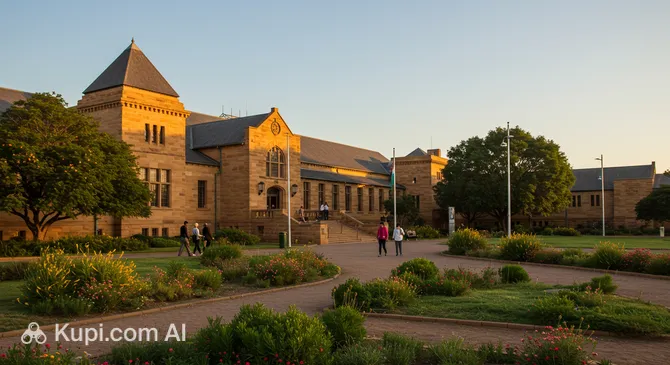
National Museum Bloemfontein
National Museum Bloemfontein. Иллюстрация. Источник: Kupi.com AI

The museum is famous for its unique collections, which cover almost every aspect of the region's life: from fossil remains of ancient reptiles to artifacts of indigenous peoples. Visitors can see the famous fossils from the Florisbad collection, archaeological treasures, and magnificent examples of San (Bushman) rock art. It is a place where academic rigor meets an engaging presentation, making it interesting for both serious researchers and curious travelers.

The museum's architectural ensemble, with its main building opened in 1915, harmoniously complements the city's historical appearance. Today, 13 research departments operate under its auspices, focusing on paleontology, archaeology, and ethnography. Thanks to its rich exhibits and careful preservation of heritage, the National Museum is rightfully considered a must-visit for anyone who wants to truly understand South Africa's cultural and natural code.

Contacts

To find out the latest information about special exhibitions or educational programs, visitors can use the official communication channels. The museum actively interacts with the scientific community and tourists through its website and by phone.

How to contactContact
Address36 Aliwal St, Bloemfontein Central, Bloemfontein, 9301, Южная Африка
Phone+27 51 447 9609
Websitewww.nasmus.co.za

What to Do

An exciting journey through the ages awaits you in the museum's halls. Be sure to visit the African fauna section, which features full-sized models of elephants, lions, and rare bird species. Paleontology enthusiasts will be impressed by the collection of dinosaur skeletons and prehistoric reptiles. Of particular note is the famous Florisbad Collection — unique fossils recognized by scientists worldwide.

For those interested in culture, the archaeology and ethnography halls are open. Here you can see authentic stone tools, ancient ceramics, and mysterious rock paintings by the San people (Bushmen). The "Bushmen of the Free State" exhibition provides a detailed look at the traditions and daily life of the region's indigenous people, immersing you in ancient times.

One of the most vivid experiences is a walk through a reconstruction of a 19th-century city street. With authentic furniture, sound effects, and attention to detail, you will literally be transported to Bloemfontein's past. Visitors can explore old shop windows and house interiors, feeling the rhythm of life from the colonial era. Photography is permitted (without flash in most halls), so don't forget to capture these atmospheric settings.

In addition to permanent exhibitions, the museum regularly hosts temporary displays of contemporary South African art and crafts. Families with children will enjoy the interactive zones and educational programs that make science accessible and fun. After touring the halls, it's pleasant to stroll through the well-kept museum gardens, enjoying the peace and quiet.

Getting There

The museum is conveniently located in the very heart of the city at 36 Aliwal St, making it easily accessible for most travelers. If you are traveling by car, the most convenient way is to take President Brand St or Charles St. Parking is provided near the entrance, though it's worth noting that parking in the city center may be subject to a fee.

For those who prefer public transport, stops for popular South African minibus taxis and city buses are within walking distance. Major transport hubs are concentrated on Aliwal St and the neighboring President Brand St. If you arrive at the Bloemfontein Station central railway station, the walk to the museum will take about 20 minutes (approximately 1.5 km), allowing you to see the historic architecture of the center along the way.

The journey from Bloemfontein Airport (BFN) is about 15 km. A taxi or rental car ride will take 20 to 30 minutes depending on traffic, following the N1 and R30 highways. For maximum comfort and mobility, tourists in this region are recommended to rent a car, as it significantly simplifies travel between more distant attractions.

Ближайший город: Bloemfontein

History & Facts

The history of this scientific center began on July 20, 1877. The decision to create the museum was made at a public meeting in the town hall following the success of the Philadelphia Exhibition. Initially, the collection was housed in an old building on St George Street, and it officially opened its doors to the public in May 1878 with the active support of the Orange Free State government.

For a long time, the institution operated thanks to the enthusiasm of honorary curators, such as Dr. B.O. Kellner, who led the development of the collections for over 30 years. Due to the rapid growth in the number of exhibits, the building was expanded several times, but radical changes only came in 1915, when the museum moved to a purpose-built building on Aliwal Street, where it remains today.

A new era in the museum's history is linked to the name of Dr. E.C.N. van Hoepen, who became the first full-time director in 1922. A passionate paleontologist, he turned the regional museum into a world-class research center. It was under his leadership that the large-scale study of fossils and the formation of unique collections began, which today attract scientists from all over the world.

In subsequent decades, the museum continued to grow: new office blocks, modern storage facilities, and even satellite branches appeared, such as the Wagon Museum and the Oliewenhuis Art Museum. From a modest collection of curiosities, it has evolved into a powerful structure with 13 scientific departments, becoming the guardian of the memory of the region's natural and cultural diversity.

Time Needed

To see the main exhibitions, including paleontological finds and ethnographic sections, without rushing, an average visitor will need 2 to 3 hours. This is enough time to walk through the main halls and peek into the cozy inner garden.

If you are planning a trip with the whole family, it is worth setting aside about 4 hours. The interactive elements, the detailed reconstruction of an old street, and the large-scale dinosaur skeletons are always a hit with children, causing them to linger at each exhibit. For a more thorough study of all 13 departments and temporary exhibitions, it is better to allocate a full half-day.

Working Hours

The museum is open to visitors throughout the working week and on Saturdays, making it easy to plan a visit. On weekdays (Monday–Friday), the institution's doors are open from 08:00 to 17:00. On Saturdays, the museum operates on a reduced schedule from 10:00 to 15:00. On Sundays and public holidays, the museum is usually closed.

Before planning your trip, it is recommended to check the current schedule on the official website, as opening hours may change due to special events or public holidays.

DayWorking hours
понедельник08:00–17:00
вторник08:00–17:00
среда08:00–17:00
четверг08:00–17:00
пятница08:00–17:00
суббота10:00–15:00
воскресеньеЗакрыто

Nearby

Its location in the historical core allows tourists to create a full one-day itinerary without long journeys. Just a few steps from the museum halls are architectural monuments that tell the story of the region's political and administrative past.

A walk through the surrounding area will allow you to see magnificent government buildings, memorials, and cozy squares that form the unique look of the city center.

NameDistance
Loch Logan Waterfront0.8 km
Nelson Mandela Statue1.1 km
Cappello1.2 km
New York Restaurant1.3 km
Chicago Lounge and Bar1.4 km
Famous Brew & Still2.2 km
War Museum of the Boer Republics3 km

What to see in nearby cities

Reached the end of the page?

That means the route is fully explored