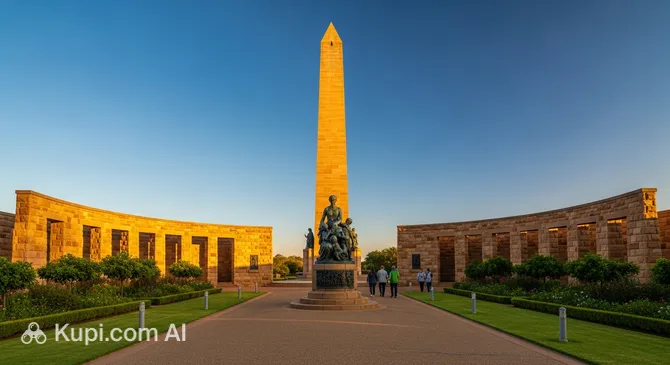
On the southern outskirts of Bloemfontein stands the majestic National Women's Monument—one of the most significant memorial complexes in South Africa. This site is more than just an architectural structure; it is a deeply revered symbol of resilience and courage. The centerpiece of the composition is a grand 36-meter sandstone obelisk, at the base of which stands a bronze sculpture depicting a grieving mother holding her child.
The memorial was erected in memory of the tens of thousands of women and children who lost their lives during the Anglo-Boer War at the turn of the 20th century. Its creation was an act of collective mourning and the nation's profound respect for its heroines. The monument's design, developed by Louis M. V. Roussy, and the fine work of sculptor Anton van Wouw, transformed this place into a masterpiece of memorial art recognized far beyond the country's borders.
Traveler photos:
Today, the National Women's Monument is an important cultural and educational center. The ashes of British human rights activist Emily Hobhouse, whose humanitarian mission saved thousands of lives, rest on its grounds. A visit to this site allows tourists to touch the complex pages of history and feel the atmosphere of the unbroken spirit that permeates every element of this monumental ensemble.