Support

Cape Town International Airport

About the Airport

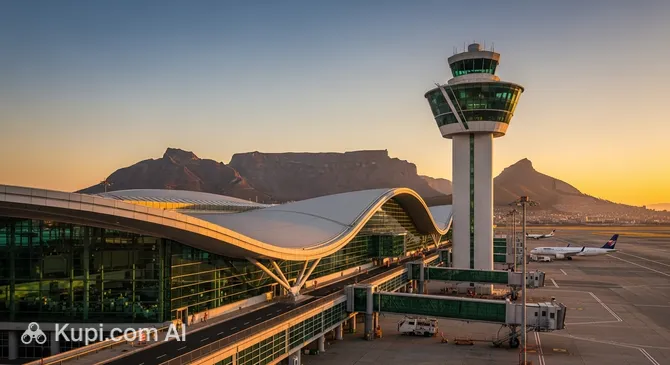
Cape Town International Airport (CPT) is not merely an air gateway to one of the most picturesque cities in the world, but a true African hub that welcomes travelers with modern design and world-class service. Being the second busiest airport in South Africa and one of the leading airports on the continent, it serves as the starting point for unforgettable adventures at the foot of Table Mountain. The airport has repeatedly received prestigious awards, including the Skytrax award for Best Airport in Africa, which speaks to the high quality of service.

Cape Town International Airport. Source: Kupi.com Binoculars
IATA Code CPT
ICAO Code FACT
City Cape Town
Distance to centre approx. 20 km
Status International
Annual Passengers over 2.8 million international passengers (2023)
Popular Airlines Lufthansa, British Airways, South African Airways
Schedule Online Board "Cape Town International Airport"

One of the key features of the airport is its well-thought-out structure: the domestic and international terminals are linked by a common central building, making transfers between flights as convenient as possible. Passengers have access to over 120 check-in counters and 20 self-service kiosks, helping to minimize waiting times. Inside the terminal, you will find numerous shops, cafes, and restaurants, as well as currency exchange bureaus, ATMs, and Wi-Fi access. For those who enjoy watching planes, a special observation deck is equipped on the upper level of the central terminal.

Contact Information

For your convenience, we have compiled the main contact information for Cape Town International Airport (CPT). We recommend checking the official website for the most up-to-date data before your trip, as details may change.

  • Official Website: The most complete and current information can be found on the airport's official portal: www.airports.co.za.
  • Help Desk Phone: For immediate information and inquiries, you can call: +27 21 937 1200.
  • Airport Address: Airport Ring Rd, Matroosfontein, Cape Town, 7490, South Africa.
  • Email: For most general inquiries, it is recommended to use the contact forms available on the airport's official website.
  • Social Media: Follow news and updates on the airport's official social media pages, such as X (formerly Twitter) and Facebook.
  • Lost Luggage Information: If your luggage was lost or damaged during the flight, you should first contact your airline's representative. For items left within the terminal building, please contact the airport's Lost Property service.
  • Passenger Support Contacts: For general questions, you can contact the help desk by phone. The website also provides information for passengers with special needs and families with children.

How to Get to the Airport

Cape Town International Airport is located approximately 20 kilometres east of the city centre, and can be reached by several convenient methods. The choice of transport depends on your budget, time, and amount of luggage. The journey from the centre of Cape Town to the airport usually takes 20 to 40 minutes, although this time can increase significantly during peak hours due to traffic.

Public Transport: MyCiTi Bus
The most budget-friendly way to get to the airport is the modern and safe MyCiTi bus system. Route A01 runs between the airport and the Civic Centre bus station in the city centre. Buses run regularly from early morning until late evening. To pay for the fare, you will need a myconnect card, which can be purchased and topped up at vending machines at stations, including at the airport. This is an excellent option for light travelers.

Taxis and Ride-Hailing Services
A more comfortable and faster option is a taxi or a ride via popular apps such as Uber or Bolt, which are widely used in the city. Official airport taxis (Touch Down Taxis) can be found at the designated rank near the arrivals terminal. The cost of the trip will be higher than the bus, but it ensures "door-to-door" convenience, which is especially relevant if you have a lot of luggage or are traveling with family.

Car Rental and Parking
For those planning to actively explore the beauty of South Africa by car, renting a vehicle is the ideal solution. Counters for all major international and local rental companies are located at the airport. You can pick up and drop off your rental car right before departure. If you are arriving in your own vehicle, the airport offers convenient parking options: from short-term (P1, P2) to more economical long-term parking (P3, P4, P5).

Shuttles and Private Transfers
Many private companies offer shuttle services and individual transfers. These can be booked online in advance. This is a good choice for large groups, as the cost per person can be quite favorable. A transfer guarantees a fixed price and a meet-and-greet service by a driver with a sign, adding peace of mind to your journey.

Terminals and Map

Cape Town International Airport (CPT) features a modern and well-planned layout that makes navigation intuitive even for first-time visitors. The airport consists of one large terminal complex, divided into two main zones: for domestic and international flights. These zones are connected by a central building, significantly simplifying passenger movement.

Structure and Navigation:

In fact, there are no separate, detached terminals at the airport. All key processes are concentrated in one building, which is its main feature.

  • Central Terminal Building: This is the heart of the airport. Here you will find check-in counters for all airlines, both international and domestic. The departure zone is located on the upper level, and the arrival zone is on the lower level (ground floor).
  • Domestic Terminal: After check-in, passengers flying within South Africa proceed through security control to the southern wing of the building, where the boarding gates for domestic flights are located.
  • International Terminal: International flight passengers proceed to the northern wing after check-in, passing through passport and customs control.

Transfers and Procedure Times:

Moving between the international and domestic zones does not require the use of buses or trains — simply walking through the common space of the central terminal is sufficient. This is particularly convenient for transit passengers. It is recommended to allow standard time for all formalities: for international flights, arrive at the airport 3 hours before departure, and for domestic flights, 1.5-2 hours is sufficient. During peak seasons, this time may increase.

Recommendations for Passengers:

Navigation at Cape Town airport will not cause difficulties thanks to clear signage in English. Upon arrival at the airport, simply go up to the upper level for check-in. After dropping off your luggage, follow the signs to your sector (Domestic or International). Due to the unified structure, getting lost here is practically impossible, making your stay at the airport comfortable and predictable.

Airport History

The history of Cape Town International Airport (CPT) began in 1954, when it opened under the name D.F. Malan Airport. It replaced the old Wingfield Aerodrome and was originally designed to serve both domestic and international flights, becoming the main air gateway for travelers arriving in Cape Town and the Western Cape region.

A significant stage in the airport's development was the period following the end of apartheid. In the mid-1990s, the airport was renamed Cape Town International Airport, symbolizing a new, open era for South Africa. This period was marked by a sharp increase in international tourism, requiring further expansion and modernization of infrastructure to meet the growing passenger traffic.

The most extensive reconstruction in the airport's history was carried out ahead of the 2010 FIFA World Cup. As part of this ambitious project, a new central terminal was built, uniting the previously separated domestic and international terminals into a single modern space. Runways were significantly expanded, baggage handling systems modernized, and new parking zones created. This transformation allowed the airport to handle a record influx of fans and cemented its status as one of the best in Africa.

Today, Cape Town International Airport is the second busiest airport in South Africa and a multiple winner of the prestigious Skytrax award for "Best Airport in Africa". It continues to develop, opening new direct routes to Europe, Asia, and the Americas. An interesting fact: the airport also serves as a logistics hub for the national Antarctic programs of several countries, launching scientific expeditions to the icy continent from here.

Services and Amenities

Cape Town International Airport (CPT) offers passengers a wide range of services to make their stay as comfortable and productive as possible. The terminals host a variety of restaurants, cafes, and dining spots to suit every taste: from fast food outlets to full-service restaurants where you can try local and international cuisine. For shopping enthusiasts, there are Duty Free shops, boutiques of famous brands, souvenir stalls, and bookstores where you can buy gifts or travel essentials.

For those who need to stay connected, free Wi-Fi is provided throughout the airport, along with numerous charging stations for electronic devices. If you are looking for greater comfort, several premium lounges (VIP lounges) are at your service. Access can be obtained via airline loyalty cards, special programs, or for a separate fee. Inside, you will find comfortable seating, snacks, beverages, and a quiet atmosphere away from the bustle of the main hall.

To handle financial matters, bank branches, ATMs, and currency exchange points operate at the airport. This makes it easy to withdraw cash or exchange money upon arrival or before departure. In case of unforeseen health situations, medical services and a pharmacy are available where you can purchase necessary medicines and receive a consultation.

The airport is well-equipped for passengers with children: there are mother and child rooms for changing and feeding, as well as small play areas to help entertain young travelers. For travelers with reduced mobility, all necessary facilities are provided, including ramps, elevators, specially equipped restrooms, and an assistance service, which is recommended to be booked in advance through your airline.

Business travelers can make use of conference rooms and business services for holding meetings or working in a quiet environment. And for those with an early departure or a long layover, several hotels are located right on the airport grounds and in the immediate vicinity, offering comfortable accommodation and convenient access to the terminals without leaving the airport zone.

Where to Eat

Cape Town International Airport (CPT) offers a multitude of dining options for every taste and budget, allowing for a quick snack before departure or a leisurely lunch or dinner. Dining establishments are conveniently located in both the public area and the departure zones after security control.

In the public zone (landside), on the upper level, there is a main food court accessible to all airport visitors. Here you will find popular chain outlets offering quick and filling meals. For a more substantial lunch, you can visit restaurants such as Mugg & Bean, known for their diverse menu including breakfasts, sandwiches, and hot dishes. The Woolworths Food store offers a large selection of ready-made salads, sandwiches, and healthy snacks that are convenient to take on board.

After passing security control (airside), in the domestic and international departure halls, the selection is also quite wide. Here you can find cozy coffee shops, for example, the popular South African chain Vida e Caffè, serving excellent coffee and pastries. For those wishing to relax before their flight, there are venues offering various beverages. If time permits, you can choose one of the à la carte restaurants to enjoy a final South African steak or seafood dish.

Particular attention should be paid to local specialties. Do not miss the opportunity to try biltong (cured meat) or droëwors (dried sausages) — traditional South African snacks. Many establishments offer dishes that meet special dietary requirements: vegetarian, vegan, and gluten-free options are usually indicated on the menu. Information regarding Halal meals is best verified directly with the staff at each establishment.

The price range at the airport varies from budget fast food to mid-range and high-end restaurants. Most establishments operate from early morning until late at night, aligning with flight schedules, so you will always be able to find an open cafe, even if you have a very early departure or late arrival.

Travel Tips

To ensure your journey through Cape Town International Airport goes as smoothly as possible, take advantage of our tips. These recommendations will help you save time, stress, and even money, whether you are arriving in Cape Town or setting off on a new adventure from South Africa.

Arrival Time at the Airport. For international flights, it is recommended to arrive at the airport at least 3 hours before departure. For domestic flights within South Africa, 1.5-2 hours is usually sufficient. During peak seasons (for example, during summer holidays or festive periods), it is better to add another 30-40 minutes to this time due to potential increases in queues.

Check-in and Security Control. The fastest way to check in for a flight is to do so online on your airline's website. This allows you to go straight to the bag drop counter or, if you are traveling light, directly to security screening. When passing through security, prepare in advance: remove laptops and other large electronics from your bag, and place all liquids up to 100 ml in a separate transparent bag.

Hand Luggage Regulations. Standard international rules apply here: sharp objects, flammable substances, and liquids in containers larger than 100 ml are prohibited. All liquids must be packed in one transparent bag with a capacity of no more than 1 litre. Remember that airlines may have their own, stricter restrictions on the weight and size of hand luggage — check these in advance.

Tips for Transit Passengers. If you have a connecting flight in Cape Town, check when booking your ticket whether you will need to collect and re-check your luggage. Typically, when flying with the same airline or alliance, luggage is transferred automatically. Follow the "Transfers" / "Connecting Flights" signs to quickly find the necessary gate without exiting into the general arrivals area.

Customs Control. Upon arrival in Cape Town from another country, you will need to clear customs. Use the "Green Channel" if you have no goods to declare. If you are carrying something that requires duty payment (for example, goods exceeding the allowance limit) or restricted items, you should proceed through the "Red Channel". Be prepared to present receipts for expensive purchases.

Saving Time and Money. To save money, order a taxi or transfer via online apps or book in advance — this is often cheaper than taking a car on the spot. Bring an empty reusable water bottle, which can be filled at drinking fountains after passing security. Time savings are achieved through online check-in and studying the airport map beforehand.

In Case of Flight Delay. First, contact your airline representative. Depending on the duration of the delay and its cause, you may be provided with vouchers for meals or even hotel accommodation. Keep all receipts for necessary expenses. It is useful to familiarize yourself with passenger rights in advance to know what compensation you may be entitled to.
Reached the end of the page?

That means the route is fully explored