Support

Harrismith

About

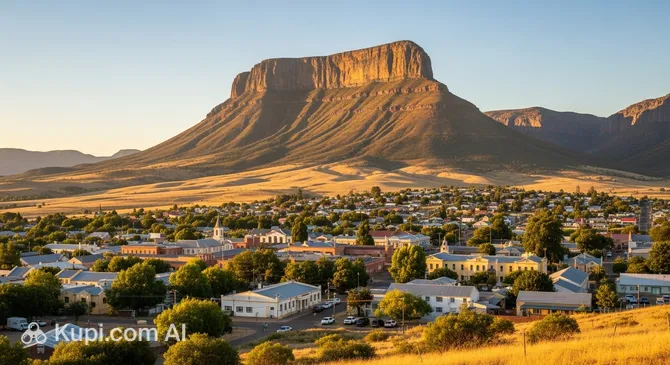
Harrismith is a picturesque and cozy town located in the Free State province, often referred to as the "gateway to the Drakensberg." Thanks to its strategic location halfway between Johannesburg and Durban, it has become a popular stopover for travelers exploring South Africa. The town is famous for its cleanliness, well-maintained streets, and the stunning natural landscapes that surround it on all sides.

Harrismith. Illustration.
Source: Kupi.com AI

The geographical landmark of the area is the majestic Platberg (flat mountain), at the foot of which the town is nestled. The climate here is temperate, with cool winters and warm summers, making a visit comfortable at any time of year. Despite a relatively small population of about 40,000 people, Harrismith boasts a well-developed tourist infrastructure and a special atmosphere of provincial charm. The fascinating history of Harrismith, dating back to its founding in 1849, is reflected in the beautifully preserved architecture of its central streets.

Among the key attractions, the Town Hall is a must-see; built of red brick and sandstone, it is recognized as a national monument and is considered one of the most beautiful buildings in the country. Nature lovers should definitely visit the Deborah Retief Garden (Wildflower Garden), established in 1904, where you can see unique species of local flora. Additionally, the Platberg Nature Reserve offers excellent opportunities for hiking and observing wild animals in their natural habitat.

Harrismith is the perfect place to slow down, enjoy the fresh mountain air, and experience the authentic culture of the region before continuing your journey.

Weather Overview

The climate in this region can be described as temperate, with clearly defined seasonality. The summer period, lasting from November to March, brings pleasant warmth: average temperatures in December and January are around 19.0°C, while daily maximums often reach 24.6°C. However, this is also the wettest time of year—the number of rainy days in the height of summer varies from 13 to 19 per month.

Winter, occurring in June and July, is fundamentally different from summer. The average temperature drops to 9.6°C, and nights become truly cold with minimums around 2.2°C. However, precipitation is practically non-existent in the winter months, making this period sunny but cool. Before your trip, we recommend checking the current weather in Harrismith to choose your wardrobe correctly.

The shoulder seasons, such as April and September, offer mild conditions with temperatures in the 15°C range. Overall, when planning a trip here, expect warm summers with occasional rain and cold, dry winters.

Average monthly temperature

Average monthly precipitation

Interesting Facts

In addition to its main attractions, Harrismith holds many fascinating secrets and historical details that often escape the notice of transit travelers. Here are a few facts that will allow you to see this town in a new light:

  • Ancient History at the Town Hall's Doorstep. In the Deborah Retief Garden, located in the town center next to the Town Hall, lies an incredible find—a petrified tree trunk 33 meters long. This geological wonder is about 250 million years old and serves as a reminder of what the region's nature was like long before humans appeared.

  • A Legendary Race. Mount Platberg, looming over the town, annually becomes the arena for the Platberg Mountain Race. This marathon, established in 1922, is considered one of the oldest sporting events in South Africa. Participants call it the "toughest race," requiring incredible endurance to climb to the summit.

  • Military Heritage. In the vicinity of the town's natural parks, you can find a historical British blockhouse from the Anglo-Boer War (1900–1902). This small fortification was built to guard the town's water supply and remains in excellent condition today.

  • Unique Flora at the Mountain's Base. Don't confuse the town square with the actual botanical reserve—the Harrismith Wildflower Gardens. This garden, founded in 1967, is located directly at the foot of Mount Platberg. It is unique because it specializes exclusively in plants that grow in the Drakensberg Mountains and the high-altitude regions of the Free State.

How to Get There

Harrismith occupies a strategically important position halfway between the country's two largest metropolises, making it a convenient stop for road travelers. Since the town itself has no commercial airport, tourists typically use the air hubs of neighboring cities and then continue their journey by land. You can find out more about how to get to Harrismith by exploring all available routes and modes of transport.

The most popular choice for international travelers is O. R. Tambo International Airport (IATA: JNB). It is important to note that it is not located in Harrismith but in the city of Johannesburg, at a distance of approximately 253 km. This is Africa's largest airport with a massive passenger flow, receiving flights from all over the world. A trip from here to Harrismith by rental car or transfer along the N3 highway usually takes about 3–4 hours.

Another convenient option, especially if you plan to visit the coast, is King Shaka International Airport (IATA: DUR). It is located in Durban, about 244 km from Harrismith. This is a modern, large airport from which the road to the town will also take about 3–4 hours by taxi or bus, passing through the scenic landscapes of the KwaZulu-Natal province.

For convenience, here is a summary of the main airports located relatively close to the town:

AirportPassenger trafficDistance
Pietermaritzburg Airport144 458197 km
Moshoeshoe International Airport90 000202 km
King Shaka International Airport5.0 mln244 km
O.R. Tambo International Airport21.3 mln253 km
Lanseria International Airport2.5 mln285 km

As for rail connections, regular passenger trains to Harrismith are currently rare or focused on freight, so this method of travel is not recommended for typical tourists. The primary way to reach the town remains road transport. The main N3 national highway connecting Johannesburg and Durban passes through Harrismith, making it easy to reach by intercity buses (such as Greyhound or Intercape) or rental car.

Main Attractions

Harrismith offers travelers a harmonious blend of natural beauty and historical heritage. The town serves as an excellent starting point for exploring the region, and there are several places that definitely deserve the attention of tourists.

Platberg Nature Reserve
This majestic table mountain towering over the town is Harrismith's main natural attraction. The reserve, covering about 3,000 hectares, is a true paradise for outdoor enthusiasts. There are scenic routes for hiking and mountain biking leading to the summit, which offers breathtaking panoramic views. The area is home to various species of antelope, such as eland and blesbok, as well as many birds, making it a draw for photographers and naturalists.

Harrismith Town Hall
In the center of town, it is impossible to miss this architectural masterpiece built in 1907. Constructed from red brick and local sandstone, the building is considered one of the most beautiful administrative structures in South Africa and holds national monument status. Its elegant facade and well-preserved details provide a wonderful backdrop for photos and serve as a reminder of the town's rich history.

Sterkfontein Dam
Located just a few minutes' drive from the town, this dam is known for its incredibly clear, azure water and picturesque surroundings. It is a popular spot for water sports enthusiasts, especially windsurfing and sailing, thanks to favorable winds. Anglers also highly value Sterkfontein for its excellent yellowfish fishing opportunities, while the peaceful atmosphere of the shore is ideal for picnics.

Harrismith Wildflower Gardens
Located at the foot of Mount Platberg, this garden is one of the oldest in the country specializing in indigenous flora. It was created to preserve the unique plants of the Drakensberg highland region. A walk through the garden is a wonderful opportunity to see rare flower species and enjoy the silence of nature without leaving the town limits.

Local Cuisine

The culinary scene in Harrismith is a vibrant reflection of the traditions of the Free State province, where a cult of hearty farm food, known as "boerekos," reigns supreme. Since the town is in the heart of an agricultural region, the local menu is based on high-quality red meat, fresh dairy products, and vegetables. Don't look for molecular gastronomy here; instead, travelers can expect generous portions, homey comfort, and simple, rich flavors.

The main culinary ritual you will surely encounter is the braai—the South African version of a barbecue. It's not just a way to cook food, but an important social event. Be sure to try boerewors—a spiced farmer's sausage coiled in a spiral and grilled over an open fire. Another iconic dish of the region is potjiekos—a thick meat and vegetable stew simmered for hours in a cast-iron pot over coals. For a snack on the road, biltong is ideal—dried meat with spices, sold in almost every store and considered a national pride of South Africa.

For those with a sweet tooth, Harrismith offers the traditional melktert (milk tart)—a delicate milk pie with cinnamon, resembling custard on a thin crust, or warm malva pudding with apricot jam, often served with custard. Among drinks, pay attention to the famous rooibos tea, which is grown only in this country; it is enjoyed both hot and as an iced tea. Alcohol enthusiasts can appreciate local craft beers or classic South African wine, although brandy and coke is particularly popular in the rural Free State.

The dining culture in the town is closely linked to its status as a major transport hub on the N3. "Padstals"—roadside farm stalls and cafes—are popular here. In these places, you can not only have a substantial meal but also buy homemade jams, pastries, and meat delicacies. Restaurants in the town itself generally have a relaxed atmosphere and specialize in steaks and grills, offering tourists a chance to rest and enjoy the hospitality of the locals.

Travel Tips

Harrismith is not just a convenient point on the map for a stopover, but a town with a rugged mountain character that requires certain preparation. To make your introduction to the "gateway to the Drakensberg" as comfortable and safe as possible, we have prepared a list of important practical recommendations.

  1. Clothing and Gear. The weather in the region is extremely changeable due to the proximity of the mountains. In summer (November to March), afternoon thunderstorms often occur, so a light raincoat is essential. In winter, nights are truly freezing, and temperatures can drop below zero, so a warm jacket, hat, and thermal underwear are vital. If you plan to hike Mount Platberg, ensure you have reliable trekking shoes with ankle support.
  2. Transport. Public transport within the town is poorly developed and largely unsuitable for tourists. The optimal way to get around is a rental car. This will provide you with freedom and security. Taxi apps can be unstable here, so rely on your own wheels or pre-booked hotel transfers.
  3. Finances. The official currency is the South African Rand. Bank cards are accepted without issues in supermarkets, gas stations, and restaurants in Harrismith. However, if you want to buy souvenirs from street vendors or visit small farm stalls, it's better to have cash on hand. Tipping in restaurants is welcomed (about 10% of the bill), and it is also customary to give a small amount (5–10 Rand) to petrol attendants.
  4. Health and Safety. Harrismith is a relatively quiet town, but you should not lose your vigilance. Do not walk alone on unlit streets after dark and always lock your car doors while driving. Pharmacies are located in the town center and shopping areas, but there may be no 24-hour duty points, so pack a basic first-aid kit in advance. It is recommended to drink bottled water.
  5. Communication. English is the main language of business communication, and you will be understood almost everywhere: in hotels, shops, and at gas stations. Local residents also speak Sesotho and Zulu. Local SIM cards (Vodacom, MTN) can be purchased at any supermarket or specialized kiosk; a passport is required for this. Mobile internet (4G) works stably in town.
  6. Local Etiquette. Residents of the Free State province are known for their traditional hospitality. It is customary to greet strangers, shopkeepers, and staff, and to ask "How are you?". Politeness and a smile are keys to good service. A handshake is the standard greeting.
  7. What to Avoid. Do not feed wild animals, especially baboons, which can be found on the outskirts of town or near trash bins. They can be aggressive and bold if they see food. Also, avoid displaying large sums of money or expensive gadgets in crowded places to avoid attracting pickpockets.
  8. Tip for Road Travelers. Given the town's location on the busy N3 highway, be extremely careful on the roads: there is very heavy truck traffic. Life hack: instead of lunch at a chain gas station, look for a local "padstal"—a roadside shop. There you can buy fresh homemade bread, jams, and the famous biltong dried meat made by local farmers.

By following these simple tips, you can avoid minor troubles and fully focus on the beauty of the mountain landscapes and the cozy atmosphere of this corner of South Africa. Have a pleasant and safe journey!

Entertainment & Nightlife

Harrismith is a quiet provincial town, and its nightlife is fundamentally different from bustling metropolises like Johannesburg or Durban. You won't find neon signs for 24-hour nightclubs or loud discos here. Evening leisure in Harrismith primarily consists of cozy pub gatherings, hearty dinners at steakhouses, and a relaxed atmosphere after a long drive. The town goes to sleep quite early, so most establishments close their doors around 10:00 PM or 11:00 PM.

In the evenings, the bars at large hotels and guesthouses often become the center of activity. These are favorite spots not only for transit tourists but also for local farmers who gather here to discuss news or watch a rugby match. The atmosphere in such places is very casual and friendly, with no dress code—you'll feel comfortable in ordinary everyday clothes. If you're looking for a place to spend the evening, look for establishments along the main Warden Street and McKechnie Street, as well as near the N3 highway.

Notable places for an enjoyable evening include the bar and restaurant at the Harrismith Inn (often called Sir Harry's). It is an iconic stop for travelers, known for its "Old English" style, a fireplace on cold evenings, and an excellent selection of drinks. The Buffalo Bill's Spur chain restaurant is also popular; while it is a family establishment, it becomes a lively spot in the evening for dinner with a glass of wine or beer. For a more authentic experience, you can stop by local pubs serving craft beer and traditional snacks.

Safety and Transport at Night: This is a critically important aspect. Harrismith, like many towns in South Africa, requires caution. It is strongly recommended not to walk on foot through the town center or residential areas after dark. The streets empty quickly and can become unsafe. You should travel exclusively by car—from door to door. Taxi services like Uber are practically non-existent here, so if you plan to consume alcohol, arrange a transfer with your hotel in advance or choose an establishment within walking distance (but only within a secure complex).

Regarding daytime entertainment not related to nature, the choice is modest but pleasant. Sports enthusiasts can visit the Harrismith Country Club, which features one of the oldest golf courses in South Africa (founded in 1887), as well as bowls greens. This is a great way to meet the local community in a relaxed setting. For those interested in history and culture, small local museums and souvenir shops offer an interesting glimpse into the life of the Free State region.

Parks & Museums

Harrismith offers travelers a surprising blend of natural beauty and historical heritage that often goes unnoticed by transit tourists. The town is proud of its well-maintained green spaces, where you can discover the unique flora of the Drakensberg, while its architectural monuments serve as living testaments to the region's rich past.

Harrismith Wildflower Gardens is a true gem for botany lovers, located at the foot of the majestic Mount Platberg. Established in 1967, this garden was created specifically to preserve and display high-altitude region plants. Neat walking paths are laid out here, where you can see thousands of local flower species, including rare succulents and aloes. It is an ideal place for a quiet rest, a picnic surrounded by nature, and bird watching without traveling far from civilization.

In the very heart of the town lies the Deborah Retief Garden, a small but significant park located next to the Town Hall. This place attracts tourists with its main exhibit—a petrified tree 33 meters long, estimated to be 250 million years old. The park serves as an excellent relaxation area after a walk through the town, offering shade and coolness on hot summer days.

While there are no large traditional museums in Harrismith, the role of the main cultural and historical center is played by the Town Hall. This magnificent sandstone and brick building, constructed in the early 20th century, is a national monument. Its architecture impresses with its monumentality and elegance of detail. Viewing the building from the outside and visiting its interiors allows you to touch the atmosphere of the colonial era and appreciate the craftsmanship of the builders of that time.

Another important site reflecting history is the British Blockhouse, located near the Botanical Garden. This small fortification, built in 1900 to guard the town's water supply, is perfectly preserved to this day. A visit to the blockhouse is interesting not only from a historical perspective but also for the panoramic view of the town that opens from this point.

For those seeking an authentic experience, we suggest simply walking along the old streets of the town, such as Warden Street. Here you can find many Victorian and Edwardian era buildings, as well as old churches built from local sandstone, which create the unique character of this corner of the Free State province.

Getting Around

The public transport system in Harrismith is poorly developed and differs significantly from what residents of major metropolises are used to. The town lacks a metro, trams, and trolleybuses. A municipal bus network with a clear schedule and stops also does not function here. Due to the town's small size and the specifics of local infrastructure, public transport is primarily oriented towards the needs of the local working population rather than tourists.

The only type of mass transport is minibus taxis. These are white microbuses that run between the town center, residential areas (townships), and surrounding settlements. They have no fixed stops: pickups and drop-offs are made on demand or at informal collection points. No schedule exists—the vehicle only departs when the cabin is completely filled with passengers.

Payment for minibus taxis is made exclusively in cash. No travel cards, contactless payments, or mobile apps work here. Money is handed to the driver or a specific person collecting the fare immediately upon boarding. The fare is low, but tourists are strongly advised against using this type of transport. The route system is complex and undocumented (directions are often shown with hand gestures), driving styles can be aggressive, and the level of safety and comfort does not meet tourist standards.

The most reliable and convenient alternative for travelers is renting a car. Harrismith is a driver-friendly town, with ample parking near attractions, shopping centers, and restaurants. Having a car will give you freedom of movement and the ability to safely reach natural parks located outside the town limits, such as Mount Platberg.

Regarding taxi services, popular international apps (such as Uber or Bolt) work very inconsistently in Harrismith or may be completely unavailable due to a shortage of drivers in the region. Do not rely on being able to call a car through an app at any moment. The most proven way to order a taxi is to contact the reception of your hotel or guesthouse. Local hoteliers usually have contacts for reliable private drivers who provide transfer services at fixed rates.

Bicycle rental and car-sharing are non-existent in the town. Walking is possible in the central historic part of the town during daylight hours, where distances between shops and cafes are small. However, for travel between districts or in the evening, walking is not recommended for safety reasons. Thus, a personal or rental car remains the only guaranteed way to move comfortably around Harrismith.

Accommodation

Harrismith, being a key transit point between Johannesburg and Durban, offers travelers a wide selection of accommodation options geared towards both short overnight stays and longer rests. The town's hospitality sector is characterized by an absence of flashy luxury chain resorts; instead, comfort, a homey atmosphere, and practicality prevail. The bulk of the accommodation consists of charming guesthouses, classic Bed & Breakfasts (B&Bs), and functional motels and lodges for road travelers.

When choosing a place to stay, consider the purpose of your visit, as the town is roughly divided into several zones:

  • Along the N3 highway. This area is ideal for those making a one-night stop to break up a long journey. Here you'll find hotels and motels with easy access roads, 24-hour reception desks, and secure parking. This is a choice for practicality and time-saving.
  • Historic center and residential neighborhoods. If you want to feel the atmosphere of old Harrismith, choose guesthouses deeper in the town, on streets like Warden Street. Many are located in restored Victorian-era mansions with well-kept gardens. It is quiet, green, and offers traditional South African hospitality.
  • Nature zones. For lovers of outdoor activities and peace, there are accommodation options on the outskirts, closer to Mount Platberg or the Wilge River. Here you can find campsites, caravan parks, and self-catering chalets offering magnificent views of the Drakensberg Mountains.

Pricing in Harrismith is quite affordable. Most offers fall into the budget and mid-range segments. You can easily find a comfortable room with all amenities at a reasonable price, which often includes a hearty farmhouse breakfast. Luxury boutique hotels are rare here, but the service level in family-run pensions often exceeds expectations due to the personal attention of the owners.

Booking Tip: While finding a free room is usually not a problem, the situation changes drastically during school holidays and festive periods (especially in December and over Easter). During these times, a huge flow of tourists passes through the town heading to the ocean, and the best accommodation options are snapped up weeks in advance. We recommend booking your stay early through popular online platforms or contacting owners directly if you plan to travel during peak season.

Nearby Cities

For those who want to explore the surroundings, Harrismith serves as an excellent starting point for day trips to several interesting nearby locations:

One of the most interesting destinations is Pietermaritzburg, the capital of the neighboring KwaZulu-Natal province. The drive there takes about two hours, but the city is definitely worth a visit for its magnificent Victorian architecture and the famous red-brick Town Hall. It also houses National Botanical Gardens, where you can relax in the shade of exotic trees.

If you are interested in history, it is worth looking at Newcastle, located about 100 km from Harrismith. This city is an important point on the historical "Battlefields Route." Here you can visit the Fort Amiel Museum, which offers a fascinating look at the region's military history and the events of the Anglo-Boer Wars.

CityPopulationDistance
Warden10 97749 km
Ladysmith64 85572 km
Bethlehem16 23681 km
Fouriesburg12 97498 km
Glencoe17 548101 km

These nearby destinations provide a glimpse into the diverse culture and landscapes of the region.

Shopping & Souvenirs

Shopping in Harrismith has its own specifics, dictated by the town's size and its location on the country's main transport artery. You won't find the giant malls with luxury boutiques of world brands that Johannesburg or Cape Town are famous for. However, the town offers excellent opportunities for purchasing essentials, high-quality outdoor gear, and, most importantly, unique local products. For tourists, shopping here is primarily about experiencing the farm culture of the Free State and buying authentic souvenirs for the road.

Main Shopping Areas and Streets

The town's commercial life is concentrated in two completely different zones. The first is the historic town center, particularly Warden Street and its surrounding blocks. This is where small private shops, pharmacies, banks, and supermarkets serving local residents are located. A stroll along these streets allows you to feel the atmosphere of a provincial town and browse antique shops or clothing stores featuring local brands.

The second and most popular zone for tourists is located along the N3 national highway. This is the territory of large service complexes that have evolved into full-fledged shopping hubs. This is where travelers spend most of their time, and the range of goods here is adapted to the needs of those passing through: from food products to artisanal crafts.

Shopping Centers

In the usual sense of giant entertainment complexes, there are none in the town, but there are several significant shopping points:

  • Bergview Complex. This is perhaps the most famous shopping spot among tourists. Located right off the N3, the complex includes not just a gas station and restaurants, but a whole range of shops. Here you can find an excellent bookstore, boutiques with safari and outdoor clothing, and high-quality souvenir shops.

  • Mountain View Shopping Centre. A small shopping center focused on daily needs. A large supermarket is located here (usually a Spar or Checkers), where you can restock on food and water at regular town prices, avoiding the tourist markups of roadside cafes.

Markets and Farm Stalls

The real highlight of the region is not classic town markets, but "padstals"—farm shops. In the vicinity of Harrismith and on the outskirts of the town, you can find these stalls selling fresh products directly from the producers. These are the best places to buy homemade jams, preserved fruits, home-baked "rusks," and seasonal fruits.

Souvenirs: What to Bring Back

A visit to Harrismith cannot be considered complete without buying gastronomic souvenirs and items made by local craftsmen. Here is a list of what to look out for:

  • Biltong. South Africa is famous for its dried meat, and they make it excellently in the Free State. In Harrismith's specialized butcher shops, you can buy beef, kudu, or ostrich biltong. It's an ideal hearty snack for the road and a great gift for friends.

  • Mohair and Wool Products. The region is known for its livestock, so you can find high-quality warm items: socks, scarves, and blankets made from natural wool or mohair that will keep you warm on cold evenings.

  • Zulu Beadwork. Given the proximity to the KwaZulu-Natal province, souvenir shops widely feature traditional beadwork, woven baskets, and wooden figurines.

  • Ceramics and Sandstone. Local artisans often use sandstone to create decorative interior items that reflect the geological character of the region.

Opening Hours and Payment

Most shops in the town center operate on a standard schedule: from 09:00 to 17:00 on weekdays and from 09:00 to 13:00 on Saturdays. Many private shops are closed on Sundays. However, shops in the tourist complexes along the N3 (like at Bergview) often work longer or even 24/7 to accommodate the flow of travelers.

Bank cards (Visa, MasterCard) are accepted almost everywhere, including supermarkets and most souvenir shops. Cash (South African Rands) may only be needed for buying small souvenirs from street vendors or at small markets.

Tax Free

South Africa has a Value Added Tax (VAT) refund system for foreign tourists, which stands at 15%. If you make large purchases (the total value of goods on one receipt must exceed 250 Rand), be sure to keep the Tax Invoices. You cannot process the refund in Harrismith itself—this is done at special Tax Refund offices at international airports (Johannesburg or Durban) before departing the country, upon presentation of the goods and receipts.
Nearby cities

Reached the end of the page?

That means the route is fully explored