Support

Ngala Airfield

About the Airport

Ngala Airfield
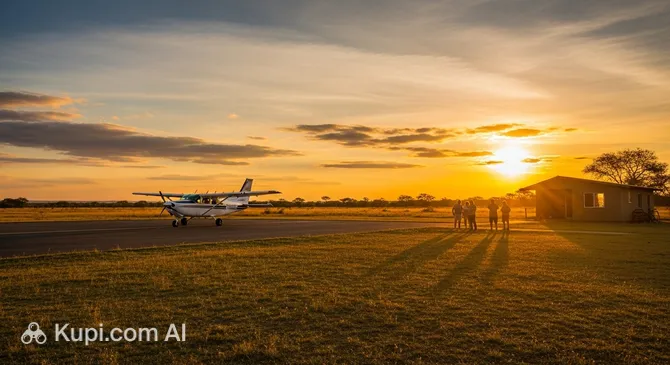
Ngala Airfield. Source: Kupi.com AI

Ngala Airfield is not merely a transport hub, but a true gateway to the world of the African wilderness. Instead of the usual terminals and waiting halls, you are greeted here by the endless expanses of the savannah and the sounds of nature, as the runway is located directly within a private game reserve. Landing here marks the beginning of an exciting adventure: it is not uncommon to spot antelopes or giraffes grazing nearby while the aircraft is still taxiing.

IATA CodeNGL
ICAO Code FANG
City Ngala (Private Game Reserve)
Distance to Centre Within the reserve territory
Status Domestic (Private)
Passengers per Year No official data
ScheduleOnline board

Airport Features and Advantages:

Ngala Airfield exclusively serves guests of the eponymous private reserve and lodges located in the famous Kruger Park and Timbavati Reserve. This ensures exceptional privacy and comfort: there are no queues, hustle, or complex passport controls here. Flights are operated by small light aircraft, allowing you to enjoy stunning panoramic views of the bush from a bird's-eye view even before landing.

The main advantage of this air harbour is its location. Travellers save hours on transfers, arriving from Johannesburg or Nelspruit practically at the doorstep of their safari lodge. Guests are often met by rangers in jeeps right at the aircraft steps, turning the transfer to the accommodation into their first fascinating safari.

Contact Information

  • Official Airport Website: The airfield does not have its own website. All information regarding flights and visiting rules can be found on the official website of the management company andBeyond.com (Ngala Private Game Reserve section).
  • Help Desk Phone: +27 11 809 4300 (&Beyond Guest Support Head Office) or +27 11 395 9000 (Federal Air, the main carrier).
  • Airport Address: Ngala Private Game Reserve, Timbavati/Kruger National Park Border, South Africa.
  • Email: safaris@andbeyond.com or contactus@andbeyond.com (for transfer and accommodation enquiries).
  • Social Media: Current news and photos can be found on the official &Beyond Travel accounts on Instagram and Facebook.
  • Lost Luggage Information: Luggage tracing is handled by the air carrier. If you flew with Federal Air, you must contact their representative office (+27 11 395 9000) or report the issue to the lodge manager immediately upon arrival.
  • Passenger Support Contacts: Meeting and passenger support are provided by rangers and staff of Ngala Safari Lodge and Ngala Tented Camp directly at the aircraft steps.

How to Get to the Airport

Getting to or leaving Ngala Airfield is a task that differs significantly from the logistics at standard international airports. Since the runway is located within a private game reserve, the usual schemes with buses or city taxis do not work here. The entire transport system is built around the comfort of safari lodge guests and exclusive service.

Transfer and Guest Arrival

The primary and practically the only way to leave the airfield is via an organised transfer from your lodge. There are no taxi stands or ride-hailing apps here. The process is organised as follows:

  • Upon aircraft arrival (usually Federal Air charters), passengers are met right at the runway by rangers in open-top off-road vehicles (Land Rovers).
  • Luggage is transferred by staff into support vehicles.
  • The journey from the airfield to Ngala Safari Lodge or Ngala Tented Camp takes from 20 to 45 minutes. This time flies by unnoticed, as the transfer is effectively your first safari: along the way, you are likely to encounter elephants, zebras, or antelopes.
  • The transfer cost is generally already included in the lodge accommodation price, so there is no need to pay for the trip on the spot.

Public Transport and Taxis

It is important to understand that public transport (buses, minibuses, trains) does not run to this part of the reserve. The airfield is located in a wilderness area, remote from populated settlements. Calling a standard city taxi (e.g., Uber) is also impossible here due to strict access control at the park gates and lack of coverage.

Car Rental

There are no car rental desks directly at Ngala Airfield. If you plan to travel around South Africa by car, you will need to rent one at major airports (Johannesburg, Nelspruit, or Hoedspruit) and travel to the reserve by land. In such a case, you will not use Ngala Airfield but will arrive at the main reserve gates, where you will leave your car at the lodge's secure car park.

Parking

There is no specialised passenger parking at the runway. Only ranger service jeeps and airfield technical transport stop here.

Nearest Airports and Alternative Routes

If a direct flight to Ngala is not possible for some reason, tourists often use other transport hubs in the region. Below is a list of other airports that may be useful when planning complex routes across Southern Africa (please note that distances can be significant and may require border crossings or long drives):

  • Mfuwe (MFU) — located approximately 120 km away. A popular hub for visiting South Luangwa National Park.
  • Lilongwe International Airport (LLW) — a large international hub located at a distance of about 127 km.
  • Matundo Airport (TET) — located 246 km away, serving the city of Tete.
  • Lichinga Airport (VXC) — located at a distance of about 297 km.
  • Chileka Airport (BLZ) — an important airport in Malawi, the distance is about 305 km.

Terminals and Map

The infrastructure of Ngala Airfield (NGL) fully corresponds to the concept of an exclusive safari: minimalism and proximity to nature reign here. Unlike large city airports, Ngala does not have a complex terminal system. The entire airfield is a compact complex consisting of a runway and a small passenger reception area, which is harmoniously blended into the savannah landscape.

Structure and Terminals

Formally, one nominal terminal operates here. Often, this is a small structure with a thatched roof or an open veranda (lapa) where guests can wait for their flight in the shade. The building is designed in a traditional African style, using wood and natural materials. There is no division into levels, floors, or sectors; departure and arrival areas are effectively combined into one open-air space.

Arrival and Departure Zones

Concepts such as "gate" or "boarding gate" are absent here. The arrival zone is the area directly at the aircraft steps. As soon as the engines are shut down, ranger jeeps pull up to the aircraft to meet guests. The departure zone is located in the same place: the transfer brings you to the aircraft, pilots personally load the luggage, and you board. The entire process takes mere minutes.

Navigation and Walkways

Orienting yourself at Ngala Airfield is extremely simple — it is impossible to get lost here. The movement scheme is linear: aircraft — jeep — lodge (and vice versa). Transitions between zones are made on foot across the airfield or dirt paths. It is important to remember that there are no jet bridges or buses here, so a short walk from the aircraft to the vehicle is a mandatory part of the route.

Check-in and Screening

Procedures at Ngala take place in a relaxed but organised mode. There are no long queues at check-in counters or metal detector frames.

  • Arrival Time: It is recommended to be at the airfield 15–20 minutes before departure. Usually, the departure time from the lodge is calculated by managers so that you arrive exactly for the aircraft's arrival.
  • Formalities: Charter flight pilots (usually Federal Air) check passengers against a list and personally control luggage weight. Since strict weight restrictions apply on small aircraft, weighing bags is perhaps the most important procedure before departure.

Recommendations for Passengers

The main feature of navigating the airfield is observing safety rules in the wild. Since the airfield perimeter often does not have solid fencing against animals, it is strictly forbidden to wander away from the terminal building, aircraft, or jeep without the accompaniment of a ranger or pilot. Your "waiting area" often serves as comfortable chairs in the shade or the cabin of the support vehicle.

Airport History

The history of Ngala Airfield (NGL) is inextricably intertwined with the history of the private reserve itself and the establishment of elite eco-tourism in South Africa. Unlike major international hubs, the chronicle of this airstrip is measured not by the number of terminals built, but by stages of wildlife conservation and the development of a unique partnership.

Foundation and Turning Point

Although dirt roads and simple landing strips existed in this region back in the days when these lands were used for farming and hunting, the official history of the airfield as an important tourist facility began in the early 1990s. A key date is considered to be 1992, when a historic event occurred: Ngala became the first private reserve to be officially incorporated into the Kruger National Park.

This unprecedented partnership between South African National Parks (SANParks), the WWF fund, and the tourism company &Beyond (then known as CC Africa) required the creation of a reliable logistical chain. The airfield was modernised to receive regular flights with guests wishing to see the results of this union between man and nature.

Development Stages and Modernisation

Over the past decades, the airfield has evolved from a simple strip in the bush to a professionally maintained aviation hub for light aircraft:

  • Surface Improvement: The initially grass and dirt strip was strengthened and levelled to ensure the safe landing of all-weather turboprop aircraft, such as the Cessna Grand Caravan and Beechcraft 1900, which form the backbone of the local aviation fleet.
  • Cooperation with Federal Air: A significant milestone was establishing regular air connections. Federal Air made Ngala one of the key points in its "air shuttle" network, connecting lodges with Johannesburg and Nelspruit.
  • Comfort Infrastructure: Over time, a waiting area (lapa) with a thatched roof and restrooms was arranged, significantly increasing the level of comfort for arriving guests compared to the "wild" conditions of the early years.

Records and Achievements

The main achievement associated with this location is its status as a pioneer of public-private partnership in nature conservation. The airfield became an air bridge that allowed for the financial support of the reserve through the flow of tourists. Thanks to the accessibility provided by the airfield, Ngala regularly receives prestigious tourism awards, including recognition from Condé Nast Traveler and Travel + Leisure.

Interesting Historical Facts

  • A "Living" Runway: In the airfield's history, flight delays have occurred more than once due to "living obstacles". Pilots periodically have to perform a low pass over the strip before landing to disperse a herd of impalas or zebras that decided to rest on the warm surface.
  • Logistics Centre: During periods of active anti-poaching efforts, the airfield was used not only for tourists but also as a base for patrol aircraft and helicopters of conservation services, playing a vital role in protecting rhinos.
  • Star Guests: Thanks to its seclusion and private strip, Ngala has historically attracted celebrities, politicians, and members of royal families who can fly here incognito, bypassing the crowded terminals of public airports.

Services and Facilities

Services and facilities at Ngala Airfield (NGL) differ radically from what passengers are accustomed to in standard international terminals. You will not find duty-free shops or chain coffee houses here. The service concept is built on an "all-inclusive" principle and personal care from the lodge staff. The airfield is part of the safari ecosystem, so service here is integrated into the process of meeting and seeing off guests.

Restaurants, Cafés, and Shops

There are no fixed food outlets or shops on the runway territory. You will not be able to buy coffee, a sandwich, or a magazine here before departure.

  • Food and Drinks: Despite the lack of a café, guests do not go hungry. Meeting rangers always carry portable coolers with refreshments (water, juices, beverages) and light snacks (snacks, dried fruits), which are offered to guests immediately after landing or before departure while waiting for the aircraft.
  • Shopping: Curio shops with items from local artisans, safari clothing, and jewellery are located directly at the lodges (Ngala Safari Lodge and Ngala Tented Camp), not at the airfield.

Lounges and VIP Service

The entire service process at Ngala can be classified as VIP by default. There is no division into business class and economy. The role of a waiting lounge is played by a small covered terrace (lapa) or simply the shade of a spreading tree next to the jeep. The atmosphere of waiting for a flight resembles a picnic in nature rather than a stay at an airport. The exclusivity lies in the absence of crowds and the personal attention of your guide.

Connectivity and Electronics

  • Wi-Fi: There is no public internet access at the airfield itself. Mobile network coverage can also be unstable or absent, as you are deep within the reserve. This place is ideal for a digital detox.
  • Charging Stations: There are no specialised stands for charging gadgets on the strip. It is recommended to fully charge phones and cameras at the lodge before departure. Some safari jeeps may have USB ports, but one should not rely on this as the main power source.

Financial Services

There are no ATMs or currency exchange points at the airfield. All financial matters, including payment for additional services and tips, are settled at your lodge reception, where major credit cards (Visa, MasterCard) are accepted. It is strongly recommended to carry a small amount of cash (in South African Rand or US Dollars) in advance if you plan to tip staff, as there will be nowhere to withdraw money upon arrival.

Medical Services

There is no medical post on the strip. However, rangers meeting and seeing off guests undergo mandatory training in first aid and carry medical kits. In the event of serious emergencies, medical evacuation by helicopter or plane to the nearest major hospitals (usually in Nelspruit or Johannesburg) is organised, which is covered by appropriate travel insurance.

Services for Passengers with Children

There are no dedicated mother and child rooms at the airfield. However, &Beyond staff are famous for their friendly attitude towards children (WILDchild programme). Rangers will help with boarding, entertain children with stories about animals during the wait, and ensure safety by making sure little travellers do not wander far into the bush.

Passengers with Reduced Mobility

The airfield infrastructure is basic (dirt paths), which may cause difficulties for independent movement in a wheelchair. Nevertheless, the service compensates for the lack of ramps:

  • Lodge staff and pilots always personally help passengers board and disembark the aircraft.
  • Transfer jeeps can be driven as close as possible to the aircraft steps to minimise the need for walking.
  • Special needs must be communicated in advance at the booking stage so that the team can prepare for the meeting.

Hotels and Accommodation

The concept of a "transit hotel" does not exist here. The airfield serves specific accommodation facilities in the Ngala Private Game Reserve:

  • Ngala Safari Lodge: A classic family lodge with a colonial atmosphere, swimming pool, and spa centre.
  • Ngala Tented Camp: A luxurious tented camp on the banks of a seasonal river, offering a more secluded and romantic holiday.

Both properties are a 20–45 minute drive from the strip. Staying overnight directly at the airfield is impossible and unsafe due to wild animals.

Business Services

There are no conference rooms or business centres on the runway. If your trip involves a business component, all necessary conditions (quiet zones, desks, internet) will be provided directly at the lodge, although the safari format suggests a break from work.
Where to Eat

It is important for travellers to know that Ngala Airfield (NGL) is a unique point on the map where the usual concept of airport dining is completely absent. You will not find food courts, chain coffee shops, fast food restaurants, or vending machines here. The airfield infrastructure is integrated into the wild nature, so the "restaurant" here is the savannah itself, and the "bar" is the portable cooler in your ranger's jeep.

Restaurants and Cafés: "Bush Service" Format

Instead of fixed establishments in terminals, passenger service is built on the principle of personal service provided by the lodges (&Beyond Ngala Safari Lodge and Ngala Tented Camp). Dining at the airfield is organised as follows:

  • Improvised Bar by the Runway: Meeting and departing rangers always bring stocked portable coolers and picnic baskets. While pilots prepare the aircraft or unload luggage, guests are offered refreshments: bottled water, juices, fizzy drinks, as well as various beverages.
  • Coffee Break Before Departure: If your flight is scheduled for early morning, rangers often serve hot coffee, tea, or hot chocolate from flasks right on the bonnet of the off-road vehicle, complementing them with home-made pastries.
  • Location: All "gastronomic" services are provided directly outdoors, in the boarding area (Landside/Airside are not separated by walls here), often under the shade of a spreading tree or under the canopy of a thatched "lapa".

Local Delicacies and Snacks

Although full hot meals are not served on the strip, snack packs often include traditional South African snacks worth trying to immerse yourself in the atmosphere:

  • Biltong: Famous cured meat (beef or game), seasoned with coriander and spices. This is the main snack of any safari.
  • Droëwors: Thin dried sausages, resembling biltong but with a different texture.
  • Rusks: Traditional South African biscuits that are customarily dipped in coffee or tea.
  • Fresh Fruits and Nuts: Local seasonal fruits, often already sliced for convenience.

Dietary Requirements (Vegetarian, Halal, Gluten-Free)

Since there is no selection menu at the airfield, all special requests must be discussed in advance. Lodges in the Ngala Reserve are renowned for their high level of service and can prepare individual lunch boxes for any type of diet.

  • If you require a vegan, gluten-free, or Halal snack while waiting for the aircraft, please inform the lodge manager the day before departure. The kitchen will assemble a personal packed snack for you.
  • By default, snacks may contain meat or dairy products, so notifying staff is mandatory.

Price Range

One of the pleasant features is that food and drinks offered by rangers at the airfield are generally complimentary for guests. They are included in the lodge accommodation cost under the "All-inclusive" system. You will not need cash or cards to pay for coffee or a beverage before departure.

Recommendations for Passengers

  • For a Quick Snack: Take advantage of the ranger's offer to have coffee with home-made biscuits or enjoy a refreshing drink before boarding the aircraft. This helps pass the 15–20 minutes of waiting.
  • For a Full Meal: It is strongly recommended to have a substantial breakfast or lunch at your lodge before leaving for the airfield. The cuisine at &Beyond lodges corresponds to a high gastronomic level. Do not count on a hearty lunch directly at the runway — there are no facilities for serving hot dishes here.
  • Water for the Flight: Small aircraft often do not have on-board service. Be sure to take a bottle of water from the ranger into the cabin before take-off, especially on hot summer days.

Travel Tips

Travelling through Ngala Airfield (NGL) is a unique experience that has little in common with standard flights. To ensure your safari begins and ends flawlessly, it is important to consider the specifics of light aviation and being in the wild. Here are a few key tips to help you prepare for your flight.

Arrival Time and Planning

Forget the "arrive 2 hours early" rule. There are no queues at Ngala Airfield.

  • Optimal Time: It is sufficient to arrive 20–30 minutes before the departure time. The transfer schedule from your lodge is already arranged taking this time into account.
  • Do Not Be Late: Aircraft fly on a strict "air taxi" schedule, picking up passengers from different lodges. If you are late, the pilot cannot wait long so as not to disrupt the schedule for other stops.
  • Too Early — Also Not Advisable: Arriving an hour early makes no sense. There is no air-conditioned waiting hall at the airfield, and staying in the heat or rain for extra time can be tiring.

Check-in and Safety

The screening procedure here has a specific character. You will most likely not see scanners and metal detector frames, but there are other important rules:

  • Main Check — Weight: The strictest procedure is weighing. Pilots may ask you to stand on the scales together with your hand luggage. This is necessary to calculate the balance of the small aircraft. Be mentally prepared for this and do not be offended by the request to state your exact weight.
  • Safety on the Ground: Your main concern is wild animals. Never wander away from the jeep or aircraft into the bushes "out of necessity" or for a beautiful photo without the ranger's permission. Lions and leopards camouflage perfectly in the grass.

Luggage and Hand Luggage: A Critically Important Rule

This is the most important point for everyone flying by light aircraft to safari parks.

  • Soft Bags Only! Hard-shell suitcases on wheels are strictly prohibited on Federal Air flights and other operators. The luggage compartments of the Cessna Caravan have a specific shape, and a hard suitcase simply will not fit. You may be denied boarding with such luggage or forced to transfer items into a soft bag, leaving the suitcase in storage at the departure airport (e.g., in Johannesburg).
  • Weight Limits: The standard limit is 20 kg per person, including (!) hand luggage and photography equipment.
  • What to Take in the Cabin: Take your camera, binoculars, sunglasses, and a hat with you. Overhead bins for hand luggage in the aircraft are very small or absent (items are placed under the seat in front), so the backpack must be compact.

Choosing a Seat on the Plane

Specific seats are not indicated on tickets; boarding is carried out on a free seating principle, but with nuances:

  • Listen to the Pilot: The aircraft commander may ask you to move to a specific seat for proper weight distribution (balancing). You cannot argue with this.
  • Best Views: Since the flight takes place at a low altitude, the views are stunning from any side. However, if possible, take seats immediately behind the pilots — this way you can watch the instruments and see the panorama through the windscreen.
  • Comfort: It can be a bit cramped in small aircraft. If you are tall, try to board the plane among the first and take a seat by the aisle in the rear of the cabin or, conversely, by the door where there is slightly more legroom.

Tips for Transit Passengers

Most tourists arrive in Ngala via Johannesburg (JNB) or Nelspruit (MQP).

  • Connection in Johannesburg: Flights to safari lodges often depart from a separate terminal or Federal Air hangar, which is located away from the main international terminal. Allow at least 2.5–3 hours for the transfer to have time to pass passport control, collect luggage, and get to the Federal Air kiosk, from where you will be taken by shuttle to the aircraft.
  • Luggage Packing: If you leave extra items in the luggage storage in Johannesburg, separate your luggage into "safari" (soft bag) and "city" (the rest) in advance.

Customs Control

Ngala Airfield is domestic. There is no customs or passport control here. You must complete all formalities at the first airport of arrival in South Africa (usually JNB or CPT). Upon arrival in Ngala, your documents will not be checked, except for verifying your name on the passenger list.

In Case of Flight Delay

Delays happen here, but they are taken philosophically.

  • Reasons: Most often it is weather (fog or storm) or animals blocking the runway.
  • What to Do: Do not panic and do not demand immediate departure — safety comes first. Use this time as a bonus: rangers will offer you drinks, and you can enjoy the sounds of the bush a little longer. The lodge manager keeps in touch with the airline and will inform you of the updated departure time.

Tips for Economy and Comfort

  • Clothing: Dress in "layers". It can be cold in the morning on the open jeep on the way to the aircraft, and it will become hot in the aircraft cabin during the day. Comfortable shoes are mandatory.
  • Toilet: Be sure to visit the restroom at the lodge before leaving. The toilet at the airfield may be very basic, and there is none at all on board a small aircraft.
  • Motion Sickness Tablets: Light aircraft are more sensitive to turbulence than large liners. If you suffer from motion sickness, take medication 30 minutes before departure.

Reached the end of the page?

That means the route is fully explored