Support

Polokwane Airport

About the Airport

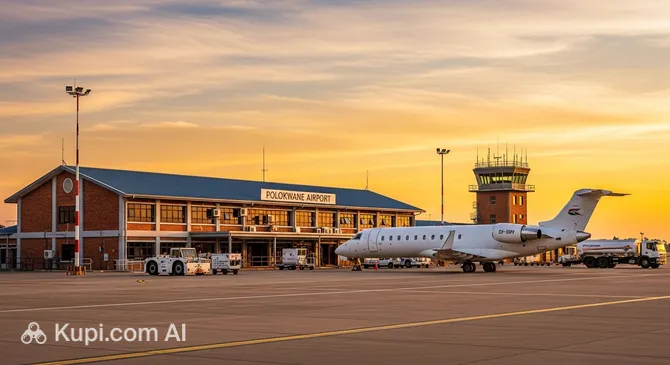
Polokwane Airport. Source: Kupi.com Binoculars

Polokwane Airport, formerly known as "Gateway International Airport," is not just an air terminal, but the main aerial gateway to the Limpopo Province. Opened in March 1996 on the site of a former airbase, it has become a strategically important transport hub in the north of South Africa. Thanks to its location near the borders with Botswana, Zimbabwe, and Mozambique, the airport fully justifies its nickname "Gateway to Africa." From here, travelers begin their journey to world-famous destinations such as the Kruger National Park and the UNESCO World Heritage Site of Mapungubwe.

IATA Code PTG
ICAO Code FAPP
City Polokwane, South Africa
Distance to center approx. 5 km
Status International
Annual passengers approx. 58,700 (based on 2010 data)
Popular Airlines Airlink, FlySafair, CemAir
Schedule online flight board "Polokwane Airport"

Despite its modest size, Polokwane Airport offers passengers everything necessary for a comfortable journey. The modern terminal building includes shops, restaurants, VIP lounges, and car rental facilities. Currently, scheduled flights primarily connect Polokwane with Johannesburg, opening up routes to the rest of the world. The main carrier on this route is Airlink, known for its punctuality.

The airport is an important center not only for tourists but also for business travelers. It boasts impressive conference facilities capable of accommodating up to 500 people, making it a convenient venue for various events. Following recent modernization and confirmation of its high safety category, the airport continues to develop, with plans to expand the cargo terminal and improve infrastructure for private aviation.

Contact Information

To contact the administration and services of Polokwane Airport (PTG), you can use the following details. Please note that certain information, such as lost luggage contacts, is primarily provided by your airline.

  • Official Website: www.gaal.co.za (website of Gateway Airports Authority Limited, the airport management company).
  • Help Desk Phone: +27 15 288 0122
  • Address: Gateway Dr, Polokwane, 0700, South Africa.
  • Email: info@gaal.co.za
  • Lost Luggage Information: For inquiries regarding checked baggage, please contact the airline directly. For items left within the terminal building, you can call the airport help desk.
  • Social Media: It is recommended to follow information on the management company's official website, as individual airport social media pages may be inactive.

How to Get to the Airport

Polokwane International Airport (PTG) is located just a few kilometers north of the city center of Polokwane, making the journey there quick and convenient. A car ride from the central part of the city usually takes no more than 10-15 minutes, depending on traffic conditions.

Taxis and Transfers

The easiest and most comfortable way to get to the airport is by taxi or a pre-booked transfer. Popular ride-hailing services (such as Uber, Bolt) are available in the city, as well as local taxi companies. A trip from the city center to the airport will cost approximately 100-200 South African Rand (ZAR). It is recommended to confirm the price before starting your journey. Many hotels also offer transfer arrangements for their guests, which is particularly convenient if you are traveling with heavy luggage.

Car Rental

For those planning to explore the Limpopo Province and other regions of South Africa, renting a car is an excellent solution. Several major car rental companies operate at Polokwane Airport and in the city itself. Having your own transport provides maximum freedom of movement. The cost of renting an economy class car starts from approximately 500-700 ZAR per day, excluding insurance and fuel. It is best to book a car in advance, especially during the peak tourist season.

Public Transport

The public transport system in Polokwane mainly consists of minibus taxis. This is the most budget-friendly way to travel, but it can be challenging for tourists unfamiliar with local routes and specifics. There is no direct bus service between the city center and the airport, so this option is not very convenient for travelers with luggage.

Airport Parking

If you are driving to the airport in your own or a rented vehicle, parking zones are at your service. Polokwane Airport provides both short-term and long-term parking where you can safely leave your car for the duration of your trip.

Other Nearby Airports

Depending on your itinerary, especially if your goal is to visit national parks, it might be more convenient to use other airports in the region:

Terminals and Map

The Polokwane Airport (PTG), also known as Polokwane International Airport, is a modern and compact aviation hub characterized by a simple and clear structure. The airport operates one passenger terminal serving both domestic and international flights. This makes it extremely convenient for passengers, as all infrastructure is concentrated in one building, eliminating the need for complex transfers.

The terminal layout is intuitive. The building is divided into main functional zones. Upon entering, you find yourself in the general hall where airline check-in counters and car rental offices are located. After checking in and dropping off luggage, passengers proceed to pre-flight security screening. Departure and arrival zones are clearly separated to optimize passenger flow. The departure lounge offers comfortable conditions, though without the excesses typical of major hubs. The arrival zone includes baggage claim belts and customs control for international flights, after which passengers exit into the general hall.

Due to the airport's small size, completing all formalities usually takes minimal time. Check-in and security screening rarely take more than 20-30 minutes. Nevertheless, it is recommended to arrive at the airport 1.5 hours before a domestic flight and 2-3 hours before an international one to avoid unforeseen delays.

The main tip for navigating Polokwane Airport is not to worry about getting lost. All key points, from check-in counters to boarding gates, are within a few minutes' walk of each other. Signage is clear and simple, and staff are always ready to assist. Since there is only one terminal, you won't have to think about transfers, making travel through this air port in South Africa as calm and predictable as possible.

Airport History

The history of Polokwane International Airport (PTG) is rooted in its military past. The airport was built on the site of a former South African Air Force base known as AFB Pietersburg, adding an interesting touch to its biography. The official opening of the civilian airport, originally named Pietersburg International Airport, took place in March 1996. Its creation was intended to provide a modern aerial gateway to the northern part of the country and stimulate the development of the Limpopo Province as an important tourist and business center.

A truly pivotal moment in the airport's history was the preparation for the 2010 FIFA World Cup. In anticipation of this global event, a large-scale reconstruction was carried out: the passenger terminal was modernized, the runway was improved, and navigation equipment was updated. Thanks to these enhancements, the airport was able to receive international charter flights and successfully handle a large flow of football fans and official delegations arriving for matches.

When the city of Pietersburg was renamed Polokwane, the airport also received its modern name. Today, it is managed by Gateway Airports Authority Limited (GAAL) and maintains its strategic role in the region's transport system. The airport not only connects the province with major transport hubs like Johannesburg but also serves as a starting point for travelers eager to see the famous Kruger National Park and other numerous reserves in Limpopo.

Services and Facilities

Polokwane International Airport (PTG), despite its compact size, offers passengers all key services for a comfortable wait before departure. The terminal building houses cafés and snack bars where you can enjoy a cup of coffee or a light snack before your flight. Also available to travelers are small shops where you can purchase fresh newspapers, souvenirs, and travel essentials.

For those wishing to stay connected, free Wi-Fi is available throughout the airport. The departure lounge is equipped with power outlets and charging stations for mobile phones and other gadgets. General waiting areas are quite comfortable, and information regarding access to any VIP lounges is best checked with your airline representatives.

The terminal features ATMs from several banks where you can withdraw cash. Currency exchange services may be limited, so for larger transactions, it is recommended to use bank branches in the city of Polokwane. If necessary, passengers can rely on first aid provided by airport staff.

The airport is equipped to meet the needs of all categories of travelers. For families with small children, there is a mother and child room where you can feed and change your baby in a quiet environment. Passengers with reduced mobility are provided with full assistance: the terminal is equipped with ramps, and to receive help boarding the aircraft, you must contact your airline in advance.

Although there are no hotels directly on the airport grounds, you will find a wide selection of accommodation options just a few minutes' drive away in Polokwane itself. There, business travelers can also utilize conference halls and other business services offered by city hotels and business centers.

Dining

Dining options at Polokwane Airport (PTG) reflect its status as a regional aviation hub. While the selection of establishments is not as extensive as in major international airports, passengers can find everything they need for a snack before departure or upon arrival.

The main place to eat is the café located in the main terminal building in the public zone (landside), before security control. This makes it convenient for both departing passengers and those meeting them. Here you can order coffee, tea, soft drinks, as well as fresh pastries, sandwiches, and light snacks—an ideal option for a quick bite.

For those seeking a more substantial meal, the menu usually features simple hot dishes, such as breakfasts, burgers, or daily specials. Although the choice is limited, it allows for a proper meal while waiting for a flight. Sometimes you can find traditional South African snacks here, such as biltong (dried meat) or droewors (dried sausages).

Passengers with strict dietary requirements (vegan, gluten-free, Halal) are advised to check the availability of suitable dishes directly with the café staff. Given the small size of the airport, specialized options may be unavailable, so the best solution would be to bring food with you. Prices in the café are average for airports. Operating hours are generally tied to the flight schedule: the establishment opens before the first departures and closes after the last aircraft leaves.

Travel Tips

To ensure your journey through Polokwane Airport goes as smoothly as possible, take advantage of our useful tips. A little preparation will help save time, reduce stress, and potentially save money, making the start of your adventure in South Africa pleasant and comfortable.

Arrival Time: Polokwane International Airport (PTG) is not as large or busy as the airports in Johannesburg or Cape Town, but it is better to be safe. We recommend arriving 1.5–2 hours before domestic flights and 2–3 hours before international flights. This is sufficient time to complete all procedures without rushing.

Check-in and Security: The fastest way to check in for a flight is to do it online on your airline's website. This way, you can avoid queues at check-in counters. Prepare for security control in advance: remove laptops, tablets, and liquids from your hand luggage and place them in a separate tray. This is a standard procedure that will speed up the process for you and other passengers.

Seat Selection: If the airline allows you to choose a seat, consider your preferences. A window seat will offer you beautiful views during takeoff and landing. An aisle seat allows you to stand up and stretch your legs freely. Seats in the front of the cabin usually mean a quicker exit upon arrival.

Hand Luggage: You can take personal items, electronics, books, and light snacks in your hand luggage. Remember the international rule for carrying liquids: all containers must be no more than 100 ml in volume and packed in one transparent bag. It is strictly forbidden to carry weapons, sharp objects, flammable substances, and other dangerous items in the cabin.

Connecting Passengers: If you have a layover in Polokwane, check in advance whether you need to collect and re-check your luggage. Usually, on through-flights with the same airline, luggage is transferred automatically. Leave a sufficient time gap between flights to avoid rushing.

Customs Control: Upon arrival on an international flight, you will have to pass through customs control. If you have no goods to declare, proceed through the "Green Channel." If you are carrying items that require declaration (for example, goods exceeding the established limit), use the "Red Channel." Honesty is the best policy to avoid fines.

Saving Time and Money: Book flight tickets and airport transfers in advance to get the best prices. Bring an empty reusable water bottle, which you can fill after passing security, and small snacks to avoid spending extra money at the airport.

Flight Delays: In case of a flight delay, stay calm. First, contact your airline representative for the latest information. Find out about your rights: in some cases, you may be provided with meals, drinks, or even hotel accommodation. Keep a portable charger and something for entertainment (a book, a movie on a tablet) with you so that the waiting time passes more quickly.

Reached the end of the page?

That means the route is fully explored