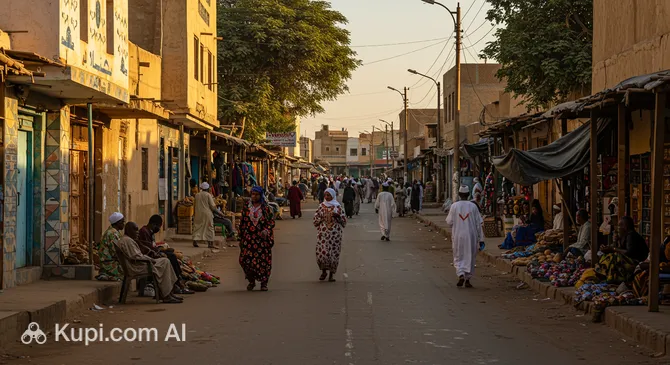
Welcome to Al-Mijlad — a city that allows you to feel the authentic rhythm of life in the heart of rural Sudan. Located in the state of West Kordofan, this settlement serves as an important administrative and commercial center for the region. Despite its provincial character, the city plays a significant role in supporting local agriculture and livestock, bringing together residents of the surrounding areas.
The atmosphere in Al-Mijlad is steeped in traditional ways and hospitality. According to data, the population of the city and adjacent areas reaches significant numbers, making it a bustling place on market days. Geographically, the city is situated in the central-western part of the country, presenting a typical Sudanese savanna landscape with its endless horizons.
Al Mijlad. Illustration.
Source: Kupi.com AI
The rich cultural heritage of Al-Mijlad is evident in the daily habits of its residents and traditional architecture. Travelers appreciate this place for the opportunity to see the real Sudan, far from the beaten tourist paths. Here, time seems to slow down, allowing guests to immerse themselves in the study of local customs and the unhurried way of life.
A visit to Al-Mijlad will be an unforgettable experience for those seeking sincerity and wishing to get acquainted with the culture of the country's central regions. We invite you to discover this unique corner, where every guest is received with genuine warmth.
Weather Overview
In Al-Mijlad, a tropical savanna climate prevails, characterized by high temperatures throughout the year and a clear distinction between dry and wet seasons. The hottest period is spring and early summer: in March, April, and May, the thermometer during the day often rises to 39–41°C. At this time, humidity is minimal and the sun shines very intensely.
The rainy season usually starts in June and peaks in August, when the maximum amount of precipitation falls (about 141 mm). The rains bring long-awaited coolness, reducing the average daytime temperature to 31°C, but make the roads more difficult to pass. During this period, the nature around the city is transformed, becoming unusually green.
For a comfortable trip, it is best to choose the winter months. By studying the weather in Al-Mijlad for the period from November to February, you will find ideal conditions: it is warm and sunny during the day (25–34°C), and nights bring a pleasant coolness with temperatures around 18–20°C. There is practically no precipitation at this time, which makes traveling around the region as convenient as possible.
Average monthly temperature
Average monthly precipitation
Interesting Facts
Population: According to the 2008 census, just over 40,000 people lived in the city itself, however, the modern agglomeration has grown significantly, serving as a key center in West Kordofan.
Geographical Hub: Al-Mijlad is located in the Darfur region of Sudan, making it a strategically important point on the trade routes connecting different parts of the country.
Agricultural Status: The city is considered one of the most important centers for the trade of gum arabic (acacia resin), which is one of Sudan's main export commodities.
Traditions: Local residents carefully preserve tribal customs, and the city often becomes a venue for traditional meetings of elders to resolve important communal issues.
How to Get There
The transport accessibility of Al-Mijlad largely depends on the condition of the region's road network. The primary way to reach the city remains by land. The journey from the capital, Khartoum, usually takes a long time and is carried out by intercity buses or private 4WD vehicles.
For those planning a complex route, it is useful to know that the nearest major transport hubs are several hundred kilometers away. It is recommended to study the travel options to Al-Mijlad in advance, as public transport schedules can be irregular and often depend on weather conditions, especially during the rainy season.
There is currently no direct air service to the city. Travelers most often use domestic flights to major regional centers such as El Fasher or Nyala, then transfer to road transport to complete the journey.
Railway communication in this part of the country is poorly developed, and main transportation is carried out via roads, many of which are unpaved. Therefore, renting a reliable car with a driver familiar with the area is the most preferred option for international tourists.
Main Attractions
Al-Mijlad is not yet on the lists of world-famous tourist destinations, but it possesses the special charm of the Sudanese outback. One of the main "living" attractions is the Central Market. This is the heart of city life, where you can see traditional trade in livestock, grain, and products of local craftsmen. The vibrant colors of fabrics and the specific aromas of spices create a unique atmosphere.
For architecture lovers, the traditional buildings of the city may be of interest. Walking through the residential quarters, you can notice how locals use natural materials to build their homes, adapting to the region's hot climate. This is a great opportunity to see authentic construction techniques passed down from generation to generation.
The city's surroundings are also worth noting. The natural landscapes around Al-Mijlad represent a classic savanna. During the rainy season, the area is transformed, becoming covered in greenery, which makes short walks outside the city limits especially pleasant for those who want to enjoy the silence and natural beauty of central Sudan.
The primary value of a trip here is getting to know the local culture and lifestyle. Communicating with open and friendly residents, participating in their daily affairs, or simply observing the flow of life in a provincial city gives a deeper understanding of the country than visiting standard museums.
Local Cuisine
The gastronomy of Al-Mijlad is a true celebration of the simple and hearty flavors typical of central Sudan. The basis of the diet consists of dishes made from grain crops such as sorghum and maize. You should definitely try Asida — a thick porridge served with various meat or vegetable sauces. This dish is a symbol of hospitality and is often prepared for large gatherings.
Another traditional dish is Kisra, thin pancakes made from fermented sorghum flour, which are eaten by dipping into a stew (mullah). Legume lovers will enjoy Ful Medames — slow-cooked fava beans seasoned with oil, spices, and onions, which are often served here for breakfast. Meat dishes are primarily represented by beef and lamb, cooked over charcoal or in the form of rich soups.
The food culture in the city is closely linked with street food. At the markets and along the main streets, you can find many small stalls where fresh food is prepared in front of you. In the evening, "tea ladies" are particularly popular, brewing strong Sudanese tea with mint or aromatic coffee with ginger (jabana). This is a great reason to sit on a low stool, watch the city life, and enjoy the moment.
Travel Tips
A trip to Al-Mijlad requires some preparation, but our tips will help you make this journey comfortable and safe.
Clothing and belongings: Choose light clothing made from natural fabrics (cotton, linen) that covers the shoulders and knees. This is important both for protection from the scorching sun and for observing the local dress code in a conservative society. Don't forget comfortable closed shoes for walking on dusty roads and sunglasses.
Transport: Within the city, use tuk-tuks, and for long-distance trips, hire a 4WD vehicle. Be prepared for the lack of asphalt on many sections of the roads.
Finance: Bring enough cash in dollars or euros and exchange them for Sudanese pounds in Khartoum. International bank cards are not accepted in Al-Mijlad, and ATMs may be unavailable.
Health: Drink only bottled water and always carry hand sanitizer. It is recommended to pack a basic first-aid kit and have insurance that covers emergency evacuation.
Communication: The main language is Arabic. Few people understand English, so learn basic phrases: "Salam Alaikum" (hello), "Shukran" (thank you). It's best to buy a SIM card in advance in the capital.
Local Etiquette: Sudanese people are very hospitable. If you are invited for tea, it is considered impolite to refuse. Always ask for permission before photographing local residents.
What to avoid: Do not discuss politics and avoid public displays of affection. Also, the import and consumption of alcohol is strictly prohibited.
Additional Tip: The best time to visit is from November to February, when the heat becomes tolerable and the probability of rain is minimal.
Come to Al-Mijlad with an open heart, and this city will reveal its amazing soul to you!
Entertainment & Nightlife
Nightlife in Al-Mijlad is practically non-existent in the sense that residents of megacities are accustomed to. Like in most provincial cities in the region, life here quiets down after sunset. The main evening gathering places are coffee shops and small open areas where local residents drink tea, socialize, and discuss the day's news.
The atmosphere of the evening city is very calm and safe. The main centers of attraction remain the market squares, where even at dusk some shops may still be open. This is the best time for unhurried walks, when the daytime heat subsides and the city fills with the soft light of lanterns and the sounds of evening prayers.
Daytime entertainment in Al-Mijlad is centered around socializing and observing local traditions. Travelers should pay attention to local festivals or wedding ceremonies, which are held with great scale and hospitality. Participating in such an event can be the most vivid impression of the trip, allowing you to see national dances and hear live music.
Parks & Museums
There are no specialized museums in Al-Mijlad, however, the city itself can be called an open-air museum. The main keeper of history here is the traditional culture of local tribes. Household items, jewelry, and tools that can be seen in the markets have remained virtually unchanged for centuries and represent immense ethnographic interest for the thoughtful tourist.
The role of parks in Al-Mijlad is fulfilled by the open spaces of the savanna surrounding the city. There are no manicured lawns here, but there are majestic acacia trees, in whose shade shepherds and their herds like to rest. These places are ideal for feeling the scale and primordial beauty of Sudanese nature, especially during the hours of sunrise or sunset.
For those interested in religious architecture, visiting local mosques can be an alternative to a museum visit. Many of them are built in the traditional style and are centers of not only spiritual but also social life in the city. A respectful attitude and adherence to the dress code will allow you to inspect these important city sites and learn more about local traditions.
Getting Around
Public transport within Al-Mijlad is mainly represented by informal carriers. The most popular and convenient way to travel short distances is by motor rickshaws (tuk-tuks). They are maneuverable, inexpensive, and can take you to any point in the city. The price of the trip should always be agreed upon in advance, as there are no meters here.
For travel between districts or to neighboring villages, locals use minibuses (box). They do not have a fixed schedule and depart as they fill with passengers. This is the cheapest type of transport, allowing you to feel like part of the local community. Be prepared for the trip to be cramped and noisy.
If you need to get outside the city, the only reliable option is to rent a four-wheel-drive vehicle with a driver. Due to the large number of unpaved roads, ordinary passenger cars may not handle the route, especially during the rainy season. Taxis in the classic sense are rare in the city, so private hire remains the main alternative for tourists.
Accommodation
The hospitality infrastructure in Al-Mijlad is modestly developed and primarily oriented toward local travelers and government employees. You won't find large hotel chains here; however, there are several small guest houses and local hotels in the city offering basic amenities.
Most accommodation options are concentrated in the central part of the city, within walking distance of markets and administrative buildings. This is the most convenient area to stay, as it is easiest to find transport and places to eat. Living conditions are usually simple: a bed, a fan, and either a shared or private bathroom.
Since online booking systems often do not work for such remote cities, it is recommended to arrange accommodation in advance through acquaintances in Khartoum or look for options directly upon arrival. Locals are always ready to point out the nearest available guest house. Accommodation prices remain affordable and correspond to the budget segment.
Nearby Cities
Al-Mijlad can serve as a starting point for exploring other interesting towns and settlements in West Kordofan state. Traveling through the surroundings allows you to see the diversity of life in Sudan's savanna zone and get acquainted with the lifestyle of various ethnic groups.
Just 32 kilometers away is the town of Babanusa, which is an important railway hub. A trip there won't take much time and will allow you to see a slightly more urbanized center of the region. Another destination could be Al-Fula, the administrative capital of the state, located about 102 kilometers away. This city is interesting for its government buildings and more developed infrastructure.
For those ready for longer journeys, the way opens to En Nahud or Kadugli, each of which possesses its own unique atmosphere and history. An interesting experience could also be crossing the border (with the appropriate permits) to visit the city of Aweil in neighboring South Sudan.
City
Population
Distance
Babanusa
19 700
32 km
Al Fula
276 000
102 km
An Nuhud
108 008
198 km
Kadugli
176 931
215 km
Aweil
46 705
254 km
Exploring these destinations requires good preparation and reliable transport, but it will reward you with a deep understanding of the regional specifics. The surroundings of Al-Mijlad are a land where history and modernity intertwine in the daily affairs of its residents.
Shopping & Souvenirs
Shopping in Al-Mijlad is primarily about visiting its colorful markets. There are no shopping malls with glass windows here, but there is the Central Souq (market), where life teems from early morning. It is the best place to buy authentic Sudanese goods that cannot be found in ordinary souvenir shops.
From Al-Mijlad, it is worth bringing back traditional fabrics, such as Sudanese tobbs (long lengths of fabric for women) with unique patterns. The city is also famous for its spices and incense (bakhour), which fill local homes with unique aromas. Another valuable acquisition could be handmade leather goods produced by local craftsmen using ancient technologies.
Shops and stalls usually operate from early morning until sunset, with a break during the hottest part of the day. Payment is made exclusively in cash in the local currency. Bargaining at the market is not just a way to lower the price, but an important part of social interaction, so don't hesitate to friendly discuss the cost of goods with the seller.