Support

El Fasher Airport

About the Airport

El Fasher Airport is not merely an air gateway, but a vital transport artery connecting the vast region of North Darfur with the rest of Sudan and the world. Located in the city of the same name, it plays a key role in ensuring transport accessibility for both local residents and international humanitarian organizations. For many travellers, their introduction to this unique corner of Africa begins right here, on a runway surrounded by distinctive landscapes.
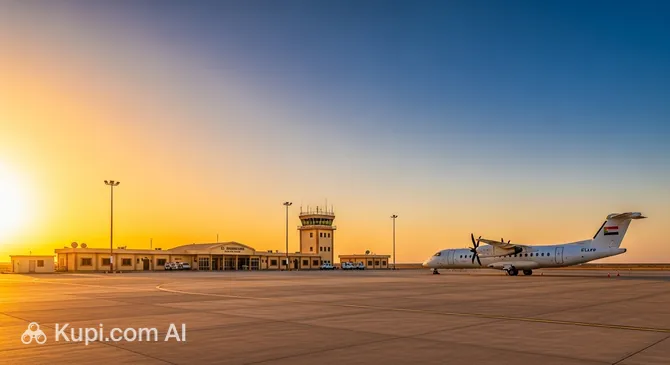
El Fasher Airport. Source: Kupi.com Binoculars
IATA Code ELF
ICAO Code HSFS
City El Fasher
Distance to center About 2 km
Status Civilian
Annual Passengers Exact current data unavailable; serves domestic and humanitarian flights.
Popular Airlines Badr Airlines, Tarco Aviation, Sudan Airways

The airport's main advantage is its strategic location. It serves as the primary aviation hub for all of North Darfur, providing a critical link to the country's capital and other cities. Its proximity to the centre of El Fasher makes it very convenient for arriving passengers — you can reach the city in just a few minutes.

The airport features one runway and a small terminal that provides a basic set of services for passengers. Although the infrastructure may seem modest compared to major international hubs, it effectively handles its main task — receiving and dispatching flights in this remote region. El Fasher Airport is a vivid example of how aviation plays an indispensable role in supporting communication and logistics in hard-to-reach parts of the world.

Contact Information

It is important to note that El Fasher Airport (ELF) in Sudan is a regional facility, and finding direct contact details in the public domain can be difficult. The most reliable way to obtain up-to-date information is to contact your airline. Below is a summary of available contact data.

  • Official Airport Website: Currently, the airport does not have an official website for passengers. To check flight status and obtain other information, it is recommended to use the resources of your airline.
  • Inquiry Service Phone: A public phone number for inquiries is not provided. For all flight-related questions, please contact your air carrier directly.
  • Airport Address: El Fasher Airport, El Fasher, North Darfur, Sudan.
  • Email: There is no official email address for general passenger inquiries.
  • Airport Social Media: The airport does not maintain official pages on social networks.
  • Lost Luggage Information: If your luggage has been lost or damaged, you should immediately contact the Lost and Found service of your airline at the arrival airport.
  • Passenger Support Contacts: Support for all issues, including schedule changes, special services, and other assistance, is provided directly by airline representatives.

How to Get to the Airport

El Fasher Airport (ELF) is located in the immediate vicinity of the city of the same name, so getting to it from the centre of El Fasher is quite quick. The choice of transport depends on your budget, amount of luggage, and comfort preferences.

Taxi and Transfer — the most popular and convenient option for tourists. The trip from the city centre to the airport usually takes 15-25 minutes. This is a reliable way to get to the terminal without unnecessary transfers, especially if you have a lot of belongings. It is extremely important to agree on the fare with the driver before the trip begins to avoid misunderstandings, as fixed rates or taximeters may be absent.

Public Transport in the city is represented mainly by route taxis ("bakkasi"). There may not be a direct and regular route to the airport, and the schedule is often flexible. This option is suitable for light travellers who are familiar with local customs, but for most tourists, it may prove inconvenient.

Car Rental offers freedom of movement if you plan to explore the region on your own. Ensure you have all necessary documents, including an International Driving Permit. Parking is usually available at the airport where you can leave a car for a short or long period.

In general, for a trip to the airport of El Fasher, it is recommended to use a taxi as the most predictable and comfortable method. Plan your departure in advance to calmly go through all pre-flight formalities.

Terminals and Map

El Fasher Airport (ELF) is distinguished by a compact and clear structure, typical of regional air harbours. The complex features one passenger terminal, which serves both departing and arriving travellers. Thanks to the small size of the building, navigation here is intuitively simple, and passengers can easily orient themselves without using complex maps.

The interior space is organized as functionally as possible. The check-in area is located in close proximity to the entrance, and security and passport control counters lead to the departure lounge. The arrival area is located in the same building, allowing for quick luggage retrieval from the conveyor belt and exit to the city. Since there is only one terminal, transfers between buildings or the use of shuttles are not required — all movements are made on foot.

Among the features of the terminal, one can highlight the absence of the hustle and bustle typical of major international hubs. A basic set of services necessary for a comfortable wait for a flight is provided here. Check-in and security procedures generally do not take much time due to moderate passenger flow; however, travellers are still recommended to arrive at the airport in advance — approximately 2 hours before the scheduled departure, to calmly complete all formalities.

For successful navigation, it is sufficient to follow the standard information signs inside the terminal. Airport staff are usually ready to help and suggest the direction to check-in counters or the boarding gate. The compactness of El Fasher Airport makes the departure and arrival process quick and untiring for tourists.

Airport History

The history of El Fasher Airport (ELF) dates back to the Second World War, when it was established as a strategic airfield for the British Royal Air Force (RAF). Its location in El Fasher, the capital of the North Darfur region, made it an important point on trans-African routes. After the war, the airfield was handed over to the civil authorities of Sudan and began its transformation into a key transport hub for this remote region.

A significant stage in the airport's development was the construction of an asphalt runway, which replaced the previous dirt one. This modernization, completed in the 20th century, allowed for the reception of larger and heavier aircraft, which radically improved connections with Khartoum and other cities in the country. For a region geographically isolated by desert landscapes, this was a real breakthrough, facilitating the transport of passengers and vital cargo.

The recent history of the airport is inextricably linked with its key role in international humanitarian operations. Since the early 2000s, it has become a major logistics base for UN missions and other non-governmental organizations working in Darfur. In particular, the airport served as the main hub for the African Union-United Nations Hybrid Operation in Darfur (UNAMID), receiving numerous cargo and passenger flights with humanitarian aid, equipment, and personnel. This turned it into one of the most important airfields for humanitarian logistics on the African continent.

Today, El Fasher Airport continues to perform a dual function. On one hand, it serves civil flights, remaining the main air gateway for the residents of North Darfur and supporting the local economy, including the export of valuable gum arabic. On the other hand, it retains its strategic importance for international organizations, proving that even a relatively small airport can play a huge role in the life of an entire region and on the world stage.

Services and Amenities

El Fasher Airport (ELF) is a regional air hub in Sudan that provides passengers with a set of essential services focused on meeting basic needs before departure. Given the size and status of the airport, the infrastructure here is quite simple, and travellers are advised to prepare for their trip in advance.

Dining and shopping options at the airport are limited. Typically, there is a small kiosk or café where you can purchase light snacks, refreshing drinks, and bottled water. There are no full-service restaurants or duty-free shops. A general hall is provided for waiting for flights, and specialized VIP lounges or business class lounges are absent.

Access to Wi-Fi in the terminal is not provided. Also, the number of power outlets for charging electronic devices may be very limited, so it is recommended to bring a portable charger (power bank) with you. Banking services, including ATMs and currency exchange points, are generally absent within the airport building. All financial transactions are best completed in advance in the city of El Fasher.

A first aid point is usually available on the airport territory for emergency cases. Specialized services for passengers with children, such as playrooms or mother and child rooms, are not provided. Passengers with reduced mobility are recommended to contact their airline in advance to organize necessary assistance during boarding and disembarking. There are no hotels or business centers directly at the airport; all accommodation and business service options can be found in the city itself.

Dining

El Fasher Airport (ELF), being a regional transport hub, offers passengers basic but sufficient opportunities for dining. It is important to consider that the selection here will not be as wide as in major international airports, and is mainly focused on a quick snack before departure.

In the main and only terminal of the airport, you will likely find a few small cafés or kiosks located both in the public area (before security) and in the departure lounge. Full-service restaurants with a menu are absent here. The main assortment consists of drinks — tea, coffee, bottled water, and sodas — as well as simple snacks, such as packaged sandwiches, pastries, and snacks.

As for local cuisine, finding authentic dishes at the airport is unlikely. However, sometimes local sweets or simple appetizers may be on sale. With dietary preferences, the situation is challenging: practically all food offered will comply with Halal standards, but finding vegetarian, vegan, or gluten-free options will be extremely difficult. Passengers with strict dietary restrictions are strongly advised to bring food with them.

Dining establishments at El Fasher Airport operate in accordance with the flight schedule and are generally closed at night. Prices are moderate but slightly higher than in the city. If you need a quick snack, local kiosks will offer you everything necessary. For a full lunch or dinner, it is best to eat beforehand at one of the establishments in El Fasher, as there will likely be no suitable options within the airport itself.

Travel Tips

To ensure your journey through the airport of El Fasher city goes as comfortably as possible, we recommend familiarizing yourself with a few useful tips. Plan your arrival at the airport well in advance — at least 3 hours before international flights and 2 hours before domestic ones. This will give you a sufficient margin of time to calmly go through all formalities in this important transport hub of Sudan.

Given the specifics of a regional airport, registration and security procedures may take time. It is strongly recommended to have printed copies of all necessary documents with you: passport, visa (if required), and flight tickets. This will help avoid difficulties in case of technical glitches and speed up communication with staff.

When choosing a seat on the plane, be guided by personal preferences: a window seat will allow you to enjoy the views, while an aisle seat ensures more freedom of movement. Regarding hand luggage, remember the general rules: liquids in containers no larger than 100 ml and no sharp objects. Always check the exact baggage allowance on your airline's website in advance.

If you have a transfer planned, check in advance whether you need to collect and re-register your luggage. When entering the country, be prepared at customs control to present your luggage for inspection and declare goods if required. Calmness and politeness will help pass this procedure faster.

Important tip: carry a sufficient amount of cash. ATMs, currency exchange points, or cashless payment options may be absent at the airport. Cash will be useful for paying airport fees, buying water, or snacks. We also recommend taking non-perishable snacks allowed for carriage with you, as the choice of food in small airports is often limited.

In case of flight delay or cancellation, stay calm. First of all, contact your airline's counter or its representative for up-to-date information and instructions. Find out about your rights as a passenger — depending on the length of the wait, you may be offered drinks, meals, or even hotel accommodation.

Airports in nearby cities

Reached the end of the page?

That means the route is fully explored