Support

Skelleftea Airport

About the Airport

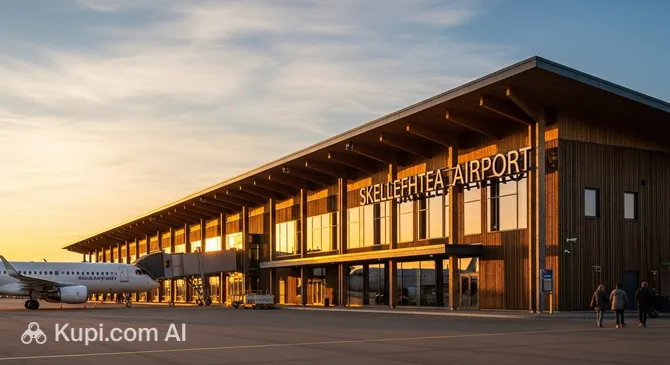
Skelleftea Airport. Source: Kupi.com Binoculars

Skellefteå Airport is not merely a transport hub, but a true gateway to the "Golden City" and the innovative heart of the Swedish north. This cosy air harbour, surrounded by the dense forests of Västerbotten, immerses travellers in an atmosphere of Scandinavian tranquillity and hospitality from the very first minutes. Thanks to its strategic location, the airport serves as an ideal starting point both for business trips to the centre of the European "green" industry and for adventurers dreaming of witnessing the Northern Lights.

IATA Code SFT
ICAO Code ESNS
City Skellefteå
Distance to Centre 17 km
Status International and Domestic
Passengers per Year Over 300,000
Schedule Available on the official website

Airport Features and Advantages

Despite its compact size, Skellefteå Airport plays a key role in the life of the region and possesses a number of unique advantages valued by travellers:

  • Environmental Leader: It is one of the "greenest" airports in the world, actively implementing the use of biofuel and infrastructure for electric aviation, striving for complete climate neutrality.
  • Speed of Service: Thanks to the small passenger flow and smart logistics, the time from entering the terminal to the boarding gate is minimal here, eliminating stress and long queues.
  • Winter Readiness: The airport is excellently adapted to harsh northern winters; the runway is maintained with the highest efficiency, and car parks are equipped with outlets for engine heaters.
  • Scenic Location: The airport is situated amidst beautiful nature, and the views during take-off or landing over the snow-covered forests and the Gulf of Bothnia leave an unforgettable impression.

Contact Information

Contact the representatives of Skellefteå Airport for up-to-date information on flights, services, and regulations. Below are the main contact details.

  • Official Website: www.skellefteaairport.se
  • Helpline Phone: +46 (0)910 576 00
  • Address: Flygplatsvägen 34, 931 79 Skellefteå, Sweden
  • Email: info@skellefteaairport.se
  • Social Media: Current links to the airport's official social media pages are usually posted on their website.
  • Lost Luggage Information: For issues related to lost or damaged luggage, it is recommended to contact your airline's support service directly.
  • Passenger Support Contacts: For general enquiries and assistance, you can use the airport's main telephone number or email address.

How to Get to the Airport

You can reach Skellefteå Airport (SFT), located approximately 17 km south of the city centre of Skellefteå, via several convenient methods. The choice of the optimal option depends on your budget, time, and comfort preferences.

Public Transport. The most economical way is the Airport Bus (Flygbuss). Its schedule is usually synchronised with flight arrivals and departures, making it a reliable option. The trip from the city centre to the airport takes about 20-25 minutes. Tickets can be purchased online or directly from the driver. This is an excellent choice for solo travellers and those looking to save money.

Taxi and Transfer. For maximum comfort and speed, utilise taxi services. Cars can be found at the dedicated stand outside the terminal exit or booked in advance through one of the local companies. The journey will take about 15-20 minutes, but the cost will be significantly higher than the bus. A pre-booked transfer can be convenient for large groups or families with bulky luggage, as the price will be fixed.

Car Rental. If you plan to actively travel around the Västerbotten region and northern Sweden, renting a car is your best choice. Skellefteå Airport hosts representatives of several international and local rental agencies. It is recommended to book a car in advance, especially during the tourist season, to guarantee the availability of the desired model at a favourable price. This will give you complete freedom of movement.

Parking at the Airport. For those arriving at the airport in their own or rented car, parking zones are provided. Both short-term parking (for dropping off or picking up) and long-term parking for those leaving their car for the duration of their trip are available. The cost depends on the duration of the stay.

It is also worth noting that there are other airports in the region that may be alternatives depending on your route. Among them are Umeå Airport (approximately 100 km away) and Luleå Airport (about 114 km away), offering a larger number of flights.

Terminals and Map

Skellefteå Airport (SFT) is a modern and compact airport distinguished by a simple and clear structure. It consists of one passenger terminal serving both domestic flights within Sweden and international destinations. Thanks to its small size and thoughtful layout, navigating through it causes no difficulties even for those here for the first time.

All airport infrastructure is located in a single building. Since there is only one terminal, you do not have to worry about transferring between different buildings. The departure and arrival zones are in close proximity to each other, making movement around the airport fast and convenient. The terminal layout is intuitive: after entering, you immediately find yourself in the general hall, where check-in counters and self-service kiosks are located.

The Departure Zone is located after passing security control. It includes a small but cosy waiting lounge with several boarding gates. The Arrival Zone consists of the baggage claim hall and customs control. Immediately after exiting the arrival zone, passengers enter the main hall, where they can find car rental counters, order a taxi, or wait for public transport.

Completing all pre-flight procedures at Skellefteå Airport usually takes little time. Flight check-in and security screening typically proceed very quickly, rarely taking more than 20-30 minutes. Nevertheless, it is recommended to arrive at the airport in advance: approximately 1.5 hours before international flights and 1 hour before domestic ones, to check in luggage and pass all formalities without haste.

The main advice for navigation is simple: follow the signs. All information is duplicated in English, and staff are always ready to help. Thanks to the compactness of the terminal, all key points—from check-in counters to boarding gates—are within a few minutes' walk of each other, making the stay at the airport as comfortable and carefree as possible.

Airport History

The history of Skellefteå Airport (SFT) began in 1961, when it was opened as a military airbase. However, just a few years later, it became obvious that the growing region also needed a civil air harbour. The first civil flights began in 1963, and in 1964, the first passenger terminal was built, officially marking the beginning of a new era for air travel in this part of Sweden.

The 1970s became a key stage of development. During this time, the runway was significantly lengthened, allowing for the accommodation of larger jet aircraft. This facilitated the launch of direct flights to Stockholm and other important cities. In 1979, a new, more spacious and modern terminal was opened, which was able to serve the growing passenger flow and became a symbol of the region's prosperity. The airport played an important role not only in business travel but also in the development of tourism, opening access to the beauties of Swedish Lapland.

In the 21st century, the airport continued its development. An important event was the transfer of the airport from state ownership to the municipality of Skellefteå in 2010. This allowed for a more flexible response to the needs of the local community and business. Recent years have been marked by a new wave of modernisation driven by the region's rapid economic growth, including the construction of the massive Northvolt battery factory, which led to a sharp increase in demand for air travel.

One of the most notable achievements in the airport's recent history has been its commitment to sustainable development. Skellefteå Airport actively implements environmental initiatives and has become one of the pioneers in the use of Sustainable Aviation Fuel (SAF). This makes it not just a transport hub, but an example for other airports in the field of "green" aviation. Today, SFT is a modern and dynamically developing airport, serving as a vital artery for business and tourism in the north of the country.

Services and Amenities

Skellefteå Airport (SFT) offers passengers a compact yet modern set of services to make waiting for a flight as comfortable as possible. Despite its small size, the airport is well-equipped to meet the basic needs of travellers.

Dining and Shopping: There is a restaurant on the airport premises where you can have a full lunch or simply drink coffee with dessert while enjoying the view of the runway. A small shop is also located here, where you can purchase essentials, press, and local souvenirs.

Comfort and Connectivity: Passengers can utilise free Wi-Fi throughout the terminal. For those who need to recharge electronic devices, special stations and power outlets are provided in the waiting lounges. Although there are no separate VIP lounges at the airport, the general waiting areas are sufficiently comfortable and spacious.

Passenger Services: Mother and child rooms with changing tables are equipped for travellers with children. Passengers with reduced mobility are provided with all necessary assistance: from ramps and specially equipped toilets to escorting during boarding (it is recommended to book this service in advance through the airline). Financial services are represented by ATMs. A currency exchange office may not be available at the airport, so it is recommended to take care of this in advance. First aid assistance can be requested if necessary.

Business and Accommodation: For business travellers, the airport offers the possibility to rent conference rooms equipped with everything necessary for meetings and negotiations. Although there are no hotels directly on the airport grounds, many accommodation options can be found in the city of Skellefteå itself, which is easily accessible by taxi or bus.

Where to Eat

Gastronomic opportunities at Skellefteå Airport (SFT) are concentrated in one main establishment that serves all guests of this compact regional air hub. The main restaurant-café is located on the first floor of the terminal, in the public area (landside), before passing security control. This makes it convenient for both departing passengers and those meeting them.

For a full meal, they offer "Dagens lunch" — a set lunch at a fixed price traditional for Sweden, as well as à la carte dishes. If you are in a hurry, you can grab fresh sandwiches, salads, or pastries. Be sure to try local sweets with coffee, following the Swedish tradition of fika (coffee break). After passing security control (airside), a small refreshment counter or kiosk from the same restaurant is usually available, where you can buy beverages and light snacks before boarding your flight.

The establishment offers options for both a quick snack and a leisurely meal. Regarding special dietary needs, vegetarian and gluten-free dishes can usually be found here. For vegan or Halal options, it is recommended to check directly with the staff, as the selection may be limited.

Prices at the airport correspond to the average level for Swedish air harbours, meaning they are slightly higher than in city establishments. The opening hours of the restaurant and café are directly tied to the flight schedule: they open a few hours before the first departure and close after the departure of the last flight, so passengers can be assured they will not go hungry.

Travel Tips

Travelling through Skellefteå Airport (SFT) generally proceeds calmly and in an organised manner, but a few tips will help make your flight even more comfortable. This regional airport serves northern Sweden, and knowing its specifics will help avoid unnecessary stress.

Arrival Time and Check-in. For international flights, it is recommended to arrive at the airport 2–2.5 hours before departure, and for domestic flights — 1.5–2 hours. Although the airport is small, queues are possible during peak seasons. To save time, use online check-in on your airline's website. This will allow you to head straight to the baggage drop counter or, if you are travelling light, to the security control point.

Security Check and Hand Luggage. Security rules are standard for EU airports. All liquids up to 100 ml must be packed in a single transparent bag. Electronic devices, such as laptops and tablets, must be removed from your bag for separate scanning. Prepare these items in advance to speed up the process. It is forbidden to carry sharp objects, weapons, and flammable substances in hand luggage.

Seat Selection and Connections. When choosing a seat on the plane, consider your preferences: a window seat will offer you picturesque views of the Swedish landscapes, especially during take-off and landing. An aisle seat is more convenient if you plan to get up during the flight. If you have a connecting flight, for example in Stockholm, check in advance whether you will need to collect your luggage and check in again. In most cases, for flights within the Schengen area, repeat security screening is not required.

Customs Control. For passengers arriving from countries outside the EU, "Green" and "Red" channels operate. If you have no goods to declare, feel free to go through the green channel. For flights within the EU, formal customs control is usually absent, but random checks are possible.

Saving Time and Money. To save money, book parking at the airport in advance online. The most budget-friendly way to get to the city is to use the dedicated bus (Flygbuss). You can also take an empty water bottle with you and fill it after passing security control — this is cheaper than buying water at a premium in the departure zone.

In Case of Flight Delay. If your flight is delayed, follow the information on the departure boards and in the airline's app. Contact your carrier's representative for up-to-date information. Remember your rights: according to EU rules, for long delays, the airline is obliged to provide passengers with drinks, meals, and if necessary, hotel accommodation.

Reached the end of the page?

That means the route is fully explored