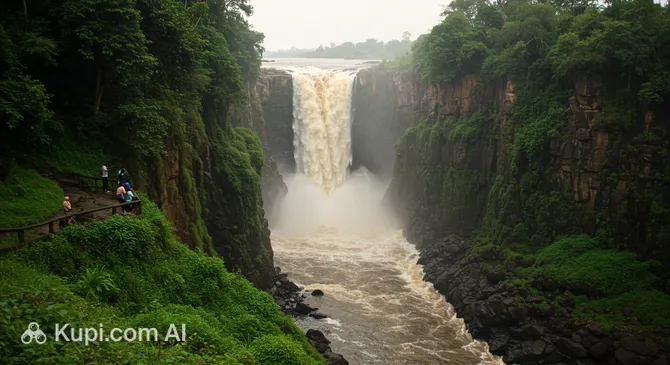
Imagine the mighty Nile forcing its way with furious power through a narrow rocky gorge just seven meters wide. This is Murchison Falls—one of the most spectacular natural wonders that Uganda has to offer. Torrents of water plunge from a height of 43 meters, creating clouds of spray and permanent rainbows, making the ground literally tremble beneath the feet of onlookers.
Murchison Falls. Illustration.
Source: Kupi.com AI
Traveler photos:
The attraction is located in the national park of the same name near the settlement of Kabalega Falls. This area is considered the country's largest protected natural zone, where endless savannas meet dense tropical jungles and hilly landscapes. The park is home to lions, elephants, Rothschild's giraffes, and massive herds of buffalo.
Along the riverbanks and in the surrounding forests, you can find rare birds such as the shoebill stork, as well as observe the lives of hippos and Nile crocodiles. The flora is striking in its diversity: from ancient mahogany trees to exotic orchids and vines that create a unique atmosphere of pristine Africa.
Contacts
To clarify travel details and current visiting conditions, you can refer to the following contact information:
The highlight of the experience here is the hike to the top of the falls, where a specially equipped platform allows you to literally look into the "throat" of the roaring torrent. For those who prefer more peaceful contemplation, a river cruise upstream on the Nile is ideal. During the boat trip, you will find yourself at a safe but impressive distance from the falling water, while spotting lazy crocodiles and snorting hippos in the shallows along the way.
For those seeking maximum immersion in the wild, safari tours in open-top jeeps are available. In the northern part of the park, there is a high chance of spotting leopards and elephants against the backdrop of picturesque palm groves. And if you want to see the African plains from a bird's-eye view, you can book a hot air balloon ride, which provides truly unique photo opportunities at sunrise.
Don't forget to dedicate time to birdwatching walks—in the Nile Delta near Lake Albert, you can try to track down the legendary shoebill. Photo safaris for big cats and picnics in designated areas overlooking the water cascades will be a wonderful conclusion to an active day in this amazing biosphere reserve.
Getting There
The journey to this natural wonder from Uganda's capital, Kampala, takes about 5–6 hours. The distance is approximately 240–300 km, and most of the route follows well-paved roads; however, be mindful of the lack of detailed road signs. Using GPS or being accompanied by an experienced local guide is highly recommended.
For those who prefer comfort and speed, domestic flights are available to Pakuba airfield, located right within the national park. If you are planning a self-drive trip, it is strongly recommended to rent a 4x4 vehicle, as the dirt roads inside the reserve can be difficult for standard passenger cars to navigate.
Organized tours from the town of Kabalega Falls or Kampala often include transfers in specialized safari jeeps. You can also reach key locations by water on a cruise from Lake Albert heading upstream along the Nile.
Nearest city: Kabalega Falls
History & Facts
Murchison Falls received its modern name in honor of the prominent Scottish geologist and geographer Sir Roderick Murchison, who made significant contributions to the study of the African continent in the 19th century. However, the site also has an indigenous name—Kabalega—given in honor of the ruler of the local Bunyoro kingdom.
The national park surrounding the churning waters was officially established in 1952. It was created as a conservation area to protect the unique ecosystems along the banks of the Nile. Interestingly, in the 1980s, the park's wildlife populations suffered severely from poaching, but thanks to strict conservation measures, nature has recovered, and today the park's biodiversity is considered one of the richest in the region.
The geological history of the waterfall spans millions of years. The powerful waters of the Victoria Nile tirelessly wore away the rock until they carved a narrow gorge through the hard basement rock. It is this natural narrowing that creates colossal pressure, transforming the calm flow of the river into one of the most powerful waterfalls in the world.
Time Needed
To fully enjoy the power of the water and see the inhabitants of the national park, travelers are recommended to set aside at least 1–2 days for their visit. This time is sufficient to combine a Nile cruise with a driving safari and a hike to the top of the falls.
If your time is very limited, a brief program can take about 4–6 hours. During this period, you can manage to visit the main observation deck and take one of the popular water excursions to the base of the cascade. However, remember that rushing in such a place might prevent you from truly experiencing the majesty of African nature.
Working Hours
Visits to the national park are typically tied to daylight hours for safety reasons and wildlife observation regulations. Entry and exit through the main gates are usually possible from early morning until sunset.
Since the park service schedules and boat excursion departure times can change depending on the season, it is recommended to check the current schedule on the official website of the national park authority or with your tour operator before heading out.
Nearby
The surroundings of the waterfall offer travelers equally exciting opportunities to explore African nature. Visiting nearby locations allows for a deeper immersion into the atmosphere of the wild savanna and the chance to see the park's rare inhabitants in their natural habitat.