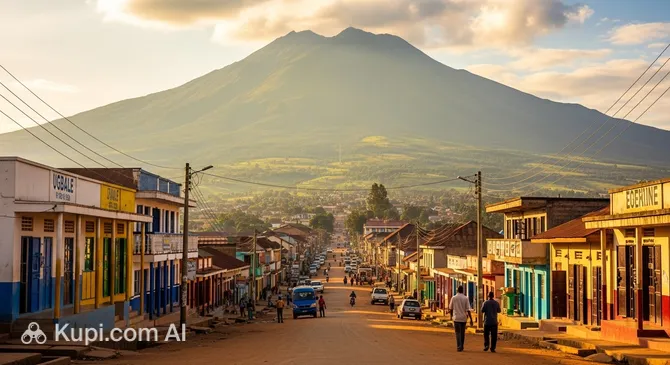
Located in the eastern part of Uganda, Mbale welcomes travelers with the vibrant atmosphere of a bustling commercial and administrative hub. This city is nestled at the very foot of the majestic dormant volcano, Mount Elgon, at an altitude of over 1,100 meters above sea level. Mbale is rightfully considered the gateway to the country's highland regions and an important junction connecting the eastern region with the capital, Kampala.
Today's Mbale is a fast-growing city with a population rapidly approaching the 364,000 mark. Over years of development, it has transformed from a stopover for Arab traders into a modern agricultural center. The rich history of the city is reflected in its architecture and ethnic diversity, where the traditions of the Bagisu people are closely intertwined with the heritage of Indian merchants who built the railway here.
Mbale. Illustration.
Source: Kupi.com AI
The main draw for tourists in Mbale remains its stunning nature. The city serves as an ideal base for expeditions to the peaks of Mount Elgon and for visiting picturesque markets where the air is filled with the aroma of fresh coffee. Although the city is actively developing as a business center, it retains its charm through a combination of busy streets and tranquil views of the misty mountain slopes. We invite you to discover this dynamic corner of East Africa, where the hospitality of the locals will make your stay unforgettable.
Weather Overview
The climate in Mbale is largely shaped by its high-altitude location and proximity to extensive wetland areas. Because of this, the sweltering heat typical of the lowlands is rare here. The average temperature throughout the year stays in a comfortable range of about 22-24°C, with January and February traditionally considered the warmest months, when daytime highs can reach 29°C.
The region is characterized by two distinct rainy seasons. The main period of precipitation falls between March and November, with the most intense rainfall in April, May, and October. During this time, nature blooms, but it is worth noting that humidity increases significantly, and mountain trails can become difficult to traverse. More detailed information on current conditions can be found on the Mbale's climate page.
If you are planning an active holiday or climbing, the best time to travel is during the dry periods in December, January, or mid-summer (June-July). During these months, the number of sunny days is at its peak, and the risk of prolonged rain is minimal. Expect pleasant warmth during the day and refreshing coolness in the evening hours, creating ideal conditions for exploring the city and its surroundings.
Average monthly temperature
Average monthly precipitation
Interesting Facts
Mbale is an important junction on the railway line from Tororo to Pakwach, which historically secured its status as a key transport hub in the east of the country.
The city is considered the "heart" of Uganda's coffee region; it is here that most of the high-quality Arabica for export is grown and processed.
The main population of the city is the Bagisu (Bamasaba) people, whose Lumasaaba language and unique cultural rites, such as the "Imbalu" initiation ceremony, are well-known far beyond the region.
Mbale demonstrates a phenomenal rate of urbanization: over the last ten years, its population has more than tripled, turning a small trading post into one of the country's largest cities.
The city is located on a scenic route leading to the Kenyan border near the town of Kitale, making it a popular stopover point for cross-border travelers.
How to Get There
The city of Mbale enjoys good transport connectivity with other regions of the country, making it easily accessible for tourists. The primary way to get here is by road. The city is located approximately 225 kilometers northeast of Kampala. The journey along a high-quality paved road takes an average of 4 to 5 hours, offering scenic views of the Ugandan landscape along the way.
Currently, regular air service directly to Mbale is limited, so most travelers arrive via Entebbe International Airport or use regional air hubs in neighboring cities. You can find more detailed information on flights and logistics in the how to get to Mbale section.
The railway line passing through the city, connecting Tororo to Pakwach, historically played a vital role in the region's development. Although the railway is primarily used for freight today, it remains an important element of the infrastructure. For planning long-distance trips, tourists are more often advised to use comfortable intercity buses or private transfers.
Main Attractions
The main point of attraction for everyone visiting Mbale is the grand dormant volcano, Mount Elgon. Its Wagagai peak reaches a height of 4,321 meters, and the surrounding national park offers travelers stunning routes for hiking and mountaineering. The nature of this region is striking in its biodiversity, ranging from dense tropical forests to unique alpine meadows.
In the very heart of the city, the Mbale Clock Tower catches the attention of tourists. This historical site is not only a landmark for locals but also an important architectural monument, reminding visitors of the colonial past and the city's role in the region's transport network. Life is always bustling around the tower, and the streets lead to numerous shops and administrative buildings.
If you want to feel the modern rhythm of the city, stop by the Bam Shopping Centre. This is a popular spot for shopping where you can meet both locals and visitors. After browsing the shops, a great option is to visit cozy coffee shops such as Endiro Coffee, where you can enjoy a cup of the famous local Arabica coffee in a pleasant setting.
Local Cuisine
The gastronomic scene in Mbale is inextricably linked to the fertile lands of the region and the traditions of the Bagisu people. The local diet is based on fresh agricultural products: beans, millet, sweet potatoes, and sesame. It is definitely worth trying dishes made from plantains (matooke) and local peanut-based sauces. Thanks to well-developed dairy farming, you can always find the freshest milk and dairy products, for which one of the city's largest factories is famous.
Coffee holds a special place in Mbale's culture. The region is the center for Arabica cultivation, and tasting the local brew is an essential part of any itinerary. You can experience the city's modern coffee culture at Endiro Coffee, which serves world-class drinks made from beans grown on nearby plantations.
For a classic lunch or dinner in a comfortable setting, many tourists choose the restaurant at the Mt Elgon Hotel. Here you can find both traditional Ugandan dishes and international options. If you want to explore local flavors, stop by the food markets, which sell ripe mangoes, pineapples, and the famous local vegetables—tomatoes and cabbage grown in the rich volcanic soils.
Travel Tips
A trip to Mbale promises to be a vibrant adventure, and to ensure your journey goes as smoothly as possible, we have prepared some practical recommendations.
Clothing and Essentials: When packing for Mbale, bring comfortable clothing made from natural fabrics. Since the city is in the highlands, evenings can be cool, so a light jacket or sweater will come in handy. For hikes to Mount Elgon, sturdy trekking boots and a raincoat are essential.
Transport: For getting around the city, it is most convenient to use taxis or hire a driver for the day. If you decide to use a motorcycle taxi (boda-boda), always wear a helmet and hold onto your belongings firmly.
Finances: The main currency is the Ugandan Shilling. It is best to exchange money at banks in Kampala or at official exchange points in Mbale. Cards are only accepted in large hotels and shopping centers, so always carry a reserve of cash.
Health and Safety: Mbale is a relatively safe city, but avoid walking alone after dark. Be sure to use insect repellent and drink only bottled water.
Communication: The official language is English, and most city residents speak it well. Knowing a few phrases in Luganda or the local Lumasaaba (Gisu) will help you build rapport with people more quickly.
Local Etiquette: Ugandans are very polite. Greeting is an important part of communication. Before asking a question or making a request, be sure to say hello.
What to Avoid: Do not take photos of government buildings, bridges, or military objects without special permission—this could lead to trouble with the police.
Planning: The best time to visit is during the dry seasons (December–January and June–July), when the roads to natural attractions are most passable.
Following these simple rules will help you focus on the beauty of the region and ensure you have only positive emotions from visiting this amazing corner of Uganda.
Entertainment & Nightlife
Mbale is a city that lives to the rhythm of trade and administrative affairs, so classic nightlife here is moderately developed. The main entertainment for guests is centered around outdoor recreation and visiting establishments within large hotel complexes. If you are looking for a quiet place for the evening, consider the Mbale Resort Hotel Bar, where you can enjoy drinks in a safe and comfortable environment.
For those who find the scale of night clubs lacking, it is worth remembering that Mbale is primarily a place for daytime activities. The main forms of leisure here are trekking the slopes of Mount Elgon and exploring local agricultural markets. The atmosphere in the city is quite calm, and the locals are friendly, though for rowdier discos and a wider selection of bars, travelers sometimes head to neighboring Jinja.
In the evening, small cafes and bars operate in the city center, playing contemporary Ugandan music and serving local beer. Safety in the central areas is maintained at a good level during the evening; however, for nighttime travel, it is recommended to use a taxi, which can be ordered through hotel reception. Daytime leisure is complemented by walks through hotel park areas and visits to commercial districts.
Parks & Museums
The primary natural "park" for Mbale is the grand Mount Elgon massif. Although most of the national park lies outside the city limits, its slopes dominate the landscape and offer unlimited opportunities for eco-tourism. Here you can see rare plant species, go birdwatching, or take a walk to the nearest waterfalls while enjoying the fresh mountain air.
There are few specialized museums within the city itself, so historical monuments fulfill the role of cultural landmarks. One such symbol is the Mbale Clock Tower. This site serves as a reminder of the city's history of development as a trade and administrative center. Walking nearby, you can feel the pulse of the city and see how modern life exists alongside the architectural heritage of the past.
The city's surroundings are also rich in natural green zones, including wetland areas that are important for the local ecosystem. These places are interesting for those passionate about studying biodiversity. For a deeper immersion into the region's culture, it is recommended to visit local cultural centers and Bagisu communities, where the traditions and history of this land are carefully preserved.
Getting Around
The transport system in Mbale is typical for major cities in this region and is focused on providing mobility both within city neighborhoods and between adjacent districts. The primary and fastest way to get around the city is by motorcycle taxis, known as boda-bodas. They are maneuverable and allow you to quickly reach any point; however, tourists should agree on the fare in advance and keep safety in mind.
For longer distances or travel to neighboring towns, locals and tourists use minibus taxis (matatus). They run on specific routes and depart once full. This is the most affordable form of transport, allowing you to experience the local flavor. Intercity connections to Kampala and other centers are provided by large buses that depart from the central bus station.
The road network within the city and the main highways leading to the Kenyan border and Jinja are in good condition. For those who value comfort and independence, it is recommended to rent a car with a driver—this is the most reliable way to explore the surroundings and reach Mount Elgon National Park. Fares in public transport are paid in cash, so it is always useful to have small denominations of the local currency on hand.
Accommodation
As an important regional and tourist center, Mbale offers a decent selection of accommodation options for travelers with various budgets. Most hotels are concentrated in the city center or on its outskirts, closer to the green mountain slopes. For those who value comfort and high-level service, the Mt Elgon Hotel is an excellent choice, known for its hospitality and convenient location.
For business trips and tranquil relaxation, complexes with developed infrastructure are also popular, such as the hotel housing the well-known Mbale Resort Hotel Bar. Here, guests can find not only cozy rooms but also opportunities for relaxation after active mountain hikes. Budget-conscious travelers can rely on numerous guesthouses and small hotels that offer basic amenities at affordable prices.
Given the growing interest in the region and the proximity to the national park, it is recommended to book accommodation in advance, especially if your trip coincides with the dry season or periods of local festivals. Most properties can be booked through popular international platforms or by contacting the hotel management directly.
Nearby Cities
Thanks to its location in the eastern region, Mbale serves as an excellent starting point for exploring the surrounding areas and neighboring settlements. Just 9 kilometers away is Kamonkoli, a small settlement that allows you to get acquainted with the region's rural life. The journey there takes very little time, making the town convenient for short excursions.
For those who want to see more natural beauty and agrarian landscapes, Sironko, located 18 kilometers to the north, is an interesting destination. This town is an important agricultural hub and opens the way to the northern slopes of Mount Elgon. It is also worth noting the picturesque Bududa, a trip to which will allow you to enjoy views of mountain terraces and learn about the unique culture of local communities.
City
Population
Distance
Kamonkoli
25 000
9 km
Sironko
18 900
18 km
Bududa
8 700
20 km
Manafwa
16 000
24 km
Bulambuli
25 000
24 km
Exploring the nearby towns and districts will help you better understand the diversity of eastern Uganda. If you have more time, you can plan a trip to Jinja (about 120 km) to see the source of the Nile, or take a cross-border journey toward Kitale in Kenya along the updated and convenient road network.
Shopping & Souvenirs
Shopping in Mbale is primarily about discovering the region's agricultural abundance and local crafts. The city is famous for its markets, where you can purchase high-quality Arabica coffee, cocoa, and fresh exotic fruits. The central markets are true mazes of sounds and colors, bustling with the trade of vegetables, fabrics, and household items.
If you prefer a more modern and familiar shopping format, visit the Bam Shopping Centre. This is one of the main spots in the city, where clothing, electronics, and everyday goods stores are gathered under one roof. Here you can find both imported goods and locally produced items in a comfortable setting with fixed prices.
Popular souvenirs from Mbale often include items made by local artisans: woven baskets, wooden figurines, and traditional Bagisu jewelry. Products made from natural materials are in particular demand. Shops usually operate from morning until early evening, and cash is preferred (Ugandan Shillings) for payment, although larger retail outlets are beginning to accept bank cards.