Support

Hawarden Airport

About the Airport

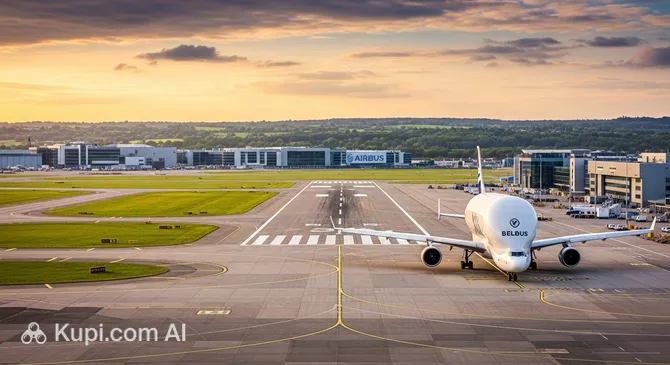
Hawarden Airport. Illustration.
Source: Kupi.com AI
Hawarden Airport (Chester) is not just a transport hub, but a true gem for aviation and history enthusiasts. Located on the border of Wales and England, it serves as the home for a giant Airbus factory where wings for liners are manufactured, and acts as a base for the impressive Beluga cargo aircraft. This place combines the atmosphere of an elite business terminal for private jets with a cosy corner for spotters dreaming of seeing the "flying whale" in the sky. Instead of noisy crowds and queues, a spirit of exclusivity and engineering mastery reigns here.
PropertyValue
IATA CodeCEG
ICAO CodeEGNR
CityChester
CountryUnited Kingdom
TimezoneEurope/London
ScheduleOnline Timetable

Airport Features and Advantages

Despite the absence of scheduled passenger flights, Hawarden attracts many visitors due to its unique features: * Home of the "Beluga": This is one of the few points in the world where one can regularly observe the takeoff and landing of the unique Airbus Beluga transport aircraft. Their unusual shape, resembling a whale, attracts photographers and aviation enthusiasts from all over Europe. * Gastronomy with a Runway View: The popular Chocks Away Diner operates on the premises. It is known not only for its excellent cuisine but also for its panoramic views of the airfield, allowing guests to combine lunch with plane spotting. * VIP Service: The airport specialises in serving private and business aviation. Ideal conditions have been created here for business jets, ensuring privacy, speed, and a high level of comfort for discerning travellers. * Historical Significance: During the Second World War, the airfield was an important Royal Air Force base and a production site for Wellington and Lancaster bombers. The spirit of aviation history is felt everywhere here. * Proximity to Chester: Its location just a few kilometres from the historic centre of Chester makes it an incredibly convenient arrival point for those travelling by private transport.

Contact Information

Since Hawarden Airport (CEG) specialises in private aviation and servicing the Airbus factory, there are no standard passenger terminals here. The main operator providing support for civil flights and visitors is the Aviation Park Group.

  • Official Website (Civil Aviation): www.aviationparkgroup.co.uk
  • Help Desk Phone: +44 1244 536 853
  • Airport Address: Aviation Park, Flint Road, Chester, CH4 0GZ, United Kingdom
  • Email: ops@aviationparkgroup.co.uk
  • Social Media: Current information can often be found on the Facebook and Instagram pages of Aviation Park Group or the popular Chocks Away Diner.
  • Lost & Found Information: Due to the specific nature of private transport, there is no centralised Lost & Found service. If you have left items on board or on the premises, please contact the Aviation Park Group administration directly.
  • Passenger Support Contacts: For all operational questions and service requests, please contact the phone number or email address listed above.

How to Get to the Airport

Since Hawarden Airport (CEG) is located just 6-7 km southwest of Chester city centre, getting there is quite straightforward. However, it is important to remember that there is no regular passenger service here, so most visits are related either to private flights or to visiting the popular café and viewing platform.

By Car and Taxi

This is the most convenient way to get to the airport, especially if you value time and comfort. The journey from Chester city centre usually takes about 15–20 minutes depending on traffic.

Route: The main road leads via the A55 (North Wales Expressway) or A483. Follow signs for Broughton and Hawarden Industrial Park. The airport is located next to the large Broughton Shopping Park.

Taxi and Transfer: A taxi ride from the city centre will cost approximately 15–20 GBP. For business travellers arriving on private flights, a premium transfer directly to the aircraft steps is often organised through the Aviation Park Group service.

Car Rental: Car rental points are located in Chester itself or at major neighbouring airports. At Hawarden, rental is generally available upon prior request for business aviation clients.

Public Transport

If you wish to visit the airport to see the Beluga aircraft or have lunch at the café, public transport is a budget-friendly alternative.

  • Bus: Buses operated by Arriva (routes No. 3, No. 4, and others towards Broughton) run regularly from Chester (from the bus station or the stop near the railway station). You need to get off at the Aviation Park or Broughton Shopping Park stop. From there, it is a 10–15 minute walk to the terminal/café entrance. The ticket cost is about 2–3 GBP.
  • Train: The nearest railway station is Hawarden Station (approximately 3 km from the airport entrance). From the station to the airfield, you would need to take a taxi or walk for about 40 minutes, which is not always convenient. Therefore, tourists most often take a train to Chester Central Station and transfer to a bus or taxi from there.

Parking

Spacious parking is provided for visitors to Chocks Away Diner and guests of Aviation Park. As a rule, it is free for patrons of the establishment, but it is recommended to pay attention to signs and parking conditions upon entry to avoid fines.

Nearest International Airports

As Hawarden does not accept regular commercial flights, tourists planning a trip to Chester and North Wales usually fly into neighbouring major aviation hubs and then reach their destination by ground transport.

Here is a list of the nearest alternatives:

  • Liverpool John Lennon Airport (LPL) — located just 19.3 km away. This is the nearest major airport, hosting many low-cost carrier flights.
  • Manchester Airport (MAN) — located 50.8 km away. The main international gateway of the region with a huge selection of flights from all over the world. A direct train from Manchester Airport to Chester takes about an hour.
  • Birmingham International Airport (BHX) — situated 115.6 km away. A convenient option for those travelling through the central part of England.
  • Leeds Bradford Airport (LBA) — the distance is 116.2 km.
  • East Midlands Airport (EMA) — located 117.3 km away.

Terminals and Map

It is important to understand that Hawarden Airport (CEG) differs radically from standard passenger aviation hubs. You will not find huge halls with boarding gates numbered 1 to 100 or long baggage claim belts here. The structure of the airport is dictated by its specific nature: it is a combination of an industrial giant (the Airbus factory) and an elite business aviation centre.

Terminals and Their Purpose

In fact, Hawarden has one main complex for servicing aircraft and passengers, which is managed by the Aviation Park Group. It cannot be called a "terminal" in the classic mass tourism sense; rather, it is a multi-functional service centre (FBO — Fixed Base Operator).

  • General Aviation Terminal (Aviation Park): This is the heart of the civil part of the airport. Private planes, business jets, helicopters, and charter flights transporting corporate employees or sports teams are serviced here. This is where crew rest areas and VIP lounges for passengers are located.
  • Industrial Zone (Airbus): A huge part of the airport territory is occupied by the production hangars of the Airbus factory. This zone is closed to free visitation and has no passenger infrastructure. Only employees and special transport, including the famous Beluga cargo planes, have access here.

Layout and Airport Zones

Navigation around the territory is extremely simple thanks to the compactness of the civil sector. You will not require complex maps or apps to find the exit.

Departure and Arrival Zone: Unlike major hubs, passenger flows here are not separated by complex corridors. Arriving guests pass through the cosy hall of the Aviation Park terminal and find themselves almost immediately at the car park. For departing passengers, there is a separate entrance leading to the lounge zone, from where there is direct access to the apron and the aircraft steps.

Infrastructure Features

The terminal is designed to ensure maximum comfort and privacy, or (for café visitors) the best possible view.

  • For Business Aviation Passengers: Comfortable lounges with soft furnishings, meeting rooms, showers, and free Wi-Fi are available. The main feature is the absence of crowds and complete confidentiality.
  • For Visitors and Spotters: The public zone, accessible without a ticket, includes the famous Chocks Away Diner. It is integrated into the terminal building and has access to an open terrace which serves as an excellent viewing platform.

Processing Time

One of the main advantages of Hawarden is the speed of service. There are no hours-long queues for security checks here.

Passengers on private flights usually complete all formalities (check-in, passport control if the flight is international, and security screening) just 15–20 minutes before departure. Often, a transfer can drive passengers directly to the aircraft, bypassing the terminal building, if this is arranged in advance.

Navigation Recommendations

If you plan to visit Hawarden, follow these simple tips:

  1. Follow the "Aviation Park" signs: When entering from the main road, look for brown or white signs leading to Aviation Park. Do not look for "International Terminal" signs; they do not exist here.
  2. Parking: Leave your car in the guest car park in front of the Aviation Park building. It is located in immediate proximity to the entrance of the café and terminal.
  3. Do not enter "Restricted Areas": Be attentive: fences and gates leading to the Airbus factory territory are strictly guarded. Aviation enthusiasts are better off observing planes from the café terrace or the official car park without attempting to breach the perimeter.

Airport History

From Military Base to Global Aviation Hub

The history of Hawarden Airport (CEG) is inextricably linked with the development of the British aviation industry. Unlike many other airports that started as passenger hubs, Hawarden was born out of the necessity to strengthen the country's defence and became one of the most important production centres in Europe.

Foundation and World War II Years

The airfield's birth date is considered to be 1939. In anticipation of the Second World War, the UK government initiated the creation of so-called "shadow factories" to disperse armaments production. The company Vickers-Armstrongs chose a site in Broughton (near Hawarden) to build an aircraft factory.

During the war years, the airfield operated at full capacity. It was here that thousands of legendary Vickers Wellington bombers were assembled. Towards the end of the war, the factory also switched to producing heavy Avro Lancaster bombers. The airfield served not only for test flights of new machines but also as a base for Royal Air Force (RAF) units engaged in maintenance and ferrying of equipment.

Post-War Era and Jet Aviation

After the war, in 1948, management of the factory and airfield passed to the famous de Havilland company. This marked the beginning of a new era:

  • In the 1950s and 60s, De Havilland Vampire, Venom, and Sea Vixen fighters were produced here.
  • Hawarden played a key role in civil aviation, participating in the production of components for the world's first jet airliner, the de Havilland Comet.
  • The airfield gained particular fame with the HS125 business jet (later BAe 125). This aircraft, which became a bestseller in the business aviation class, was assembled here for decades, turning Hawarden into an important point on the map of business travel.

The Airbus Era and Modern Upgrades

With the transition of the factory under the wing of the Airbus consortium (initially through British Aerospace), Hawarden Airport found its modern specialisation — wing production. This required significant changes in the airfield infrastructure for logistics.

One of the most significant milestones was the introduction of Super Guppy transport aircraft, followed by the Beluga. To accommodate these giants, the runway and taxiways were repeatedly upgraded and strengthened.

Key Stages of Modernisation:

  • In the 1990s, a large-scale reconstruction of the runway was carried out to ensure regular flights of heavy transport aircraft.
  • In the recent past, the Beluga Line Station was opened — a special all-weather hangar allowing wings to be loaded into the Beluga aircraft faster and more safely, protecting the process from strong winds.

Interesting Facts and Achievements

Hawarden's history is full of records and curious details that make this place unique:

  • Guinness World Record: During the war years, 5,540 Wellington bombers were built at the Broughton factory — a record for a single type of aircraft produced at one factory in Britain in such a short time. It is said that at the peak of production, a new plane was rolled out of the hangar every few hours.
  • Royal Visits: The airport regularly receives flights from the Royal Family. The Prince of Wales (now King Charles III) frequently used Hawarden for visits to Wales, and it was here that he underwent part of his flight training.
  • Hidden History: During the war, to protect the factory from German bombing, the buildings were camouflaged to look like ordinary hills and farmland. Traces of this camouflage could be seen in old aerial photographs.
  • Wings for a Giant: It was from here that the huge wings for the world's largest passenger airliner, the Airbus A380, were shipped. Their transport required a highly complex logistical operation involving barges on the River Dee and special tractors.

Today, Hawarden continues to write its history, remaining the place where wings are born for planes flying all around the globe.

Services and Amenities

The infrastructure of Hawarden Airport (CEG) differs significantly from what passengers of major international hubs are accustomed to. Since there are no regular commercial flights here, you will not find Duty-Free zones, huge food courts, or currency exchange points at every turn. All service is oriented towards two categories of guests: business aviation clients who value privacy and speed, and visitors coming to see the planes.

Restaurants and Shops

The gastronomic centre of the airport is the famous café, which is popular not only with passengers but also with locals.

  • Chocks Away Diner: This cosy establishment is located directly in the Aviation Park complex building. The menu offers classic British breakfasts, hearty lunches, home-baked goods, and desserts. The main "highlight" of the café is the panoramic windows and open terrace with a direct view of the runway. It is the ideal place to have a coffee while waiting for a flight or watching the loading of a "Beluga".
  • Shops: There are no standard clothing or cosmetic shops inside the terminal. However, in immediate proximity to the airport (literally across the road) is the huge Broughton Shopping Park. It houses dozens of brand stores, supermarkets, pharmacies, and a cinema. If you have free time before your flight, this is the best place for shopping.

Lounges and Business Services

For passengers of private flights and business aviation, conditions of enhanced comfort have been created in the Aviation Park Group terminal.

  • VIP Lounge: An exclusive relaxation zone offers soft sofas, satellite TV, fresh press, and beverages. Here you can quietly prepare for your flight in an atmosphere of complete silence and seclusion.
  • Conference Facilities: Meeting rooms are available on the complex territory for holding express meetings before departure.
  • Wi-Fi: Free access to high-speed wireless internet is provided throughout the terminal and in the Chocks Away Diner, allowing you to stay connected or work remotely.

Financial and Medical Services

  • Banks and Currency Exchange: There are no ATMs or currency exchange points within the airport building itself. It is recommended to arrange for cash in advance or use ATMs in the neighbouring Broughton Shopping Park (5–10 minutes on foot).
  • Medical Assistance: The airport is equipped with first aid facilities, and staff are trained to handle emergency situations. The nearest major hospital is located in Chester.

Services for Passengers with Children and Reduced Mobility

Despite its compact size, the airport is friendly to all categories of travellers.

  • For Families with Children: Chocks Away Diner is equipped with high chairs, and the menu includes items for little gourmets. Watching planes from the terrace is excellent entertainment for children of any age. There are no dedicated playrooms in the terminal.
  • Accessibility: The terminal building is single-storey, making it convenient for movement in wheelchairs. Entrances are equipped with ramps, and specially fitted restrooms are available. Business terminal staff are always ready to provide individual assistance with boarding and disembarking from the aircraft.

Hotels Near the Airport

There are no hotels on the airfield territory itself, but thanks to the convenient location, finding accommodation nearby is very easy.

  • Premier Inn Chester (Broughton): Located just a few minutes' walk from the airport entrance, next to the shopping park. A convenient and budget-friendly option for an overnight stay before an early flight.
  • Travelodge Chester Broughton: Another affordable chain hotel located within a radius of 1–2 km.
  • Hotels in Chester: If you wish to combine your trip with sightseeing, the historic centre of Chester with its luxurious hotels (for example, The Chester Grosvenor) is just a 15–20 minute taxi ride away.

Where to Eat

Since Hawarden Airport (CEG) is a business aviation hub and factory airfield, you will not find the usual variety of chain restaurants, fast food, and coffee shops characteristic of major international terminals here. The airport's gastronomic map is concise but possesses its own unique charm.

Chocks Away Diner: The Main Gastronomic Spot

The sole and incredibly popular dining location on the airport territory is the Chocks Away Diner. It is located in the general access zone (landside), so it can be visited by departing passengers, those seeing them off, as well as simply aviation enthusiasts.

Menu Features and Local Cuisine:
This is a classic British establishment where portions are generous and the food is deliciously home-style.

  • English Breakfast: A signature offering worth trying if you arrive in the morning. It includes eggs, sausages, beans, and toast.
  • Lunch Menu: Excellent burgers, sandwiches, paninis, and traditional British dishes such as Fish & Chips are served here.
  • Desserts: The café is famous for its home baking. Be sure to try the local scones with cream and jam — the perfect accompaniment to a cup of tea.

Dietary Requirements:
The menu includes options for various dietary needs.

  • Vegetarians and Vegans: Vegetarian breakfasts, salads, and special sandwiches are available.
  • Gluten-Free: Staff can usually offer gluten-free bread or adapt certain dishes upon request.
  • Halal: There is no specialised Halal menu, however, the wide selection of fish and vegetarian dishes allows you to find a suitable option.

Prices and Opening Hours:
The average bill is 10–15 GBP for a full lunch with a drink. The café operates daily, generally aligning with daylight hours (usually from 08:00 to 17:00–20:00 depending on the season and day of the week), which coincides with the schedule of most flights.

Alternatives at Broughton Shopping Park

If the airport café menu does not suit you or you wish to grab a bite late in the evening, the large Broughton Shopping Park is literally a 5–10 minute walk (or 2-minute drive) away. Here the choice is significantly wider:

  • Chain Coffee Shops: Costa Coffee and Starbucks for quick coffee and pastries.
  • Quick Bites: Subway, Greggs (famous British savoury pastries), and McDonald’s.
  • Full Dining: Restaurants Nando’s (grilled chicken), PizzaExpress, or Frankie & Benny's (Italian-American cuisine).

Catering for Private Flight Passengers (VIP)

For business aviation clients departing through the Aviation Park terminal, a special service system operates.

  • In the Lounge: Complimentary light refreshments, snacks, tea, coffee, and soft drinks are offered in the waiting area (airside/private zone).
  • On-Board Catering: Full meals for the flight are ordered in advance through the flight operator. The menu can be anything — from haute cuisine dishes from the best restaurants in Chester to specific dietary requests.

Recommendations for Travellers

For a Quick Snack: If time is short, it is best to pop into Broughton Shopping Park for a sandwich or coffee to go, as service at Chocks Away Diner involves a leisurely sit-down experience.

For a Full Lunch: Definitely choose Chocks Away Diner. Take a table by the window or on the terrace. The combination of a tasty hot lunch with a view of a taking-off Beluga aircraft will create a unique impression that you will not get at any other airport in the region.

Travel Tips

Since Hawarden Airport (CEG) exclusively serves private aviation, charter flights, and Airbus factory needs, the passenger experience here differs radically from flying with regular airlines. There is no hustle, long queues, or strict restrictions typical of low-cost carriers. The tips below will help you use the advantages of this unique aviation hub most effectively.

Arrival Time at the Airport

Forget the rule of "arriving 2–3 hours early". In the world of business aviation, time is valued above all else.

  • Optimal Time: For domestic flights, it is sufficient to arrive at the Aviation Park terminal 15–20 minutes before departure. For international departures, a margin of 30 minutes is recommended for passing passport control.
  • Flexibility: If you are flying on your own or a chartered jet, the plane usually waits for you, not the other way around. However, respect for departure slots (permitted takeoff times) is important, so try not to be late to avoid losing your "window" in the airspace.

Check-in and Security

Procedures at Hawarden are fast and seamless for the passenger.

  • No Queues: You do not need to stand in a general queue at a check-in counter. FBO (Ground Handling Operator) staff will meet you at the entrance, take your luggage, and escort you to the lounge.
  • Documents: Passport details are usually transmitted to the flight operator in advance. On-site, it is sufficient to present the original document.
  • Screening: Security checks are mandatory, but they are conducted on an individual basis without the need to remove shoes or belts in a rush in front of a crowd of people.

Hand Luggage and Baggage

Luggage rules here are much more lenient than in commercial aviation, but security requirements remain strict.

  • Liquids: The 100ml liquid limit often does not apply on private flights (depending on the specific operator and destination country rules), so you may take your favourite beverage or cosmetics with you.
  • Pets: Hawarden is a Pet Friendly airport. With the necessary veterinary documents, your dog or cat will be allowed in the aircraft cabin, and they will not have to fly in the cargo hold.
  • Prohibited Items: Standard international security rules apply here too. Weapons, explosives, flammable items, and dangerous chemicals are strictly prohibited in hand luggage.

Seat Selection

The concept of "seat check-in" is practically non-existent here.

  • Free Seating: In most cases, you can choose any seat you like on board a business jet.
  • Cabin Configuration: If you are flying on a corporate charter, check the cabin layout in advance. Some aircraft are equipped with sofas or seats that transform into beds, which is important for long-haul flights.

For Passengers with Connections

Hawarden is not a transit hub. People fly here to get to Chester, North Wales, or for a business meeting.

  • Connection with Regular Flights: If you need to transfer to a large international flight, plan a ground transfer to Manchester Airport (MAN) or Liverpool (LPL). Allow at least 1 hour for the taxi journey (to Manchester) or 40 minutes (to Liverpool), taking traffic into account.

Customs Control

Border crossing is simplified as much as possible for the comfort of VIP guests.

  • On Board or in the Lounge: Often, Border Force officers check documents directly on board the aircraft immediately after landing or in a separate room of the terminal, ensuring complete confidentiality.
  • Declarations: If you are carrying goods subject to declaration, inform the pilot or the meeting agent in advance so that the necessary forms are prepared for your arrival.

Tips for Saving Time and Money

  • Dining: Instead of ordering expensive catering for a short flight, you can have a tasty and reasonably priced lunch at Chocks Away Diner right before departure. This will save a significant amount compared to the on-board menu.
  • Transfer: If you do not have a limousine ordered, a regular city taxi from Chester will cost a reasonable amount. And for shopping before departure, use Broughton Shopping Park, located a 2-minute drive away — prices there are standard retail, without "airport" markups.

In Case of Flight Delay

Delays in business aviation happen rarely and are most often related to weather conditions or Air Traffic Control (ATC) restrictions.

  • Comfortable Waiting: You will not have to sit on hard seats at the gate. Make use of the VIP lounge with soft furnishings, TV, and Wi-Fi.
  • A Walk: If the delay is lengthy, step out onto the café terrace or take a walk to the nearby shops — there are usually no strict restrictions on leaving the "clean zone" (subject to re-screening) here, as the passenger flow is minimal.

Attractions

Reached the end of the page?

That means the route is fully explored