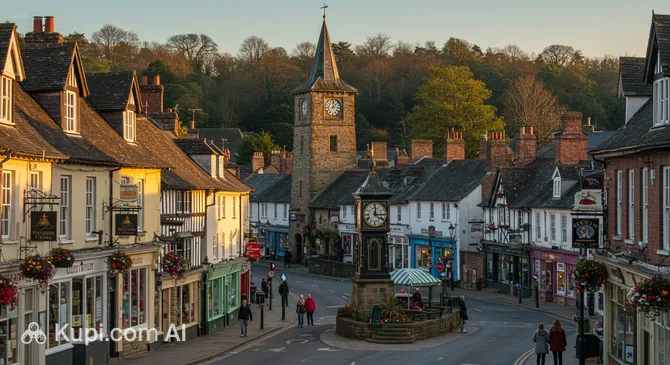
The transport system in Coleford perfectly reflects its status as a small provincial town. There are no subways, trams, or trolleys here. The primary and essentially only form of public transport is the bus. The town serves as an important transport hub for the Forest of Dean region, connecting small villages with larger towns like Gloucester and Monmouth.
The main bus operator in the region is Stagecoach West. The route network covers the main areas of interest to tourists. For example, popular routes connect Coleford town center with Lydney railway station and the city of Gloucester. The bus stop in the center of town is located at Market Place, right next to the Clock Tower—a main landmark that's impossible to miss.
The payment system on the buses is modern and convenient. The easiest way is contactless payment with a bank card (Visa, Mastercard) or a smartphone (Apple Pay, Google Pay) directly with the driver when boarding. You simply tap your card on the terminal. Cash is also accepted, but drivers strongly request that you have small change or coins, as change for large banknotes is not always available.
For those planning to travel a lot during the day, it's more cost-effective to purchase a DayRider ticket. It allows for unlimited travel within a selected zone for one day. You can buy such a ticket from the driver or via the operator's mobile app (e.g., Stagecoach Bus App), which also allows you to track buses in real-time—extremely useful in rural areas.
A significant feature of local transport is the schedule. Buses do not run as frequently as in large cities: intervals can range from 30 minutes to an hour or more. Services end fairly early in the evening, and on Sundays and bank holidays, the number of routes is significantly reduced. Tourists are strongly advised to check current schedules in advance via apps or information boards at stops.
Since there is no railway station in Coleford itself (the nearest ones are in Lydney and Gloucester), the bus is often used as a link to trains. When planning your trip, allow extra time for transfers, as delays on rural roads are not uncommon.
As an alternative to public transport, local taxi services operate in the town. However, unlike in London, it is not customary to hail a car on the street. Taxis must be booked in advance by phone. Popular aggregators like Uber are unreliable or unavailable in this forested area, so it's better to save the numbers of local operators (e.g., Sovereign Taxis or CDS Taxis).
For complete freedom of movement through the picturesque surroundings, renting a car is the ideal option. This will allow you to reach remote corners of the forest and attractions where the bus doesn't go. Bicycle rentals are also very popular in the region, especially for forest trails, though cycling here is seen more as a leisure activity than as urban transport.
One final practical tip: stops in rural England are often "on request." If you are standing at a stop and see your bus approaching, be sure to signal the driver with your hand, or they may drive past. Similarly, to get off, you must press the signal button in the cabin in advance.