Support

Boswell Bay

About the Airport

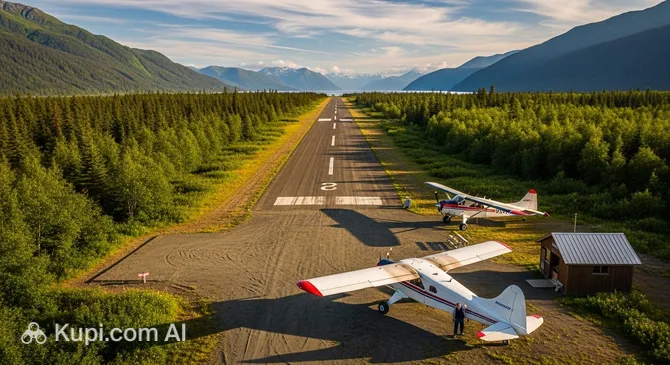
Boswell Bay. Illustration.
Source: Kupi.com AI

Boswell Bay Airport (IATA: BSW) is not just a runway, but a true aerial gateway to the wild nature of Alaska. Located in the picturesque Prince William Sound, it was built in 1968 to serve a nearby radar station which is now abandoned. Today, this small but important airfield, owned by the US Forest Service, serves as a starting point for anglers, tourists, and explorers wishing to experience the secluded beauty of one of the most impressive regions of the USA.

PropertyValue
IATA CodeBSW
CityBoswell Bay
CountryUnited States
TimezoneAmerica/Anchorage
ScheduleOnline Timetable

Despite its modest size, Boswell Bay Airport possesses a unique character. Its single gravel runway is almost 800 metres long and is ready to receive small aircraft, perfectly suited for flights to hard-to-reach places. The infrastructure here is minimal and corresponds to the status of an unattended airfield — there is no terminal in the traditional sense, no lounges, or shops. The airport's main asset is its strategic location, opening access to untouched landscapes, glaciers, and waters teeming with fish.

Contact Information

Boswell Bay Airport (BSW) is a small airfield of local significance, serving primarily private and charter aviation. Consequently, the standard set of contacts familiar at major airports is limited here. Below is the most current information:

  • Official Website: Boswell Bay Airport does not have its own official website. Information about its status is usually available on the websites of Alaska aviation authorities.
  • Information Desk Phone: There is no dedicated passenger information desk. For all questions regarding schedules, bookings, and flight details, it is recommended to contact your air carrier directly (air taxi or charter company).
  • Airport Address: Boswell Bay, AK 99573, USA. This is a remote airfield, and a precise postal address may not exist.
  • Email: A public email address for contacting the airport administration is not provided.
  • Social Media: The airport does not maintain official pages on social networks.
  • Lost Luggage Information: Issues regarding lost or damaged luggage are resolved exclusively through the airline that operated your flight.
  • Passenger Support Contacts: Passenger support functions lie entirely with the air carriers organising flights to Boswell Bay.

How to Get to the Airport

When planning a trip to Boswell Bay Airport, it is important to remember that this is a small airfield serving a remote settlement in Alaska, USA. Here you will not find the forms of public transport familiar in major cities, such as the metro, city buses, or trains. The key to a successful and comfortable journey is advance planning.

The primary and most reliable way to get to the airport is a pre-arranged transfer. Typically, this service is provided by local lodges, hotels, or tour operators with whom you have booked accommodation or an excursion. We recommend contacting them well in advance to clarify details and costs. Standard taxi services in the classic sense are absent here, although one can arrange a private ride with local residents, but this option also requires prior agreement.

If you have rented a car from a local provider (major international chains are not represented here), the drive to the airport will not be difficult. The settlement is very compact, and the journey will take just 5–10 minutes from any point within it. Parking at the airport consists of a simple lot, which is usually more than sufficient for the small number of travellers. Generally, parking is free of charge.

For travel across the broader Alaska region, it is worth considering other, larger air hubs. For instance, the nearest ones are Merle K. (Mudhole) Smith Airport in Cordova and Valdez Airport. The region's main transport hub is Ted Stevens Anchorage International Airport. It is important to understand that reaching Boswell Bay from these airports by land is practically impossible; this will require booking a separate flight on a small aircraft or using air taxi services.

Terminals and Map

Boswell Bay Airport (BSW) is a small regional airport, so its structure is extremely simple and intuitive. There are no confusing maps or multi-level complexes here, making it very convenient for passengers. The entire airport consists of one compact terminal area that serves both departing and arriving flights.

Given the modest size of the airport, the concepts of separate departure and arrival zones are quite nominal here. All key points — check-in areas, the waiting zone, the boarding gate, and baggage claim — are located in one common space or in immediate proximity to each other. Navigation will cause no difficulties: getting lost here is practically impossible, as everything is in plain sight. Transitions between terminals are absent as they are unnecessary.

Completing all pre-flight formalities at Boswell Bay Airport is usually quick and hassle-free. Thanks to the low passenger flow, check-in and security screening do not take much time. It is usually sufficient to arrive at the airport 45-60 minutes before departure to calmly drop off luggage and go through all necessary procedures. The airport staff is always ready to help and answer any questions, creating a calm and friendly atmosphere.

History of the Airport

The history of Boswell Bay Airport (BSW) is not a tale of a giant aviation hub, but rather a chronicle of a vital facility for a remote community in Alaska. Since its foundation, its main role has remained unchanged — to serve as a reliable bridge connecting the residents of this secluded corner with the rest of the world.

The airport was officially put into operation in November 1957. From the very beginning, it was created not for passenger traffic records, but to fulfill a critically important function: ensuring transport accessibility. In the harsh conditions of the USA, especially in the vastness of Alaska where ground communication is often difficult or non-existent, BSW became true "gates to the world" for Boswell Bay, through which mail, essential goods, and medicines are delivered, and communication with major settlements is maintained.

Unlike major airports, the history of BSW is not marked by large-scale reconstructions or terminal expansions. Its development is a story of constant maintenance of operability and adaptation to complex climatic conditions. The airport has one gravel runway, which is a characteristic feature of many small airfields in this region. The airport's main achievement and record can be considered decades of uninterrupted work, ensuring the well-being and safety of the local population.

An interesting fact from the airport's history is that its significance is measured not by the number of flights, but by their impact on people's lives. Every takeoff and landing here, especially in difficult weather conditions, is a small but important event. BSW is a vivid example of how light aviation plays an indispensable role in sustaining life in some of the most remote and beautiful places on the planet.

Services and Amenities

Boswell Bay Airport (BSW) is a small regional airport serving a remote district of Alaska. Considering its size and purpose, the set of services here is basic and oriented towards meeting the essential needs of passengers. Travellers departing from or arriving at this airport are advised to plan all details in advance.

Dining, Shopping, and Connectivity

There are no restaurants, cafes, or shops, including Duty Free, within the Boswell Bay airport terminal. Passengers are strongly recommended to carry their own snacks and beverages. Access to free Wi-Fi and public charging stations for electronic devices is generally not provided. It is best to bring a fully charged portable charger (power bank) with you.

Waiting Areas and Business Services

There are no VIP lounges or high-comfort waiting halls at the airport. The waiting area offers basic amenities. Conference rooms and business centres are also absent. All business matters should be resolved prior to arrival at the airport.

Financial and Medical Services

There are no bank branches, ATMs, or currency exchange points on the airport territory. All financial transactions must be completed beforehand. Medical assistance is limited to basic first aid capabilities. In emergency cases, municipal services are called.

Services for Special Categories of Passengers

Specialised mother-and-child rooms or play areas for children are not provided at the airport. Passengers with reduced mobility should notify their airline in advance regarding the need for special assistance. Airline staff will provide support during boarding and disembarking, however, the airport infrastructure may be minimal.

Accommodation

There are no hotels directly within the airport building. Accommodation options can be found in nearby settlements, however, their number is limited. It is recommended to book accommodation well before your trip.

Where to Eat

When planning a journey through Boswell Bay Airport (BSW), it is important to consider its specific features. This is a small regional airport, oriented primarily towards serving local and private aviation. Consequently, infrastructure for passengers, including dining outlets, is minimal here.

There are no restaurants, cafes, or dining establishments on the territory of Boswell Bay Airport. There are no food court zones or venues where one could have a full lunch or dinner while waiting for a flight. Accordingly, it is impossible to find specialised meals, including vegetarian, gluten-free, or Halal options, directly within the terminal building.

Passengers are strongly advised to arrange for food in advance. The best solution would be to bring food and drinks with you or to have a snack in the nearest settlement before arriving at the airport. Sometimes vending machines with a basic set of snacks (crisps, chocolate) and soft drinks may be installed in the waiting area, however, one should not rely on them as a guaranteed source of nutrition.

Thus, if you require a quick snack or a full meal, everything necessary should be purchased before arriving at the airport. This will allow you to wait for your flight comfortably without worrying about finding food on-site.

Traveller Tips

Travelling through Boswell Bay airfield is an experience that differs significantly from flying out of major airports. It is important to understand that this is a small, remote airfield serving mainly private and charter flights. Standard tips do not work here, so we have prepared recommendations that will help you correctly plan your trip and avoid misunderstandings.

The key to success is direct communication with the airline. Forget about online check-in, electronic boards, and automated services. All information regarding departure time, baggage allowance, and check-in procedures must be clarified directly with your charter carrier. It is the airline representative or pilot who will be your main source of information on-site.

Arrival time and screening. Since procedures here are simplified to the maximum, there is no need to arrive several hours early. As a rule, it is sufficient to arrive 45–60 minutes before departure. This time is enough to check in, drop off luggage, and pass through screening, which is conducted quickly and without queues. Security rules are standard for aviation in the USA: weapons and flammable substances are prohibited.

Luggage and personal items. Strict restrictions on luggage weight and size apply on small aircraft. Be sure to clarify the permissible limits with your airline in advance to avoid unpleasant surprises. Pack documents, valuables, and necessary medication in your hand luggage. Seat selection usually happens upon boarding, unless agreed otherwise with the carrier.

Lack of infrastructure. There are no shops, cafes, or even snack machines on the airfield territory. Be sure to take all necessary food and water with you for the duration of the wait and the flight. Do not count on any services other than the flight itself.

Customs and flight delays. Boswell Bay airfield serves exclusively domestic flights, so there is no customs control here. If you have a connecting flight, you will go through all customs formalities at the first international airport of arrival. Be prepared for possible schedule changes, especially due to weather conditions. In case of a flight delay, all information can only be obtained from your airline representative.

Reached the end of the page?

That means the route is fully explored