Support

Fort Sumter National Monument

About

Fort Sumter National Monument is an iconic historical site located in the city of Charleston, South Carolina, USA. This coastal fort, situated in the bay at the entrance to Charleston Harbor, is of immense importance to American history. It was here that the first shots of the Civil War were fired, making it one of the key symbols of that era. Today, the fort attracts many tourists interested in the history of the United States.
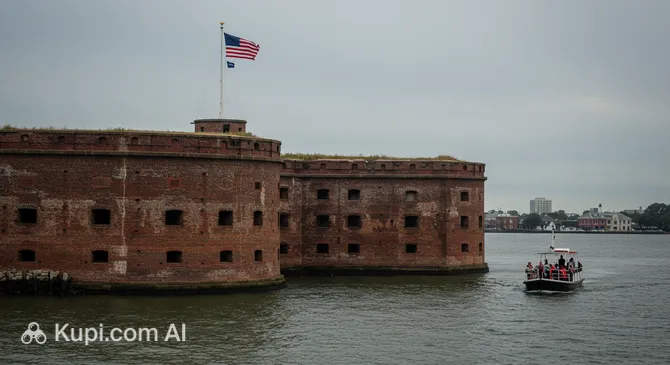
Fort Sumter National Monument. Illustration.
Source: Kupi.com AI

Traveler photos:

The construction of Fort Sumter began after the War of 1812. It was intended as one of the most important fortifications to protect Charleston, which was a major national port at the time. The fort belongs to the so-called "Third System" of defensive structures and was named after General Thomas Sumter, a hero of the American Revolutionary War. Along with Fort Moultrie, Fort Johnson, and Castle Pinckney, Fort Sumter was to be a primary element in the defense of Charleston Harbor.

A visit to Fort Sumter offers a unique opportunity to dive into the past. Guests can explore its walls and casemates, learn more about the events leading up to the Civil War, and the fort's role in the conflict. It is not just an attraction but a place where you can feel the spirit of the time and touch important pages of American history. Fort Sumter is rightly considered one of the most famous and visited historical sites in the United States.

Contacts

To get the most up-to-date information about visiting Fort Sumter National Monument, including ferry schedules, ticket prices, and opening hours, we recommend consulting official sources. Access to the fort, located in Charleston Harbor, is usually provided via dedicated excursion ferries.

For detailed information, please visit the official National Park Service (NPS) website or contact the visitor information centers in Charleston. There, you can clarify all the details regarding the planning of your visit.

How to contactContact
AddressSouth Carolina 29412, USA
Phone number+1 843-883-3123
Websitewww.nps.gov

What to Do

Visitors to Fort Sumter National Monument are given a unique opportunity to immerse themselves in history while exploring this iconic fortification. Once at the fort, you can take a self-guided walk through its defenses and closely examine the numerous cannons that have been preserved to this day, standing as testament to the site's former military importance. Since the time for self-exploration is usually limited, it is recommended to plan your route in advance to see the most interesting highlights. Every corner here literally breathes history, making the visit particularly impressive.

For a deeper understanding of the events surrounding Fort Sumter, there is a museum on-site. The museum's exhibition is dedicated to the history of the fort itself and its key role in the U.S. Civil War. Here you will find artifacts, documents, and information panels detailing dramatic moments from the past. Additionally, visitors can watch a film about the historical events that took place within the fort's walls, which helps to vividly imagine days gone by and realize the full significance of this national monument.

Getting There

You can reach Fort Sumter National Monument exclusively by water, as it stands proudly on an island at the entrance to Charleston Harbor. This means it is impossible to reach the fort directly by land. Travelers must first arrive at one of the ferry departure points in Charleston, which is where the boat trip to the historic island begins.

To visit Fort Sumter, you will need to purchase a ferry ticket—this is your pass to the island. It is important to know that you are paying for the boat crossing itself. Entry to the grounds of Fort Sumter National Monument and the exploration of its historic fortifications are free for all visitors.

Nearest city: Charleston

History & Facts

The construction of Fort Sumter National Monument was approved by the U.S. Congress on December 5, 1828, a decision that marked the beginning of an important defensive structure. A strategically important shoal south of the main shipping channel along the coast of Sullivan's Island was chosen as the site for the fort. Immediate supervision of the construction work was entrusted to Lieutenant Henry Brewerton of the Corps of Engineers, with overall project management by Brigadier General Charles Gratiot. These efforts were aimed at strengthening the defenses of Charleston.

Fort Sumter is forever etched in history as the place where one of the most dramatic periods in U.S. history began. It was here, on April 12, 1861, that the first shots were fired, marking the start of the Civil War. Confederate artillery opened fire on the fort, and this day is considered the official start date of the conflict. Notably, despite an intensive exchange of thousands of shells during this first battle, not a single person was killed in direct combat, which is a remarkable fact given the scale of the engagement.

By the time the Civil War began in 1861, Fort Sumter was still under construction and had not been fully completed. This circumstance certainly affected its defensive capabilities. After several days of intensive bombardment by Confederate forces, the garrison was forced to evacuate the fortification. This event was a major milestone in the early stages of the war, demonstrating the resolve of both sides of the conflict.

Time Needed

When planning a visit to Fort Sumter National Monument, you should expect the entire excursion to take approximately 2.5 - 3 hours. This time includes not only exploring the fort itself but also the engaging ferry ride to and from the island, which is an experience in its own right when visiting this historic site in Charleston. The one-way ferry trip usually lasts about 30 minutes.

Directly on the island where Fort Sumter is located, you will have about one hour to explore. This time is generally sufficient to walk through the main fortifications, visit the small museum with exhibits detailing the fort's history and its role in the U.S. Civil War, and perhaps listen to a brief talk or commentary from park rangers. Although time on the island is limited by the ferry schedule, it provides a good overview of this iconic site and its significance.

To make the most of your time and avoid rushing, we recommend checking the ferry schedule in advance and arriving at the departure point with time to spare. Immersing yourself in the history of Fort Sumter is a truly memorable experience, so enjoy every moment of your journey back in time and the opportunity to connect with important past events.

Working Hours

Fort Sumter National Monument is available for visits according to the schedule of ferry tours departing from Charleston. Since the fort is located on an island, these tours determine the times you can be on its grounds. It is highly recommended to purchase ferry tickets in advance, especially during the peak tourist season, as seating is limited and can sell out quickly. This will help you plan your visit and avoid disappointment.

Generally, Fort Sumter is open to visitors year-round, however, ferry schedules may change depending on the season and weather conditions. To get the most accurate and up-to-date information on hours of operation and tour availability, and to book tickets, please visit the official National Park Service (NPS) website or the authorized ferry operator's site. This is the best way to find out the current schedule and plan your trip to this historic site.

8:30 – 16:30

Nearby

Visiting Fort Sumter National Monument is undoubtedly a highlight, but exploring the surrounding area can significantly enrich your trip to Charleston. Exploring nearby attractions will allow for a deeper understanding of the historical and cultural context of this U.S. region, and you will see more of the interesting sites this charming Southern city has to offer.

There are several notable sites near Fort Sumter, each interesting in its own way and worth a visit. Below is a list of some of them, along with approximate distances, so you can plan your time and perhaps include them in your itinerary.

NameDistance
Fort Sumter and Fort Moultrie National Historical Park1.7 km
Sullivan's Island Beach3.8 km
Patriots Point Naval & Maritime Museum5.1 km
USS Yorktown (CV-10)5.3 km
Rainbow Row5.5 km
Old Exchange and Provost Dungeon5.6 km
The Spectator5.9 km

Have you reached the end of the page?

So the route has been studied inside and out