Support

Walnut Street Bridge

About

The Walnut Street Bridge is not just a crossing over the Tennessee River, but a true historical gem of the city of Chattanooga, located in the USA. This impressive bridge, formerly known as the "County Bridge," is today one of the city's iconic symbols. After a major reconstruction, it was transformed into one of the longest pedestrian bridges in the world, becoming a favorite spot for walking and relaxation.
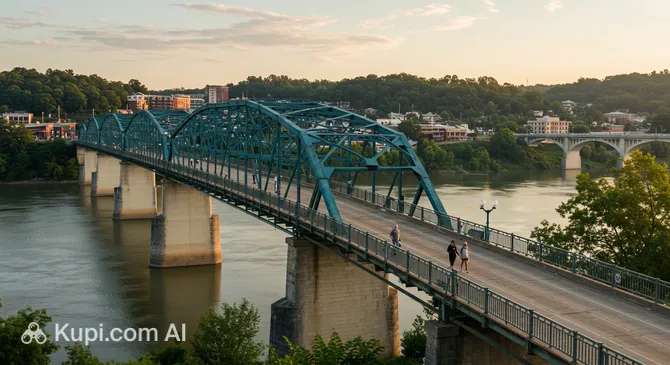
Walnut Street Bridge. Illustration.
Source: Kupi.com AI

Traveler photos:

In terms of its design, the Walnut Street Bridge is a truss structure and is considered the oldest and largest surviving truss bridge in the Southern United States. Originally, it played a vital role in the life of the city, connecting the predominantly white downtown on the south bank of the river with a large working-class community on the north bank. Thus, the bridge facilitated the development of connections between different parts of Chattanooga.

Interestingly, there was a point in the bridge's history when its existence was threatened—the structure was slated for demolition. However, thanks to the active stance and efforts of local residents who opposed this decision, the Walnut Street Bridge was saved. Today, it not only serves as a pedestrian zone offering beautiful views but is also an important historical landmark that attracts tourists and tells the story of Chattanooga's history.

Contacts

Walnut Street Bridge is a public pedestrian structure and, as such, typically does not have a dedicated contact line for visitors. For up-to-date information on potential events on the bridge or access hours, we recommend visiting the official tourism website of the city of Chattanooga or contacting local information centers. The bridge itself is easy to find, as it is a prominent landmark connecting the city center to the north shore of the Tennessee River and is fully accessible to pedestrians.

How to contactContact
Address1 Walnut St, Chattanooga, TN 37403, USA
Phone number+1 423-643-6311
Websitechattanooga.gov

What to Do

The Walnut Street Bridge offers visitors a variety of opportunities for relaxation and active leisure. One of the most exciting features is the unique climbing wall, set up directly on the bridge piers. With more than 30 routes of varying difficulty, it attracts both experienced climbers and beginners wanting to try their hand at this exciting sport and enjoy an unusual perspective of the river.

In addition to active entertainment, the bridge is an ideal place for leisurely walks and photo sessions. From its height, you can enjoy truly breath-taking panoramic views of the broad Tennessee River and the picturesque cityscape of Chattanooga. While strolling across the Walnut Street Bridge, you can not only enjoy the beauty of the surrounding nature and architecture but also feel the special historical atmosphere of this iconic structure, imagining how life bustled here decades ago.

The Walnut Street Bridge is not just an attraction, but also an important part of the downtown and waterfront revitalization project. It serves as a popular pedestrian route, connecting different parts of Chattanooga and providing residents and visitors with a wonderful opportunity for outdoor recreation. This location often becomes a venue for city events, festivals, and simple gatherings, making the bridge the true heart of social life.

Getting There

The Walnut Street Bridge is conveniently located in the heart of Chattanooga, serving as a vital pedestrian artery connecting Downtown with the North Shore district across the Tennessee River. Thanks to its central location, the bridge is easily accessible from various parts of the city.

If you are staying in downtown Chattanooga or the North Shore area, the simplest and most pleasant way to reach the Walnut Street Bridge is on foot. Many hotels, shops, restaurants, and other city attractions are in the immediate vicinity. You can also use local public transport. Buses run throughout Chattanooga, and there are certainly routes that pass near the bridge entrances on both sides of the river. It is recommended to check current schedules and routes on the city's official transit website or at a tourist information center.

For those who prefer comfort or are traveling from more distant parts of the city, taxis or ridesharing services are always an option. A trip from anywhere in downtown Chattanooga to the bridge won't take long. If you are traveling by private car, please note that the Walnut Street Bridge itself is strictly pedestrian. You will need to find a parking space in the surrounding blocks of Downtown or the North Shore and then walk to the bridge.

Nearest city: Chattanooga

History & Facts

Although the Walnut Street Bridge, originally known as the "County Bridge," served as a vital transport artery for Chattanooga for decades, its history includes a dramatic period when the structure's very existence was threatened with demolition. It was at this critical moment that the city's residents showed remarkable unity and determination. Their active public campaign, driven by a love for their city and its heritage, was successful—the bridge was saved, gaining a chance at a new life.

The rebirth of the Walnut Street Bridge was part of a large-scale project to revitalize downtown Chattanooga and its scenic waterfront. After an extensive reconstruction, the bridge was transformed, becoming exclusively pedestrian. Notably, at the time of its reopening, it proudly held the title of the longest pedestrian bridge in the world. This new status not only breathed life into the historic structure but also significantly increased Chattanooga's tourist appeal, turning the bridge into a striking symbol of successful urban renewal and a favorite spot for strolling.

An interesting fact is also the strategic location of the Walnut Street Bridge within the system of crossings over the Tennessee River. It is situated upstream from the Market Street Bridge (officially renamed the Chief John Ross Bridge in 1950) and downstream from the Olgiati Bridge. This position underscores its importance not only as a tourist attraction but also as a key element of Chattanooga's well-planned urban infrastructure.

Time Needed

When planning a visit to the Walnut Street Bridge, you should allow for 1-2 hours for a full experience. This time is usually enough to leisurely walk the entire length of the bridge, enjoy the panoramic views of the Tennessee River and the city of Chattanooga, and take some memorable photos. The bridge itself is a wonderful place for contemplation and a short break.

However, if you plan on more active leisure or want to dive deeper into the atmosphere of this place, you might need more time. For instance, climbing enthusiasts can spend several hours on the specially equipped wall on the bridge piers. Additionally, the Walnut Street Bridge often serves as a venue for various city events or festivals, participation in which will naturally extend your stay. Overall, this is a place where you can pleasurably spend half a day, especially if the weather is conducive to long walks and outdoor relaxation.

Working Hours

The Walnut Street Bridge in Chattanooga, as a public pedestrian space, is generally open to the public 24 hours a day, year-round. This allows you to enjoy walks and views at any convenient time of day or night, in any season. No special tickets or reservations are required for a standard walk across the bridge.

However, it is worth considering that various events, festivals, or maintenance work may take place on the bridge, which could temporarily restrict access or change the operating hours of certain parts (such as the climbing wall). Therefore, to get the most up-to-date information on potential restrictions or special events, it is recommended to check the official Chattanooga tourism website or local information resources before your visit.

Nearby

Once you've enjoyed the views and atmosphere of the Walnut Street Bridge, don't be in a hurry to leave this area of Chattanooga. Exploring the surroundings can significantly enrich your experience and reveal new facets of this charming city in the USA. In the immediate vicinity of the bridge, there are many interesting places that deserve your attention.

From picturesque parks and cultural institutions to unique entertainment venues—everyone will find something to their liking here. A walk through the nearby streets will allow you to immerse yourself deeper into local life and history, complementing the impressions from visiting the Walnut Street Bridge itself.

NameDistance
Coolidge Park0.2 km
Hunter Museum of American Art0.3 km
Whiskey Thief0.3 km
Ross's Landing0.3 km
Tennessee Aquarium0.4 km
Aquarium, Hummingbird and Butterfly Garden0.4 km
Bluff View Art District0.4 km

Have you reached the end of the page?

So the route has been studied inside and out