Support

Dayton (Wright-Patterson AFB)

About the Airport

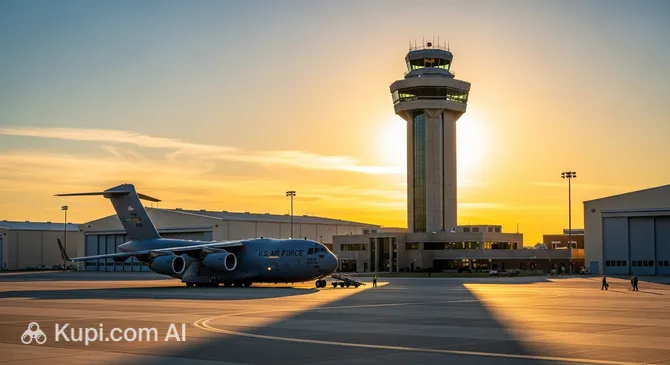
Wright-Patterson Air Force Base. Source: Kupi.com Binoculars
Wright-Patterson Air Force Base is not merely a transport hub, but a legendary location considered the heart of American military aviation and the birthplace of many aerospace technologies. Located in the vicinity of Dayton, this airfield does not accept standard tourist liners, yet it attracts travellers from all over the world with its unique atmosphere and history. It was here, on Huffman Prairie, that the Wright brothers honed their skills in piloting the first aircraft, turning the dream of flight into reality. Today, it is an active military facility, surrounded by an aura of secrecy and engineering achievements, playing a key role in the country's defence.
IATA Code FFO
ICAO Code KFFO
City Dayton (Ohio)
Distance to Centre ~16 km
Status Military Air Base
Passengers per Year Closed to civil aviation (serves military missions only)
Schedule Online board

Features and Highlights

Although it is impossible to arrive here by commercial flight, the Wright-Patterson base area is a magnet for aviation enthusiasts thanks to its unique attractions:

  • National Museum of the US Air Force: Located directly next to the base, this is the oldest and largest military aviation museum in the world. Its hangars house over 360 aircraft, including legendary presidential planes and even spacecraft capsules.
  • Historical Heritage: The base grounds include Huffman Prairie Flying Field, where in the early 20th century, Wilbur and Orville Wright tested their modified aeroplanes and opened the first flying school. This site holds the status of a National Historic Landmark.
  • Event Tourism: The famous U.S. Air Force Marathon takes place here annually, gathering thousands of runners and spectators eager to touch aviation culture. The marathon route partially passes through the base territory, offering civilians a rare opportunity to see the facility from the inside.

Contact Information

Since Wright-Patterson Air Force Base is an active military facility, standard commercial services for tourists are not available here. However, for authorised visitors, military passengers, and general enquiries, the following contact channels are operational:

  • Official Airport Website: www.wpafb.af.mil
  • Help Desk Phone: +1 937-257-1110 (Base Operator)
  • Airport Address: Wright-Patterson AFB, OH 45433, USA (Visitor Center: 4185 Logistics Ave, Bldg 286)
  • Email: 88abw.pa@us.af.mil (Public Affairs Office)
  • Airport Social Media: Official Wright-Patterson AFB pages are available on Facebook, X (Twitter), and Instagram.
  • Lost and Found Information: +1 937-257-7741 (Passenger Terminal — for military flights only).
  • Passenger Support Contacts: +1 937-257-6235 (Automated information on Space-A flight status).

How to Get to the Airport

Because Wright-Patterson Air Force Base is a closed military facility, it does not accept regular civilian flights. Travellers wishing to visit the National Museum of the US Air Force located here, or participate in the marathon, usually fly into one of the neighbouring civilian airports and then reach the location by ground transport.

Nearest Civilian Airports

For trip planning, it is most convenient to use the following aviation hubs:

Getting from Dayton City Centre

The distance from the city centre (Downtown) to the public zone of the base (specifically the National Museum of the US Air Force) is about 10–12 km. The journey by car usually takes 15–20 minutes depending on traffic.

Taxi and Transfer

This is the simplest and fastest way to get to the location if you do not plan to rent a car.

  • Services: Popular ride-hailing apps (Uber, Lyft) operate actively in the region, as do local taxi companies.
  • Cost: A trip from Dayton centre to the museum will cost approximately 20–30 USD. From Dayton Airport (DAY), the cost will be slightly higher — around 30–40 USD.
  • Tip: When ordering a taxi, specify the exact destination (e.g., "National Museum of the US Air Force"), as the base territory is vast and has multiple checkpoints, many of which are closed to civilians.

Car Rental

Renting a car is the most recommended way to get around Ohio. Rental company offices (Hertz, Enterprise, Avis, Budget) are present at all the civilian airports listed above.

  • Route: From Dayton centre, follow highway SR 444 or interstate highway I-675 (Exit 15). The roads have clear signs for the museum ("Air Force Museum").
  • Details: GPS navigation reliably leads to the main museum gates. No base pass is required to access the museum; entry is through special open gates (Gate 28B).

Public Transport

The public transport system in Dayton is represented by RTA (Greater Dayton Regional Transit Authority) buses.

  • Bus: Route No. 1 (Wright Stop Plaza — Wright State University) passes in the immediate vicinity of the base and museum. However, the stop may be some distance from the museum complex entrance (about a 10–15 minute walk), which may be inconvenient in poor weather.
  • Cost: A single trip costs about 2 USD. It is recommended to have the exact amount in cash or use the mobile RTA app for payment.
  • Recommendation: Due to the infrequent schedule and distance of stops, the bus is recommended only for those on a limited budget.

Parking

Excellent conditions are provided for visitors to the National Museum of the US Air Force:

  • Cost: Parking on the museum grounds is free.
  • Spaces: A huge parking zone can accommodate a large number of cars and tourist buses. There are also designated spaces for people with disabilities, located closest to the entrance.
  • EV Charging: Charging stations for electric cars are available on the premises (number of spots is limited).

Terminals and Map

It is important to understand that the structure of Wright-Patterson Air Force Base (FFO) differs radically from familiar civilian aviation hubs. There are no huge glass complexes with dozens of gates and endless shops here. This is a military facility where functionality and security come first.

Number of Terminals and Their Purpose

The airfield is served by one small Passenger Terminal. It is intended exclusively for processing military flights, cargo transport, and serving passengers eligible for Space-A category flights (military personnel, their families, retirees). The terminal is a compact, standalone building where all necessary services are within walking distance.

Map and Navigation

Navigation inside the terminal is maximally simple and intuitive, as it is practically impossible to get lost here. The building does not have complex levels or confusing passageways.

  • Entrance Zone: Immediately after entering, visitors find themselves in the general hall.
  • Check-in Counters: Located directly in the main lobby. Document checks (military ID) and flight check-in take place here.
  • Waiting Area: A single space for all departing passengers. There is no separation into business lounges or numerous boarding zones as in commercial airports.

Transfers Between Terminals

Since there is only one terminal, there is no need for transit trains or shuttles between buildings. The entire journey from the building entrance to boarding the aircraft (which is usually on the apron very close by) takes minimal time and is covered on foot.

Terminal Features and Services

The terminal's infrastructure is utilitarian in nature. You will not find Duty Free shops, boutiques, or fine dining restaurants here. Services are oriented towards the basic needs of waiting military passengers:

  • Dining: Vending machines with snacks and drinks are available. There are usually no full-service cafes inside the sterile zone, so it is recommended to have a meal beforehand.
  • Amenities: The waiting hall has televisions, charging stations for gadgets, and Wi-Fi access (special authorisation may be required).
  • Family Rooms: A small area is usually provided for passengers with young children.

Procedure Times

Processes in a military terminal have their own specifics and strictness:

  • Check-in: For Space-A flights, it is recommended to arrive early. Presence at Roll Call is often required; the time is indicated in the flight schedule (usually 2–3 hours before departure).
  • Security Screening: The screening procedure (TSA screening) is mandatory and similar to civilian ones but is conducted by military personnel. Queues are generally short due to the limited number of passengers, but the thoroughness of the check is very high.
  • Documents: Any error in documents or lack of proper identification will lead to denial of access to the base and the terminal.

Navigation Recommendations

The main difficulty for a passenger is not navigation inside the terminal, but getting onto the base itself. The terminal is often located not far from the Hope Hotel & Conference Center.

  • Use the checkpoint (Gate) indicated in your orders or on the terminal website (usually Gate 12A or 15A for Area C, but rules can change).
  • Parking for passengers is located next to the terminal. Be sure to clarify long-term parking rules with staff, as strict restrictions apply on military sites.

Airport History

Airport History

The history of Wright-Patterson Air Force Base is a gripping chronicle of the development of world aviation, beginning long before the appearance of modern supersonic fighters. The land on which this vast military complex sits today is effectively the cradle of flight: it was here, on the Huffman Prairie pasture, that the Wright brothers learned to control their first aircraft after their historic success at Kitty Hawk.

Inception and Unification (1917–1948)

The official starting point of this location's military history can be considered 1917, when three separate military facilities were founded here during World War I: Wilbur Wright Field, the Fairfield Aviation General Supply Depot, and McCook Field. These disparate facilities served for pilot training, equipment repair, and conducting early aviation research.

An important milestone was 1927, when the research centre was moved to a new territory named Wright Field. In 1931, the neighbouring Fairfield airfield was renamed Patterson Field in honour of Lieutenant Frank Stuart Patterson, who died here during a test flight. The final merger of these two giants into the single Wright-Patterson base occurred in 1948, shortly after the US Air Force became a separate branch of the armed forces.

Key Stages of Development

  • World War II: In the 1940s, Wright Field turned into the brain of American military aviation. The staff grew from a few hundred to tens of thousands. Base engineers were engaged in testing and refining practically all aircraft used by the allies, as well as studying captured enemy equipment.
  • Cold War: The base became a centre for the development of jet age technologies and the space race. Life support systems for astronauts and high-altitude reconnaissance aircraft were designed here.
  • Diplomatic Mission: In November 1995, the base hosted peace negotiations that ended the Bosnian War. The result was the signing of the famous Dayton Accords.

Scientific Achievements and Records

Wright-Patterson is famous not for the number of take-offs and landings, but for the technological breakthroughs made in its laboratories. It was here that:

  • The first pressurised cabins and high-altitude pressure suits were developed and tested.
  • Tests were conducted on ejection seats, which have saved the lives of thousands of pilots.
  • "Stealth" technologies were created, making aircraft invisible to radar.
  • Today, the base is the headquarters of the Air Force Materiel Command (AFMC), managing research and procurement for all US military aviation.

Legends and Interesting Facts

Many stories are connected with the base, attracting mystery lovers from around the world.

  • Project Blue Book: From 1952 to 1969, this was the headquarters of the secret US Air Force project for the systematic study of Unidentified Flying Objects (UFOs).
  • Hangar 18: This is perhaps Dayton's most famous urban legend. Conspiracy theorists claim that debris from a flying saucer and alien bodies were stored in this hangar after the Roswell incident of 1947. Although the military consistently denies these rumours, "Hangar 18" has become a firm part of pop culture and base folklore.
  • Home of Heroes: Huffman Prairie, part of the base, is a National Historic Landmark. Here, the Wright brothers opened the world's first pilot school and perfected their 1905 Flyer, turning it into the first practical aeroplane.

Services and Amenities

Infrastructure and service at Wright-Patterson Air Force Base (FFO) differ significantly from what passengers of commercial airlines are accustomed to. Since this is a military facility, there are no luxury shopping galleries or spas for the general public. Services are clearly divided into those available in the small passenger terminal (for departing military personnel and their families) and those offered by the vast infrastructure of the base itself (for staff and residents of the base town).

Restaurants, Cafes, and Shops

In the passenger terminal itself, opportunities for dining are minimal, so experienced travellers recommend arranging food in advance.

  • In the Terminal: Only vending machines with crisps, chocolate, carbonated drinks, and coffee are available. There are no full-service food outlets in the sterile waiting zone.
  • On Base (Main Exchange): For those with base access, a large shopping centre (BX) with a food court operates. Popular American fast-food chains are represented here (e.g., Burger King, Subway, Taco Bell, Starbucks). Clothing, electronics, and souvenirs with Air Force symbols can also be purchased here.
  • For Museum Visitors: Tourists visiting the National Museum of the US Air Force can visit the Valkyrie Café, located on the second floor of the museum complex, or have a snack at the Refueling Station cafe in the Cold War building.

Lounges and VIP Services

The concept of a VIP lounge here is replaced by the hospitality of the USO (United Service Organizations) — a volunteer organisation supporting the military.

  • USO Center: A USO centre operates on the base, serving as a rest area for military personnel and their families. Here you can have a snack, drink coffee, watch TV, or read books in a cosy, home-like atmosphere for free.
  • Terminal: The general waiting hall is comfortable enough, equipped with soft seats and televisions, but does not have separation into service classes.

Communication and Finance

  • Wi-Fi and Charging: Wireless internet access is provided in the passenger terminal. However, please note that due to security requirements, access to certain resources may be restricted. Charging stations for mobile devices are available in the waiting area.
  • Banks and ATMs: Currency exchange is not available in the terminal. ATMs are installed on the base and in the terminal, predominantly serviced by Wright-Patt Credit Union. It is recommended to obtain US Dollars in cash in advance.

Medical Services

The level of medical provision on the base is one of the highest in the Air Force structure.

  • Medical Centre: The Wright-Patterson Medical Center is located here — the second-largest hospital in the US Air Force. It provides a full range of medical services, from emergency care to complex surgeries.
  • In the Terminal: Standard first aid kits are available for passengers, and staff are trained to act in emergency situations.

Passengers with Children and Special Needs

  • For Children: The passenger terminal usually features a small play area or a family room (Nursery) where you can change a baby or feed them in a quiet environment.
  • Accessibility: All base facilities, including the terminal and museum, fully comply with American ADA (Americans with Disabilities Act) standards. Buildings are equipped with ramps, automatic doors, and specially equipped restrooms. Terminal staff are always ready to assist passengers in wheelchairs with boarding and disembarking.

Accommodation: Hotels

Accommodation in the Wright-Patterson AFB area deserves special attention thanks to a unique hotel that has become a local landmark.

  • Hope Hotel & Conference Center: This is a unique hotel named after the legendary entertainer Bob Hope. It is located directly on the base grounds but, surprisingly, is open to the civilian public (entry is through special gates without the need for a military pass). This is an ideal place for those who want to immerse themselves in the aviation atmosphere.
  • Wright-Patterson Inns: An Air Force Inns system hotel, intended exclusively for military personnel on assignment and their families. It offers comfortable accommodation at affordable prices.
  • Nearby Hotels: In the neighbouring towns of Fairborn and Beavercreek, literally 5–10 minutes' drive from the base, there are dozens of chain hotels (Hilton, Marriott, Holiday Inn) in various price categories.

Business Services and Conferences

Business activity on the base is constantly bustling, and excellent conditions have been created for this.

  • Hope Hotel Conference Center: The hotel has extensive areas for events, banquets, and conferences. It is a popular place for meetings of military contractors, official ceremonies, and even weddings.
  • Office Services: There is no full-fledged business centre with printers and faxes for passengers in the terminal, so it is recommended to resolve all work matters in advance or use the hotel's facilities.

Where to Eat

The gastronomic landscape of Wright-Patterson Air Force Base (FFO) has its own unique specifics dictated by the military purpose of the facility. Here you will not find the restaurant courts with dozens of signs in the departure zone familiar to large international hubs. The catering system is clearly divided into three access zones: Spartan conditions inside the passenger terminal, publicly accessible venues (in the hotel and museum), and various food courts for military pass holders.

Passenger Terminal: Departure Zone

For passengers awaiting military flights (Space-A), the choice of food is maximally limited. The terminal is designed for functionality, not leisure.

  • Format: Exclusively vending machines.
  • Assortment: A standard set of snacks (crisps, chocolate bars, biscuits), carbonated soft drinks, bottled water, and coffee.
  • Location: Machines are installed in the main waiting hall (airside) and are available 24/7.
  • Recommendation: If you have a long flight ahead, it is strongly recommended to eat a substantial meal before passing security or bring food with you (sandwiches, fruit), as buying a full lunch after check-in will be impossible.

Public Zone: Hope Hotel and Museum

For well-wishers, tourists, and passengers who have time before their flight, the best option is to visit establishments located in the immediate vicinity of the terminal, where a special base pass is not required.

Packy’s Sports Bar & Grill

Located inside the Hope Hotel & Conference Center complex, which is literally within walking distance of the passenger terminal. This is the most popular place for a full lunch or dinner in the airfield area.

  • Cuisine: Classic American. The menu features excellent burgers, steaks, Buffalo wings, pizza, and hearty salads.
  • Signature Offer: It is worth trying their signature Packy’s Burger with toppings and Swiss cheese. The venue also offers a wide selection of refreshing beverages.
  • Atmosphere: Relaxed, in the style of a sports bar with an aviation theme. Ideal for passing time before check-in.
  • Average Bill: 15–25 USD.
  • Opening Hours: Usually open from 11:00 to 23:00 (kitchen may close earlier).

Cafes at the National Museum of the US Air Force

If you are visiting the museum before departure (located 5–10 minutes' drive from the terminal), there are two excellent options here:

  • Valkyrie Café: Located on the second floor above the gift shop. Offers soups, sandwiches, burgers, and hot lunches. This is a spacious place with quick service.
  • Refueling Station: Located in the Cold War hangar. Ideal for a quick snack: hot dogs, ice cream, popcorn, and drinks.
  • Opening Hours: Daily from 9:00 to 16:00.

Restricted Zone (Base Access Required)

Passengers holding a military ID or base pass gain access to the broad infrastructure of the military town. The main point of attraction is the Main Exchange Food Court (Base Shopping Centre).

  • Establishments: Familiar chain brands are gathered here: Burger King, Subway, Taco Bell, Charleys Philly Steaks, and a Starbucks coffee shop.
  • Features: Fast, inexpensive, and filling. This is a classic American food court.
  • Location: Located in "Area A" and "Area B"; a transfer or car is required from the terminal.

Dietary Requirements and Special Requests

Considering the specifics of the region and the format of establishments, options for special dietary needs are limited but exist:

  • Vegetarians: At Packy’s Sports Bar, you can order meat-free salads or pizza (e.g., Margherita). At Subway in the base food court, the Veggie Delite option is available. The Valkyrie Café always has vegetarian sandwiches and fruit.
  • Gluten-Free: There are no specialised menus, but at the hotel restaurant, you can order a steak or grilled chicken with vegetables without sauces containing gluten. It is recommended to check ingredients with the waiter.
  • Halal and Kosher: Finding certified Halal or Kosher meals directly on the base is extremely difficult. Travellers strictly observing these dietary laws are strongly advised to bring food with them or visit specialized restaurants in the city of Dayton (e.g., in the Fairborn area) before arriving at the base.

Summary: Where to Eat?

  • Quick Snack: Vending machines in the terminal or the Refueling Station in the museum.
  • Full Meal Before Departure: Packy’s Sports Bar & Grill at the Hope Hotel (accessible to all, located near the terminal).
  • Budget and Familiar (Military Only): Food court at the Main Exchange.
Tips for Travellers

Travelling via Wright-Patterson Air Force Base (Space-A flights) differs radically from flying with commercial airlines. There is no familiar business-class comfort here, but there is the romance of true aviation and the opportunity to save significantly. To ensure your experience is positive, follow these specialised recommendations.

Arrival Time and Check-in

Unlike civilian airports, the key concept here is Roll Call.

  • Arrive Early: It is recommended to be at the terminal at least 2 hours before the Roll Call time, not the flight departure time. This time is necessary for document checks and listing.
  • Track Status: Military flight schedules can change at the last minute. Be sure to check the terminal's Facebook page or call the hotline (Flight Recording) 24 hours and 4 hours before departure.
  • Document Readiness: Keep your military ID card, leave papers, or travel orders ready. Passports and dependent IDs are mandatory for family members.

Seat Selection and In-Flight Comfort

You will most likely fly on cargo aircraft (C-17, C-5, or KC-135), where comfort is a relative concept.

  • Seat "Selection": There is no online check-in with window seat selection here. Boarding is on a "first come, first served" basis or by rank/status.
  • Clothing: Cargo holds of military aircraft are often very cold due to the specifics of the air conditioning system. Be sure to take a warm jacket, hat, and even gloves with you, regardless of the season outside.
  • Noise: The noise level on board military transport aviation is extremely high. You will be given simple earplugs, but it is better to bring your own high-quality noise-cancelling headphones.
  • Sleeping Places: On C-17 or C-5 aircraft with low loads, passengers are sometimes allowed to spread out camping mats and sleep directly on the floor. Bringing a light sleeping bag or blanket is an excellent idea.

Hand Luggage and Baggage

Security rules here are stricter than in civil aviation, but there are nuances.

  • Footwear: For flights on certain types of military aircraft, open-toed shoes are prohibited (sandals, flip-flops, high heels) for safety reasons. Wear comfortable trainers or boots.
  • Baggage: The baggage allowance per passenger is usually two pieces of 70 pounds (about 32 kg) each, which is more generous than commercial airlines. However, bag sizes must be standard.
  • Food and Water: A dry ration (Box Lunch) is often only provided on board if ordered and paid for in advance (in cash). It is recommended to take a sufficient amount of sandwiches, snacks, and an empty water bottle in your hand luggage (it can be filled after screening).

Recommendations for Transit Passengers

Space-A flights do not guarantee connections. You may arrive at an intermediate base and get stuck there.

  • Financial Cushion: Always have reserve funds to pay for a commercial ticket home or for hotel accommodation for several days if the next military flight is delayed.
  • Flexibility: Be prepared to change your route. If there is no direct flight, it is sometimes faster to fly to another base in the desired region (e.g., Andrews or Dover) and travel by ground transport from there.

Customs Control

If you arrive at Wright-Patterson from abroad (e.g., from Ramstein Base in Germany):

  • Agricultural Control: Military customs checks for food products very strictly. Importing meat, fruit, vegetables, and plants is categorically prohibited and can lead to serious fines.
  • Declarations: Fill out customs forms honestly. Baggage inspection is often conducted using service dogs.

What to Do in Case of Flight Delay

Military missions always take priority over passenger transport. A flight can be postponed, rescheduled, or cancelled at any moment.

  • Stay Calm: Terminal staff do not control mission schedules. Anger and arguments will not help.
  • Accommodation: If the delay is long, contact the Hope Hotel, located right at the base gates. Check at reception for special rates for passengers awaiting departure (distressed passenger rate).
  • Transport: Have taxi apps (Uber/Lyft) ready so that in case of flight cancellation, you can quickly get to Dayton civilian airport (DAY).

Reached the end of the page?

That means the route is fully explored