Support

Willow Run Airport

About the Airport

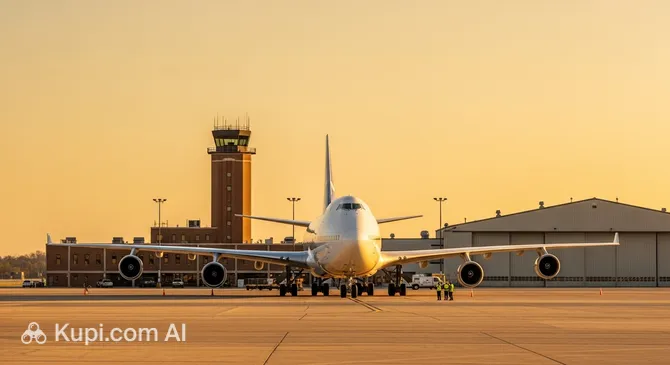
Willow Run Airport. Source: Kupi.com Binoculars

Willow Run Airport (YIP) is not merely a transport hub, but a true legend of American aviation located on the outskirts of Detroit. During World War II, history was forged here at the famous bomber plant, and today, this air harbour serves as a centre for urgent cargo transport and elite private aviation. Travellers arriving here on charter flights are greeted by an atmosphere of tranquillity and exclusivity, far removed from the hustle and bustle of crowded passenger terminals. It is a place where the industrial might of the past blends harmoniously with modern business-class comfort.

IATA Code YIP
ICAO Code KYIP
City Ypsilanti (serves Detroit)
Distance to Centre ~53-55 km (to downtown Detroit)
Status International (cargo and charter)
Annual Passengers No scheduled passenger flights (private aviation only)
Schedule Individual flight schedule

Airport Features and Advantages

Willow Run Airport occupies a unique niche in Michigan's transport system, offering its guests advantages unavailable at major commercial hubs:

  • Living History: Willow Run is known worldwide as the former "Arsenal of Democracy". It was here, during World War II at the Ford plant, that the famous B-24 Liberator bombers were produced. Arriving at this airport is a chance to touch the great past of American industry.
  • Yankee Air Museum: Located directly on the airport grounds is the Yankee Air Museum — one of the region's main attractions. Here, you can see rare operational historic aircraft and learn about Detroit's contribution to global aviation, making the wait for your flight incredibly educational.
  • Comfort and Privacy: Since the airport does not service mass scheduled flights, there are no exhausting security queues or crowds of passengers. Private aviation terminals (FBOs) guarantee personal service, confidentiality, and the fastest possible boarding procedure.
  • Convenient Location: The airport is located in the city of Ypsilanti, providing excellent transport accessibility not only to Detroit but also to the university city of Ann Arbor. It is a strategically convenient point for business travellers who need to reach the western suburbs of the metropolis, bypassing the main traffic.

Contact Information

For the most up-to-date information regarding the operation of Willow Run Airport (YIP), it is recommended to contact official channels. Below are the primary contact details:

  • Official Website: You can find schedules, flight status information, and other services on the website willowrunairport.com.
  • Information Desk Phone: For general enquiries, you may call the airport administration number: +1 (734) 485-6666.
  • Airport Address: 801 Kirk Profit Dr, Ypsilanti, MI 48198, USA.
  • Email: A direct email address for general enquiries is not published. It is recommended to use the contact form on the official website.
  • Social Media: Willow Run Airport does not maintain active public pages on social networks, as it primarily serves cargo and private aviation.
  • Lost Luggage Information: The airport does not have a centralised baggage tracing service. For issues regarding lost items, you should contact your airline or charter operator representative directly.
  • Passenger Support Contacts: Passenger support is provided by private terminal operators (FBOs) and airlines. Please contact the company operating your flight for assistance.

How to Get to the Airport

Willow Run Airport (YIP) primarily serves cargo, corporate, and private flights, so the transport infrastructure for passengers here is developed differently than in major international hubs. When planning a trip to this airport, located west of Detroit, it is important to consider the limited public transport options. The most convenient ways to reach the location are by car or taxi.

By Taxi or Ride-Sharing Services

The simplest and most predictable way to get to Willow Run Airport is to order a taxi or use apps like Uber or Lyft, which are widely available in the USA. A trip from the centre of Detroit will take approximately 30-40 minutes depending on traffic conditions. The estimated cost of the trip will be from 50 to 70 dollars. This option is particularly convenient if you are travelling with luggage.

By Car (Rental or Personal)

Travelling by personal or rented car ensures maximum flexibility. The airport is conveniently located near the major I-94 highway. If you are renting a car, please note that rental counters may not be present directly within the Willow Run terminals, so it is better to rent a vehicle in the city or at the region's main passenger airport. Willow Run Airport has parking, but since it is oriented towards cargo transport, it is recommended to check availability and rates for long-term parking for private individuals on the official airport website in advance.

Public Transport

Direct public transport routes (buses, trains, metro) from the centre of Detroit to Willow Run Airport are non-existent. Some regional bus routes of the SMART system may pass in the vicinity of the airport, but they do not offer a convenient stop at the terminals and may require long walks. This method is strongly not recommended for tourists, especially those with luggage.

Important Recommendation

Most passengers arriving in the Detroit region use the main international airport — Detroit Metropolitan Wayne County Airport (DTW). It is located just 15 km from Willow Run and offers a full range of transport services, including shuttles, buses, taxis, and numerous car rental companies. If your flight arrives at or departs from Willow Run, the most reliable option is to pre-book a transfer or use a taxi.

Terminals and Map

When planning a journey, it is important to understand the specifics of the airports. Willow Run Airport (YIP) has a unique structure that distinguishes it from most major passenger hubs. Today, Willow Run is primarily one of the busiest cargo airports in the USA, as well as a centre for private and corporate aviation. It does not serve scheduled commercial passenger flights, unlike the neighbouring metropolitan airport of Detroit (DTW).

Instead of public passenger terminals, Willow Run uses so-called Fixed-Base Operators (FBO). Essentially, these are private, separate terminals designed to serve passengers of charter, business, and private aircraft. Each FBO is a separate building with its own lounge, reception desks, and security checkpoints.

The airport layout for such passengers is extremely simple. You will not have to move between terminals or search for your boarding gate in huge halls. typically, you arrive at the specific address of your FBO, where you are met and escorted through all stages. Transfers between such "terminals" are not required, as each operates independently.

Registration and security screening procedures at FBOs are significantly faster and more comfortable than at large airports. Queues are practically non-existent, and the entire process takes minimal time. Departure and arrival zones are cosy lounges where you can wait for your flight in comfort. The level of service here is more reminiscent of a business lounge than a standard terminal.

Main Navigation Advice: If your departure is scheduled from Willow Run Airport, clarify the exact name and address of the FBO that will be handling your flight with your airline or flight operator in advance. All navigation will simply involve getting to the correct building, and you will receive further instructions upon arrival.

Airport History

The history of Willow Run Airport (YIP) is inextricably linked to one of the most dramatic periods in the history of the USA — World War II. The airport was built in 1941 by the Ford Motor Company at the behest of the government. Initially, it was not just an airfield, but a gigantic factory complex designed for the mass production of B-24 Liberator heavy bombers. Located near Detroit, the plant became a key element of the "Arsenal of Democracy" concept, transforming the region into a centre of military industry.

During the war years, the Willow Run plant reached incredible production capacities. At its peak, one B-24 bomber rolled off the assembly line every 63 minutes. This was a revolutionary achievement for the aviation industry, based on mass production methods perfected by Henry Ford in automotive manufacturing. The factory was so massive that its assembly line was L-shaped to fit within the boundaries of a single county. In total, over 8,600 aircraft were produced here during the war, making a colossal contribution to the Allied victory.

After the war ended, production capacities were wound down, and Willow Run began a new chapter in its history. In 1947, it was converted into the main commercial airport of Detroit, serving passenger flights for the major airlines of that time. It remained the city's primary air harbour until the late 1950s, when most carriers moved their operations to the more modern and expanding Detroit Metropolitan Airport (DTW).

With the departure of passenger airlines, Willow Run successfully repurposed itself. Today, it is one of the busiest cargo airports in North America, as well as an important centre for charter, corporate, and private aviation. The airport has not undergone global reconstructions like those seen in major passenger hubs, but its infrastructure is constantly being modernised to serve modern cargo aircraft. The airport's historical heritage is carefully preserved, particularly thanks to the Yankee Air Museum, which is located on its grounds and is dedicated to the history of the plant and aviation.

Services and Amenities

Willow Run Airport (YIP) is primarily a major cargo, charter, and private aviation hub. Consequently, the range of services for passengers here differs substantially from what major commercial airports offer, and many familiar amenities may be unavailable.

Passenger service is mainly provided through Fixed-Base Operator (FBO) terminals that handle private and charter flights. These terminals usually feature comfortable lounges where you can use free Wi-Fi and find outlets for charging devices. Some FBOs may also provide small conference rooms for business meetings.

It is important to note that there are no restaurants, cafes, or shops for passengers within Willow Run Airport. Additionally, there are no bank branches or currency exchange points here. Travellers are advised to attend to all such matters in advance, prior to arriving at the airport.

Specialised services, such as playrooms for passengers with children or permanent medical stations, are not provided. Passengers with disabilities or other special needs should contact their airline or charter flight operator in advance to organise necessary assistance.

There are no hotels on the airport territory itself. However, in the immediate vicinity, in the neighbouring towns of Ypsilanti and Belleville, there are numerous hotels to suit any taste and budget. Most of them are located just a 10-15 minute drive away by car or taxi.

Where to Eat

It is important to understand that Willow Run Airport (YIP) functions mainly as a major cargo and aviation centre, rather than a traditional commercial passenger airport. Passenger transport here is generally limited to charter and private flights.

Due to this, there are practically no restaurants or cafes on the airport grounds that travellers might be accustomed to in large aviation hubs. The infrastructure for passenger dining is extremely limited, and you will not find a variety of establishments offering special menus (such as Halal, vegetarian, gluten-free, etc.) or full meals here.

Travellers departing from or arriving at Willow Run are recommended to plan their meals in advance. The best solution would be to have a snack or lunch at one of the establishments in nearby cities, such as Ypsilanti or Belleville. There you can find many options — from fast food restaurants to cosy cafes with American cuisine, where you can eat peacefully before travelling to the airport.

Tips for Travellers

Departing from Willow Run Airport (YIP), located near Detroit in the USA, offers a completely different experience compared to major commercial hubs. The airport specialises in serving private and charter flights through FBO (Fixed-Base Operator) terminals. This means minimal fuss, a personalised approach, and maximum efficiency at all stages of pre-flight preparation.

A key tip for passengers: always follow the instructions of your flight operator or charter company. They will provide you with exact information regarding arrival times. Typically, for private flights, it is sufficient to arrive at the FBO terminal 45-60 minutes before departure. Check-in is conducted quickly, on a personal basis, without queues at counters.

Security screening procedures are conducted in accordance with TSA regulations but proceed much faster due to the absence of large passenger flows. Nevertheless, general requirements for hand luggage remain in force: liquids must be in containers of no more than 100 ml. Baggage allowances can vary greatly depending on the type of aircraft, so be sure to check the permissible weight and dimensions with your operator in advance.

When arriving on an international flight, you will need to undergo border and customs control. This procedure at Willow Run is also organised as efficiently as possible and takes place directly within the FBO. To avoid delays, keep your passport, visa (if required), and other accompanying documents ready.

In the event of a flight delay, you will wait for departure in a comfortable FBO lounge, rather than a general waiting hall. Your operator's staff or the aircraft crew will provide all up-to-date information and ensure your comfort by offering refreshments and light snacks.

For the smoothest possible journey, discuss all details with your flight operator in advance: from special dietary preferences on board to organising a transfer from the airport. Timely communication is the key to the impeccable service for which private and business aviation is renowned.

Reached the end of the page?

That means the route is fully explored