Support

Fort Bridger

About

Fort Bridger is more than just a settlement; it is a living monument to the era of the Old West. Nestled in a picturesque valley in Wyoming, this small village is steeped in an atmosphere of adventure and the pioneer spirit. Despite its modest size and population of about 350 people, this place plays a vital role in the region's cultural heritage.

While traveling through the USA, tourists often stop here to touch the legends of the frontier. Geographically, the village sits on the banks of the Blacks Fork River, which provides a pleasant microclimate and beautiful landscapes that contrast with the rugged plains. It is a quiet harbor where time seems to have slowed down, allowing guests to take a break from the noise of big cities.
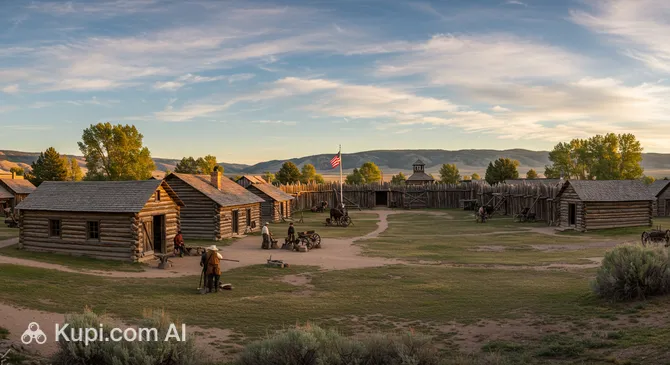
Fort Bridger. Illustration.
Source: Kupi.com AI

Originally established as a trading post in 1843 by the famous mountain man Jim Bridger, the settlement became a key supply point for settler wagon trains. The fascinating history of Fort Bridger is closely intertwined with the routes of the Oregon and Mormon Trails, as well as the legendary Pony Express. Today, these pages of the past come to life at the State Historic Park, where buildings of that era have been preserved and reconstructed, including the old trading post and military barracks.

The local museum, which houses 19th-century artifacts, and the annual "Mountain Man Rendezvous" festival are particularly popular with travelers. This colorful event gathers enthusiasts from across the country who recreate the lifestyle of trappers and fur traders. If you are looking for an authentic experience and want to see firsthand how the character of the American West was forged, Fort Bridger is the perfect stop on your itinerary.

Weather Overview

When planning a trip, keep in mind that the climate in this region is characterized by distinct seasonality. Typical weather in Fort Bridger involves significant contrasts between frosty winters and warm summers, typical of a location with its geographical positioning.

Winter months here are truly cold. In January and December, average nighttime temperatures drop to -10°C to -11°C, and daytime highs often remain below freezing. Travelers heading here during this time will need warm clothing to feel comfortable outdoors.

Summer, on the other hand, is pleasantly warm and is the most popular time for visits. In July, the hottest month, the air warms up to an average of +29°C, although nights remain pleasant and fresh with temperatures around +13°C. This is the ideal time to explore historical outdoor attractions.

There is little precipitation in the region, but spring can bring surprises. May stands out as the month with the most wet days (about 14), though the actual volume of precipitation is small. Overall, expect a warm summer with occasional rain and cold, fairly dry winters.

Average monthly temperature

Average monthly precipitation

Interesting Facts

In addition to its rich history as a trading post, Fort Bridger hides many curious details and legends that make a visit even more exciting for history buffs.

  • A Four-Legged Hero. On the fort's grounds, there is an unusual burial site—the grave of a dog named Thornburgh. This faithful dog served alongside soldiers and participated in military campaigns in the late 19th century. He became a local legend thanks to his bravery and was buried with honors, a rare exception for army regulations of that time.

  • Burned by its Owners. In 1857, during a conflict known as the Utah War, the fort was burned to the ground. Surprisingly, it was not the attacking troops who did this, but the Mormons themselves, who owned the post at the time. They destroyed the buildings so that the advancing USA army could not use them for wintering and resupplying.

  • A Unique Crossroads. Fort Bridger occupies an exceptional place on the map of Western expansion. It is one of the few points where several vital historical routes intersected simultaneously: the Oregon Trail, the Mormon Trail, the California Trail, and the route of the legendary Pony Express. For thousands of settlers, it was the last island of civilization before the difficult crossing over the Wasatch Mountains.

  • The Legends of Jim Bridger. The founder of the fort was famous not only as a trapper but also as a talented storyteller of tall tales. It was here, while entertaining travelers by the campfire, that he spun yarns about "stone forests" with "stone birds" singing "stone songs" (which later turned out to be a distorted description of Yellowstone's real fossils), creating the region's unique folklore.

How to Get There

When planning a trip to this historic corner of Wyoming, it is important to think through the logistics in advance, as the village is located away from major metropolises. Since there is no direct air service to the settlement itself, tourists will need to take a combined route. You can learn more about how to get to Fort Bridger by studying all available options, but the primary method remains flying to one of the neighboring cities followed by a car trip.

The most convenient and popular option for international and domestic tourists is Salt Lake City International Airport (IATA: SLC). It is located in Salt Lake City, approximately 147 km from Fort Bridger. This is a major aviation hub with excellent infrastructure, receiving flights from all over the world. The drive from the airport to the destination in a rental car or taxi will take about 1.5–2 hours, with most of the journey following the scenic Interstate 80.

If you are looking for a closer option, consider Southwest Wyoming Regional Airport (IATA: RKS) in Rock Springs, which is only 114 km from Fort Bridger. This is a small regional airport suitable for those already in the USA making a domestic flight. The driving time from here is just over an hour.

For clarity, here is summary information on the main airports located relatively nearby:

AirportPassenger trafficDistance
Rock Springs-Sweetwater County Airport50 981114 km
Vernal Regional Airport22 142122 km
Ogden Municipal Airport59 000137 km
Salt Lake City International Airport28.4 mln147 km
Provo Airport900 000166 km

Rail service in this region is poorly developed for passenger travel to the village itself. The nearest major stations are in the same cities as the airports (for example, in Salt Lake City). Therefore, regardless of whether you arrive by plane or train in a neighboring major city, the final leg of the journey to Fort Bridger is best covered by a rental car, enjoying the views of the American West.

Main Attractions

Despite its modest size, this settlement offers travelers a unique opportunity to immerse themselves in the atmosphere of the Wild West. The main point of attraction here is the Fort Bridger State Historic Park. This is an extensive open-air museum complex where history literally comes to life. A walk through the park allows you to trace the chronology of the region's development: from the era of mountain men and Mormon pioneers to the period of the USA military presence. The grounds are well-maintained and perfect for leisurely strolls among ancient trees and historic buildings.

The heart of the complex is the Fort Bridger Museum, located in the former stone barracks built in 1888. The museum's exhibits carefully preserve a rich collection of artifacts telling the story of life on the frontier. Here, you can see authentic household items, tools, weapons, and 19th-century clothing. For tourists, it is an excellent chance to learn the details of the daily lives of early settlers and soldiers that often remain outside the pages of history textbooks.

The Jim Bridger’s Trading Post reconstruction is of particular interest to guests. The recreated wooden factory, based on the 1843 model, allows one to imagine what this long-awaited "oasis of civilization" looked like for weary travelers on the Oregon Trail. The rough log walls and an interior filled with animal skins and goods of that era create an incredibly authentic atmosphere, transporting visitors back a century and a half.

Architecture and military history enthusiasts should pay attention to the surviving historic military buildings, including the guardhouse and the old Sutler's store. These structures serve as a reminder of the fort's strategic importance during the second half of the 19th century. The complex of buildings provides a clear idea of how the daily life of a military garrison was organized, guarding the country's most important transport arteries during turbulent times.

Local Cuisine

The gastronomic scene of Fort Bridger fully aligns with the spirit of the Old West: it is simple, hearty, and homey. You won't find fine dining restaurants in this small village, but local establishments offer authentic dishes perfect for restoring strength after long walks through historic sites. The menu is based on meat delicacies typical of the state of Wyoming.

The main culinary experience for tourists is often bison meat. This is not just a nod to tradition but a very popular local product. Travelers should order a juicy bison burger or steak—the meat has a rich flavor and is considered leaner than beef. Local diners also excel at preparing classic American ribeye steaks and BBQ, served with potatoes and corn.

If you find yourself here during festivals or historical reenactments, be sure to try Indian Fry Bread. This fluffy, deep-fried dough is often served as a treat on its own with honey or powdered sugar, or used as a base for "Indian tacos" with meat, beans, and cheese. This dish is an important part of the region's cultural heritage and a favorite snack for guests of the "Mountain Man Rendezvous."

Regarding drinks, the atmosphere of old saloons prevails. Among the non-alcoholic options, Sarsaparilla and root beer are extremely popular. These sweet, herbal-flavored carbonated drinks are considered frontier classics. Those looking for something stronger can appreciate products from Wyoming's local breweries; local bars often offer craft ales and lagers brewed in neighboring towns.

The food culture in Fort Bridger centers around small family cafes and roadside diners. It's customary here to eat leisurely while discussing news or local history. The interiors of these establishments are often decorated in a rustic style using wood and hunting trophies, creating a special charm. For tourists, this is an opportunity not just to have lunch, but to feel like part of a friendly community living among the rugged but beautiful landscapes of the USA.

Travel Tips

Preparing for a trip to Fort Bridger requires attention to detail, as this small historical settlement is located far from major metropolises. To ensure your introduction to the legendary outpost of the Old West is as comfortable as possible and free of surprises, we have compiled a list of useful recommendations.

  1. Clothing and Gear. Wyoming weather is changeable, so the best clothing principle is layering. Even in summer, nights can be cool, so be sure to bring a fleece jacket and a windbreaker. For walks around the historic park, choose comfortable closed shoes (sneakers or hiking boots), as you will be walking on dirt paths and grass. Don't forget sunglasses and a hat—the mountain sun is very intense.
  2. Transport. Public transportation (buses, metro) is non-existent in a village with a population of about 350. The only reliable way to get here and move around the area is by rental car. Taxi or ridesharing services (Uber, Lyft) are virtually unavailable here, or wait times will be very long. The historic center itself is compact and best explored on foot.
  3. Finances. The official currency is the USA dollar (USD). Credit cards are accepted at the museum gift shop and gas stations, but it is strongly recommended to carry cash in small bills. This will be useful for purchases in small shops or if you visit a craft fair during festivals. ATMs are available in local stores, but their numbers are limited. Tipping in cafes is standard for the country—15–20%.
  4. Health and Safety. Fort Bridger is a very quiet and safe place. However, keep in mind that there are no 24-hour pharmacies here. The nearest major medical centers and pharmacies are in neighboring towns (such as Evanston or Lyman), so be sure to pack a personal first aid kit with necessary medications in advance. Also, drink plenty of water: the dry climate and high altitude can cause dehydration.
  5. Communication. The primary language is English. Museum staff are accustomed to tourists, but knowing basic phrases will be helpful. Mobile service and mobile internet (4G/LTE) work stably within the village, but the signal may drop on the highway between towns. We recommend downloading offline maps of the region to your smartphone beforehand so you aren't dependent on network coverage.
  6. Local Etiquette. Wyoming residents are known for their friendliness and hospitality. It is customary to greet shopkeepers, museum workers, and even passersby on the street. Simplicity and politeness are valued in communication. Respect the monuments within the historic park: do not climb on old buildings or touch exhibits unless explicitly allowed.
  7. What to Avoid. Strictly avoid trespassing on private property. There are many private ranches around the village, and climbing over fences for a pretty photo is a bad idea that can cause serious displeasure from owners. Also, do not exceed the speed limit on the approaches to town: wildlife (deer, antelope) often cross the roads, especially at dusk.
  8. Extra Tip. If you plan your trip for early September, be sure to check the dates for the Mountain Man Rendezvous. This is one of the largest events in the region, where hundreds of enthusiasts live in tepees, wear buckskins, and trade handcrafted goods. During these days, shops may have special hours, and local accommodation needs to be booked several months in advance.

Fort Bridger is a place where history becomes reality and the bustle of the modern world fades into the background. By following these simple tips, you can fully focus on the atmosphere of the old frontier and bring home only the warmest memories from your trip.

Entertainment & Nightlife

Entertainment and nightlife in Fort Bridger have a unique flavor that is drastically different from bustling metropolises. In a town with a population of about 350, you won't find districts filled with nightclubs, glamorous discos, or 24-hour raves. Evening leisure here is about immersing yourself in the atmosphere of the true American West, where time flows slower and the night sky is striking with a scatter of stars, unobstructed by city lights.

The evening hub is the legendary Jim Bridger Club. Located near the historic fort, this establishment is a classic Western bar that serves as the main meeting point for both locals and passing tourists. It boasts a simple and friendly atmosphere: wood paneling, pool tables, and a jukebox playing country hits. It’s the perfect place to grab a pint of cold beer, listen to local stories, and feel like a character in an old movie. There is no dress code—jeans and comfortable shoes are most appropriate.

If you're looking for variety, it's worth driving just a few miles to the neighboring town of Lyman, which essentially merges with Fort Bridger. There you can visit BV's Barn & Grill (if it's open for the season), where crowds often gather for dinner and evening socializing. Nightlife in this region is concentrated along the main road (Business Loop I-80). The style of establishments here is exclusively "dive bar" or family restaurant: no dress codes or guest lists, just genuine conversation and hearty food. Prices are affordable, with an average evening check for drinks rarely exceeding $20–$30 per person.

It is important to consider logistics and safety. In Fort Bridger and its surrounding areas, taxi services and apps like Uber are completely non-existent. If you plan on drinking alcohol, arrange a designated driver in advance or choose accommodation within walking distance of the bar (though sidewalks are not everywhere, and you may have to walk along the shoulder). In terms of crime, the area is very safe; the main threat at night is wildlife, such as deer and elk, which frequently cross the roads.

During the day, the entertainment program in this corner of Wyoming is educational. Most tourists spend their time walking through the State Historic Park or visiting museums dedicated to the pioneer era. For outdoor enthusiasts, hiking trails and picnic spots are available during daylight hours. But as soon as the sun sets behind the horizon, Fort Bridger quiets down, leaving travelers the opportunity to enjoy the silence or a warm welcome in a local saloon.

Parks & Museums

The cultural and natural landscape of this small settlement is inextricably linked to its rich past, offering tourists a unique symbiosis of outdoor relaxation and educational tours. Instead of traditional city parks and modern art galleries, travelers will find picturesque historical territories and museum exhibits dedicated to the era of Western expansion in the USA.

The main green zone is the territory of Fort Bridger State Historic Park. This is not just an open-air museum, but also a beautiful, well-kept park covering about 15 hectares. Century-old cottonwoods and willows grow here, providing thick shade even on the hottest summer days. For tourists, there are cozy picnic areas with tables and benches where you can rest to the sound of rustling leaves after sightseeing.

The Blacks Fork River valley, which flows directly through the village and the historic park, adds natural charm to the site. The riverbanks are a scenic natural area perfect for leisurely walks and observing the local fauna. The clear water and green meadows create a peaceful atmosphere that contrasts with the harsh desert landscapes surrounding this part of Wyoming.

The central exhibition space is the Fort Bridger Museum, located in the 1888 stone barracks. This is a key cultural site where an impressive collection of artifacts is gathered: from Native American jewelry and trapper tools to military uniforms and settlers' household items. The museum is interesting because it allows you to trace the chronology of the region's development in detail through the personal belongings of the people who lived here a century and a half ago.

The Jim Bridger’s Trading Post Reconstruction, which functions as a "living museum," deserves special attention. While not a classic gallery, this is where the frontier culture is most vividly revealed. Inside the log building, the 1840s interior is recreated, and staff in historical costumes demonstrate crafts of the time. This place immerses visitors in the atmosphere of the fur trade and early contact between Europeans and indigenous peoples.

Among the architectural monuments, the surviving Officer's Quarters stand out. One of the buildings is open to the public and serves as a house museum furnished with Victorian-era pieces. The exhibition clearly shows how officers' families tried to maintain comfort and civilized living conditions in a remote military garrison, providing a unique perspective on the social history of the army.

For lovers of hidden details, look for the small stone structure known as the Milk House. This modest building is often overlooked, but it is an excellent example of 19th-century utility architecture and is used for small seasonal exhibitions or demonstrations.

Getting Around

Public transportation in the sense familiar to an urban tourist does not exist in Fort Bridger. This is due to the tiny size of the settlement, with a population of no more than 400 people. You won't find subways, trams, trolleys, or shared taxis here. Travelers should prepare in advance to rely solely on their own means or private transport.

The primary and essentially only way for guests to move around the region is by rental car. Most tourists rent a car immediately upon arrival at Salt Lake City or Rock Springs airports. The road network here is excellently developed: the village is located right off Interstate 80, making the trip comfortable and fast. Parking in the village and at the historic park is usually free and doesn't pose problems with availability.

As for taxi services and popular ride-hailing apps (like Uber or Lyft), don't count on them. Due to the distance from major cities and low population density, drivers for these services practically do not operate here. Calling a car "here and now" through an app will be impossible. If you absolutely need a transfer, it must be ordered in advance through specialized transportation companies in the neighboring town of Evanston, but it will not be cheap.

Within Fort Bridger itself, your best "transport" is your own feet. The village and the main attraction—the State Historic Park—are very compact. All key sites—the museum, reconstructed trading post, historic barracks, and shops—are within walking distance of each other. A walk from the parking lot to the furthest corners of the historic zone will take no more than 10–15 minutes.

Intercity bus service in the region is provided by major carriers (like Greyhound) running along the I-80 corridor. However, it's important to note that they do not stop directly in Fort Bridger. The nearest bus stations are in the towns of Evanston (about 50 km west) or Rock Springs (about 110 km east). From there, you'll still need to reach your final destination by hitchhiking or a rental car.

Cycling infrastructure as such is absent (there are no dedicated bike lanes or rental stations), but many tourists bring their own bikes. Riding on local roads is quite safe due to low traffic, and the flat terrain of the valley makes cycling a pleasant way to see the surroundings. If you're traveling in an RV, there are convenient access roads and parking spots available.

Practical advice on travel expenses: since you won't need public transport tickets, your main budget will go toward fuel. Gas stations in the Fort Bridger and neighboring Lyman areas accept both cash and credit cards. We recommend keeping an eye on your fuel level, as distances between settlements in Wyoming can be significant.

Accommodation

Accommodation in Fort Bridger perfectly reflects the character of this small, secluded settlement. You won't find luxury five-star resorts or major chain hotels with panoramic pools here. The hotel infrastructure is primarily oriented toward transit travelers and history lovers, offering simple but cozy lodging options. The main range of housing is represented by classic roadside motels, guest houses, and—particularly popular in these parts—RV parks.

The geography of lodging is quite compact. Most available options are concentrated along the main transport artery—Interstate 80 and the business loop passing through the village. This is the most convenient area for tourists, as you can reach the State Historic Park from here in a matter of minutes. If there are no vacancies directly in Fort Bridger, experienced travelers recommend looking for housing in the neighboring town of Lyman, which is only 5–7 kilometers away and effectively forms a single urban area with the fort.

For those who want to immerse themselves as much as possible in the atmosphere of the Wild West, camping is an excellent option. There are several sites equipped in the surrounding area where you can stay with a tent or in a motorhome. This allows you to wake up with a view of the mountains and the Blacks Fork River valley, enjoying the silence broken only by birdsong. This type of accommodation is particularly in demand in the summer when the weather is favorable for outdoor recreation.

Booking Tip: While finding a room is usually easy, the situation changes drastically in late August and early September. During the annual "Mountain Man Rendezvous" festival, the valley's population increases many times over. If your trip coincides with this colorful event, you must book accommodation several months in advance; otherwise, you will have to look for lodging in more distant towns like Evanston or Rock Springs.

Pricing in the region remains very affordable. Most offers fall into the budget and mid-range segments. You can book a room through popular online aggregators or directly by phone, which is often more reliable for small private motels. Expect an honest price-to-quality ratio: a clean bed, a hot shower, and parking at your door are standard amenities for local hospitality.

Nearby Cities

For those who want to explore the surrounding area, Fort Bridger serves as an excellent starting point for day trips to several interesting nearby locations. The village's position near the state border allows travelers to easily reach larger Utah cities that offer a variety of leisure activities.

One of the most attractive destinations is Ogden. This city, with its rich railroad history, is known for its famous 25th Street, which was once a bustling hub of the Wild West and is now filled with restaurants, galleries, and museums. Ogden also serves as a gateway to magnificent mountain resorts, making it interesting year-round.

Another city worth noting is Logan, located in the picturesque Cache Valley. It is a university center with a vibrant cultural atmosphere and beautiful architecture. Logan is ideal for nature lovers due to its proximity to the canyon of the same name, where you can enjoy breathtaking views and hiking.

Below is information on the nearest cities that can be visited as part of a short trip:

CityPopulationDistance
Kemmerer2 60054 km
Green River11 88780 km
Rock Springs23 505103 km
Roosevelt18 019118 km
Vernal10 037120 km

These nearby destinations provide insight into the diverse culture and landscapes of the region, harmoniously complementing the historical experience of staying in Fort Bridger.

Shopping & Souvenirs

Shopping in this small historic settlement is drastically different from the typical shopping trips in big cities. You shouldn't come to Fort Bridger for fashion brands or the latest electronics. Local commerce is entirely geared toward tourists interested in Wild West history and travelers making a stop along their journey. The atmosphere is that of an old-fashioned trading post, where buying a souvenir becomes part of the cultural experience.

The concept of "shopping streets" in a town with a population of under 400 is quite loose. All commercial activity is concentrated along the main road and in the immediate vicinity of the State Historic Park. This is where souvenir stalls and small shops are located, selling essentials and keepsakes. The most interesting retail spot is the museum shop, which offers a wide range of themed literature and handcrafted items.

There are no large shopping centers or malls in Fort Bridger itself. For major shopping, mass-market clothing, or specialized goods, locals and tourists must travel to the neighboring town of Evanston (about 50 km west) or Rock Springs. Standard American supermarkets and chain stores are found there. In the village itself, retail is limited to small general stores and gas stations with an expanded range of goods.

However, once a year, Fort Bridger transforms into one of the most magnificent open-air markets in the USA. During the annual Fort Bridger Rendezvous (usually held the first weekend of September), a massive fair takes place. Hundreds of traders in historical costumes offer unique goods: tanned animal skins, homespun blankets, forged items, Native American-style beadwork, and 19th-century weapon replicas. This is the best place to find a truly authentic item.

As for souvenirs from Fort Bridger, items reflecting the frontier spirit are worth bringing home. Leather goods (moccasins, belts, bags), coonskin caps, and turquoise and silver jewelry characteristic of the region are popular. Books about the history of the Oregon Trail, local wild berry jams, or souvenir coins with Pony Express symbols make excellent gifts.

Most shops and souvenir stalls operate on a standard schedule: from 9:00 or 10:00 AM to 5:00–6:00 PM. Hours may be reduced during the winter season. Credit cards are accepted almost everywhere; however, if you plan to visit the Rendezvous fair or buy from private artisans, it is highly recommended to have cash dollars on hand, as not all crafters have terminals.

The Tax Free system (VAT refund) for tourists does not exist in the USA as it does in Europe. Prices on tags are usually listed without sales tax, which will be added at the checkout. In Wyoming, sales tax is relatively low, but it is impossible to get a refund upon leaving the country. Keep this additional charge in mind when planning your shopping budget.

Reached the end of the page?

That means the route is fully explored