Support

Fort Jefferson

About

Fort Jefferson is a small but historically significant settlement in Ohio that offers travelers the chance to immerse themselves in the peaceful atmosphere of the American heartland. This quiet corner attracts those interested in the frontier era and who prefer a slow-paced lifestyle over bustling tourist centers.

The village is located in Darke County, in the western part of the state. The climate here is humid continental, with warm summers and snowy winters, giving the area a special charm in every season. Despite its modest size and small population, Fort Jefferson holds its own unique place on the map of the USA as an important monument of the past.
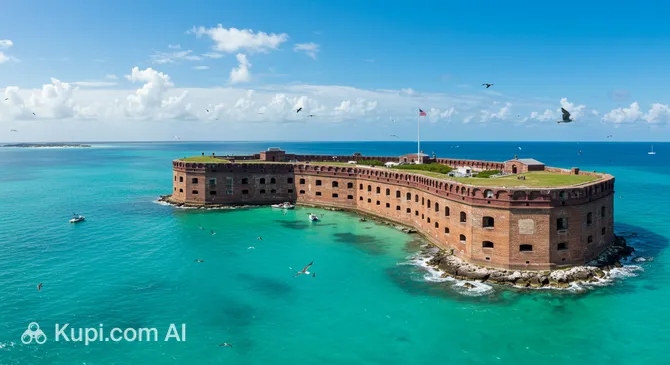
Fort Jefferson. Illustration.
Source: Kupi.com AI

The past of this place is inextricably linked to the military campaigns of the late 18th century. The fascinating history of Fort Jefferson dates back to 1791, when General Arthur St. Clair established an outpost here to supply his troops during campaigns in the Northwest. Today, this heritage is carefully preserved and serves as the main point of attraction for visitors to the village.

A key attraction is the Fort Jefferson State Memorial. Within a small park, a granite monument stands as a reminder of the soldiers and events that took place here more than two centuries ago. This well-maintained green space is perfect for a short walk, a picnic, and exploring historical markers.

A visit to Fort Jefferson will be an educational and peaceful stop on your journey through Ohio, allowing you to momentarily transport yourself back to the era of early American history.

Weather Overview

The climate in this part of Ohio is characterized by distinct seasonality, allowing tourists to enjoy the variety of nature year-round. Before your trip, it is helpful to check the expected weather in Fort Jefferson to choose the right wardrobe for exploring historic sites.

The warmest time of year is summer: in July, the average temperature is 24.1°C, and daytime highs often reach 28.1°C. Winters here are cool but not extremely freezing; in January, the thermometer averages 1.7°C, sometimes dropping to -1.4°C. Spring and autumn offer comfortable transitional conditions: for example, in May, the air warms up to 18.9°C, and in October, the average temperature stays around 15.6°C.

A feature of the local climate is a fairly high number of days with precipitation, which is evenly distributed throughout the year (from 9 to 14 days per month), although the intensity is usually light. Expect warm summers with periodic rain and cool, often overcast winters.

Average monthly temperature

Average monthly precipitation

Interesting Facts

Beyond its main attractions, Fort Jefferson holds many fascinating secrets and local legends rooted in the era of the American frontier. It is a place where history comes alive in details often hidden from the average tourist's eye.

  • The Legend of the Deceptive Hunt: One of the most famous local stories involves the fort's commandant, Captain Joseph Shaylor. He was a passionate hunter, and according to legend, Native American warriors used this against him. They mimicked the call of a wild turkey to lure the captain out of hiding. Shaylor fell into an ambush and narrowly escaped, but his son, who had accompanied him, tragically lost his life in the trap.

  • The Irony of the Name: Initially, the fortification was named "Fort Deposit," as its primary purpose was to store provisions for the army. However, in practice, the fort was often cut off from supplies, and its garrison suffered from food shortages. It was later renamed in honor of Thomas Jefferson, who was the U.S. Secretary of State at the time.

  • Tactical Oversight: Modern historians point out a curious fact: the site for the fort was poorly chosen. It was located in a depression surrounded by hills, giving opponents an advantage for bombardment. Additionally, excavations in the 1930s revealed underground tunnels, the purpose of which still sparks debate among researchers today.

  • First Sentences: Fort Jefferson became the site of the first documented executions in Darke County history. During the construction process in 1791, three soldiers were hanged here for desertion, a somber omen for the difficult fate of this outpost.

How to Get There

When planning a trip to this historical corner of Ohio, it is important to think through the logistics in advance. Since the settlement is very small, there is no direct air or rail service, and travelers will need to combine different modes of transport. You can find out the details and consider all the ways to get to the city on a dedicated page, while below we will cover the key transport hubs nearby.

The most convenient and fastest option for most tourists is to fly to one of the nearby major cities followed by a trip in a rental car. The closest destination is James M. Cox Dayton International Airport (IATA: DAY). Please note: there is no airport in Fort Jefferson itself; you will fly into the city of Dayton, which is approximately 48.5 km away. The drive from there via local highways takes only about 40–50 minutes.

An alternative option with a much higher volume of flights is John Glenn Columbus International Airport (IATA: CMH). It is located in Gahanna, 109.5 km from your destination. This is a major aviation hub hosting many international and domestic flights. The journey from this airport to Fort Jefferson by car or transfer takes roughly 1.5 hours, making it a very accessible arrival option.

For planning convenience, here is summary information on the region's main airports:

AirportPassenger trafficDistance
James M. Cox Dayton International Airport1.3 mln49 km
John Glenn Columbus International Airport8.1 mln109 km
Rickenbacker International Airport500 000114 km
Fort Wayne International Airport856 803118 km
Toledo Express Airport159 938142 km

If you prefer traveling by train, keep in mind that the rail network in this part of the state is limited and mostly oriented toward freight. The closest passenger station appearing in routes is Windsor Station (IATA: XEC). It is important to understand that it is quite far away—approximately 239.7 km from Fort Jefferson. The drive from the station to the final destination takes about 2.5–3 hours, so this option should only be chosen if there are specific reasons for traveling by rail.

Below is information about the railway station:

StationPassenger trafficDistance
Windsor Railway Station240 km

Main Attractions

Despite the settlement's modest size, the attractions of Fort Jefferson and its immediate surroundings are of great interest to fans of American history and those seeking a quiet outdoor retreat. The main points of interest here are related to the frontier heritage and the picturesque landscapes of Darke County.

Fort Jefferson State Memorial is undoubtedly the main historical site in the village itself. It was here in 1791, under the command of General Arthur St. Clair, that a fort was built to serve as an important supply point. Today, tourists can see a commemorative granite obelisk erected in honor of the soldiers and officers of that time. This place attracts visitors with its quiet atmosphere and the opportunity to connect with events from over two hundred years ago while walking through the well-kept park grounds.

Just a few minutes' drive from Fort Jefferson, in the neighboring city of Greenville, is the famous Garst Museum. This is a must-visit location for all guests of the region. The museum is known as the home of the Annie Oakley National Center, dedicated to the legendary sharpshooter. The exhibition also details the historic Treaty of Greeneville and the life of Native American peoples. A visit to the museum provides a deep understanding of the historical context in which Fort Jefferson existed.

Another gem of the region is Bear's Mill, located nearby. Built in 1849, it is one of the few remaining functional water-powered mills in the USA. Tourists come here to admire the authentic architecture, walk the scenic trails along the creek, and buy fresh stone-ground flour at the local shop. This place perfectly combines historical value and natural beauty.

For nature lovers, the Shawnee Prairie Preserve is an excellent choice. It is the largest park in the county, offering visitors a network of hiking trails through forests and prairies. Here you can visit an education center, see a reconstructed log house, and observe local birds. The preserve serves as a wonderful addition to a historical tour, offering outdoor recreation.

Local Cuisine

The culinary scene of Fort Jefferson and the surrounding Darke County is the embodiment of American Midwest traditions. You won't find high molecular gastronomy here; local food is famous for its simplicity, heartiness, and homemade comfort. Travelers can expect generous portions, meat dishes, and desserts with recipes passed down through generations.

One of the region's main gastronomic symbols is the famous "loose meat sandwich." Unlike typical burgers, the meat is not formed into a patty but prepared as juicy seasoned ground meat served on a soft bun with mustard, onions, and pickles. You should also definitely try "Buckeyes"—popular Ohio candies made of peanut butter dipped in chocolate, designed to look like the nut of the Ohio Buckeye tree.

Regarding drinks, locals prefer the classics. On hot days, iced sweet tea and homemade lemonades are popular. Those looking for something stronger should check out the products of local Ohio breweries, which brew excellent lagers and ales, as well as cider made from apples grown in local orchards.

The food culture here is closely tied to a neighborly atmosphere. In Fort Jefferson and neighboring Greenville, small family diners and cafes are popular, where owners often know their customers by name. Farmer's markets and fairs hold a special place in regional life, especially the Great Darke County Fair, where you can sample the best street food: from roasted corn to fresh pastries.

Travel Tips

Welcome to Fort Jefferson! To ensure your trip to this quiet, historic corner of Ohio is as comfortable and worry-free as possible, we have prepared a list of useful recommendations taking into account local life and infrastructure.

  1. Clothing and Essentials. Midwest weather is changeable, so the best principle for packing is layering. It is hot and humid here in the summer (bring light natural fabrics), while in spring and autumn, a waterproof jacket and a warm sweater may be needed. Be sure to bring comfortable shoes: sneakers are best for exploring the memorial park and walking on nature trails. Don't forget a Type A or B power adapter (US standard) if your devices have different plugs.
  2. Transport. Fort Jefferson is a very small settlement, and there is no public transport. The only reliable way to get around is renting a car. This will give you the freedom to visit not only the fort itself but also neighboring Greenville or Bear's Mill. Taxi apps (Uber, Lyft) may work, but wait times in rural areas are often long, so relying solely on them is risky.
  3. Finances. The official currency is the USA dollar (USD). While cards are accepted almost everywhere, cash may be required in small village shops, at farmer's markets, or when buying tickets for local fairs. ATMs are easiest to find in the neighboring city of Greenville. The customary tip in cafes and restaurants is 18–20% of the bill.
  4. Health and Safety. The area is considered very quiet and safe for tourists. However, remember that there are no 24-hour pharmacies in the village itself; for medication or urgent help, you will need to go to Greenville (about 10 minutes by car). In emergencies, as elsewhere in the country, the universal number is 911. In the summer, don't forget insect repellent when walking in nature.
  5. Communication. The main language is English. In this part of the state, you shouldn't count on other languages being widely spoken, so a basic set of English phrases or an online translator will be very useful. Mobile service and 4G are stable, but we recommend downloading offline maps of the area, as the signal can weaken on some remote roads.
  6. Local Etiquette. Ohioans are famous for their friendliness. It is customary to greet passersby on the street even if you don't know them and to hold the door for the person behind you. Politeness and "small talk" (short conversations about the weather or current events) are valued. Be open and smile—it's the best way to win over the locals.
  7. What to Avoid. Do not enter private property without an invitation. There are many farms around Fort Jefferson, and "Private Property" signs should be taken literally. Also, avoid planning dinner too late: in rural areas, many establishments close quite early, around 8:00–9:00 PM.
  8. Extra Tip. If your trip falls at the end of August, be sure to visit The Great Darke County Fair in neighboring Greenville. It is one of the oldest and most colorful events in the region, allowing you to see real rural America, sample local food, and buy handmade souvenirs.

We hope these tips help you plan the perfect trip. Fort Jefferson is waiting for you to share its rich history and small-town charm!

Entertainment & Nightlife

Nightlife in Fort Jefferson and its surroundings fully reflects the spirit of this historical place: it is quiet, cozy, and lacks the hustle and bustle of megacities. In the village itself, you won't find loud night clubs or discos that stay open until dawn. Evening leisure here is primarily about relaxed rest, a delicious dinner, and pleasant conversation with friends.

For more lively entertainment, locals and tourists head to the neighboring city of Greenville, located just a few minutes away. The epicenter of evening activity here is the city's historic center, especially the South Broadway district. This is where the main gastropubs, bars, and restaurants are concentrated, coming to life after sunset. The atmosphere in these establishments is very democratic and friendly; the dress code is almost everywhere casual, and the crowd consists of both young people and couples.

Among the popular places to spend a great evening are:

The Merchant House — one of the most stylish venues in the county, located in a restored historic building. This place is famous for its excellent cocktail list and modern American cuisine. The loft-style interior with brick walls creates the perfect atmosphere for evening gatherings.

Sure Shot Tap House — a unique bar themed after the legendary Annie Oakley. The main highlight is the self-pour tap system, where guests can try dozens of types of craft beer and cider, paying for drinks by the ounce. It’s a great place to get acquainted with the local beer culture.

Montage Cafe — although this place is better known for its lunches, it often hosts wine tastings and themed dinners in the evenings. The cozy setting makes it a lovely choice for a quieter, more romantic evening.

It is important to note that "nightlife" in rural Ohio ends quite early. Most restaurant kitchens close by 9:00 PM or 10:00 PM, and bars may stay open until midnight or slightly later on weekends. Plan your evening in advance so you don't find yourself facing closed doors.

In terms of safety, the area is considered very secure. Evening walks through downtown Greenville or around Fort Jefferson pose no threats, although streets can be quiet and not always brightly lit. The main logistical nuance is transport. Taxi and ridesharing services (Uber, Lyft) operate inconsistently here, especially late at night. The best solution is to have a designated driver in your group or a pre-arranged transfer if you plan to consume alcohol.

As for daytime entertainment, it harmoniously complements the evening rest. The region's cultural program includes visiting the Garst Museum, where you can learn about the legends of the Wild West, and walking along the scenic trails of natural parks. In the summer, the county often hosts outdoor festivals and live music concerts in town squares, which smoothly transition into evening festivities.

Parks & Museums

Despite its modest size, Fort Jefferson and the surrounding Darke County offer travelers a wonderful blend of peaceful nature and rich historical heritage. Green spaces here are closely interwoven with monuments of the past, creating a unique atmosphere for leisurely walks and educational retreats. Guests of the region can enjoy the beauty of local landscapes and visit museums that preserve the memory of legendary figures from the American frontier.

The main green space in the village itself is the Fort Jefferson State Memorial. This is not just a park, but a place where history comes to life. The well-maintained grounds are perfect for a short walk or a picnic in the shade of the trees. The central element of the park is a granite obelisk erected in memory of General Arthur St. Clair's soldiers. Tourists appreciate this place for its silence and the opportunity to connect with the events of 1791 while surrounded by picturesque rural scenery.

For nature lovers, a visit to the Shawnee Prairie Preserve, located just a few minutes away, is a must. This is the county's largest park, a mosaic of wetlands, forests, and prairies. It features convenient hiking trails for birdwatching and observing local wildlife. There is also an education center on the grounds where you can learn more about the region's ecosystem. It is an ideal place to escape the hustle and bustle and breathe in the fresh air of the USA.

The cultural heart of the region beats within the Garst Museum, often referred to as the "Annie Oakley National Center." This museum complex offers an extensive exhibition dedicated not only to the famous sharpshooter but also to the renowned traveler Lowell Thomas and the history of the Treaty of Greeneville. Visitors note the incredible detail of the exhibits and the richness of the collection, which allows for a deep dive into the Wild West atmosphere and an understanding of how Ohio's culture was formed.

Another unique site that combines the features of a museum and an architectural monument is Bear's Mill. Built in 1849, it remains one of the last examples of a working water-powered mill in the region. The building, constructed from dark walnut, stands on the banks of a scenic creek surrounded by forest. Tourists come here not only for a tour of the historical floors, where ancient millstones still operate, but also to visit the art gallery and pottery shop located inside.

Insider Tip: If you enjoy active recreation, check out the Tecumseh Trail. This multi-mile route for hikers and cyclists passes through picturesque fields and connects the county's main attractions. A walk or ride along the trail in the early morning or at sunset will give you the best views of rural America and allow you to see the region from a completely new perspective.

Getting Around

It is important to immediately note a key logistical feature of Fort Jefferson: due to the settlement's small size and its rural location, there is no public transport system typical of large cities. You will not find subways, trams, or regular city bus routes here. The infrastructure is oriented exclusively toward personal transport, so travelers should not expect to move between attractions via municipal services.

The only truly reliable way for a tourist to get around is a rental car. Since most guests arrive via airports in nearby major cities, it is best to book a car immediately upon arrival. The roads in the county are in good condition, traffic is light, and navigation is intuitive. The road payment system in this part of the state typically does not include toll roads in the immediate vicinity of the village, simplifying budget planning.

As for alternative ways to get around, taxi and ridesharing services like Uber or Lyft are technically available in the region, but relying on them as your primary transport is risky. Due to the distance from major metropolitan areas, wait times for a car can be very long, and during late hours or weekends, there may be no available drivers nearby. If you plan a trip for dinner in a neighboring town, it is recommended to arrange a transfer in advance or have a designated driver in your group.

For getting around the historic complex itself and the surrounding natural parks, walking or cycling is best. A network of bike routes connecting natural areas is popular in the region, but there are no municipal bike-share programs with automated stations. If you want to explore the surroundings on two wheels, you should look for private equipment rental shops in neighboring Greenville or bring bicycles with you on a car rack.

A practical tip for motorists: there are almost never problems with parking in Fort Jefferson. Main attractions, such as the memorial park, have free parking spaces provided. However, given the rural nature of the area, gas stations may be less frequent than in the city, so try to monitor your fuel level and don't leave refueling until the last minute.

Accommodation

When planning a visit to Fort Jefferson, travelers should take into account that this small historical settlement does not have its own hotel infrastructure. There are no hotels or guesthouses directly in the village, so the optimal solution is to find accommodation in the neighboring city of Greenville, which is just a 10–15 minute drive away. This allows for comfortably combining sightseeing with the amenities of urban living.

The main range of available accommodation in the region is represented by mid-range hotels and budget motels. Well-known American hotel chains predominate here, offering a standardized set of services: clean rooms, breakfast, and parking. For those seeking a more authentic atmosphere, cozy Bed & Breakfasts (B&Bs) can be found in the Darke County area, located in historic buildings or on farms, which perfectly complements the immersion into Ohio's rural charm.

In terms of location, the most convenient area for staying is the southern part of Greenville, near the main interchanges and US-127. Hotels in this zone provide the fastest access to the road leading to Fort Jefferson. An alternative is to stay closer to Greenville's historic center (Broadway), where local restaurants, shops, and museums will be within walking distance, enhancing your evening leisure after tours.

Booking Tip: While there are usually no problems with availability, the situation changes drastically at the end of August during the famous Great Darke County Fair. During this week, thousands of visitors flock to the region, and all rooms within a 30–40 km radius can be booked up. If your trip coincides with festival or fair dates, it is highly recommended to book accommodation several months in advance.

Pricing in the region remains quite democratic. Travelers can expect a budget to mid-range price bracket, making the trip accessible to most tourists. Booking is easiest through popular international online platforms, as even small local motels in the USA are generally listed on aggregator systems.

Nearby Cities

For those looking to explore the surrounding area, Fort Jefferson serves as an excellent starting point for day trips to several interesting nearby locations:

The primary center of attraction in the region is undoubtedly Dayton. This major city is known worldwide as the birthplace of aviation. Here, tourists can visit the National Museum of the U.S. Air Force—one of the most impressive collections of aircraft in the world—as well as the historical park dedicated to the Wright brothers' legacy. Dayton offers a rich cultural program, excellent parks, and a developed dining scene, making it an ideal choice for a full-day trip.

If you are looking for a quieter atmosphere, consider the city of Lima. Located to the north, it is interesting for its Allen County Museum, which preserves the history of the region's railroad past and its famous locomotive works. This cozy place allows you to experience the architecture and life of a typical Midwest town without any extra fuss.

Below is a table with data on nearby cities that may be of interest for a visit:

CityPopulationDistance
Sidney20 5597 km
Piqua20 35224 km
Wapakoneta9 92128 km
Bellefontaine13 79229 km
Tipp City10 20242 km

These nearby destinations provide a glimpse into the diverse culture and landscapes of the region, successfully complementing the historical experience of visiting Fort Jefferson.

Shopping & Souvenirs

Shopping in Fort Jefferson and its immediate surroundings is a journey into the past, devoid of the rush of giant shopping malls. Since the village is very small, you won't find global brand boutiques here. The main interest for tourists lies in antique shops, small family-owned stores, and souvenir departments at historical sites. For more extensive shopping, locals and guests head to the neighboring city of Greenville, just a few minutes' drive away.

The main shopping artery of the region is the historic South Broadway street in Greenville. This is a classic American Main Street, where cozy shops are housed in restored 19th-century brick buildings. Here you can find unique gifts, clothing from local designers, home goods, and bookstores. A stroll down Broadway will delight those who appreciate the atmosphere of provincial comfort and a personalized approach to every customer.

In Fort Jefferson itself, the Old Fashion Country Store on Fort Jefferson Avenue deserves special mention. This colorful establishment maintains an old-time spirit and offers visitors a wide range of retro-style goods. The shop is particularly popular for its rich selection of high-quality fabrics for quilting and crafts, as well as traditional sweets and products that evoke nostalgia for bygone eras.

The most picturesque place for shopping near the village is the shop at Bear's Mill. Inside this historic building, there is a shop selling fresh stone-ground flour (corn, rye, wheat) produced using ancient technologies. Additionally, it features handmade pottery from local artisans, making it an ideal place to find authentic gifts.

As souvenirs from a trip to Fort Jefferson and Darke County, consider bringing home:

  • Farm Products: Bags of flour or pancake mixes from Bear's Mill, local honey, and jams.
  • Craft Supplies: Unique fabrics and textiles from the Old Fashion Country Store make excellent gifts for creative individuals.
  • Annie Oakley Memorabilia: The Garst Museum store offers books, posters, and keepsakes related to the legendary sharpshooter.
  • Antiques: There are many shops in the area selling old items, from vintage glassware to Western-era interior decor.

Most shops in the region operate on a standard schedule: from 10:00 AM to 5:00 PM or 6:00 PM. It is important to remember that many private shops in downtown Greenville and souvenir stores may be closed on Sundays or operate on a reduced schedule. Credit cards (Visa, MasterCard) are accepted almost everywhere, though having some USA cash is an advantage at small farmer's markets or fairs.

The Tax Free system (VAT refund) as found in Europe does not exist in the United States. Sales tax in Ohio is added to the price of the item at the register and is not refundable for foreign tourists upon leaving the country. Keep this in mind when budgeting: the price on the tag will always be lower than the final total on the receipt.

Reached the end of the page?

That means the route is fully explored