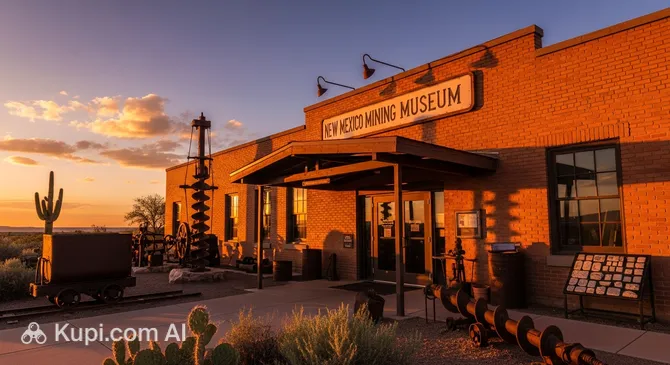
Imagine a place where the industrial power of the past comes to life: the New Mexico Mining Museum is a unique cultural site located in the city of Grants. The museum is dedicated to the rich history of mineral extraction, which became the foundation for the development of this region in the USA.
New Mexico Mining Museum. Illustration.
Source: Kupi.com AI
Traveler photos:
A special place in the collection is dedicated to the era of the legendary uranium boom, which spanned the period from the 1950s to the early 1980s. This was a time when small settlements were transformed into bustling industrial centers, and raw material extraction played a key role in the development of nuclear energy for the entire country. The museum acts as a guardian of the memory of this complex and important historical period.
Visitors can expect more than just dry display cases; they will find a full immersion into the world of miners. Through authentic artifacts and interactive exhibits, the museum tells the story of how human labor and engineering ingenuity transformed the state's desert landscapes, turning New Mexico into a significant link in global industry.
Contacts
For information about special exhibitions or group tours, you can contact the museum administration directly.
The main highlight of visiting the museum is the opportunity to see unique mining equipment and tools used in the middle of the last century. You can explore detailed exhibits dedicated to uranium mining and understand the conditions in which people worked to fuel the atomic age. Historical documents, maps, and rare photographs create a comprehensive picture of industrial progress.
The museum halls present not only the technical aspects of mining but also the personal stories of the miners. Interactive exhibitions allow guests to experience the atmosphere of the time when Grants was the uranium capital of the world. This is a great chance to learn about the state's contribution to the development of the nuclear program and atomic energy through visual examples and authentic everyday items.
For those who value an educational format, the museum offers special programs and tours. Here, you can delve deeper into technological processes or discuss the socio-economic impact of mining on the region's development. A walk through the halls becomes a short journey through time, revealing the secrets of the underground depths.
Getting There
The museum is located at 100 Iron Ave, Grants, NM 87020, in the heart of the city. If you are traveling through the USA by car, getting here is easy: the city is intersected by the famous Interstate 40. The drive from Albuquerque takes about an hour (approximately 80 kilometers to the west), and parking is provided next to the building for visitors' convenience.
For those arriving from further away, the nearest major transport hub is Albuquerque International Sunport. You can rent a car there, which is the most convenient way to travel around New Mexico. In the city of Grants itself, the museum is easily accessible by taxi from anywhere in the center or even on foot if you are staying in one of the nearby hotels.
Nearest city: Grants
History & Facts
The history of the mining industry in New Mexico is a fascinating chronicle closely intertwined with the fate of the entire country. The uranium boom era, which began in the 1950s, turned this region into one of the world's most important industrial hubs. During those years, uranium mining was of critical importance for the development of nuclear power and ensuring national security during the Cold War.
The city of Grants quickly became the epicenter of this activity, earning the title "Uranium Capital of the World." Rapid economic growth attracted thousands of workers, contributing to infrastructure development and turning the small settlement into a thriving industrial center. The museum carefully preserves evidence of the time when mining labor shaped the region's future.
Today, the museum's exhibits serve not only as a reminder of the technological achievements of the past but also as a tribute to the miners and their families. By documenting daily life, social changes, and economic cycles, the museum allows visitors to see how industrial heritage has shaped the modern face of New Mexico.
Time Needed
To fully appreciate the scale of the exhibition and immerse yourself in the atmosphere of mining life, the average visitor will need between 1.5 and 3 hours. This is enough time to carefully examine the artifacts, study the photographs, and read the information stands.
If you plan to participate in educational programs or study technical documentation and equipment in detail, it is worth allowing a bit more time. The museum is organized so that even a quick tour leaves a strong impression, but a thoughtful exploration of the history of the uranium boom requires a relaxed pace.
Working Hours
When planning your visit to the New Mexico Mining Museum, please note the opening hours to ensure you have time to see all the exhibits:
Monday – Friday: 09:00 – 17:00
Saturday: 09:00 – 16:00
Sunday: Closed
The museum is closed on Sundays, so it is advisable to adjust your itinerary in advance. It is also recommended to check the schedule before public holidays, when operating hours may change slightly.
Day
Working hours
Monday
09:00–17:00
Tuesday
09:00–17:00
Wednesday
09:00–17:00
Thursday
09:00–17:00
Friday
09:00–17:00
Saturday
09:00–16:00
Sunday
Закрыто
Nearby
After diving into the region's industrial history, it's worth taking time to see other interesting places nearby. The museum's surroundings offer a harmonious blend of cultural centers and iconic locations along the legendary Route 66.