Support

Wheelwright Museum of the American Indian

About

Amidst the picturesque hills of Santa Fe lies a unique space that its creators once called the "House of Prayer." The Wheelwright Museum of the American Indian is more than just a repository of artifacts; it is a living testament to the rich culture and traditions of Native American peoples. Founded in 1937, it was the first private museum in New Mexico dedicated entirely to the heritage of Indigenous peoples, specifically the Navajo (Diné).
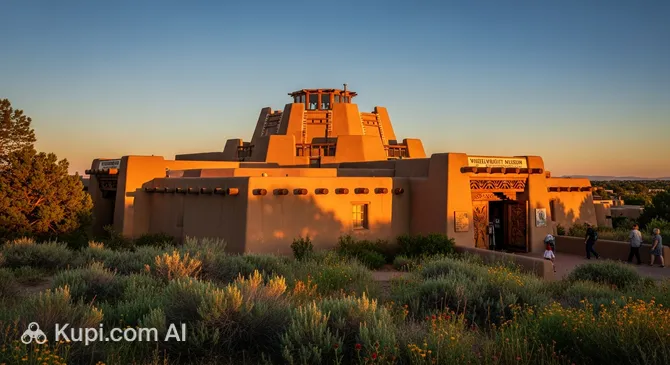
Wheelwright Museum of the American Indian. Source: Kupi.com AI

The building's architecture deserves special mention: it is designed in the shape of a traditional octagonal hogan—a sacred Navajo dwelling with its entrance facing east. Today, within these walls located in the USA, ancient traditions meet modernity. The museum has evolved from a repository of sacred sandpaintings to a dynamic gallery showcasing the work of some of the most prominent contemporary Indigenous artists, jewelers, and sculptors.

The main feature of this place is its intimate and warm atmosphere. Unlike massive state-run complexes, the Wheelwright Museum allows guests to feel a personal connection to the art. Visitors come here to see the famous collections of jewelry, textiles, and pottery, as well as to visit the Case Trading Post—an authentic trading post that recreates the atmosphere of the early 20th century.

Contacts

For more details about your visit or to organize a group tour, you can use the museum's official contact channels. The staff is always ready to help with information about current exhibitions and special events. It is also recommended to check their website for the latest news and announcements.

Address 704 Camino Lejo, Santa Fe, NM 87505, USA
Phone +1 505-982-4636
Website https://wheelwright.org/
Social Media Facebook, Instagram

What to Do

Start your museum experience in the central hall, reached by a wide staircase. Immersing yourself in this space, you feel as though you are inside a massive hogan. This area hosts rotating exhibitions, such as "Carved Stories," where Hopi legends are revealed through intricate wood carvings. Be sure to pay attention to the details: the museum masterfully combines historical artifacts from the 1850s with avant-garde works by young Indigenous masters.

The Jewelry Gallery deserves special attention. It presents an impressive retrospective of silver and turquoise jewelry created by Navajo and Pueblo masters. Each piece is not just an ornament, but a whole narrative about the social status and beliefs of its owner. Additionally, the halls often feature rare Cochiti pottery and textiles that have retained their vibrant colors after centuries.

Don't miss the chance to visit the Case Trading Post, located on the lower level. It is one of the best museum shops in the USA, selling only authentic works of art. Here you can find everything from traditional Kachina dolls to contemporary designer pieces. The museum frequently hosts Artists Markets, where visitors can talk to the artists in person and learn the secrets of their craft firsthand.

Getting There

The museum is located in the picturesque Museum Hill area at 704 Camino Lejo. The drive from the center of Santa Fe takes only 10–15 minutes: head east on Old Santa Fe Trail or Canyon Road, then turn onto Camino Lejo. Free parking is available on-site for visitors traveling by car.

If you prefer public transportation, use the Santa Fe Trails city buses (routes #14 or #24), which will take you to the Museum Hill stop, just a short walk from the museum entrance. Another highly convenient and popular option is taking a taxi or Uber directly from downtown—this allows for maximum comfort without having to navigate the turns yourself.

For those who enjoy walking, the route from the center is about 3 kilometers. However, keep in mind that the path is uphill through hilly terrain, so in hot weather or if you are short on time, it is better to choose a vehicle. Travelers arriving from Albuquerque International Sunport can reach the museum in about an hour by car.

History & Facts

The history of this place began with a remarkable friendship between Boston socialite and philanthropist Mary Cabot Wheelwright and Hastiin Klah, a revered Navajo medicine man and singer. In the 1920s, when traditional Indigenous culture was under threat of disappearance, they joined forces to preserve sacred knowledge. Despite ancient taboos, Klah agreed to document ceremonial chants and sandpaintings, entrusting them to Wheelwright to pass on to future generations.

The museum building, which opened to the public in 1938, is an architectural landmark in its own right. Its shape was inspired by the hogan, the traditional Navajo dwelling. Originally, the institution was named the Museum of Navajo Ceremonial Art and served more as a sanctuary and research center than a conventional gallery. For decades, it housed unique recordings and artifacts, with access strictly regulated.

A significant turning point occurred in 1977 when the museum decided to repatriate sacred items back to the Navajo community. Following the transfer of these valuables to Diné College, the concept changed: the museum was renamed after its founder and shifted its focus to contemporary Native American art. Today, it is recognized as one of the leading venues showcasing the living and evolving culture of the Indigenous tribes of the Southwestern USA.

Time Needed

To explore all the exhibits at a leisurely pace, visitors usually need between 1.5 and 2.5 hours. This is enough time to study the main exhibitions in the central Klah Gallery and get acquainted with the jewelry collection, which is considered one of the best in the state.

If you plan to visit the famous Case Trading Post at the museum, set aside an additional 30–45 minutes. This shop is an attraction in itself, where you can not only see but also purchase authentic works by contemporary Indigenous artists. It is also worth leaving some time to appreciate the unusual architecture of the building and enjoy the views of the Santa Fe hills.

Working Hours

The museum welcomes guests from Tuesday to Saturday, 10:00 AM to 5:00 PM. Please note that Sunday and Monday are closed, and access to the grounds is restricted during these times.

Operating hours may change on holidays, so it is highly recommended to check the information on the official website or call the museum before your trip. Plan your visit for the first half of the day to see all the exhibits in natural light, which beautifully highlights the architecture of the "hogan."

Nearby

The Museum Hill district is a true cultural cluster where interesting historical and architectural monuments are gathered within a short distance of each other. A walk through the surrounding area will allow you to dive deeper into the atmosphere of old New Mexico and see the region's iconic landmarks.

Name Distance (km)
El Zaguán 2.2
San Miguel Chapel 2.5
The Oldest House Indian Shop 2.5
Downtown Santa Fe, NM 2.8
Santa Fe Plaza 2.9
Cross of the Martyrs 3.0
Historic Fort Marcy 3.0
Nuestra Señora de Guadalupe 3.1
The Old Cross of the Martyrs 3.8
Randall Davey Audubon Center & Sanctuary 4.7

Reached the end of the page?

That means the route is fully explored