Support

Grayling Airport

About the Airport

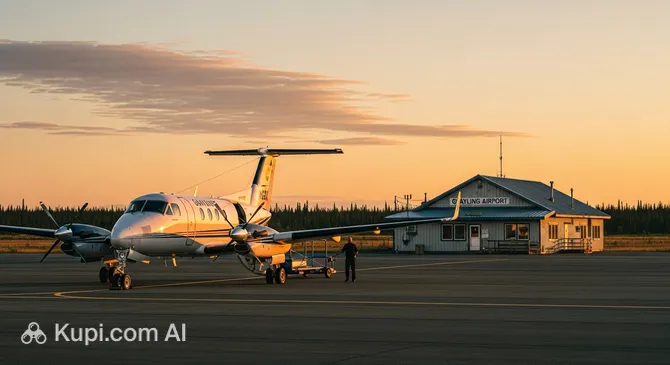
Grayling Airport. Source: Kupi.com Binoculars

Grayling Airport (KGX) is a true "lifeline" for the small settlement of the same name, located on the banks of the mighty Yukon River in Alaska. You won't see the usual hustle and bustle of giant aviation hubs here: this is a place where the spirit of the wilderness reigns, and the aeroplane is the primary means of connection with the outside world. For travellers, this modest airport serves as a starting point for exploring the harsh beauty and authentic culture of the Yukon-Koyukuk region.

IATA Code KGX
ICAO Code PAGX
City Grayling (Alaska)
Distance to centre ~2 km
Status Regional / Domestic
Passengers per year About 3,000 - 4,000 people
Schedule Check with local air carriers

Features and Advantages of the Airport:

Grayling is a typical representative of Alaskan "bush flying". Its main feature is a gravel runway approximately 1,200 metres long. Because of this, flights are mainly operated by small propeller aircraft capable of landing on unpaved surfaces. Passengers should be prepared for the absence of a standard terminal with shops and cafes; the infrastructure here is minimal and subordinated exclusively to functional tasks — delivering mail, cargo, and transporting local residents.

The airport plays a critically important role in the life of the community, as reaching Grayling by land is practically impossible. Flying here is an adventure in itself, allowing you to see the mesmerising landscapes of the tundra and the winding channel of the Yukon River from above. Due to geographical features and the lack of a control tower, flights are highly dependent on weather conditions, so it is always worth allowing extra time when planning your trip.

Contact Information

  • Official Airport Website: The airport does not have its own separate website. Up-to-date information on the runway condition can be found on the portal of the Alaska Department of Transportation & Public Facilities (DOT&PF).
  • Help Desk Phone: Since the airport has no permanent staff, for questions regarding flights and tickets, please contact the main carrier — Wright Air Service: +1 (907) 474-0502. For infrastructure condition inquiries: +1 (907) 451-2200 (DOT&PF Northern Region).
  • Airport Address: 1 Mile South of Grayling, Grayling, AK 99590, USA.
  • Email: There is no direct email for the airport. For booking and flight inquiries, write to the air carrier: reservations@wrightairservice.com.
  • Airport Social Media: Official accounts are absent.
  • Lost Luggage Information: The airport is not equipped with luggage storage or a tracing service. In case of lost items, immediately contact the airline that operated the flight (Wright Air Service).
  • Passenger Support Contacts: Support is provided exclusively through airline offices in Fairbanks or Anchorage. There is no stationary support service on the airfield territory itself.

How to Get to the Airport

Since Grayling is a small isolated settlement in Alaska, one should not look for standard urban transport infrastructure here. Getting from the village "centre" (where the school, post office, and shop are located) to the runway is a simple task, but it has its own local flavour. The distance is only about 1.5–2 kilometres, so logistics here are governed by the rules of life in the wild.

Public Transport

Buses, minibuses, trains, or metro are completely absent in Grayling. This community is so compact that the need for regular passenger transport within the village simply does not arise. Locals move around on foot or using high-clearance private vehicles.

Taxis, Transfers, and Help from Locals

There are no official taxi services or apps like Uber here. However, this does not mean you will have to walk with heavy luggage. Ways to get to the plane depend on the season:

  • In Summer: The main transport is quad bikes (ATVs) and pickup trucks. If you are visiting someone or have arrived for work, you will likely be met or given a lift by car. You can also ask locals for help — people here are helpful and often give guests a lift for a symbolic fee or simply out of neighbourly kindness.
  • In Winter: Snowmobiles become the main means of transport. A ride to the plane's steps on a snowmobile is a common occurrence for these places.

Travel time from any point in the village to the airfield by transport takes no more than 5–10 minutes.

Car Rental

Car rental points are absent in Grayling. There are no roads connecting the village with other cities, so bringing a car here or trying to rent one on the spot is pointless. All logistics are built on walking or arrangements with owners of all-terrain vehicles.

Airport Parking

There is no specially equipped, paved, or guarded parking. Near the runway, there is a dirt area where locals leave their vehicles (snowmobiles or ATVs) while meeting flights. Parking is free and unstructured.

Nearest Transport Hubs

Since there are usually no direct flights from major metropolises to Grayling, travellers often build a route through neighbouring regional airports that serve as transfer points for small aviation. Here is a list of the nearest airfields that may be useful when planning a complex route across Alaska:

Recommendations for Tourists: When planning a departure from Grayling, always arrange a transfer in advance with the hosting party. If you are travelling independently, be prepared for a walk in the fresh air, but consider weather conditions and the presence of wild animals in the vicinity.

Terminals and Map

Terminal Structure and Navigation

Grayling Airport (KGX) is designed as simply and functionally as possible, which is typical for remote corners of Alaska. There is no familiar division into international and domestic sectors or a complex system of gates. The entire airport complex consists of a single small one-storey building (often simply called the "station" or warming hut), located in immediate proximity to the gravel runway.

Departure and Arrival Zones

All necessary zones are combined inside this compact structure. The space is not zoned by partitions: the waiting area, registration place, and baggage claim zone are in one common room. Such a layout eliminates the possibility of getting lost. The "gate" here is simply the exit from the building door directly onto the apron where the plane stops. Passageways between terminals are absent, as there is only one terminal.

Service Features and Infrastructure

The main function of the terminal building in the harsh climate of Alaska is to provide passengers with warmth and shelter from the wind. One should not expect service at the level of major hubs here. Inside you will find:

  • Several benches for waiting for the flight.
  • An airline representative's counter (often staffed only during flight arrival/departure).
  • A heating system, which is critically important in the winter period.

Restrooms may be located either inside or as a separate outdoor cabin (outhouse style), so it is better to clarify this point in advance. There are no Duty Free shops, cafes, or ATMs on the airfield territory.

Check-in and Pre-flight Procedures

Procedures in Grayling take place in a relaxed but organised rhythm. There are no strict TSA frameworks with shoe screening here, however, flight safety remains a priority.

  • Arrival Time: It is recommended to be at the airport 30–45 minutes before departure. This time is sufficient to complete all formalities.
  • Weighing: This is the most important stage of check-in. Since flights are operated on small aircraft (e.g., Cessna or Piper Navajo), the pilot needs to know the exact weight of every passenger and every bag for the correct balancing of the vessel. Be prepared to step on the scales together with your hand luggage.
  • Luggage: Dropping off and collecting luggage happens on a "hand-to-hand" basis. Upon arrival, items are unloaded from the plane directly onto the ground or handed to passengers at the steps.

Navigation Recommendations

Orienting oneself at Grayling Airport is intuitively simple, but it is worth remembering the rules of conduct on an open airfield. Never walk onto the runway without permission from the pilot or ground service staff. In winter, be careful when moving from the building to the plane: the surface may be slippery or covered in snow. If you do not see staff in the building, wait outside or inside — employees often combine several roles and may be busy preparing the aircraft.

History of the Airport

The history of Grayling Airport (KGX) is not a chronicle of grandiose constructions of glass and concrete, but a chronicle of survival and mutual aid in the conditions of the Far North. The development of the air hub is inextricably linked with the history of the Holikachuk community itself, which moved here in the 1960s, and the need to maintain a connection with the "mainland".

Foundation and Early Years

Before the appearance of a stationary runway, aviation in this area was episodic. In the first half of the 20th century, pilots used seaplanes in summer, landing directly on the waters of the Yukon River, and planes on ski landing gear in winter, using the frozen riverbed as a natural airfield. The official establishment of the airport as an infrastructure facility began in the mid-20th century, when the state of Alaska embarked on a systemic programme to ensure transport accessibility for remote settlements.

Stages of Development and Modernisation

A key stage in the history of KGX was the construction of a permanent gravel strip, which allowed flights to be received in the off-season — the period of ice drift and freezing, when the river became inaccessible for landing. Over the decades, the airport has gone through a number of upgrades:

  • Surface Improvement: Regular backfilling and grading of the strip to combat ground subsidence characteristic of permafrost zones.
  • Lighting Equipment: The installation of a runway lighting system became a critically important step for ensuring flight safety in polar night conditions.
  • Navigation: The introduction of modern communication means and GPS approaches significantly reduced dependence on visual landmarks in bad weather.

Historical Events: The Iditarod Race

One of the brightest pages in the airport's history is its role in the famous dog sled race, the Iditarod Trail Sled Dog Race. Grayling serves as a checkpoint on the "Southern Route" of the race (used in odd-numbered years). On these days, the quiet airport turns into a noisy logistical hub:

  • The runway fills with planes of volunteers, veterinarians, and journalists of the "Iditarod Air Force".
  • The airport receives tons of cargo: dog food, provisions for mushers, and equipment.
  • For local residents, the arrival of the "flotilla" becomes the main event of the winter, connecting them with the international sports community.

Records and Significance

Although Grayling Airport does not set world records for passenger traffic, its main achievement is accident-free operation in extreme conditions. Pilots flying here demonstrate mastery of landing in strong crosswinds from the river and low cloud cover. The airport is a record holder of local importance for the number of air ambulance (medevac) flights performed, saving the lives of hundreds of residents of the region where there is no full-fledged hospital.

Interesting Facts

The history of the airport holds many stories about "bush pilots" who delivered everything here: from Christmas gifts to building materials for the new school. Curiously, in the past, when navigation equipment was primitive, pilots often oriented themselves by the bends of the Yukon River, jokingly calling it "Alaska's longest compass". Today, Grayling remains a symbol of reliability, continuing to serve as the only year-round gateway to this remote corner of America.

Services and Facilities

Travellers planning a flight to Grayling (KGX) should adjust their expectations regarding the level of service in advance. The airport represents a basic infrastructure facility in remote rural Alaska ("Bush Alaska"), where the concept of "services" has a completely different meaning than in major international hubs. There is no commercial zone here, and all amenities are reduced to providing basic safety and shelter from bad weather.

Restaurants, Cafes, and Shops

Catering and retail outlets are completely absent on the territory of Grayling Airport. You will not find cafeterias, vending machines with snacks, or souvenir shops here.
Advice to tourists: Be sure to take care of a supply of food and water in advance, especially if you are flying with transfers. Groceries can only be purchased at the single General Store in the village itself, which is located at some distance from the strip and operates on a limited schedule.

Banking Services and Currency Exchange

There are no ATMs, currency exchange points, or bank branches in the terminal building. In the village itself, opportunities to use bank cards may be limited.
Important: It is strongly recommended to carry a sufficient supply of cash (US dollars) in small bills to pay for transport, purchases in the village, or unforeseen expenses.

Waiting Lounges, Wi-Fi, and Communications

A "VIP lounge" or business lounge is absent in Grayling. The entire terminal is a single small room for all passengers.
Regarding communications:

  • Wi-Fi: Public Wi-Fi is not provided for passengers.
  • Mobile Connection: Cellular network coverage in this area can be unstable (the GCI operator mainly works).
  • Charging Devices: There are no special stands for charging gadgets. There may be ordinary power sockets in the building, but their availability is not guaranteed, so it is better to have a fully charged power bank.

Services for Passengers with Children

There are no specialised mother-and-child rooms or play areas at the airport. Given the waiting time and possible flight delays due to weather, parents should bring everything necessary with them: baby food, warm clothes, toys, and books to entertain the child.

Services for Passengers with Disabilities

Despite the lack of high-tech equipment (jet bridges or lifts), the airport is accessible to citizens with reduced mobility due to its simplicity:

  • The terminal is single-storey, which eliminates the need to use stairs.
  • Boarding the plane is carried out from the ground. Small aviation pilots and ground staff always personally assist passengers in boarding.
  • If you require special assistance, it is extremely important to notify the air carrier (Wright Air Service) at the ticket booking stage.

Medical Services

There is no medical centre or pharmacy at the airport. The nearest medical assistance can be obtained at the Grayling Health Clinic, where health aides work. In emergency cases, the airport itself becomes a "medical facility": it is from here that urgent evacuation of critically ill patients to hospitals in major cities is carried out.

Hotels and Accommodation

There are no hotels in the immediate vicinity of the runway. Grayling is a small community, and there are no hotels in the usual sense here.

  • Accommodation: Lodging options are usually limited to arrangements with locals (B&B format) or accommodation in the school building (often practised for sports teams or official delegations).
  • Planning: Never fly to Grayling without a prior arrangement for lodging, as finding a free place "on arrival" may be impossible.

Business Services

Conference rooms, printing, or fax services are absent at the airport. This place is intended exclusively for transit, not for work. If you need to hold a business meeting, the only public place for this may be the local Tribal Council building or the school, by prior agreement.
Where to Eat

When it comes to dining at Grayling Airport (KGX), it is important for travellers to immediately tune in to the realities of "wild Alaska". There are no food courts, coffee shops, or restaurants here. The airport infrastructure is subordinated exclusively to logistical tasks, so any catering outlets on the airfield territory are completely absent.

Your gastronomic journey in Grayling is what you bring with you in your backpack. Below are detailed recommendations on how not to go hungry while waiting for a flight.

Restaurants, Cafes, and Bars

In the single terminal building (warming hut), there is not a single establishment where one could buy food or drinks.
Important: There are not even vending machines with chocolates or water here. The nearest familiar cafes are located at the airports of departure — Fairbanks or Anchorage.

Local Cuisine Dishes

Although you won't be able to taste anything at the airport itself, the region is famous for its traditional products. Locals eat what nature provides: salmon (King, Coho), moose meat, and northern berries (blueberries, cranberries). However, there is nowhere for a tourist to buy ready-made dishes from these products. This is not commercial cuisine, but a way of life. If locals treat you — consider it great luck and a true cultural experience.

Options for Vegetarians, Vegans, and Special Diets

Given the complete autonomy of the trip, passengers with special dietary needs (Halal, gluten-free food, veganism) must take care of their diet independently in advance. In the local village shop, the selection of specialised products is extremely limited or non-existent.

Dining Recommendations (What to Bring)

Since it is impossible to buy food on the spot, the best strategy is to prepare a "packed lunch" before flying out of a major city.

  • For a quick snack: Energy bars, nuts, dried fruits, crackers, or jerky are ideal. They take up little space, weigh little (which is important for weighing before the flight), and do not spoil.
  • For a full lunch: Bring sandwiches or rolls in sealed packaging. Avoid perishable products, as there are no refrigerators in the terminal.
  • Drinks: Be sure to have a bottle of water with you. There are no drinking fountains in the terminal, and tap water may be unavailable.

Alternative: Village Shop

The only place where groceries can be bought is the general store Grayling Native Store, located in the centre of the village (about 1.5–2 km from the strip).

  • Assortment: Basic canned goods, chips, carbonated drinks, frozen semi-finished products, and bread. Fresh fruits and vegetables are rare, as they are flown in.
  • Prices: Be prepared for "Alaskan village prices". The cost of products can be 2–3 times higher than in "big" cities due to complex delivery logistics.
  • Opening Hours: The shop may close for lunch or operate on a reduced schedule on weekends, so do not count on it as a guaranteed source of food before a quick departure.

In-flight Catering

Flights to Grayling are operated on small aircraft (e.g., Cessna 208 Caravan), where flight attendant services and meals are not provided. The maximum you can count on on board is a bottle of water, but it is better to have your own.

Travel Tips

Travelling through Grayling Airport (KGX) is a unique experience that differs greatly from flying through major international hubs. Here, the laws of small aviation, weather, and personal relationships rule. To ensure your flight is as comfortable and stress-free as possible, we have collected a number of practical tips relevant to the conditions of "wild Alaska".

Optimal Arrival Time

Forget the rule of "arriving 2–3 hours early". There are no queues for security or passport control in Grayling. It is recommended to arrive at the runway 30–45 minutes before departure. This time is enough for the pilot to mark you on the list, weigh the luggage, and prepare the plane. However, one must not be late: in changeable weather conditions, pilots try to use every "window" and may depart strictly according to schedule.

Check-in and Safety: Get Ready for Scales

The main feature of checking in for small aviation flights (Bush flights) is the weighing procedure.
How it happens:

  • You will be asked to stand on the scales together with your hand luggage.
  • All checked baggage is also weighed.
  • The pilot needs to know the exact weight to calculate the aircraft's centre of gravity. Do not be embarrassed or hide your real weight — this is a matter of your safety.

There is no classic TSA screening with scanners and shoe removal here. The security check is visual. The pilot may ask about the presence of dangerous items (gas canisters, weapons, batteries).

Seat Selection on the Plane

In small aircraft like Cessna or Piper Navajo, there is no system for booking specific seats when purchasing a ticket.
Seating tips:

  • The pilot decides: The captain will assign you a seat based on the weight distribution (balancing) of the vessel. You cannot argue with them.
  • Best views: If weight permits, ask for a window seat. The most coveted seat is next to the pilot (co-pilot seat), if the flight is operated on a single-pilot vessel and this seat is free of cargo. Politely ask about this in advance; it will ensure unforgettable panoramic views for you.

Hand Luggage and Baggage: Packing Rules

Space in the luggage compartments of small planes is very limited, and they have non-standard shapes.
What is important to know:

  • Soft bags: It is better to use soft duffel bags or backpacks instead of rigid plastic suitcases. They are easier to fit into the fuselage.
  • Minimum hand luggage: Take only the essentials into the cabin (documents, phone, medicines). Overhead bins are absent; everything will have to be held in your hands or at your feet.
  • Prohibited items: Carrying bear spray in the cabin is strictly prohibited. It can accidentally discharge and blind the pilot. Hand it over to the pilot personally, warning about the contents.

Tips for Transit Passengers

If Grayling is only the starting point of your route, and you plan to transfer to a major airline flight (e.g., Alaska Airlines) in Fairbanks or Anchorage:
Allow a large time buffer. Flights from villages are often delayed due to fog or wind. The ideal option is to have at least 3–4 hours for the transfer or even plan an overnight stay in the transfer city. Remember that there is no "through" baggage check-in: you will have to collect your items upon arrival from Grayling and check them in again for the next flight.

Customs Control

Since all flights from Grayling are domestic, customs and passport controls are absent. It is sufficient to have identification (ID or passport) to check against the passenger list.

How to Save Time and Money

  • Bring food: Food prices in rural Alaska are very high, and there is no food at the airport at all. Bring a snack from the departure city — this will save you a significant amount.
  • Cash: Have small bills with you (1, 5, 10, 20 dollars). If you need help from locals with transporting luggage on a quad bike, it is customary to leave a small tip or payment for fuel. Finding change is difficult here.

Actions in Case of Flight Delay or Cancellation

Weather on the Yukon is unpredictable, and flight delays are a common occurrence.
Action plan:

  1. Do not panic: Pressure on the pilot or operator is useless. They will not fly if it is unsafe.
  2. Have a "Plan B": Find out in advance the contacts of the school or locals with whom you can stay in case of flight cancellation. There are no hotels here, so personal arrangements determine everything.
  3. Entertainment: Download books, movies, or music to your phone in advance. There is no internet in the airport building, and waiting can drag on for several hours.

Reached the end of the page?

That means the route is fully explored