Support

Jamestown Airport

Airports in the city

About the Airport

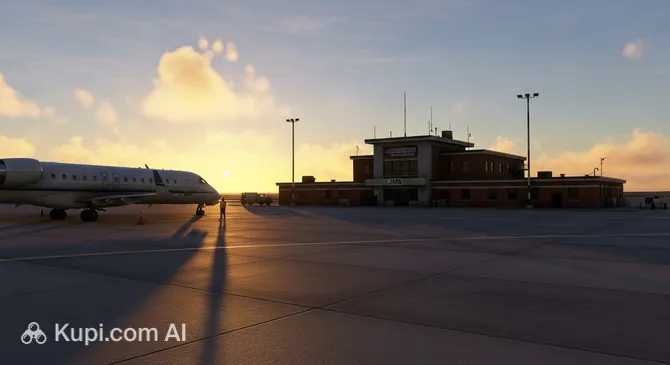
Jamestown Airport. Source: Kupi.com Binoculars

Jamestown Airport (JMS) is not merely a transport hub, but a cosy aerial gateway to the heart of the North American prairies and "The Buffalo City". Instead of the endless queues and noise of megacities, travellers here are greeted by the tranquillity of North Dakota and sincere hospitality. This compact terminal allows you to begin your acquaintance with the region in the most relaxed manner, turning the flight from a tiring obligation into an easy and pleasant part of your journey.

IATA Code JMS
ICAO Code KJMS
City Jamestown
Distance to Centre 3 km
Status Regional
Annual Passengers About 22,000
Schedule According to seasonal timetable

Features and Advantages of the Airport

The main advantage of the Jamestown air harbour is its exceptional speed of service. Thanks to the terminal's small size, the journey from the building entrance to the boarding gate takes mere minutes. There are practically no queues at security checks here, allowing passengers to arrive at the airport a little later than at major hubs and avoid unnecessary stress before departure.

Another significant bonus for travellers is the free parking located in the immediate vicinity of the terminal. While car parking at most airports around the world can cost significant sums, in Jamestown, you can leave your car for the duration of your trip completely free of charge. This makes the airport particularly attractive for local residents and tourists renting cars to travel around North Dakota.

Despite its status as a small regional airport, JMS ensures a reliable connection with the outside world through major transfer hubs. Regular flights to an international hub (usually Denver) open access to hundreds of destinations worldwide. Thus, passengers can enjoy the comfort of departing from a small city while having the opportunity to reach any point on the planet with one convenient transfer.

Contact Information

If you need to contact representatives of Jamestown Airport (JMS), please use the following contact information. We recommend checking the official website for up-to-date data, as it may change.

  • Official Website: Generally, the freshest information on flights, services, and rules can be found on the site www.jamestownairport.com.
  • Information Desk Phone: For immediate information, you can call +1 (701) 252-6480.
  • Airport Address: 3301 19th Ave NW, Jamestown, ND 58401, USA.
  • Email: To contact via email, it is recommended to use the contact form on the airport's official website.
  • Social Media: You can follow news and updates on the airport's official Facebook page.
  • Lost Luggage Information: In case of loss or damage to luggage, you should first contact your airline's representative. If items were lost within the terminal territory, contact the airport information service.
  • Passenger Support Contacts: For general questions related to your stay at the airport, you can contact the main information desk number.

How to Get to the Airport

Getting to Jamestown Regional Airport (JMS) from the city centre of Jamestown is effortless thanks to its close proximity. A car journey usually takes just 5–15 minutes depending on traffic conditions. The main ways to reach the terminal are by taxi, rental car, or private vehicle, as public transport options are quite limited.

Taxi and Transfer are the simplest and most predictable ways to reach the airport. The trip will cost approximately $15–25. Local taxi companies operate in the city. It is also worth checking the availability of ride-hailing apps like Uber or Lyft, although their availability and wait times in small cities can be inconsistent. Booking a taxi or shuttle in advance is a reliable option, especially if you have an early flight or a lot of luggage.

Car Rental and Private Transport are the ideal choice for those who value independence and plan to explore the surroundings. In the USA, and specifically in North Dakota, the car is the primary means of transport. Rental points can be found both at the airport and in the city itself. For travellers with their own vehicles, Jamestown Airport provides convenient and, pleasantly, free parking located within walking distance of the terminal.

Regarding public transport, options for travelling to the airport are extremely limited. Although there is bus service in the city, specific routes to the airport may not exist or may operate on an inconvenient schedule. If you are considering this budget option, it is strongly recommended to study current routes and schedules on the city's official website or clarify information with the local transport service in advance.

Terminals and Map

Jamestown Airport (JMS) is a small regional airport serving domestic flights. It consists of one passenger terminal, making its structure extremely simple and understandable for travellers. All functional zones are combined in this single building: check-in, security screening, departure lounge, and baggage claim.

The airport layout is extremely logical and compact. Upon entering the building, you immediately find yourself in the general area with airline check-in counters. After receiving a boarding pass and checking in luggage, passengers pass through the single security checkpoint, which leads directly to a small waiting hall by the boarding gate. The departure and arrival zones are effectively in the same space; upon arrival, passengers from the aircraft enter the hall and head to the baggage claim belt located near the main exit.

Thanks to its modest size and low passenger traffic, completing all pre-flight procedures at Jamestown Airport takes minimum time. Flight check-in and screening usually happen very quickly, with practically no queues. Despite this, the standard recommendation is to arrive at the airport approximately 60-90 minutes before departure to complete all formalities calmly and without rushing.

Navigation within the terminal is intuitive, and getting lost here is virtually impossible. All key points—from the entrance to the boarding gate—are within a few minutes' walk of each other. Since the airport consists of a single building, transfers between terminals are not required. This makes travelling through Jamestown Airport maximally fast and convenient, especially for those who dislike the hustle of large aviation hubs.

Airport History

The history of Jamestown Airport (JMS), officially known as Jamestown Regional Airport, began in 1935. It was then, on July 14, that its grand opening took place. Initially, it was a modest airfield with dirt runways serving the needs of local aviation.

A key moment in the airport's history was the period of World War II. During this time, it was transferred to the USA Army Air Forces and used as a contract school for training glider pilots. The 15th Glider Training Detachment was based here, making a significant contribution to personnel training for military operations. After the war ended, the airport returned to civil control and continued its development.

The post-war decades were marked by gradual modernisation. The first paved runways were built, and in 1957, the first full-fledged passenger terminal opened. In the 1960s, the main runway was lengthened, allowing for larger turboprop aircraft and expanding the geography of flights. This strengthened the airport's status as an important regional transport hub.

The newest stage in Jamestown Airport's history began in the 21st century. The most significant event was a large-scale reconstruction completed in 2015. The old terminal building was replaced by a modern complex meeting all requirements for comfort and safety. The new terminal received spacious waiting halls, an improved baggage handling system, and modern security checkpoints. Around the same time, a qualitative leap in air service occurred: regional jet liners replaced turboprop aircraft, reducing travel time to major hubs.

Today, Jamestown Regional Airport is a modern and efficient transport facility. It may not boast record passenger numbers, but its history is a clear example of how a small airfield that played its role in military history transformed into an important aerial gateway connecting the region with the rest of the country.

Services and Amenities

Jamestown Airport (JMS) is a compact regional airport offering passengers a basic set of services for a comfortable wait before their flight. It is important to understand that the infrastructure here is focused on fast and efficient passenger processing rather than long-term stays.

For the convenience of travellers, the terminal offers free Wi-Fi and stations for charging electronic devices. The choice of dining establishments and shops is limited: typically, this includes a small café or vending machines where you can buy drinks and snacks. Full-service restaurants and duty-free shops are absent here.

Like all airports in the USA, the terminal is fully equipped to serve passengers with disabilities in accordance with ADA standards. Ramps, accessible restrooms, and staff assistance for boarding and disembarking are provided; assistance is recommended to be requested in advance through your airline. For passengers with small children, there are changing tables in the restrooms. Specialised VIP lounges or business lounges are not provided at the airport.

There are no bank branches or currency exchange points on the airport territory, although ATMs may be available. There is also no stationary medical point, but in emergencies, staff will provide first aid and call emergency services. Services such as conference rooms or business centres are not provided. If you need to stay overnight, several hotels are located in the city of Jamestown itself, just a few minutes' drive from the airport.

Where to Eat

When planning a flight through Jamestown Airport (JMS), it is important to consider that this is a small regional air terminal with a limited range of services. Dining options here are quite modest and primarily designed for passengers needing a quick snack before departure.

Typically, a small café or snack bar operates in the airport's single terminal. Here you can purchase basic beverages such as coffee, tea, water, and soft drinks, as well as packaged snacks: sandwiches, chips, and pastries. Additionally, the airport building usually has vending machines offering drinks and snacks around the clock. This is the most reliable option for those arriving outside the main café's operating hours.

There are no full-service restaurants offering hot meals or bars with a wide assortment of beverages at Jamestown Airport. Finding specialised options, such as vegetarian, gluten-free, or Halal dishes, is extremely unlikely here. Café operating hours are usually tied to the flight schedule and may be limited.

Recommendation for travellers: If you require a full lunch or dinner, or if you have specific dietary requirements, it is best to eat at one of the establishments in the city of Jamestown before arriving at the airport. The terminal's infrastructure is oriented towards quick and functional solutions for a short wait before a flight.

Tips for Travellers

When planning a trip through Jamestown Airport (JMS), use our tips to make your journey as comfortable as possible. Even though it is a small regional airport, proper preparation helps avoid unnecessary stress. We recommend arriving at the airport at least 60–90 minutes before a domestic flight departure. This time will be sufficient for calm check-in, luggage drop-off, and passing security controls.

To save time, complete online check-in for your flight in advance and save the boarding pass on your smartphone. Security checkpoints at small airports are usually less busy, but security rules are standard for all air hubs in the USA. Ensure that all liquids in your hand luggage are packed in containers up to 100 ml and placed in a single transparent bag. Laptops and other large electronics must be placed in a separate bin for scanning.

When choosing a seat on the plane, be guided by your preferences: a window seat offers beautiful views during takeoff and landing, whilst an aisle seat allows you to stand up freely and exit the plane among the first. Regarding hand luggage, remember the ban on carrying sharp objects, flammable substances, and liquids exceeding 100 ml per container. Check your airline's exact rules in advance to avoid unpleasant surprises.

Jamestown Airport serves primarily domestic flights, so transit passengers do not have to wait long for their next departure here. Navigation in the terminal is simple and intuitive. Customs and passport control take place only on international flights, so for flights within the country, you will not need to worry about these procedures—you will pass them at your first airport of arrival in the USA if flying from abroad.

To save money, bring an empty reusable water bottle, which can be filled after passing security, and light snacks. In case of a flight delay, first contact your airline representative for up-to-date information. Know your rights: in some cases, passengers are entitled to meals or hotel accommodation. In a small airport, opportunities for a long wait are limited, so it is useful to have a book, a charged power bank, and headphones with you.

Reached the end of the page?

That means the route is fully explored