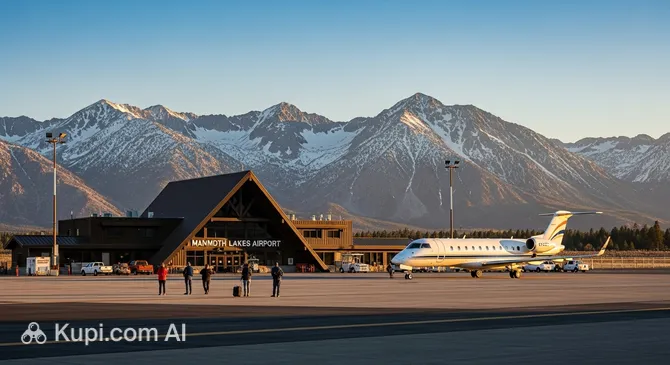
Mammoth Lakes Airport, often referred to as Mammoth Yosemite, is not just a transport hub, but an atmospheric gateway to the world of the majestic Sierra Nevada. There are no endless corridors or the noise of megacities here; instead, travelers are greeted by fresh mountain air and panoramic views of snow-capped peaks right at the aircraft steps. This cozy regional airport allows you to swap an airliner seat for skis or trekking boots literally half an hour after landing, immersing you in an atmosphere of adventure from the very first minutes.
| Characteristic | Value |
|---|---|
| IATA code | MMH |
| ICAO code | KMMH |
| City | Mammoth Lakes |
| Country | United States |
| Time zone | America/Los_Angeles |
| Popular airlines | HOP! |
| Schedule | Online timetable |
Features and Highlights of the Airport
The main "highlight" of Mammoth Lakes Airport is its incredible location and cozy atmosphere. The terminal resembles a welcoming mountain chalet rather than a standard airport building, creating a special mood for tourists. Thanks to its compact size, all arrival and departure procedures are completed as quickly as possible: it usually takes no more than 15–20 minutes from baggage claim to exiting towards a taxi or shuttle. This is an ideal option for those who value their time and want to get to the slopes as soon as possible.
However, the high-altitude location (more than 2,000 meters above sea level) dictates its own rules. The airport is known for its dependence on weather conditions. Strong winds or heavy snowfall in the mountains sometimes lead to route changes, and flights may be diverted to nearby airports, such as Bishop or Fresno. Travelers should consider this factor when planning connections and always allow extra time. Nevertheless, in clear weather, the approach into MMH is considered one of the most picturesque in the US, offering stunning views of the Long Valley Caldera and mountain ranges.