Support

Miami International Airport

Airports in the city

About the Airport

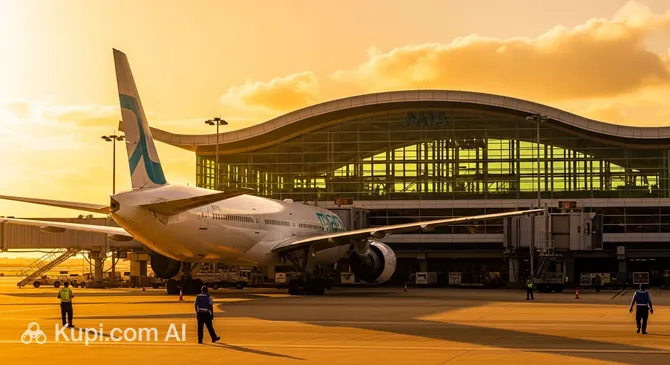
Miami International Airport. Source: Kupi.com Binoculars

Welcome to Miami International Airport (MIA) — the main aerial gateway not only to sunny Florida but to all of Latin America. This is not merely a transport hub, but a true city within a city, where every traveller begins their acquaintance with the vibrant and multifaceted culture of Miami Beach and the entire region. The airport is renowned for its scale and is one of the busiest in the USA in terms of international traffic. Every year, millions of passengers pass through its terminals, heading towards tropical beaches, business meetings, or new adventures.

IATA Code MIA
ICAO Code KMIA
City Miami
Distance to Centre approx. 16-20 km to Miami Beach centre
Status International
Passengers per Year over 52.3 million (2023)
Popular Airlines American Airlines, Spirit Airlines, Delta Air Lines
Schedule "Miami International Airport" online schedule

Miami International Airport is more than just a place to wait for a flight. It serves as one of the largest hubs for American Airlines, ensuring a vast number of flights worldwide, especially to the Caribbean and Latin America. One of the airport's unique features is its extensive art collection located directly within the terminals. Travellers can enjoy works by local and international artists, transforming the waiting time into a cultural experience.

For the convenience of passengers, the airport provides everything necessary: from numerous shops and dining venues to suit every taste, to spas where one can relax before a flight. The airport also includes the MIA Hotel, located right in the central terminal, which is very convenient for transit passengers or those with early departures. Thanks to convenient transport links, including the automated MIA Mover train, one can easily reach the Rental Car Center, Metrorail stations, and bus stops where the express to Miami Beach departs.

Contact Information

  • Official Website: www.miami-airport.com
  • Information Desk Phone: +1 305-876-7000
  • Address: 2100 NW 42nd Ave, Miami, FL 33126, USA
  • Email: To contact airport representatives, it is recommended to use the contact form on the official website, as a public email address is not provided.
  • Social Media: You can follow airport news on official pages on Facebook, X (formerly Twitter), and Instagram under the handle @iflymia.
  • Lost Luggage Information: If you have lost items in the terminal, contact the Lost and Found bureau at +1 305-876-7377. For issues regarding lost checked luggage, you should contact your airline directly.
  • Passenger Support Contacts: For assistance and answers to general questions, you can call the main airport number: +1 305-876-7000.

Getting to the Airport

Getting from the resort area of Miami Beach to the region's main airport, Miami International Airport (MIA), is straightforward thanks to a well-developed transport system. The choice of method depends on your budget, time, and comfort preferences. The journey from central Miami Beach to the airport usually takes 20 to 45 minutes by car, depending on traffic conditions.

Public Transport is the most economical option. The direct express bus Route 150 Miami Beach Airport Express is an ideal choice for tourists. It runs every 30 minutes from Miami Beach (with stops along Collins Avenue) directly to the Miami Intermodal Center (MIC), from where the free MIA Mover shuttle will take you straight to the terminals. The cost of the trip is just a few dollars. You can also use the Metrorail system. To do this, you first need to reach one of the stations on the mainland, and then take the Orange Line train, which goes to the airport.

Taxis, Uber, and Lyft offer the fastest and most convenient way to reach the airport. A trip from Miami Beach to MIA typically costs between $35–$50, though the price may vary depending on demand and time of day. This is an excellent option if you are travelling with a large amount of luggage or a small group. Travel time without traffic jams is about 20-30 minutes.

If you rented a car for travelling around the USA, you can easily return it before departure. All major rental companies are located at the Rental Car Center (RCC), situated near the airport. Simply follow the signs on the highways to the airport and then to the RCC. From there, the aforementioned MIA Mover will take you to the terminals.

Airport Parking is available for those arriving in their own or rented vehicles for a long period. The airport has several multi-level parking garages (Dolphin and Flamingo Garages) with hourly and daily rates. It is worth noting that long-term parking directly at the airport can be quite expensive. Alternatively, you can consider more budget-friendly options at off-site car parks that offer free transfers to the terminals.

Terminals and Map

Miami International Airport (MIA) is a vast and bustling transport hub consisting of one main terminal which has a U-shape. For ease of navigation, this terminal is divided into three sections: North, Central, and South. Each section serves its own airlines and destinations, and has its own concourses, designated by letters from D to J.

Structure and Navigation:

  • North Terminal — essentially Concourse D. It is the primary hub for American Airlines and its partners. This is the largest and most modern concourse in the airport, stretching over one and a half kilometres. For rapid movement along its length, the automated SkyTrain operates, making 4 stops along the departure hall.
  • Central Terminal includes Concourses E, F, and G. It handles a mixed flow of both international and domestic flights from various airlines. Concourse E is also frequently used by American Airlines, while F and G serve carriers from Europe and the Caribbean. These halls are the older parts of the airport.
  • South Terminal consists of Concourses H and J. It primarily serves airlines from the SkyTeam and Star Alliance alliances, including Delta, Air France, Lufthansa, and others. Concourse J is a modern and spacious area for international departures with a wide selection of shops and restaurants.

All three terminals are connected on the landside (before security) at Level 3, allowing free movement between them on foot. Departure and check-in areas are located on the upper level (Level 2), while arrival and baggage claim areas are on the lower level (Level 1). To get from the terminal to the Rental Car Center or the Metrorail station, you must use the automated MIA Mover system, the station for which is located on Level 3 between the Dolphin and Flamingo garages.

Check-in and security procedures can take a significant amount of time, especially during peak hours. For international flights, it is recommended to arrive at the airport at least 3-4 hours before departure, and for domestic flights — 2-3 hours. Lines at passport control upon arrival can also be long. To simplify navigation, study the airport map on its official website in advance and check which terminal and concourse your flight departs from. Signage in the airport is intuitive, but due to its immense size, always allocate extra time for moving between gates.

Airport History

The history of Miami International Airport (MIA) is a chronicle of rapid development, reflecting South Florida's transformation into a global crossroads. It all began in 1928, when the legendary airline Pan American Airways opened its first airfield here, Pan American Field. Initially, it was a modest airfield, but thanks to its strategic location, it quickly became a key base for flights to Latin America and the Caribbean.

The airport received a significant boost in development after World War II. In 1945, Pan American Field was merged with a neighbouring military airfield, creating a modern and major aviation hub. In subsequent decades, MIA became a primary hub for giants such as Eastern Air Lines and Pan Am. It was here in the early 1960s that thousands of children arrived as part of the humanitarian program Operation Pedro Pan, marking an important page in the history of the airport and the entire region.

Throughout its history, the airport has constantly expanded and modernized. In the late 20th and early 21st centuries, large-scale reconstruction projects were implemented, including the construction of modern North and South terminals designed to service the newest wide-body aircraft and growing passenger traffic. These changes were necessary to match the status of one of the busiest airports in the USA.

Among interesting facts from MIA's history, it is worth noting that it has repeatedly set records. Today, it is one of the country's leading airports in terms of international passenger traffic and an absolute leader in cargo. Its role as a vital transport bridge between North and South America makes it not just an airport, but a strategic asset that continues to play a key role in the economic and cultural life of all Florida.

Services and Amenities

Miami International Airport (MIA) offers passengers a full range of services and amenities to make their stay as comfortable as possible. The terminals house a vast number of restaurants, cafes, and dining venues to suit every taste and budget — from fast food outlets to fine dining restaurants. Travellers can also visit numerous shops, including large Duty-Free zones, where one can purchase perfumes, cosmetics, beverages, souvenirs, and designer clothing.

For those who wish to stay connected or work, free Wi-Fi is provided throughout the airport territory. Numerous charging stations for electronic devices are located throughout the building. For a more comfortable wait for a flight, passengers can utilise the services of one of the many VIP lounges belonging to various airlines and alliances. These lounges offer snacks, refreshments, comfortable seating, and a quiet atmosphere.

Financial services at the airport include ATMs, bank branches, and currency exchange points located in different parts of the terminals. In case of need, passengers can seek medical assistance at special first aid stations.

The airport is well-equipped for travellers with children: there are special nursing rooms for infant care. For passengers with reduced mobility, a barrier-free environment has been created, including ramps, lifts, and specially equipped restrooms. Assistance services can also be requested by contacting your airline in advance.

For those needing rest between flights, the Miami International Airport Hotel is located right in the central terminal. Additionally, business travellers can make use of business centres and conference rooms equipped with everything necessary for meetings and events.

Dining

Miami International Airport (MIA) offers passengers a huge variety of establishments for every taste and budget, from a quick snack to a fine dinner. The airport's gastronomic scene reflects the cultural diversity of the city itself, with a special emphasis on Latin American cuisine.

For those short on time, there are plenty of options for a quick bite. In almost every terminal, you will find popular chains such as Starbucks, Dunkin', and McDonald's. These places are ideal for grabbing a coffee, sandwich, or pastry before departure. Most of them are located in the "airside" zone, after passing security control.

If time allows for a full meal, consider full-service restaurants. At Shula's Bar & Grill, you can try classic American steaks and burgers, while Estefan Kitchen Express, owned by the famous couple Gloria and Emilio Estefan, serves modern Cuban dishes. These establishments offer a more relaxed atmosphere and are an excellent choice for a leisurely meal.

The main highlight of Miami Airport is, without a doubt, authentic Cuban food. We highly recommend visiting one of the La Carreta cafes, considered a local landmark. Here you can order a genuine *cafecito* (strong and sweet Cuban espresso), *pastelitos* (puff pastries with guava and cheese), or a legendary Cuban sandwich. This is a wonderful opportunity to taste Miami without even leaving the terminal.

There are also choices for passengers with specific dietary preferences. Many restaurants offer vegetarian, vegan, and gluten-free options — look for salads, vegetable dishes, and special markings on the menu. Travellers seeking Halal options should inquire about ingredients or opt for seafood and vegetarian dishes, which are widely available. Fresh juice and smoothie points are also excellent healthy options. The price range varies: from $15-25 for a quick lunch in the food court to $40-60 and above for dinner in a restaurant. Opening hours for most establishments are adapted to flight schedules; many are open from early morning until late at night, and some coffee shops operate 24/7.

Travel Tips

Planning a trip through Miami International Airport (MIA) requires a little preparation, but knowing a few nuances will help make your journey as comfortable as possible. This is one of the busiest airports in the USA, especially during peak seasons, so arrive early: at least 2-3 hours before a domestic flight and 3-4 hours before an international one. This will give you enough time for check-in, baggage drop, and passing security control without unnecessary rush.

To speed up pre-flight formalities, check in for your flight online and save the boarding pass on your phone. At the airport, special lanes such as TSA PreCheck exist for security screening, which significantly save time. Remember the rules for carrying hand luggage: all liquids must be in containers of no more than 100 ml and packed in a transparent bag. Laptops and other large electronics will likely need to be removed from your bag for separate scanning.

If you have a transfer in Miami Beach, carefully study the airport map. The automated Skytrain runs for quick movement between gates in the long Concourse D. Ensure you have enough time between flights, as you may need to not only switch terminals but also pass security control again. When choosing a seat on the plane, note that flights departing from Miami often offer stunning views of the ocean and cityscape — a window seat can provide unforgettable impressions.

For passengers arriving on international flights, a key stage is passing customs and border control. To save time, fill out the customs declaration in advance. The process can be significantly sped up by programs like Global Entry or using the free mobile application Mobile Passport Control (MPC), which allows you to submit your data electronically before approaching the border control counter.

To save money, bring an empty reusable water bottle, which can be filled after passing security at special water fountains. Prices for food and drinks at the airport are quite high, so a light snack brought from home will also be handy. Consider using public transport, such as the Metrorail train, to get to the city — this is significantly cheaper than a taxi or car rental.

In case of a flight delay, do not despair. Miami International Airport offers plenty of leisure options: from shops and restaurants to unique art installations that are part of the MIA Galleries program. Check your flight information via the airline's mobile app and clarify if you are entitled to compensation, such as meal vouchers, in the event of a long delay.

Reached the end of the page?

That means the route is fully explored