Support

Nikolski

About

Nikolski is a truly unique and remote destination that offers a glimpse into a way of life defined by the rugged beauty of the Aleutian Islands. Located on the southwest end of Umnak Island in the United States, this small village is far removed from the bustle of modern cities, providing an atmosphere of profound solitude and connection with nature. It is a place where the wind sweeps across treeless landscapes and the Bering Sea meets the Pacific Ocean, creating a dramatic backdrop for an unforgettable adventure.

Despite its small size, with a population of approximately 18 residents, the village holds immense significance as one of the oldest continuously inhabited communities in the world. The area has been home to the Unangan (Aleut) people for thousands of years, and the history of Nikolski is deeply rooted in this ancient heritage. Archaeological sites here, such as the famous Chaluka mound, offer evidence of human habitation dating back over 4,000 years, making it a fascinating location for those interested in anthropology and the enduring resilience of indigenous cultures.
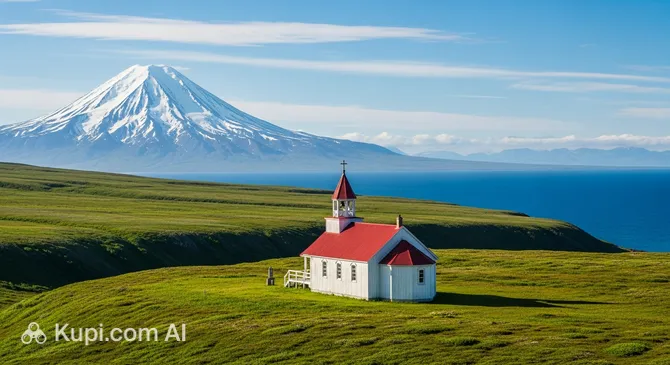
Nikolski. Source: Kupi.Binoculars

The geography of Nikolski is dominated by striking volcanic features and rich marine ecosystems. The climate is maritime, characterized by cool temperatures, frequent winds, and fog, which adds to the mystical allure of the island. While the weather can be challenging, it preserves the pristine condition of the local environment. Travelers who make the journey are often drawn by the spectacular views of Mount Vsevidof, a symmetrical stratovolcano that rises majestically nearby, and the opportunity to explore Umnak Lake, the largest lake in the Aleutian chain.

For nature enthusiasts, Nikolski offers exceptional opportunities for wildlife viewing and birdwatching. The isolation of Umnak Island makes it a haven for seabirds and marine mammals, while the surrounding waters are rich with halibut and salmon, attracting adventurous anglers. Whether you are hiking across the tundra or simply taking in the raw power of the Aleutian landscape, a visit to Nikolski is a journey into the wild heart of Alaska that promises serenity and awe-inspiring sights.

Weather Overview

The climate in this remote village is distinctly maritime, characterized by cool temperatures and consistent moisture throughout the year. Due to its location in the Aleutian Islands, the weather in Nikolski is moderated by the ocean, preventing the extreme cold often associated with mainland Alaska while keeping summers quite cool. The temperature range is remarkably stable, with very little fluctuation between the seasons.

Winters are generally mild but damp, with average temperatures in January and December hovering around 1.2°C to 2.2°C. This season sees the highest frequency of precipitation, with December experiencing up to 25 wet days. Summers offer a modest warm-up, peaking in August with average highs of approximately 9.9°C and lows around 8.2°C. Even during the relatively drier months of June and September, rain or mist is common, with about 14 wet days per month. Expect cool, breezy summers and chilly, consistently wet winters with frequent precipitation year-round.

Interesting Facts

Beyond the known archaeological significance and rugged landscapes, Nikolski holds fascinating secrets that reveal the unique character of this remote outpost. From hidden geothermal wonders to surprising living remnants of the past, the village offers details that few outsiders ever encounter.

  • Rare Geothermal Activity: Umnak Island is one of the few places in the region where you can witness active geothermal features. Geyser Bight, located a hiking distance from the village, contains natural hot springs and steam vents. This area is home to some of the only known geysers in Alaska, creating a steamy, surreal contrast to the typically cool and windy Aleutian weather.

  • A Ranching Legacy: Although it seems wild and untouched today, the area was once the headquarters for a massive sheep and cattle operation known as the Aleutian Livestock Company. As a result of this mid-20th-century history, visitors are often surprised to spot feral cattle and horses roaming freely across the treeless tundra, survivors of the ranching era that have adapted to the harsh environment.

  • Ancient Neighbors: While Nikolski itself is famous for the 4,000-year-old Chaluka mound, the history goes even deeper just offshore. The tiny islet of Anangula, visible from the village, hosts an archaeological site dating back nearly 9,000 years. This makes it one of the earliest known human settlements in the entire Aleutian chain, essentially serving as a cradle of civilization for the Unangan people long before the modern village was established.

How to Get There

Reaching the remote village of Nikolski is a true adventure, often requiring careful planning and a spirit of exploration. Due to its isolated location on Umnak Island in the Aleutian chain, there are no roads connecting it to the mainland or other major settlements. Visitors typically arrange travel through regional air carriers or charter services. For a comprehensive overview of routes and logistics, you can read more about how to get to Nikolski on our detailed page.

The city of Nikolski does not have its own international airport. The primary gateway for travelers heading to this part of the Aleutians is Unalaska Airport (DUT), located in the city of Dutch Harbor. This regional hub is approximately 187.5 km from Nikolski. Since Nikolski is located on a separate island across the open ocean, you cannot take a taxi or bus from Dutch Harbor. Instead, travelers must arrange a connecting flight, typically via a small commuter plane or charter service, which lands on Nikolski's gravel airstrip. The flight offers breathtaking views of the volcanic archipelago and usually takes about 45 minutes to an hour, depending on weather conditions.

For clarity, here is a summary of the main airport used to access the region:

Airport Name City Passenger Traffic Km from City
Unalaska AirportDutch HarborMedium187.5

There is no railway service on Umnak Island or anywhere in the Aleutian chain. The rugged terrain and maritime geography make train travel impossible in this region. Visitors rely exclusively on air travel or, in rare cases, maritime vessels to reach the village. Once in Nikolski, the community is small enough to navigate entirely on foot.

Main Attractions

The attractions in Nikolski are defined by their rugged natural beauty and profound historical significance, offering a travel experience unlike any other in the United States. Instead of commercial tourist spots, visitors here discover a landscape shaped by volcanoes and a village rooted in thousands of years of continuous habitation. The destinations listed below highlight the unique blend of Russian Orthodox heritage, ancient Unangan culture, and the wild geography of Umnak Island.

St. Nicholas Orthodox Church is the most iconic man-made landmark in the village. Constructed in 1930, this historic wooden church is beloved for its simple yet elegant design, featuring a classic three-part structure and a bell tower that has withstood the fierce Aleutian winds for decades. The interior is particularly famous for its exquisite decorative carvings and Royal Doors, crafted by local elders from driftwood. A visit here provides a quiet moment to reflect on the community's deep spiritual resilience and the lasting legacy of the Russian era in Alaska.

Towering over the island is Mount Vsevidof, a spectacular stratovolcano that serves as the island's highest peak at over 2,100 meters. Its perfectly symmetrical cone, often shrouded in mist or gleaming with snow, dominates the western horizon and offers one of the most dramatic views in the Aleutians. For those with mountaineering experience, it presents a formidable climbing challenge, while others simply enjoy the stunning vistas it creates from the village and surrounding tundra. The volcano is a constant reminder of the fiery geological forces that created this archipelago.

Nature lovers and anglers are drawn to Umnak Lake, distinguishing itself as the largest lake in the Aleutian Islands. Connected to the sea by a stream, the lake is a rich ecosystem supporting runs of sockeye salmon and resident populations of trout. It is a peaceful location for fishing or simply walking along the shores to observe the abundant birdlife, including tufted puffins and cormorants. The contrast of the calm freshwater against the rugged volcanic terrain makes it a scenic highlight of any trip to the island.

The Chaluka Site offers a fascinating look into the deep past, recognized as a National Historic Landmark of global importance. This immense mound is actually a prehistoric midden—a layered accumulation of shells, bones, and artifacts—that documents over 4,000 years of continuous human living in this exact spot. Walking near the site gives visitors a sense of scale regarding the village's ancient heritage, as the mound stands roughly 6 meters high and stretches over 200 meters long, effectively serving as a physical timeline of the Unangan people's history.

Just offshore lies Anangula Island, a place of immense archaeological value visible from Nikolski. This small islet hosts the Anangula Archeological District, where excavations have uncovered core and blade artifacts dating back nearly 9,000 years. It is considered one of the oldest known human settlements in the Aleutian chain. While physically reaching the rocky islet requires a boat and favorable weather, its presence on the horizon connects modern visitors to the very earliest chapters of human migration into the Americas.

Local Cuisine

The culinary experience in Nikolski is defined entirely by its isolation and the rich resources of the Bering Sea. Travelers should be aware that there are no restaurants, cafes, or bars in this remote village of approximately 18 residents. Instead, the "local cuisine" is a subsistence diet, deeply rooted in Unangan (Aleut) traditions and the daily rhythm of hunting, fishing, and gathering. For visitors, eating here is not about dining out, but about witnessing a lifestyle where food comes directly from the ocean and the tundra.

The foundation of the local diet is fresh seafood, which is abundant and of exceptional quality. Salmon, particularly sockeye and coho, is a staple, often prepared fresh, smoked, or dried to preserve it for the winter months. Pacific Halibut is another prize catch, known for its dense, flaky white meat, often fried or baked. You might also encounter cod or locally caught crab. Traditional preparation methods, such as drying fish in the wind (a process resulting in a product similar to jerky), are still practiced and represent a flavor profile developed over thousands of years.

On land, the tundra provides a seasonal bounty that supplements the marine diet. During the summer and early autumn, locals gather various wild berries, including crowberries (mossberries) and blueberries. These are eaten fresh, baked into desserts, or preserved as jams and jellies. While traditional dishes involving marine mammals like seal are culturally significant to the Unangan people, they are generally not accessible to tourists due to strict federal regulations regarding the harvest and consumption of marine mammals by non-Natives.

Regarding drinks and the general food scene, the culture is one of hospitality and practicality. Hot tea is the drink of choice, a custom dating back to the Russian colonial era, and is served at almost every social gathering. Since there are no commercial eateries, tourists must plan their meals carefully. Visitors typically stay at the local lodge, where meals are provided, or must bring their own non-perishable groceries. The village has a small community store with basic supplies, but stock can be limited depending on the weather and flight schedules. Sharing a meal in Nikolski is a communal and intimate affair, offering a rare connection to the land and its people.

Travel Tips

Visiting Nikolski is not a typical vacation; it is an expedition into one of the most remote and self-sufficient communities in North America. To ensure a safe and respectful experience in this tiny village of fewer than 20 residents, thorough preparation and self-reliance are absolutely essential.

  1. Clothing and Gear: Prepare for the "Aleutian tuxedo"—high-quality rain gear is non-negotiable. The weather is notoriously windy and wet, so bring a heavy-duty waterproof jacket, rain pants, and insulated rubber boots (Xtratufs are the local standard). Dress in synthetic or wool layers to manage moisture and warmth; cotton is useless here. Since there are no streetlights and terrain is uneven, a sturdy headlamp and trekking poles are highly recommended.

  2. Transportation: Forget about apps like Uber, taxis, or car rentals; they simply do not exist here. The village is small enough to navigate entirely on foot. For exploring further afield, hiking is your primary mode of transport. While some locals use ATVs (four-wheelers) to get around, these are private vehicles. You must be physically prepared to walk everywhere, often on gravel paths or directly across the tundra.

  3. Finances: Cash is king and often the only option. There are no ATMs, banks, or currency exchange counters in Nikolski. While the small community store or lodge might accept checks or credit cards depending on their current system, you should not rely on it. Bring enough US dollars in smaller denominations to cover your entire stay, including potential tips or emergency purchases.

  4. Health and Safety: You are visiting a location where professional medical help is a plane ride away. There is no pharmacy or hospital in the village, only a basic clinic aided by health aides. Weather often grounds flights for days, making medical evacuation difficult. Bring a comprehensive personal first-aid kit and an ample supply of any prescription medications you need. Always inform your host before hiking alone, as the weather can turn dangerous instantly.

  5. Communication: Prepare for a digital detox. Cell phone service is generally non-existent for standard carriers; only specific regional providers (like GCI) might have spotty coverage, but even that is not guaranteed for visitors. Wi-Fi is rare, slow, and expensive, often via satellite. A satellite messenger (like an inReach or SPOT device) is a wise investment for safety if you plan to hike outside the immediate village area.

  6. Local Etiquette: In a community this small, every face is familiar, and a stranger stands out immediately. A friendly wave or "hello" to anyone you pass is the norm. Respect privacy rigorously; do not take photos of residents, their homes, or their equipment (like drying fish or boats) without explicit permission. The pace of life here is dictated by the weather and tides, not a clock, so patience and flexibility are highly valued traits.

  7. What to Avoid: strictly avoid removing any artifacts, bones, or stones from the ground. Nikolski is built on and around the Chaluka mound, a site of immense archaeological significance. Picking up "souvenirs" from the beach or tundra is not only disrespectful to the Unangan heritage but is often illegal on federal or native corporation land.

  8. Food and Supplies: Since there are no restaurants, you must plan your nutrition carefully. If you are not staying at a lodge with full board, bring your own non-perishable groceries from Dutch Harbor or Anchorage. The local store has a very limited selection of goods, and stock depends entirely on when the last freight plane arrived.

Traveling to Nikolski requires a mindset shift from "tourist" to "guest." By arriving well-prepared and respecting the subsistence lifestyle of your hosts, you will be rewarded with an authentic connection to the land and a peacefulness that is increasingly rare in the modern world.

Entertainment & Nightlife

Travelers expecting a bustling scene with nightclubs, cocktail bars, or neon-lit districts will find Nikolski to be a world apart. In this remote village of approximately 18 residents, there is absolutely no traditional nightlife. The "entertainment district" is essentially the vast, open tundra and the shoreline of the Bering Sea. The atmosphere here is one of profound tranquility, where the evenings are defined not by music and crowds, but by the sound of the wind, the crashing waves, and the company of a few fellow travelers and locals.

Instead of hopping between bars, evening entertainment in Nikolski is deeply connected to nature. During the darker months, the lack of light pollution makes the village a premier destination for stargazing and witnessing the Aurora Borealis (Northern Lights). When the skies are clear, the display of dancing green and violet lights over Mount Vsevidof provides a spectacle far more memorable than any city club. For those visiting in the summer, the "night" is virtually non-existent due to the midnight sun, allowing for late-night photography or walks along the beach to watch seabirds under the glow of a twilight that never truly fades.

Social life in the village typically revolves around the Nikolski Lodge, which serves as the primary accommodation and gathering spot for visitors. Here, evenings are spent sharing meals, playing cards, or exchanging stories with local residents and other adventurers. It is a warm, communal experience where the dress code is strictly functional—wool socks and comfortable layers are the norm. Another focal point for a quiet evening walk is the exterior of the historic St. Nicholas Orthodox Church; while you cannot enter at night, the silhouette of this 1930s structure against the darkening sky is a poignant reminder of the island's history.

Practicalities for the evening are simple but strict. There are no taxis, rideshares, or public transport options. Getting around means walking on gravel paths or unpaved trails, so a sturdy flashlight or headlamp is essential for safety, even within the village limits. While the area is safe from urban crime, the real "dangers" are the rapidly changing weather and the uneven terrain. It is advisable to stay within the village perimeter after dark unless you are an experienced navigator, as the treeless landscape can be disorienting.

While the nights are for rest and reflection, daytime entertainment in Nikolski is an active pursuit. Visitors spend their days exploring the outdoors, from hiking the volcanic slopes to visiting the ancient Chaluka Site to understand the region's deep human history. Birdwatching and beachcombing are the primary "amusements," offering a raw and authentic connection to the Aleutian environment that replaces the need for museums or theaters.

Parks & Museums

In the remote village of Nikolski, the concept of parks and museums takes on a different meaning. There are no manicured city gardens with paved paths, nor are there ticketed galleries with glass display cases. Instead, the entire island of Umnak serves as a vast, open-air nature reserve, while the ground beneath the village itself acts as a living museum of indigenous history. Visitors here do not step inside buildings to see exhibits; they step outside into a landscape that has preserved its biological and cultural heritage for millennia.

Umnak Lake functions as the area's premier natural park, offering a pristine wilderness experience that rivals any protected reserve on the mainland. As the largest lake in the Aleutian chain, it is a brackish body of water connected to the ocean by a stream, creating a unique ecosystem where freshwater and marine environments merge. It is a haven for birdwatchers and anglers, teeming with sockeye salmon and trout. Walking along its shores provides a sense of solitude and scale, with the reflection of volcanic peaks often visible on the water's surface, making it a perfect spot for quiet contemplation and photography.

For those willing to venture further, Geyser Bight offers a natural attraction that is geologically spectacular. Located a significant hike from the village, this geothermal area contains one of the most active hot spring systems in Alaska. It is a raw, undeveloped landscape where steam vents rise from the earth and hot water bubbles to the surface, contrasting sharply with the cool Aleutian air. It serves as a wild geological park where visitors can witness the volcanic forces that shaped the archipelago firsthand, offering a rugged alternative to the commercial hot springs found elsewhere.

While there is no formal building labeled "museum," the Chaluka Site is effectively an archaeological archive of global importance. Designated a National Historic Landmark, this massive ancestral midden mound contains layers of history stretching back 4,000 years. It is not a place of static exhibits but a tangible connection to the Unangan ancestors who have lived here continuously. Exploring the perimeter of this site with a respectful guide allows tourists to understand the deep roots of the community, where every layer of soil tells a story of survival, adaptation, and resilience in a harsh environment.

The cultural heart of the village, which serves the role of a gallery of faith and art, is the St. Nicholas Orthodox Church. Inside this modest wooden structure, visitors can view religious artifacts that are significant to the local history, including icons and the beautifully carved Royal Doors. These items are not just museum pieces; they are active elements of the community's spiritual life. The church preserves the legacy of the Russian Orthodox influence in the Aleutians and stands as a testament to the craftsmanship of the local elders who built and adorned it.

For a truly authentic experience, take a walk along the Bering Sea beaches surrounding the village. These shores are a treasure hunter's delight, often washed with driftwood and marine debris that has traveled thousands of miles. Locals and visitors alike enjoy beachcombing here, where you might find glass fishing floats—historic remnants from trans-Pacific fishing fleets—that are highly prized by collectors. It is a simple, uncurated activity that connects you directly with the powerful currents of the Pacific Ocean.

Getting Around

Visitors arriving in Nikolski will immediately notice that the standard concepts of public transportation do not apply to this remote village. There is absolutely no public transport system here: no buses, trams, trolleys, or metros exist within the settlement or on the island. The infrastructure is minimal, designed solely to support a subsistence lifestyle for a population of fewer than 20 people, meaning travelers should not expect any scheduled transit services whatsoever.

Given the complete absence of public transit, there are no tickets to buy, no travel cards to top up, and no transport apps to download. You do not need to worry about fare zones or validation machines. The economy of movement here is entirely physical, and the cost of getting around is measured in effort rather than currency. Budgeting for local transport is unnecessary, as your feet will be your primary vehicle for the duration of your stay.

For the vast majority of visitors, walking is the only mode of transportation available. The village itself is extremely compact, consisting of a few houses, a lodge, a church, and a store, all clustered within a short distance of the airstrip. Navigating Nikolski is straightforward and requires no maps; you can walk from one end of the community to the other in a matter of minutes. However, the terrain can be uneven, muddy, or gravelly, so the most practical advice for getting around is to bring durable, waterproof boots.

Alternatives such as taxis, car rentals, or ride-sharing services are non-existent. You will not find a cab stand or a bike rental shop. While you will likely see All-Terrain Vehicles (ATVs) and rugged pickup trucks moving about, these are privately owned by residents and are essential for their daily work and survival on the island. There is no commercial service for hiring these vehicles, so unless a local host graciously offers a ride, you should be prepared to rely entirely on hiking to explore the surrounding landscape.

The "transport system" of Nikolski is essentially the network of gravel paths and tundra trails that radiate from the village. Since weather conditions can change rapidly and wind is a constant factor, getting around requires appropriate clothing rather than a ticket. Travelers should view the lack of mechanized transport not as an inconvenience, but as an integral part of the authentic wilderness experience that defines life on this isolated island.

Accommodation

Where to Stay:

Accommodation in Nikolski is extremely limited, reflecting the remote and non-commercial nature of the village. Visitors should not expect a range of options such as budget hostels, chain hotels, or luxury resorts. Instead, the hospitality landscape is defined by functionality and community. Typically, there is only one primary lodging facility available for travelers, often referred to as the community lodge. This facility is designed to support contractors, officials, and the few adventurous tourists who make the journey to Umnak Island.

Because the village is so compact, "location" is not a factor when choosing where to stay; everything is within walking distance of the airstrip and the sea. The accommodation available is generally rustic but comfortable, offering a warm refuge from the fierce Aleutian weather. Guests should anticipate a communal living experience, often with shared bathrooms and common areas. Since there are no restaurants in Nikolski, lodging packages are almost exclusively "full board," meaning meals are provided by the hosts as part of the stay.

For the most intrepid travelers, camping might seem like an option, but it comes with significant challenges and rules. You cannot simply pitch a tent anywhere on the tundra. Most of the land is privately owned by the local Native corporation, and permission is required. Furthermore, the environment is harsh; high winds can shred standard tents, and the lack of facilities means you must be entirely self-sufficient. Camping is generally not recommended unless you are an experienced expeditioner with specialized gear and explicit prior authorization.

Booking and Prices:

Booking accommodation in Nikolski requires advanced planning and direct communication. You will not find properties listed on standard travel aggregator websites or apps. Reservations must typically be made by contacting the local Native corporation or the lodge management directly via phone or email, often months in advance. Prices are generally in the mid-to-high range, not because of luxury amenities, but due to the high cost of logistics and the all-inclusive nature of the service (covering room, board, and often ground support). Tip: Never arrive in Nikolski without a confirmed reservation, as there are no alternative hotels and no infrastructure to support unexpected guests.

Nearby Cities

Nikolski is an isolated community on Umnak Island, situated far from other settlements in the Aleutian chain and Western Alaska. Due to the vast distances and the open ocean separating these locations, there is no direct road connectivity, and travel between them requires complex logistics involving regional flights or maritime charters. These destinations are not accessible as day trips, but for adventurers planning a broader expedition across the region, the following list highlights other notable settlements that define this rugged part of the world:

City Population Distance (km)
Dutch Harbor 4300 186
King Cove 1000 490
Togiak 800 862
Akutan 713 244
Kipnuk 700 833

Dutch Harbor (Unalaska) is the most significant destination in the vicinity and serves as the essential transit hub for anyone traveling to Nikolski. Located approximately 186 kilometers away, it is a bustling industrial port known for its deep-water harbor and role in the international fishing industry. Visitors here can explore the Museum of the Aleutians to gain context on the region's history or visit the World War II National Historic Area. It offers a level of infrastructure and amenities that contrasts sharply with the solitude of Umnak Island.

Situated on a neighboring island to the east, Akutan presents another facet of Aleutian life. It is dominated by an active volcano and is home to a traditional village alongside a major seafood processing plant. Like Nikolski, it is remote and rugged, accessible only by boat or amphibious aircraft. Exploring these communities requires significant planning, as they are separated by the unpredictable waters of the Bering Sea, yet each offers a unique perspective on survival and culture in this extreme environment.

The other locations listed, such as King Cove and Togiak, are situated hundreds of kilometers away on the Alaska Peninsula or mainland coast, illustrating the immense scale of the region.

Shopping & Souvenirs

Shopping in Nikolski is fundamentally different from the experience in almost any other destination in the United States. Visitors should be aware that there is no commercial shopping scene, no retail districts, and no boutiques. In this remote village, "shopping" is strictly utilitarian, focused on basic survival needs rather than leisure. The isolation of Umnak Island means that goods must be flown in, making availability dependent on weather and flight schedules.

There are no shopping streets or districts in the village. The entire commercial infrastructure consists of a single small community store, often referred to simply as the Nikolski Store. This establishment is located within the central cluster of buildings near the airstrip. It stocks a limited selection of non-perishable groceries, canned goods, and essential household items. Visitors might find a few snacks or frozen goods, but the inventory is designed to support the local residents, not to cater to tourists.

Travelers looking for shopping malls or department stores will find none on the island. The nearest facilities of this kind are hundreds of kilometers away in Anchorage or, to a much lesser extent, in Dutch Harbor. Nikolski is a place to escape consumer culture entirely, and visitors are strongly advised to bring everything they need—including specialized gear, toiletries, and specific food items—with them upon arrival.

Unlike other destinations where local markets are a highlight, Nikolski does not have food markets, flea markets, or souvenir bazaars. The "market" here is the land and sea itself, from which locals harvest salmon, halibut, and berries. This subsistence economy means that fresh produce is rarely sold; it is gathered. Consequently, tourists cannot rely on buying fresh ingredients locally and should plan their meals in coordination with their lodging provider.

When it comes to souvenirs, you will not find gift shops selling magnets or postcards. However, the Aleutian region is world-renowned for the incredible artistry of Unangan (Aleut) grass weaving. While there is no formal gallery, you may occasionally find a local artisan willing to sell a small woven basket or intricate craft directly. These items are museum-quality masterpieces made from beach grass and are considered some of the finest basketry in the world. If you are lucky enough to find one for sale, treat it as a significant investment in art.

Opening hours for the community store are irregular and can change without notice, often revolving around the arrival of the mail plane or the storekeeper's schedule. It is generally best to ask your host when the store might be open. In terms of payment, cash is the only reliable method. Credit cards are rarely accepted due to the lack of reliable internet connectivity, and there are absolutely no ATMs on the island. Ensure you bring enough US dollars in small denominations to cover any incidental purchases.

regarding taxes, the state of Alaska does not impose a state-level sales tax, which technically makes shopping "tax-free" in that regard. However, given the high cost of freight to reach this remote location, prices for basic goods in the village store are significantly higher than on the mainland. The concept of a tourist tax refund is not applicable here, as the infrastructure for such programs does not exist.

Nearby cities

Reached the end of the page?

That means the route is fully explored