Support

Palm Springs International Airport

About the Airport

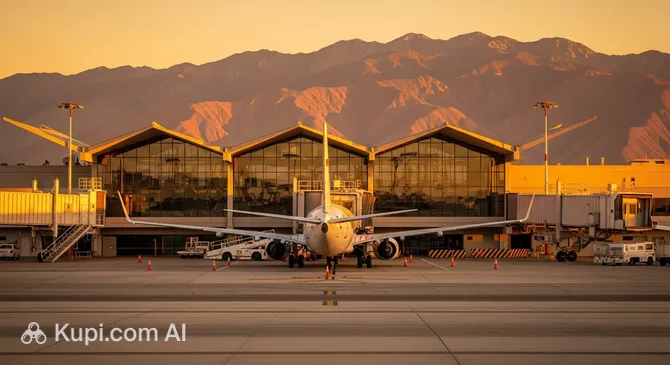
Palm Springs International Airport. Source: Kupi.com Binoculars

Palm Springs International Airport is not merely a gateway to the famous Californian resort, but a true architectural marvel that fits perfectly into the relaxed atmosphere of this desert oasis. Unlike most terminals, a significant part of it is located outdoors, allowing travellers to enjoy the sunny weather of the USA immediately upon arrival. Thanks to its unique design and high level of service, the airport has been repeatedly recognised as one of the most comfortable and least stressful in America.

IATA Code PSP
ICAO Code KPSP
City Palm Springs
Distance to Centre approx. 3 km
Status International
Annual Passengers over 3.2 million (2023)
Popular Airlines Alaska Airlines, United Airlines, American Airlines
Schedule Online Board "Palm Springs International Airport"

One of the main features of the airport is its thoughtful integration with the environment. The terminal is surrounded by palm trees and picturesque mountains, and there are even several artificial lakes on its grounds, which not only decorate the landscape but also help regulate the air temperature. Spacious waiting halls are filled with natural light, and the central open-air courtyard with restaurants and shops creates the feeling of being at a resort rather than a transport hub. Its proximity to the city centre, just a few kilometres away, makes it incredibly convenient for tourists wishing to quickly reach their hotels and begin their holiday.

Contact Information

For your convenience, we have compiled the main contact information for Palm Springs International Airport (PSP). Save this so you always have it to hand.

  • Official Website: You will always find the most complete and up-to-date information on the airport's official portal — palmspringsairport.com.
  • Information Desk Phone: For general enquiries, you can call +1 (760) 318-3800.
  • Airport Address: 3400 E Tahquitz Canyon Way, Palm Springs, CA 92262, USA.
  • Lost and Found: If you have left personal items in the terminal building, contact the airport's Lost & Found service at +1 (760) 318-3841. For issues related to lost or damaged luggage, you must contact your airline's representative directly.
  • Social Media: Follow the latest news and airport updates on the official pages on Facebook, X (formerly Twitter) and Instagram.
  • Passenger Support Service: For assistance and consultations, use the main airport phone number or the feedback form available on the official website.

How to Get to the Airport

Palm Springs International Airport (PSP) is very conveniently located just a few kilometres east of the city centre, so getting there is effortless. Travellers have access to several transport options, varying in cost, speed, and convenience.

Public Transport. The most budget-friendly way to get to the airport is by bus. The local transport company, SunLine Transit Agency, serves the entire Coachella Valley, and several of its routes pass in the immediate vicinity of the airport. This is an excellent option for economical tourists with a small amount of luggage, although it is worth allowing extra time for the journey.

Taxis and Transfers. The fastest and most comfortable method is a taxi or ride-sharing services such as Uber and Lyft. A trip from the centre of Palm Springs to the terminal will take no more than 10-15 minutes, depending on traffic. The cost of such a trip is usually between 15–25 dollars. You can also pre-book a private transfer, which is particularly convenient if you are travelling in a large group or with bulky luggage.

Car Rental. If you plan to explore the picturesque surroundings, for example, Joshua Tree National Park, then renting a car would be the ideal choice. Offices of all major rental companies are represented at Palm Springs Airport. You can pick up a car upon arrival or, conversely, return it right before departure, ensuring maximum flexibility for your journey.

Personal Car and Parking. For those driving to the airport in their own vehicle, convenient parking zones are provided. Passengers have access to both short-term and long-term parking, located within walking distance of the terminal. Prices depend on the duration of the stay, but finding a free space is usually not a problem.

Terminals and Map

Palm Springs International Airport (PSP) is distinguished by its unique and passenger-friendly structure. In fact, there is only one main terminal here, which is divided into several zones connected by open space, creating a resort atmosphere right inside the airport.

The airport layout is simple and intuitive. The main terminal building is designed for flight check-in and baggage claim. This is where airline counters and car rental points are located. After check-in, passengers pass through a single security checkpoint located in the centre of this building. Security clearance time is usually shorter than in major airports, but during the peak tourist season (winter and during festivals), it is recommended to allow at least 30-40 minutes for this.

The most remarkable feature of Palm Springs Airport is its post-security zone. After screening, you enter a spacious open-air inner courtyard. Here you will find restaurants, shops, a children's playground, and plenty of places to relax amidst palm trees and art installations. This courtyard serves as a link between the main building and two separate concourses (gate zones):

  • Sonny Bono Concourse (Gates 4-11) — the larger of the two, serving most major airlines.
  • Second Concourse (Gates 12-20) serves regional and some other flights.

Transfer between concourses is done on foot through the same central courtyard, which takes just a few minutes. Navigation is extremely simple; it is practically impossible to get lost here. Departure zones (gates) and arrival zones are organised in the same concourses. Arriving passengers also pass through the central courtyard to get to the main building for baggage claim carousels. In general, to orient yourself in the airport and complete all formalities before departure, it is sufficient to arrive 1.5–2 hours before a domestic flight leaves.

Airport History

The history of Palm Springs International Airport (PSP) begins long before it became a popular civilian hub. Its roots go back to 1939, when the US Army Air Corps established an airfield here. During World War II, the facility played a key role as an airfield for the 11th Ferrying Group, ensuring the transfer of aircraft and cargo to the Pacific theatre of operations. This military phase laid the foundation for the future airport infrastructure.

After the war, the airfield gradually transitioned to civilian use. In 1961, the city of Palm Springs purchased the land and facilities, and in 1964 regular commercial flights began. This moment became a turning point in the city's history, transforming it into an easily accessible destination for tourists and Hollywood stars seeking seclusion in the desert. The growth of the resort's popularity directly contributed to the development and expansion of the airport.

One of the most iconic events in the airport's history was the opening of the main terminal in 1965, designed by the famous architect Donald Wexler. The building is a striking example of the mid-century modern architectural style that defines the look of all Palm Springs. Later, as a tribute to the former mayor of the city and famous artist, one of the terminals was named the Sonny Bono Concourse. Over the decades, the airport has been modernised repeatedly to cope with growing passenger traffic.

Interesting fact: Palm Springs International Airport is famous for its unique open-air design. Most waiting areas and walkways between gates are located in the fresh air, allowing passengers to enjoy the sunny California weather right up until boarding the plane. This feature makes it one of the most pleasant and atypical airports in the USA, perfectly reflecting the relaxed atmosphere of the resort itself.

Services and Amenities

Palm Springs International Airport (PSP) offers passengers a comfortable and relaxed atmosphere, supported by all necessary services. A feature of the airport is its unique architecture with open zones where one can enjoy the California sun while waiting for a flight. Travellers have access to various restaurants and cafes offering both quick snacks and full meals. Shops in the terminal include souvenir stands, newsstands, and travel goods outlets.

Free Wi-Fi is provided throughout the airport, and numerous stations with sockets and USB ports are equipped for charging electronic devices. Passengers looking for extra comfort can use the services of premium lounges, where beverages, snacks, and a more private setting are offered. ATMs are installed in the terminal for financial transactions, and currency exchange services are also available.

The airport is fully equipped for the needs of passengers with reduced mobility, including ramps, lifts, and specially adapted washrooms. Families with children can use the nursing rooms. Medical assistance is available to passengers if needed. Although there are no hotels directly inside the terminal building, many hotels of various price categories are located in the immediate vicinity, and many can be easily reached by shuttle or taxi. For business travellers, some lounges offer basic business services, such as work zones and access to office equipment.

Where to Eat

Palm Springs International Airport (PSP) offers passengers a pleasant and diverse dining experience, largely thanks to its unique architecture with open courtyards. Here you can find options for both a quick snack and a leisurely lunch while waiting for your flight.

Before Security (Landside)

In the main check-in area, accessible to all visitors, the choice of establishments is limited. As a rule, you can find a coffee shop here, for example, Starbucks, where it is convenient to grab a coffee and pastries to go. This is an ideal option if you are seeing someone off or have arrived at the airport long before check-in begins.

After Security (Airside)

The main gastronomic points are concentrated in the departure zone, after screening. A unique feature of the airport is the spacious open-air inner courtyard where most restaurants are located. This allows you to enjoy a meal in the fresh air under the Californian sun.

  • For a full lunch: Pay attention to establishments such as Santa Rosa Kitchen & Spirits, which serves modern American cuisine, or a branch of the famous local restaurant Las Casuelas Terraza, offering Mexican classics. This is a wonderful opportunity to taste the authentic flavours of the region without leaving the airport. Please note that while vegetarian options are available, Halal certification is not standard in this region, so please check ingredients with staff.
  • For a quick snack and coffee: In addition to chain coffee shops, local cafes operate in the departure zone, where you can order sandwiches, salads, and freshly brewed coffee. Look for signs like PSP Coffee House or similar establishments in both terminals (Sonny Bono Concourse and Gates 4-11).
  • Refreshments: There are also several venues in the secure zone, such as The Taproom, where you can relax with a beverage before your flight.

Special Dietary Requirements and Prices

Most establishments offer vegetarian options, such as salads, vegetable sandwiches, and snacks. Finding vegan and gluten-free dishes is also possible, but it is best to check the composition with the staff. Prices at Palm Springs Airport, as in most airports, are higher than the city average. Restaurant and cafe opening hours are usually tied to the flight schedule and cover the period from early morning until the departure of the last evening flight.

Travel Tips

Travelling through Palm Springs International Airport (PSP) often becomes a pleasant start or end to a trip, largely thanks to its unique open-air architecture. Nevertheless, good preparation will help make your experience even smoother. Here are a few tips that will be useful for every traveller.

Arrival Time and Security Control. For domestic flights within the USA, it is recommended to arrive at the airport 90 minutes before departure, and for international ones — at least 2 hours. Although the airport in Palm Springs is not as large as mega-hubs, during the peak season (winter and during festivals) it can get crowded. To save time, check in online in advance. The screening procedure is standard for American airports; be prepared to remove electronics and liquids from your carry-on luggage.

Seat Selection and Carry-on Luggage. When flying out of Palm Springs or arriving here, try to get a window seat. You may be treated to stunning views of the Coachella desert and the San Jacinto Mountains. Regarding carry-on luggage, remember the rule for carrying liquids: all containers must be no more than 100 ml in volume and packed in a single transparent bag. It is prohibited to carry sharp objects, weapons, and flammable substances in the cabin.

Connections and Customs Control. PSP is not a major transit hub, so navigation here is simple. If you have a connecting flight, little time will be needed to transfer between gates. For passengers arriving from other countries, customs and border control are provided. Keep your passport, visa, and completed customs declaration ready to speed up the process.

Saving Time and Money. To save money, book parking on the official airport website in advance — this is often cheaper than paying on the spot. Take an empty water bottle with you, which can be filled after passing security control, and light snacks. This will allow you to avoid higher prices within the terminal.

If the Flight is Delayed. In case of a flight delay, first contact your airline representative for the latest information. Find out about your rights to compensation, provision of meals, or a hotel. Fortunately, Palm Springs Airport has cosy waiting areas, cafes, and shops, as well as the famous open-air courtyard, where waiting becomes less tiring.

Reached the end of the page?

That means the route is fully explored