Support

Port Moller

About the Airport

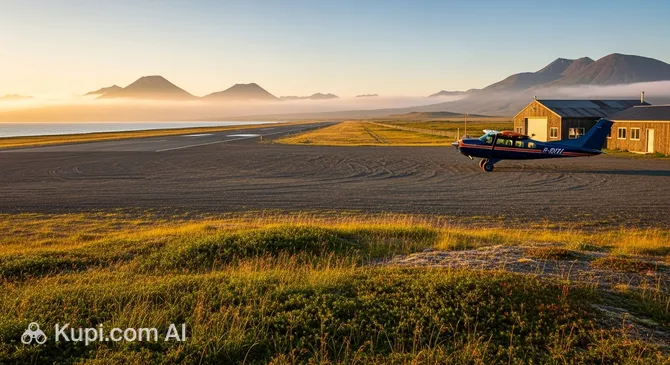
Port Moller. Illustration.
Source: Kupi.com AI

Port Moller Airport (PML) is not just a transport hub, but a true starting point for immersing yourself in the wild nature of Alaska. Located on a secluded peninsula, this airfield serves adventurers dreaming of seeing rugged volcanoes and legendary fishing spots. There is none of the usual hustle and bustle of major international hubs here; instead, travelers are greeted by fresh ocean air and landscapes so majestic they take your breath away.

PropertyValue
IATA CodePML
ICAO CodePAAL
CityPort Moller
CountryUnited States
TimezoneAmerica/Anchorage
ScheduleOnline Timetable

Features and Advantages of the Airport:

Authentic Alaskan Spirit. Port Moller consists of a gravel runway surrounded by pristine tundra. This place is ideal for those seeking solitude and real adventures far from urban civilization.

Access to Unique Locations. The airport serves as a key hub for transfers to world-class fishing lodges and hot springs located in the vicinity. Often, expeditions to nearby volcanoes and lakes begin right here.

Seasonality and Atmosphere. Due to its location, the airport operates primarily during the summer season, providing logistics for the fishing industry and eco-tourism. The lack of complex infrastructure is more than compensated for by the incredible atmosphere of being at the edge of the world.

Contact Information

  • Official Airport Website: There is no dedicated website (the airport is a private facility for public use). Current information on flights and weather conditions should be checked on the website of the main air carrier — Grant Aviation.
  • Help Desk Phone: +1 888-359-4726 (Grant Aviation Unified Support Center). There is no direct line to the airport dispatch for passengers.
  • Airport Address: Port Moller Airport, Port Moller, AK 99571, USA.
  • Email: res@flygrant.com (Grant Aviation Reservations). The airport administration's own e-mail address is not publicly provided.
  • Airport Social Media: Official accounts are absent. Regional news is sometimes published in Alaska aviation enthusiast communities or on the pages of seasonal fishing lodges.
  • Lost Luggage Information: Tracing items is carried out exclusively through the airline that operated the flight. You must contact the carrier's office at the point of departure or arrival.
  • Passenger Support Contacts: Since the terminal operates in a limited mode and often has no permanent staff, all service issues (delays, rescheduling, transfers) are resolved through representatives of the airline or the hosting party (fishing lodges, Peter Pan Seafoods).

How to Get to the Airport

Getting to or from Port Moller Airport is a task that differs significantly from the usual city experience. Since this airport serves a remote and sparsely populated region of Alaska, the classic elements of metropolitan transport infrastructure are absent here. It is important to understand that logistics in these parts require advance planning.

Transfers and Taxis

In Port Moller, there are no taxi services, ride-hailing apps, or official carrier counters in the terminal. The main mode of transport for tourists is organized transfer.

  • Lodge Transfers: If you are flying for fishing or an eco-tour, your hosting lodge (for example, Bear Lake Lodge) will almost always organize a meet-and-greet. Resort representatives meet guests right at the aircraft in SUVs or special all-terrain vehicles. The travel time to most bases is from 10 to 30 minutes. The cost of the transfer is usually included in the tour price.
  • Transfer for Workers: During the fishing season, employees of the Peter Pan Seafoods processing plant are met by corporate buses or shift vehicles.

Public Transport

Public transport is completely absent in the region. There are no bus routes, trains, or metro. Port Moller is not a city in the usual sense, but rather an industrial-tourist settlement where all facilities are either within walking distance or require special off-road transport.

Car Rental

Counters of international rental companies (Hertz, Avis, etc.) are absent at the airport. It is impossible to rent a car on arrival. The road network is extremely limited and consists mainly of gravel tracks connecting the airport with the factory and a few residential buildings.

Parking and Airport Access

The concept of "parking" here is nominal. Next to the runway, there is a small dirt area where vehicles of those meeting passengers can stop. Parking is free and unguarded. The distance from the drop-off zone to the aircraft is minimal — often just a few dozen meters.

Nearest Alternative Airports

If a flight to Port Moller is impossible due to weather conditions or other reasons, travelers often use larger regional hub airports, from where they can arrive by small aircraft or water transport (depending on the season):

  • Cold Bay Airport (CDB) — the nearest major all-weather airport with a long runway. Located approximately 163 km away.
  • Egegik Airport (EGX) — located at a distance of about 310 km.
  • Dillingham Airport (DLG) — an important regional hub, distant by 360 km.
  • King Salmon Airport (AKN) — a popular entry point to Katmai Park, the distance is about 379 km.
  • Unalaska Airport (DUT) — located on the Aleutian Islands, 449 km from Port Moller.

Recommendations for Passengers: Always coordinate your arrival and departure method with your hosting party in advance. Independent movement without arrangements in the wild conditions of Alaska can be difficult.

Terminals and Map

Port Moller Airport (PML) is a vivid example of Alaskan "bush flying." Here you will not find multi-level walkways, jet bridges, or confusing maps. All infrastructure is extremely functional and adapted to the harsh conditions of the region. Travelers should be prepared in advance for the fact that the concepts of "terminal" and "departure zone" here have a completely different scale than in international hubs.

Number of Terminals and Structure

In fact, the airport has one small structure acting as a passenger terminal. Often, a room provided by the local cannery or one of the fishing lodges may serve as a waiting area, depending on whose charter you are flying. It is a single-story building housing basic amenities for protection against wind and rain.

  • Check-in Zone: There are no check-in counters as such. Passenger meetings and list checks often take place directly at the aircraft side or in a mini-office of the airline inside the building.
  • Waiting Hall: A small space with a minimal set of seats. In the height of the season, it can be crowded here due to shift changes at the fish production facility.

Departure and Arrival Zones

The boundary between the "airside" zone and the public access zone in Port Moller is practically erased. The movement logistics look as follows:

Departure: Passengers wait for the aircraft's arrival in the room or next to it. After a command from the pilot or airline representative, the group walks to the aircraft. Boarding is carried out via small portable stairs or steps built into the aircraft fuselage.

Arrival: After landing and the propellers stop, passengers descend onto the gravel surface of the airfield. Luggage delivery happens right there: the pilot or ground staff unload bags from the cargo hold directly onto the ground or a cart, from where passengers collect them independently.

Features and Services

The Port Moller terminal offers only the most necessary minimum for a short stay:

  • Heating: The premises are heated, which is critically important in the windy and cool weather of the Aleutian region.
  • Restrooms: Basic toilet rooms are available (sometimes outdoor types, depending on the specific waiting location).
  • Lack of Services: There are no Duty Free shops, cafes, ATMs, or currency exchange points here. Food, water, and cash must be brought with you in advance.
  • Connectivity: Mobile connection and Wi-Fi may work intermittently or be absent altogether.

Check-in and Screening Procedures

The absence of complex security systems makes the departure process very fast, but requires discipline:

Check-in: It is recommended to arrive at the boarding place 30–45 minutes before departure. This time is sufficient for weighing luggage (strictly mandatory for small aviation) and verifying passport details.

Screening: There is no classic security screening with metal detector frames and scanners (like TSA). However, the pilot has the right to visually inspect luggage and clarify the contents of bags for flight safety purposes. Weapons for hunting and protection against bears must be unloaded and packed according to the carrier's rules.

Navigation and Safety Recommendations

Since there are no transitions between terminals, navigation comes down to following staff instructions. Nevertheless, it is important to remember the rules of conduct at an unequipped airfield:

  • Follow the Pilot: Never walk onto the runway without an escort. This is an active zone where other aircraft may maneuver.
  • Caution, Propellers! Approach the aircraft only when the engines are completely shut down, and only from the side indicated by the pilot.
  • Wildlife: The airfield territory is not fenced. Brown bears often roam in the vicinity. Be attentive while waiting for a flight outside, and do not stray far from buildings or vehicles.

Airport History

The history of Port Moller Airport (PML) is inextricably linked with the history of the exploration of the harsh lands of the Alaska Peninsula, the development of the fishing industry, and Cold War military projects. Unlike city airports built for mass transport, this airstrip emerged from the necessity of survival and work in conditions of complete isolation.

Origins: The Era of Canneries

Although the exact date of the first aircraft landing on this territory is not documented, the aviation history of the place began in parallel with the rise of the fishing industry. In the early 20th century (around 1912–1917), a large cannery was founded here (now associated with Peter Pan Seafoods). Initially, connection with the outside world was maintained exclusively by sea, but with the development of small aviation in the 1940s–1950s, a need arose for the rapid delivery of mail, medicine, and personnel. The airstrip formed spontaneously, being strengthened with gravel to receive light piston aircraft.

The "White Alice" Era and Military Significance

The most significant stage of infrastructure development occurred during the Cold War period. In the late 1950s, Port Moller became an important point on the US defense map. A tropospheric scatter station was built here as part of the "White Alice Communications System".

The airport played a key role in the construction and maintenance of giant parabolic antennas that ensured communication between remote military facilities. To deliver heavy equipment and building materials, the runway was modernized and strengthened. The station functioned until 1979, and it was during this period that the airfield was maintained in its best technical condition through government contracts.

Modern Stage and Tourism

After the closure of the military facility and the winding down of the "White Alice" program, the airport returned to its civil purpose. In the 1980s and 1990s, the focus shifted to serving seasonal workers of the fish factory and emerging eco-tourism. Modernization during this period was of a maintenance nature: regular leveling of the gravel surface and updating of navigation signs by private owners and airlines.

Interesting Facts and Historical Details:

  • Over-the-Horizon Communication: The remains of the "White Alice" station are still visible in the vicinity of the airport, attracting fans of industrial history. In its time, it was a marvel of engineering, allowing radio signals to be transmitted by reflecting them off layers of the atmosphere.
  • Volcanic Neighborhood: Throughout its history, the airport has periodically faced activity from Mount Veniaminof. Ash emissions have repeatedly interrupted air traffic, reminding us that nature dictates its own rules here.
  • Private Status: Historically, the facility developed as a private initiative (first by fishermen, then with military support), so there has never been a classic state terminal here.
  • Logistical Feat: All fuel for aircraft in the early years was delivered here exclusively by barges during the summer navigation period, which made every flight literally "worth its weight in gold."

Services and Facilities

The services and infrastructure of Port Moller Airport (PML) reflect its specific nature: it is a remote seasonal airfield designed for quick transfers from an aircraft to fishing lodge transport or industrial vehicles. There are no usual attributes of commercial aviation here, so passengers should be fully autonomous and prepared for the absence of city comfort.

Restaurants, Cafes, and Shops

In the airport and its immediate vicinity, catering and retail outlets are completely absent. There are no cafes, vending machines with snacks, or souvenir shops.

  • Food: It is strongly recommended to carry a supply of food (sandwiches, snacks) and drinking water, especially if a flight delay due to weather is possible.
  • Shopping: All necessary equipment, personal hygiene products, medicines, and batteries must be bought in advance in Anchorage or King Salmon before flying to Port Moller.

Connectivity and Electricity

Port Moller is a place for a "digital detox," often forced.

  • Wi-Fi: Public internet for passengers is absent. Satellite connection exists only in the offices of fishing lodges and at the factory, but access is provided exclusively to employees or lodge guests upon arrival at the accommodation site.
  • Mobile Network: Coverage by cellular operators is extremely unstable or absent.
  • Charging Stations: There are no specialized stands for charging gadgets. A standard socket might be found in the waiting building, but one should not count on it — it is better to bring a fully charged power bank.

Financial Services and Business

Infrastructure for business travelers and financial operations is not provided here:

  • Banks and ATMs: Absent. It is impossible to pay by card on the airport territory.
  • Currency Exchange: Not performed.
  • Conference Rooms: There are no business centers or VIP lounges. The only place for waiting is the general room or the street.

Tip: Always take a sufficient amount of cash in US dollars in small bills for tips to guides or emergency situations.

Medical Services

There is no medical center or pharmacy at the airport. Basic first aid can be provided by the staff of the fish processing plant or lodge guides who have first aid kits. In case of serious injuries or illnesses, emergency evacuation by air ambulance (medevac) to the nearest large settlement is required, which may take time due to weather.

Services for Passengers with Children

Specialized mother and child rooms, play areas, or changing tables are absent. Traveling with infants to this region requires careful preparation by parents: all supplies of baby food, diapers, and warm clothing must be brought with you.

Accessible Environment

Port Moller Airport has limited capabilities for serving passengers with reduced mobility (PRM):

  • Boarding: Carried out via narrow stairs or steps of small aircraft (often Cessna or Piper), which makes boarding in a wheelchair impossible without outside help.
  • Territory: The gravel surface of the runway and dirt roads make movement in wheelchairs difficult.
  • Recommendation: If you require assistance, it is necessary to notify the air carrier and the hosting party (lodge) at least 48 hours before departure so they can organize staff support upon meeting.

Hotels and Accommodation

There are no classic hotels, hostels, or guest houses in the airport building itself or within walking distance. Accommodation in Port Moller is strictly tied to the purpose of the visit:

  • Bear Lake Lodge: A popular high-class fishing base located near the airport. Provides transfers and full board. Booking is mandatory well in advance of the trip.
  • Factory Dormitories: Intended exclusively for seasonal workers and employees of Peter Pan Seafoods.
  • Camping: There are no organized camping spots near the strip, and setting up tents in the wild tundra requires experience and caution due to high bear activity.

Where to Eat

When planning a trip to Port Moller (PML), passengers should consider a key feature of this transport hub: it is a remote airfield in the wilderness where public catering facilities are completely absent. Here you will not find the usual food courts, coffee shops, lounges, or even vending machines.

Unlike standard airports where waiting for a flight can be brightened up with a cup of coffee or lunch, in Port Moller, the concept of dining is built on the principle of complete passenger autonomy or the service of the hosting party (fishing lodges).

Restaurants and Cafes: The Reality of Wild Alaska

In the single small terminal building and the surrounding area, there are no commercial establishments. This means:

  • Terminals: In the waiting area (both inside and outside), there are no food sales points.
  • Airside / Landside: The division into zones here is nominal, and neither has access to food products.
  • Opening Hours: Since there are no establishments, this point is irrelevant. Access to drinking water may also be limited, so having your own bottle is mandatory.

Where to Eat: Strategy for the Traveler

Since it is impossible to buy food on the spot, the issue of nutrition is resolved depending on the type of your trip. Two main scenarios work in Port Moller:

1. For Guests of Fishing Lodges (All-Inclusive)

Most tourists arrive here for elite fishing and stay in specialized bases (for example, Bear Lake Lodge). In this case, catering is fully taken care of by the hosting party.

  • Signature Offerings: Lodges are famous for their cuisine. Freshest seafood awaits you: wild Alaskan salmon, halibut, crabs, as well as game dishes. This is a high-level gastronomic experience, but it is available only after transfer to the base, not at the airport itself.
  • Lunch for the Road: When departing back, lodges often pack lunch boxes for their guests (sandwiches, fruits, pastries) so you can have a snack while waiting for the plane. Be sure to clarify this option with the base staff on the eve of departure.

2. For Independent Travelers and Seasonal Workers

If you are not a guest of a lodge and are not assigned to the canteen of the fish processing plant (which is closed to outsiders), you must take care of yourself.

  • Prepare in Advance: Buy all groceries at the point of departure — Anchorage, King Salmon, or Dillingham. These cities have supermarkets and cafes.
  • What to Bring: It is recommended to have a supply of high-calorie and non-perishable products: protein bars, nuts, dried meat (jerky), chocolate, sandwiches in sealed packaging.

Dietary Requirements (Vegetarian, Halal, Gluten-Free)

Due to the lack of choice on-site, passengers with special dietary needs must be especially vigilant:

  • Full Control: The only way to guarantee that food meets your standards (whether it's veganism or Halal) is to bring it with you. Note for Muslim travelers: There are no Halal-certified facilities in this remote region.
  • Order at the Lodge: If you are going on a tour, inform the base representatives about your restrictions (allergies, Halal requirements) at least 2 weeks before arrival. Chefs in remote lodges order products in advance and will not be able to quickly find replacement ingredients on-site.

Average Price Range

Since commercial trade is absent, food costs come down to the price of groceries bought by you in the "big world" before departure. Prices in Alaska are generally 20–30% higher than the US average, so a pre-packed lunch box will help not only satisfy hunger but also save money.

Recommendations for Dining Before Departure and Upon Arrival

To avoid discomfort, follow a simple rule:

  • Full Meal: It is best to eat a substantial meal at the departure airport (for example, at Ted Stevens Anchorage International Airport), where there is a wide selection of restaurants.
  • Quick Snack: Keep a bottle of water and snacks in your hand luggage in case of flight delays due to fog or wind — a common occurrence for Port Moller. Waiting can drag on for several hours, and there will be no shops nearby.

Traveler Tips

Traveling through Port Moller Airport (PML) is a unique experience that has little in common with standard flights. Here you will not find long queues or strict security checks, but the harsh nature of Alaska and the specifics of small aviation dictate their own strict rules. To ensure your flight goes smoothly, we have prepared a number of practical tips.

Arrival Time at the Airport

Unlike major hubs, there is no need to arrive 2–3 hours in advance. The airport operates in "tundra rhythm." The optimal arrival time at the boarding place is 30–45 minutes before departure. This is enough for the pilot to check lists, weigh luggage (and sometimes passengers), and prepare the aircraft. However, being late is categorically not allowed: daylight hours in Alaska can be short, and the flight schedule tight.

Check-in and Security Features

The check-in procedure here is simplified to the maximum, but has its nuances:

  • Total Weighing: For small aircraft (Cessna, Piper, King Air), weight is critically important. Be prepared to step on the scales together with your hand luggage. Honesty when stating weight during booking is a guarantee of flight safety.
  • No TSA: There are no metal detector frames or shoe scanners here. Screening is conducted visually by the pilot or airline representative.
  • Weapons and Sprays: If you are carrying hunting weapons or bear spray, be sure to inform the pilot before boarding. Spray is strictly prohibited in the cabin due to the risk of accidental discharge; it must be securely packed in the cargo hold.

Seat Selection

Tickets for Grant Aviation or charter flights usually do not specify specific seats. Boarding is carried out on a "free seating" principle, but with an important caveat: the last word is always with the pilot. They distribute passengers to ensure perfect aircraft balance.

Tip: If weight allows, ask for a window seat. Flying over the Alaska Peninsula and volcanoes opens up incredible views worth keeping your camera ready for. If you suffer from motion sickness, ask for a seat closer to the wing, where turbulence is felt less.

Hand Luggage and Baggage

  • Type of Bags: Avoid hard plastic suitcases. It is much easier to fit soft sports bags or backpacks into the small luggage compartments of bush planes. A hard case may simply not be accepted on board.
  • Minimum Items in Cabin: There is very little space inside the aircraft (often there is none even under the seat). Take only the most necessary items into the cabin: camera, documents, and medicines. Check everything else in as luggage.
  • Prohibitions: Despite the lack of strict control, FAA rules apply. Flammable liquids and unregistered dangerous items cannot be transported.

Recommendations for Passengers with Connections

Port Moller is usually just a part of a complex route. If you have a connection in Anchorage or King Salmon:

Allocate at least 3–4 hours for the connection, or better yet — plan your departure from the major airport for the next day. Weather on the Aleutian Islands changes instantly: fog or strong wind can delay departure from Port Moller for several hours or even days. A "weather day" buffer will save your nerves and money for tickets on the main flight home.

Customs Control Features

Port Moller Airport serves exclusively domestic flights. There is no customs or passport control here. If you are flying from abroad, you will go through all formalities at the first point of arrival in the USA (usually Anchorage, Seattle, or Los Angeles). Here, it is sufficient to have an ID (passport) with you.

Tips for Saving Time and Money

  • Own Food: Food prices in remote regions of Alaska can be 2–3 times higher than on the mainland, and it is impossible to buy it at the airport itself. Sandwiches and snacks brought with you will save your budget.
  • Cash: Have a supply of cash (bills of 1, 5, 10, and 20 US dollars). They will be useful for tips to pilots or transfer drivers, as there are no payment terminals.
  • Group Transfer: If you are flying independently, try to cooperate with other tourists to order a transfer to the lodge — this can reduce costs.

What to Do in Case of Flight Delay

Delays due to weather in Port Moller are a common occurrence. Here is the action algorithm:

Firstly, stay calm. Pilots in Alaska are professionals who do not risk lives for the sake of a schedule. If they say it is impossible to fly, it means it is truly dangerous.

Secondly, be autonomous. There is no Wi-Fi or entertainment at the airport. Download books, music, or movies to your phone in advance (and don't forget a power bank!). Keep a warm jacket and raincoat handy, as waiting may take place in a cool room. And finally, stay in touch with your lodge or airline — they will advise on the current forecast.
Reached the end of the page?

That means the route is fully explored