Support

Santa Fe

About the Airport

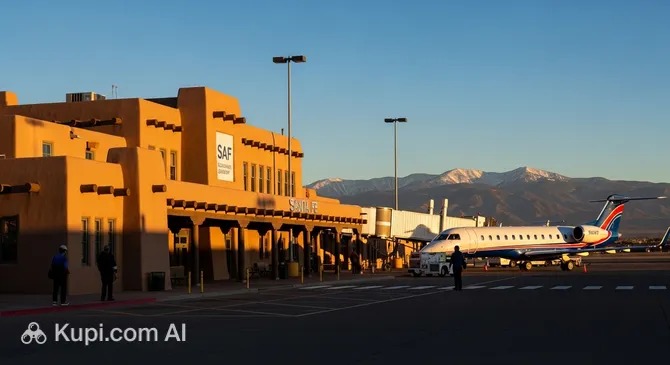
Santa Fe. Illustration.
Source: Kupi.com AI

Santa Fe Municipal Airport is not just a transport hub, but a truly atmospheric gateway to the "Land of Enchantment," immersing guests in the unique culture of New Mexico from the very first minutes. Instead of impersonal glass terminals, you will be welcomed by a cozy building in the Pueblo Revival style, reminiscent of a traditional adobe estate perfectly integrated into the desert landscape. Located in the highlands, this "boutique airport" offers travelers not only comfort and a lack of hustle but also breathtaking views of the Sangre de Cristo Mountains right upon approach.

PropertyValue
IATA CodeSAF
ICAO CodeKSAF
CitySanta Fe
CountryUnited States
TimezoneAmerica/Denver
Top AirlinesUnited Airlines, American Airlines
ScheduleOnline Timetable

Features and Advantages of the Airport

Santa Fe Airport (SAF) possesses a number of unique features that make arriving here a special experience, distinct from visiting typical large aviation hubs.

  • Architectural Flair: The airport terminal is an extension of the city's architectural code. The Pueblo-style design, utilizing earthen tones, flat roofs, and wooden beams ("vigas") in the interior, creates a sense of coziness and immediately sets the mood for exploring the region's history.
  • High-Altitude Location: Situated at an altitude of approximately 1,935 meters (6,348 feet) above sea level, SAF is one of the highest commercial airports in the USA. This guarantees passengers incredible panoramic views of the mountains and desert from the window.
  • Compactness and Speed: Thanks to the small size of the terminal, navigation here is intuitive, and security screening and baggage claim procedures are significantly faster than in large international airports. The journey from the aircraft stairs to the city exit takes mere minutes.
  • Convenient Location: The airport is located just a 20-minute drive from the historic city center and Santa Fe Plaza. This distinguishes it favorably from the alternative option — flying into Albuquerque, from where the journey takes about an hour.

Contact Information

You can contact representatives of Santa Fe Airport (SAF) in several ways. Below are the main contact details for travelers.

  • Official Website: The most complete and up-to-date information can be found on the airport's official website: www.flysantafe.com.
  • Information Desk Phone: For general questions and information, you can call: +1 (505) 955-2900.
  • Airport Address: 121 Aviation Dr, Santa Fe, NM 87507, USA.
  • Email: A direct email address for general inquiries is not published, however, a contact form for sending messages is available on the official website.
  • Social Media: You can follow news and updates on the airport's official Facebook page.
  • Lost Luggage Information: If you have lost personal items within the terminal building, please contact the airport's lost and found service. For issues regarding lost or damaged checked baggage, you should contact your airline directly.
  • Passenger Support Contacts: For questions related to booking, ticket changes, and special assistance, it is necessary to contact the support service of the airline you are flying with. General questions can be asked by calling the airport information desk.

How to Get to the Airport

Santa Fe Municipal Airport (SAF) is located approximately 16 kilometers southwest of the city center of Santa Fe. A car trip to the center usually takes 20 to 30 minutes, but time may vary depending on traffic conditions. There are several ways to get from the airport to the city, suitable for different budgets.

It is important to note that many travelers heading to Santa Fe fly into a larger airport — Albuquerque International Sunport (ABQ). It is located approximately an hour's drive away, offers significantly more flights, and often better ticket prices. Convenient shuttles run between Albuquerque Airport and Santa Fe, making it a popular alternative.

Public Transport is the most economical option. The Santa Fe Trails city bus system serves the airport with Route #2, which connects it to the city center. The trip will cost approximately $1–2. This is a convenient method for travelers without large luggage, however, it is strongly recommended to check the current schedule in advance, as service intervals can be significant.

Taxis, Rideshare Services, and Shuttles offer a faster and more comfortable way to reach your destination. A trip via Uber, Lyft, or a local taxi from the airport to the city center will cost approximately $35–50. This option provides "door-to-door" service. For groups or travelers with bulky luggage, a pre-booked shuttle may be a convenient solution.

Car Rental is an ideal choice for tourists planning to explore not only Santa Fe but also the picturesque surroundings of the state of New Mexico in the USA. Counters of major rental companies are located right in the airport building, allowing you to collect keys immediately upon arrival or return the car before departure, ensuring maximum freedom of movement.

If you are arriving at the airport in your own or a rented vehicle, airport parking is at your service. Options for both short-term and long-term parking are available. The cost of long-term parking starts from approximately $10 per day. To clarify current rates and availability, it is recommended to visit the official Santa Fe Airport website.

Terminals and Map

Santa Fe Airport (SAF) is a small and cozy regional airport characterized by a simple and clear structure. There is only one passenger terminal here, serving both departing and arriving flights. This completely eliminates confusion with transfers between buildings — all necessary zones are located in one building, designed in the charming Pueblo Revival architectural style, which immediately immerses you in the atmosphere of the southwestern USA.

Navigation through the terminal is intuitive. Upon entry, you find yourself in a general area where airline check-in counters are located. After completing check-in and dropping off luggage, passengers proceed to the Transportation Security Administration (TSA) screening, which leads to the single departure gate and a small waiting lounge. The arrival zone with the baggage claim belt is also located in this same building, just a few steps from the exit. Thanks to the compact dimensions, getting lost here is practically impossible.

One of the main advantages of Santa Fe airport is the speed of completing all formalities. Unlike large international hubs, there are rarely long queues here. Registration and screening procedures usually take significantly less time. Nevertheless, it is recommended to arrive at the airport standardly 90 minutes before a domestic flight departure to go through all stages without haste and enjoy the calm atmosphere.

The main recommendation for navigation is simply to follow the signs. All key points, from check-in counters to the boarding gate and baggage claim area, are located in a logical sequence and within direct line of sight. The compactness of the terminal makes it ideal for travelers who value comfort and dislike the bustle of large airports.

Airport History

The history of Santa Fe Municipal Airport (SAF) is a fascinating tale of aviation development in the southwestern USA. The airport was officially opened in 1941, although its story began several years earlier when city authorities realized the need for a modern aviation hub. With the onset of World War II, the facility was transferred to the US Army Air Forces and used as a training base, which played a key role in its initial development and infrastructure expansion.

After the war, the airport returned to civilian use, and a new stage in its history began. In the 1950s, airlines such as Trans World Airlines (TWA) and Pioneer Air Lines began operating flights here, connecting Santa Fe with other major cities in the country. However, the airport's operation was always associated with challenges: its location at an altitude of over 1,935 meters above sea level required special flight characteristics from aircraft and limited the types of planes that could land here.

Throughout the second half of the 20th century, the airport was modernized repeatedly. Works were carried out to extend the runways, allowing for the reception of larger aircraft. A significant reconstruction of the terminal, completed in 2016, gave it a modern look while preserving the unique Pueblo architectural style characteristic of the region. Passenger waiting areas were improved, the baggage handling system was updated, and new amenities were added.

One interesting fact from the airport's history is that for a long time, it remained one of the few commercial airports in the country without a full-fledged control tower — it was built and put into operation only in 2012. Today, Santa Fe Airport continues to play an important role in the transport system of northern New Mexico, serving both private aviation and regular commercial flights, and serves as an important gateway for tourists eager to discover the rich culture and art of this unique city.

Services and Amenities

Santa Fe Regional Airport (SAF) is a compact and convenient aviation hub that offers passengers all essential services for a comfortable wait before their flight. Despite its small size, the airport is well-equipped to meet the basic needs of travelers.

Dining and Shops. The terminal houses the Coffee Cantina cafe, where you can have a snack, drink coffee, or purchase light refreshments and beverages before departure. The assortment of shops is limited, but you can find souvenirs, press, and essential items here.

Wi-Fi and Charging Stations. Free Wi-Fi is available throughout the terminal, allowing passengers to stay connected or work while waiting for their flight. There are also zones with outlets for charging electronic devices.

Financial Services. ATMs are installed in the airport for cash withdrawals. However, please note that there are no full-service bank branches or currency exchange points here. It is recommended to exchange currency in advance if necessary.

Additional Amenities. The airport is fully accessible for passengers with reduced mobility: ramps, specially equipped toilets, and staff assistance upon prior request through the airline are provided. Families with children can use diaper changing tables in the restrooms. In case first aid is needed, please approach any airport staff member.

Waiting Halls and Business Services. Santa Fe Airport does not have separate VIP lounges or airline business lounges. Specialized conference rooms are also absent. However, the general waiting area is quite comfortable, and the availability of free Wi-Fi allows for handling work matters.

Hotels. There are no hotels directly on the airport grounds, but a multitude of accommodation options, from budget motels to luxury hotels, are located a few minutes' drive away in the city of Santa Fe itself.

Where to Eat

Despite its compact dimensions, Santa Fe Airport (SAF) offers passengers the opportunity to have a comfortable snack before their flight. Dining options are concentrated in one main establishment that serves all travelers after passing security control.

The main place to eat is the grill cafe located airside, next to the boarding gates. This means only passengers with boarding passes have access to it. The cafe offers both quick snacks and full hot meals. Its operating hours are usually tied to the flight schedule — it opens early in the morning and closes after the departure of the last aircraft.

The main highlight of the menu is dishes from the local New Mexico cuisine. Here you can enjoy the authentic flavors of the region one last time. We highly recommend trying the green chile cheeseburger — one of the most famous flavors in the southwestern USA, or a hearty breakfast burrito. For those who prefer more standard fare, the menu always includes sandwiches, salads, pastries, and coffee. There is also a small counter offering a selection of beverages.

Passengers with special dietary needs should plan ahead. Vegetarian dishes, such as a bean burrito or cheese enchiladas, are quite easy to find. However, choices for vegans or those seeking gluten-free options may be limited, so it is best to verify ingredients with the staff. Travelers requiring Halal options are advised to inquire specifically about the ingredients of vegetarian dishes. Prices in the cafe are at an average level typical for most airports.

Travel Tips

To ensure your journey through Santa Fe Municipal Airport (SAF) goes smoothly, use these tips. This small regional airport offers a calmer atmosphere than large international hubs, but preparation is always important.

For domestic flights within the USA, it is recommended to arrive at the airport at least 90 minutes before departure. Although queues here are usually shorter, it is better to have a time buffer. To speed up the process, complete online check-in for your flight and save the boarding pass on your phone. Security checkpoints operate according to standard TSA rules, so be ready to present your ID and boarding pass.

When choosing a seat on the plane, consider that picturesque views of the New Mexico landscapes open up from the window. If a quick exit from the plane or easy access to belongings is important to you, choose an aisle seat. Remember the carry-on luggage rules: all liquids must be in containers of no more than 100 ml (3.4 oz) and packed in a single transparent bag. Sharp objects, weapons, and certain flammable substances are prohibited in the cabin.

Since Santa Fe Airport serves mainly domestic flights, passengers arriving from other US cities do not need to pass through customs control. If you are flying from abroad, you will clear customs at the first airport of arrival in the country. Passengers with connections in other cities (for example, in Denver or Dallas) should clarify in advance whether they need to collect and re-check their luggage, and allow sufficient time between flights.

To save time, keep documents handy and pack your belongings so that electronics and the bag of liquids can be easily removed at security. To save money, book tickets in advance, bring an empty water bottle to fill after security, and grab some light snacks, as the selection in a small airport may be limited.

In case of a flight delay, follow updates via your airline's mobile app. Check with the carrier's representative regarding your rights, including the possible provision of food vouchers. The airport has Wi-Fi and rest areas, but for long waits, it is better to have a book, headphones, or pre-downloaded movies with you.

Reached the end of the page?

That means the route is fully explored