Support

Thief River Falls Regional Airport

About the Airport

Thief River Falls Regional Airport (TVF) is a compact and modern air gateway serving as a key entry point to the northwestern part of Minnesota, USA. Despite its modest size, it plays an important role in the region's transport system, providing convenient connections for locals and city visitors. The airport offers a calm and efficient alternative to major hubs, making the start and end of a journey as comfortable as possible. It is ideal for those who value time and prefer to avoid the hustle and bustle of large terminals.
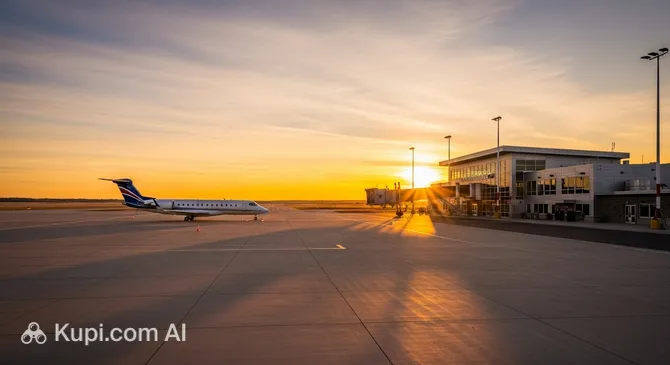
Thief River Falls Regional Airport. Source: Kupi.com Binoculars
IATA Code TVF
ICAO Code KTVF
City Thief River Falls
Distance to centre about 8 km
Status domestic
Passengers per year more than 10,000
Popular Airlines Denver Air Connection

The main advantage of the airport is its compactness and simplicity. Flight check-in and security screening procedures take minimal time here, which is especially appreciated by business travellers and tourists. The airport offers free parking, which is a pleasant bonus for those arriving by private car. Despite its small size, the terminal is clean, modern, and equipped with everything necessary for a comfortable wait before departure. Thanks to subsidised flights under the Essential Air Service programme, the airport maintains stable air connections with major hubs, ensuring reliable links between the region and the rest of the country.

Contact Information

To ensure your journey goes as smoothly as possible, we have gathered all the necessary contact information for Thief River Falls Regional Airport (TVF). Save it so that it is always at hand.

  • Official Website: You can find the most up-to-date information on flights, services, and airport news on the official website: www.trfairport.com.
  • Information Desk Phone: If you have any questions, you can contact the airport administration at: +1 (218) 681-5425.
  • Airport Address: 13722 Airport Drive, Thief River Falls, MN 56701, USA.
  • Email: For written inquiries, you can use the e-mail: airport@citytrf.net.
  • Social Media: Follow updates on the airport's official page on Facebook.
  • Lost Luggage Information: For issues related to lost or damaged luggage, it is recommended to contact the airline you travelled with directly.
  • Passenger Support Service: For general information and support, you can use the main airport phone number.

How to Get to the Airport

Getting to Thief River Falls Regional Airport (TVF) from the city centre of Thief River Falls is quite simple, as it is located just a few kilometres to the northwest. The drive usually takes no more than 10-15 minutes, making it easily accessible for travellers. The main modes of transport are taxis, rental cars, or private vehicles.

Taxis and Transfers are the most convenient way to get to the airport without a personal vehicle. Several local taxi services operate in the city. It is recommended to book a car in advance, especially if your flight is scheduled for early morning or late evening, to guarantee vehicle availability. The cost of the trip will depend on the specific company's rates, but given the short distance, it should not be high. Some hotels may also offer transfer services for their guests.

Car Rental and Private Vehicles are a popular choice for those travelling around this region of the USA, as a car provides freedom of movement. If you rent a car, you can easily return it at the airport before departure, having previously checked this option with your rental company. For those arriving in their own transport, there is a significant advantage: the airport provides free parking. This makes travelling by private car even more convenient and economical, regardless of whether you are flying out for one day or a longer period.

As for public transport, direct bus or rail routes to such a small regional airport are generally unavailable. Travellers should not rely on this option. The most reliable methods remain a taxi or car.

If you are looking for a wider selection of flights, including international ones, it is worth considering larger airports located a few hours' drive away. Among them are Grand Forks International Airport (GFK), located approximately 75 km away, and Hector International Airport (FAR) in Fargo, which is a major regional hub. Also within a 2-3 hour drive are Bemidji Regional Airport (BJI) and Devils Lake Regional Airport (DVL).

Terminals and Map

Thief River Falls Regional Airport (TVF) is a small and convenient aviation hub with a structure simplified to the maximum for passenger comfort. Here you will not find a complex system of multiple buildings, making navigation intuitively clear.

The airport operates one passenger terminal, which serves all flights — both departures and arrivals. Thanks to its compact dimensions, all key zones are within walking distance of each other. The terminal layout is extremely simple: upon entering the building, you immediately find yourself in the main hall where airline check-in counters are located. The waiting area and the exit to the luggage belt for arriving passengers are also located here.

After completing check-in, passengers proceed to the security checkpoint, which leads to a small but cosy departure area with one or more boarding gates. Since there is only one terminal, there is absolutely no need for transfers between terminals or the use of shuttles. All pre-flight and post-flight formalities take place in a single building.

One of the main advantages of Thief River Falls Airport is the speed of completing all procedures. Flight check-in and security screening take significantly less time compared to large airports. As a rule, it is recommended to arrive 60-90 minutes before departure, which is quite sufficient to go through all stages calmly without unnecessary haste. Getting lost here is practically impossible, and signs and staff will always help you orient yourself.

Airport History

The history of Thief River Falls Regional Airport (TVF) dates back to World War II. It was originally established in 1942 as a military airfield for the USA Army and was used for training glider pilots. After the war ended, the facility was transferred to civilian use, and in April 1947, the airport officially opened for commercial and private flights, becoming an important air gateway for the region.

Over the decades, the airport has played a key role in connecting the city of Thief River Falls with the rest of the country. Its development was largely supported by the federal Essential Air Service (EAS) programme, which ensures air transport for small communities. Over the years, work has been carried out here to modernize runways and navigation equipment, allowing it to accommodate modern types of aircraft and maintain high flight safety standards.

A significant stage in the airport's history was a major reconstruction in the 1990s, culminating in the opening of a new, modern passenger terminal in 1995. This event significantly improved the quality of passenger service. Today, the airport not only serves passenger flights but also plays an important role in the city's economy, supporting the operations of local industrial giants.

Thus, the history of TVF Airport is not just a chronicle of construction and modernisation. It is a story of transformation from a military facility into a vital transport hub that has contributed to economic growth and connected the residents of northern Minnesota with the world for over 75 years. Its stable operation is a true achievement and a testament to its significance for the entire region.

Services and Facilities

Thief River Falls Regional Airport (TVF) is a compact and modern air hub offering passengers essential amenities for a comfortable journey. Given its size and focus on domestic flights, the range of services is concentrated on the necessities.

The terminal building houses a waiting lounge where you can relax before your flight. Passengers can stay connected thanks to free Wi-Fi available throughout the airport, as well as use charging stations for mobile devices. The selection of restaurants and shops here is limited, so it is better to take care of meals in advance. There are no specialised VIP lounges or business centres at the airport.

Since the airport primarily serves domestic flights, currency exchange points and bank branches are not provided. It is recommended to settle all financial matters before arriving at the airport. There is also no medical centre here, but staff are ready to provide first aid in an emergency. Basic amenities are available for passengers with children, such as nursing rooms.

The airport is fully equipped for the needs of passengers with reduced mobility, ensuring an accessible environment in all zones. There are no hotels within the airport complex, but travellers can easily find accommodation options in the city of Thief River Falls, located just a few minutes' drive away.

Where to Eat

Thief River Falls Regional Airport (TVF) is a small airport serving a limited number of flights, so dining options directly on its premises are quite modest. There are no full-service restaurants, cafes, or dining halls here.

Passengers waiting for departure generally only have access to vending machines. In them, you can purchase beverages such as water and soda, as well as light snacks — chips, chocolate bars, and other treats. This is the only option for a quick bite inside the terminal.

Given the limited selection, it is strongly recommended to eat before arriving at the airport. In the city of Thief River Falls itself, you will find various establishments to suit every taste — from fast food restaurants to cafes where you can have a full lunch or dinner before your flight. Plan your time with a buffer so as not to remain hungry while waiting for your flight.

Travel Tips

To ensure your journey through Thief River Falls Regional Airport goes smoothly, use these helpful tips. Generally, for domestic flights served by this airport in the city of Thief River Falls, it is recommended to arrive 60–90 minutes before departure. This time is usually sufficient to complete all pre-flight formalities without haste, as queues at regional airports are typically shorter.

To save time, complete online check-in for your flight and print or save your boarding pass on your phone in advance. The security screening procedure is standard for the USA: be prepared to present your ID and boarding pass. To speed up the process, remove all metal items from your pockets in advance, and take electronics out of your carry-on luggage if required by the rules.

Regarding carry-on luggage, remember the liquids rule: all liquids must be in containers of no more than 100 ml (3.4 oz) and packed in a single transparent resealable bag. It is prohibited to carry sharp objects, flammable substances, and other dangerous goods in the cabin. Always check the current rules on your airline's website, as weight and size requirements for carry-on luggage may vary.

If you want to choose a specific seat on the plane, for example, by the window for beautiful views or by the aisle for greater convenience, it is best to do this during online check-in, which usually opens 24 hours before departure. Passengers with connections should clarify in advance whether their luggage will be automatically checked through to the final destination or if they need to collect and re-check it at the transit airport.

Customs control is only undergone by passengers on international flights. Since Thief River Falls Regional Airport serves mainly domestic destinations, most travellers will not need this procedure. If you are arriving on an international flight, keep your passport, visa, and completed customs declaration ready.

To save money, book tickets and, if necessary, airport parking in advance. Bring an empty reusable water bottle to fill after passing security, and permitted snacks — this will help avoid unnecessary expenses. In case of a flight delay, first check the information on the departure board or the airline's website. Clarify with the carrier's representative your rights to beverages, meals, or hotel accommodation, depending on the length of the delay.

Reached the end of the page?

That means the route is fully explored