Support

Futuna Airport

About the Airport

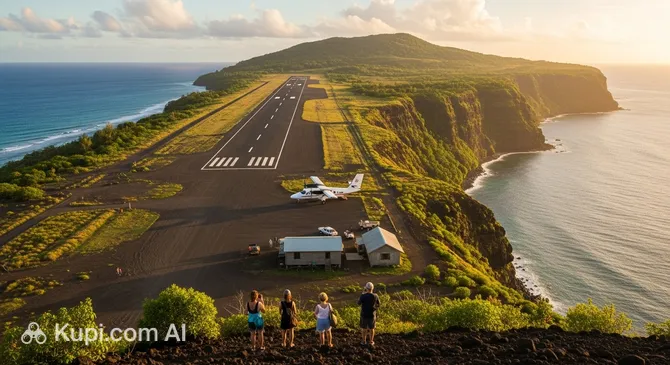
Futuna Airport (FTA) is not just a runway, but a true gateway to one of the most secluded and authentic corners of Vanuatu. Arriving here is an adventure in itself: the aircraft lands on a short grass strip located on a picturesque plateau overlooking the ocean. This small airfield serves as a vital link for the local community and a starting point for travelers seeking untouched nature and a unique cultural experience away from busy tourist routes.

Futuna Airport. Source: Kupi.com Binoculars
IATA Code FTA
ICAO Code NVVF
City/Location Futuna Island
Distance to Centre Within walking distance of main settlements
Status Domestic
Annual Passengers Several thousand
Popular Airlines Air Vanuatu

The main feature of Futuna Airport is its minimalism and unity with nature. You will not find the usual terminals, shops, or luggage belts here. The entire infrastructure consists of the runway and a small shelter where passengers await their flight, and locals meet and see off guests. Landing and taking off from the plateau, surrounded by the ocean, offer unforgettable views and thrills. The airport is served exclusively by Air Vanuatu, which operates flights on small aircraft several times a week, making every arrival and departure a real event for the entire island.

Contact Information

Finding detailed contact information for a small regional airport like Futuna Airport (FTA) can be challenging, as it lacks many of the services inherent to major international hubs. Below is the most current and accessible information relevant to its location in Vanuatu.

  • Official Website: Futuna Airport (FTA) does not have its own official website. Its operations are managed by the Civil Aviation Authority of Vanuatu.
  • Help Desk Phone: There is no direct help desk for passengers. For administrative inquiries, one should contact the relevant aviation authorities of the country.
  • Airport Address: Futuna Airport (FTA), Futuna Island, Vanuatu.
  • Email and Social Media: There are no official public email addresses or social media pages for the airport.
  • Lost Luggage Information: For all issues related to lost or damaged luggage, you must contact the airline that operated your flight directly; typically, this is Air Vanuatu.
  • Passenger Support Contacts: On-site passenger support is provided by the staff of the airline serving the flight. It is recommended to resolve all issues with them during check-in or upon arrival.

How to Get to the Airport

Getting to the airport on Futuna Island is part of the authentic adventure that awaits you in this remote corner of Vanuatu. The transport system here is very different from urban realities, so it is important to plan your movements in advance. There are no regular buses, trains, or official taxi services here, but there is always a way to get to your destination.

Transfer from Hotel or Guesthouse

This is the easiest, most reliable, and recommended way to get to Futuna Airport (FTA). Almost all accommodation providers on the island offer meet-and-greet services for their guests. When booking accommodation, be sure to provide your flight details, and the hosts will arrange a transfer for you. Often, this is a pickup truck or an SUV. The cost is usually agreed upon in advance or is already included in the stay, and the trip from the main villages to the airstrip takes no more than 15–20 minutes.

Local Transport

The role of public transport on the island is fulfilled by private trucks that transport locals and goods between villages. They do not have a strict schedule and depart when full. Although this is the cheapest way to travel, it is not suitable for getting to the airport if you are short on time or have a lot of luggage. Relying on such transport for timely arrival for a flight is risky.

Car Rental with Driver

There are no standard car rental services on Futuna. However, you can always arrange a private trip with a local resident who owns a vehicle. This is a good option if you want to not only get to the airport but also take a tour of the island. The cost of such a service is fully negotiable and depends on the time and route. It is highly recommended to arrange such trips through the owners of your accommodation.

Airport Parking

There is no official guarded or paid parking at Futuna Airport. The airport consists of a simple runway with a small building. Locals simply leave their cars nearby if they are meeting or seeing someone off. You will not have to worry about finding a parking space.

Alternative Routes

Futuna Airport accepts only small domestic aircraft. For travel to Vanuatu from abroad, you will likely have to fly through the country's main international airport — Bauerfield Airport (VLI) in Port Vila. From there, flights operate to the smaller islands, including Futuna, often with a connection at an airport on a neighboring island, for example, at Tanna Airport (TAH).

Terminals and Map

Futuna Airport (FTA) is a small local airfield serving the island of the same name in Tafea Province, in the far east of Vanuatu. Travelers should be prepared for the fact that there is no infrastructure here typical of international hubs. The airport consists of a dirt runway and minimal amenities for passengers, which gives it the special charm of a true island expedition.

The concept of a "terminal" here is quite nominal. The entire terminal complex is typically one small structure or shelter acting as a waiting area and check-in zone. There is no separation into complex departure and arrival zones here: arriving and departing passengers are in close proximity to each other, and boarding is done by walking directly across the field to the aircraft stairs.

Navigation at Futuna Airport is elementary and requires no maps. Due to the compactness of the territory, it is impossible to get lost here. All processes take place in the single accessible zone, where airline staff manually process luggage and check tickets. There is no luggage belt: suitcases and bags are passed from hand to hand or brought on a cart directly to the side of the small aircraft.

Check-in and security procedures take place in a calm mode, without queues and fuss. Nevertheless, it is recommended to arrive for the flight approximately 1 hour before departure, as the schedule on remote islands may be adjusted depending on weather conditions. It is important to consider that there may be no shops or cafes in the "terminal," so it is better to arrange a supply of water and snacks in advance.

Airport History

The history of Futuna Airport (FTA) is inextricably linked with the history of the exploration and development of transport accessibility in the Vanuatu archipelago. Unlike large international hubs, you will not find opening dates of giant terminals here. This airfield emerged as a vital necessity to connect the country's easternmost island with the outside world, replacing long and dangerous sea crossings on small vessels.

The airport was founded in the second half of the 20th century, in an era when light aviation began to actively develop in the Pacific region for delivering mail, medicine, and transporting passengers between remote islands. Initially, it was simply a cleared area on a relatively flat section of the plateau, suitable for landing light aircraft. Since then, the runway has hardly changed its appearance, remaining unpaved, which requires high skill from pilots.

A key stage in the airport's history was its inclusion in the route network of the national carrier, Air Vanuatu. This event turned Futuna from an isolated point on the map into an accessible (though not always easily) destination. Over the decades, no large-scale reconstructions in the usual sense have been carried out here: "modernization" on Futuna usually means regular leveling of the grass surface and clearing the approaches to the strip from tropical vegetation to ensure flight safety.

An interesting fact from the airport's "biography" lies in the equipment used. Historically, FTA accepts only Short Take-Off and Landing (STOL) aircraft, such as the legendary DHC-6 Twin Otter or the Britten-Norman Islander. These reliable machines have become a symbol of aviation in Vanuatu. The arrival of an aircraft here has always been and remains a real event, gathering locals, as the flight brings not only tourists but also important news and cargo from the "mainland."

During its existence, Futuna Airport has earned a reputation as one of the most authentic in Oceania. World records for passenger traffic were not set here, but the main achievement of the air harbor is its uninterrupted operation in the difficult climatic conditions of the tropics. The airport continues to serve as a reliable gateway to the island, preserving the spirit of true aviation adventures of the last century.

Services and Facilities

Futuna Airport (FTA) is a small regional airport serving Futuna Island. It is important to understand that its infrastructure is focused on meeting the basic needs of passengers departing and arriving on the island, and the range of services here is quite limited.

In the airport terminal, you will find a basic waiting area for passengers. There are no specialized VIP halls or business lounges here. Opportunities for shopping and dining are extremely limited: typically, a small kiosk or snack bar operates where you can buy drinks and light snacks. Do not count on full-service restaurants, cafes, or Duty Free shops.

Technical amenities are also minimal. Access to Wi-Fi may be absent or unstable, so it is recommended to have mobile internet with you. The number of outlets for charging devices is limited, so it is better to take a portable charger (power bank) with you. There are no bank branches, ATMs, or currency exchange points at the airport. All financial matters should be settled in advance.

Specialized services at Futuna Airport are practically non-existent. There are no dedicated medical points, mother and child rooms, or play areas. Passengers with reduced mobility are recommended to notify their airline in advance about the need for assistance so that airport staff can provide support during boarding and disembarking. There are also no hotels, conference rooms, or business centres on the airport territory.

Where to Eat

When planning a trip through Futuna Airport (FTA), it is important to consider that this is a very small regional airport serving a remote island. Consequently, the infrastructure here is minimal, and the choice of dining options is extremely limited. Do not expect a variety of cafes and restaurants here as in major international airports.

On the territory of the single terminal of Futuna Airport, typically, a small kiosk or snack bar operates. Its assortment usually includes basic goods: bottled water, soft drinks, chips, cookies, and possibly packaged sandwiches. This is the only place where you can buy something for a quick snack. There are no full-service restaurants, cafes, or bars at the airport.

Specialized dining options, such as vegetarian, vegan, halal, or gluten-free dishes, are not presented here. It is also unlikely to find local cuisine dishes on sale. The opening hours of this kiosk are usually tied to the schedule of the few flights, and it may be closed at other times.

Our recommendation: we strongly advise eating before traveling to the airport. If you need a snack, it is best to bring your own snacks and water. Do not count on buying a full lunch or dinner at Futuna Airport. This approach will allow you to avoid inconvenience and wait for your flight calmly.

Travel Tips

The airport on Futuna Island is a small air harbor serving mainly local flights within Vanuatu. Traveling here is a real adventure, and to make it go smoothly, use our tips.

Arrival Time: For domestic flights, it is usually sufficient to arrive at the airport 60-90 minutes before departure. The airport is small, and processes here go faster than in major hubs. Nevertheless, always check your airline's recommendations, as the schedule may change.

Check-in and Security: Check-in and security control procedures here are simplified as much as possible. Expect a standard check of tickets, documents, and luggage. Since this is a small airport, everything goes quite quickly, but rules should not be neglected.

Seat Selection: If possible, choose a window seat. Flights between the islands of Vanuatu offer breathtaking views of the ocean, coral reefs, and neighboring islands. This is a unique opportunity to take stunning photos.

Hand Luggage: On flights operated by small aircraft, strict restrictions on the weight and size of hand luggage and checked baggage apply. Try to travel light. Standard prohibitions on carrying liquids over 100 ml, sharp, and cutting objects also apply.

Transit Passengers: Futuna Airport is rarely used as a transit hub. Most likely, your transfer will be at a larger airport, for example, in Port Vila. Study the map of the transfer airport in advance and ensure you have enough time between flights.

Customs Control: Since the airport serves domestic flights, there is no international customs control here. However, strict biosecurity rules apply in Vanuatu. It is forbidden to bring certain plants, seeds, and food products to the islands so as not to harm the unique local ecosystem. Declare all such items if you arrived in the country through an international terminal.

Saving Time and Money: Book tickets in advance, as the number of flights is limited, and they sell out quickly. To avoid surcharges for excess weight, pack only the essentials. Also, carry some cash (local currency Vatu), as cashless payment options on the island may be limited.

Flight Delays: Flights to remote islands are highly dependent on weather conditions. In case of a flight delay or cancellation, remain calm and contact an airline representative. It is useful to have a book, a charged power bank, and a small supply of water and snacks with you, as the infrastructure at the airport is minimal.
Reached the end of the page?

That means the route is fully explored