Backpacking Through Latin America
Latin America is a “mystical” milestone in world culture. Latin America is a place hidden from the all-seeing eye of news feeds and emergency reports from CNN. A place where eternity is captured in the bas-reliefs of the Machu Picchu ruins.
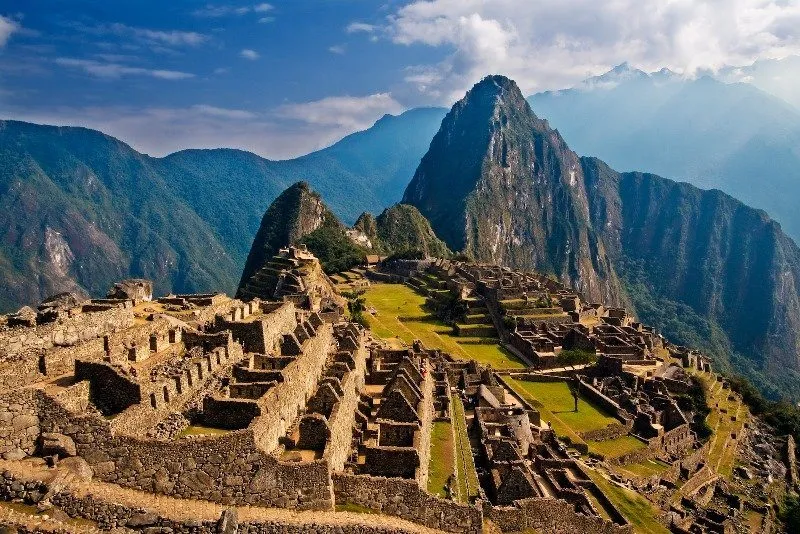
A “seasoned” traveler, having thoroughly explored the fading beauty of Europe, will inevitably turn their gaze, tracing a finger across the atlas, to the Southern Hemisphere. To places more remote and unlike anything seen before. To where the exhilarating “other” makes you feel like an alien — to Latin America, for new experiences, new impressions, for a new “self”! To touch the energetic centers of the universe — the Inca pyramids, after drinking Ayahuasca, to ascend 3600 meters to the city of Cusco, where before the reckoning of time, the first Inca — Manco Cápac founded the great empire of Tawantinsuyu, scattering the pearls of ancient civilization across the cloudy peaks of the Andes. And now, we will try to organize such a trip for ourselves. Latin America is more than 25 countries, compactly located on the South American continent and nearby islands. The most attractive travel destinations are traditionally Mexico, Peru, and Brazil. It is in these countries that you can most often meet owners of small oil refineries, satiated with eternal all-inclusive. But Antigua and Barbuda, Ecuador, Chile, Panama, Puerto Rico, and the Dominican Republic are a completely different dimension, a reality celebrated by Borges, Asturias, and Márquez. In Latin American lands, people primarily travel by train, crawling into the tunnels of the Andes and cutting through the Amazon’s greenery with mosquito nets. And Lake Titicaca is worth traveling more than a thousand kilometers to reach. Some enthusiasts climb mountains and spend weeks gazing at the evergreen foothills of Angel Falls. You can retrace Ernesto Che Guevara’s route: buy a used motorcycle in a small village and ride it across the entire continent, or, for example, explore the Mexican Plateau, bordered by three majestic mountain ranges: the Eastern Sierra Madre, the Western Sierra Madre, and the Trans-Mexican Volcanic Belt, hiding mountain peaks under clouds (the highest point is 5700 meters).

Mexico features a tropical and subtropical climate. Tropics give way to arid deserts and mountainous coniferous forests. Even in January, the thermometer rarely drops below +10°C in the northwest and +25°C in the south. In the highlands, summer temperatures hover around +15°C, and around +30°C on the coast of the Gulf of California. The largest river, Rio Bravo del Norte, separates Mexico and the USA. It is across this river that illegal immigrants cross, and it is also the main route for drug trafficking into the state of California. But first, you need to fly to these lands. When flying, you need to consider a few things:
- Travel time will be at least 12 hours, so be prepared for waiting and transfers, but rest assured — it’s worth it.
- You can choose from various airlines, including Czech Airlines, Delta, SAS, and AirFrance, often with transfers. What next? The rest is up to you! Backpack on your shoulders — the smaller, the lighter — and straight to the train station.
- The flight duration with a stopover in one of Europe’s cities will be from 4 to 30 hours. This is due to the South American continent’s distance from Europe.
- The biggest obstacle on the way to adventure is the cost of the flight, so it’s better not to rush with a return ticket. A one-way flight can be quite expensive, depending on the airline, flight time, and number of transfers. Well, don’t let that scare you, as it’s an opportunity to extend the adventure indefinitely.
- Depending on your citizenship, visas may not be required for most of these countries, but not all.
For some destinations, you will still need to obtain a visa. But even this is not a problem. Visas for Cuba can often be arranged upon arrival, as in most other countries, however, it is best to clarify this information on the websites of the embassies of the country you are traveling to. For example, a visa for Chile and Paraguay can take up to three weeks to process. But what are three weeks compared to a “round-the-world trip”?
- The main language of Latin America, or as it is also called Ibero-America — is Spanish. And if you can string together a few words in Spanish, you will definitely understand Colombians or Mexicans even better than the Spanish themselves. As a last resort, English or Polish will always help, as Poles can be found all over the world, sometimes even in the most unexpected places.
Well now, I advise you to save up some money, switch from office work to remote, book a flight ticket on Kupi.com right now and place it in a volume of Borges so that the atmosphere of magical realism immerses you in dreams of Latin America and leaves no doubt about the planned endeavor.