Checklist for Anxious Travelers and Those Afraid of Missing a Flight
 Polina
Travel is stressful. For some, it’s pleasant anticipation, and for others, it’s a reason to check if their passport is in their pocket about 48 times an hour. A racing heartbeat in a taxi, cold sweat at the sight of a security line, and the nagging thought “I definitely forgot something”—sound familiar?
You are not alone. Aerophobia often starts not in the sky, but on the ground. But the good news is that anxiety fears a plan. Chaos feeds fear, and a system kills it. We have compiled the most detailed instructions to help you regain control of the situation.
The Math of Calm (Planning Your Time)
Anxiety loves uncertainty. Let’s kill it with numbers. The main mistake is to calculate time “from leaving home.” The correct method is “Countdown from gate closing.”
Let’s take a specific example. Imagine you decided to buy tickets on Kupi.com with a departure at 18:00.
Gate closing (boarding): 17:40. This is your real deadline. After this minute, the plane won’t fly away, but you won’t be allowed on it, even if the jet bridge is still there.
Calmness buffer: 17:10 (30 minutes before gate closing). You should be at the boarding gate. This is time to breathe, buy water, use the restroom, and make sure the gate hasn’t changed.
Border Control and Security: 16:10. In large hubs, queues can be unpredictable. Allow 1 hour. If you get through in 15 minutes — great, you’ll have coffee with a view of the runway. If you get stuck — you won’t panic.
Check-in and baggage: 15:40. Even if you’re traveling light, this time is needed to get oriented in the terminal.
Travel time: Allow navigator’s time + 50%. If it’s an hour’s drive, count it as an hour and a half. A tunnel accident, a blocked highway, or a broken-down taxi — this isn’t pessimism, it’s realism.
Result: Leave home — at 14:00.
The anxious traveler’s golden rule: it’s better to be bored for 2 hours at the gate with a book than to run across the entire terminal for 20 minutes with a risk of a heart attack. Boredom is safety.
Home Preparation: Eliminating Triggers
Most problems can be solved without getting off the couch.
Online check-in — your salvation. Do it exactly 24 hours beforehand. Choose a seat (by the window is calmer — no one bothers you). Save your boarding pass.
Why: if you get stuck in traffic and rush to the counter 35 minutes before departure, when baggage drop-off is closed, with a boarding pass in hand and carry-on luggage, you have a chance to get through security. Without check-in, there’s zero chance.
Digital armor. Airport internet tends to “crash,” and banking apps freeze.
Take screenshots of your tickets, hotel booking, and insurance.
Forward them to your travel companion via messenger or to your “Saved Messages.”
Hard mode: Print paper copies. The feeling of paper in hand is incredibly calming.
Weighing luggage at home. There’s nothing worse than frantically transferring items from your suitcase to your backpack in front of a queue because you’re overweight. Weigh it at home, leaving room for souvenirs.
The “Sacred Pocket” Rule
This is the main life hack against frantically patting yourself down in search of documents.
Choose one reliable pocket (an inner jacket pocket or a zippered compartment in your backpack).
Designate it as the “Passport Home.”
Algorithm: take it out at control — show it — immediately put it back. Not in your hand, not in your teeth, not “I’ll hold it until I get to the scanner.” Only in the Sacred Pocket.
If panic strikes (“where’s my passport?”), you check only one place. If it’s not there — then you can start worrying (but it will be there).
Airport: “Special Forces” Mode
An airport is an obstacle course. Navigate it tactically.
At entrance and security:
Prepare in line. While waiting for the scanner, remove your watch, belt, take out change and your phone. Put all of this into your bag before you approach the conveyor belt.
Liquids. Collect all bottles up to 100 ml in one clear bag at home. Put it in the side pocket of your backpack.
Navigation:
Don’t go to Duty Free. Don’t go for coffee.
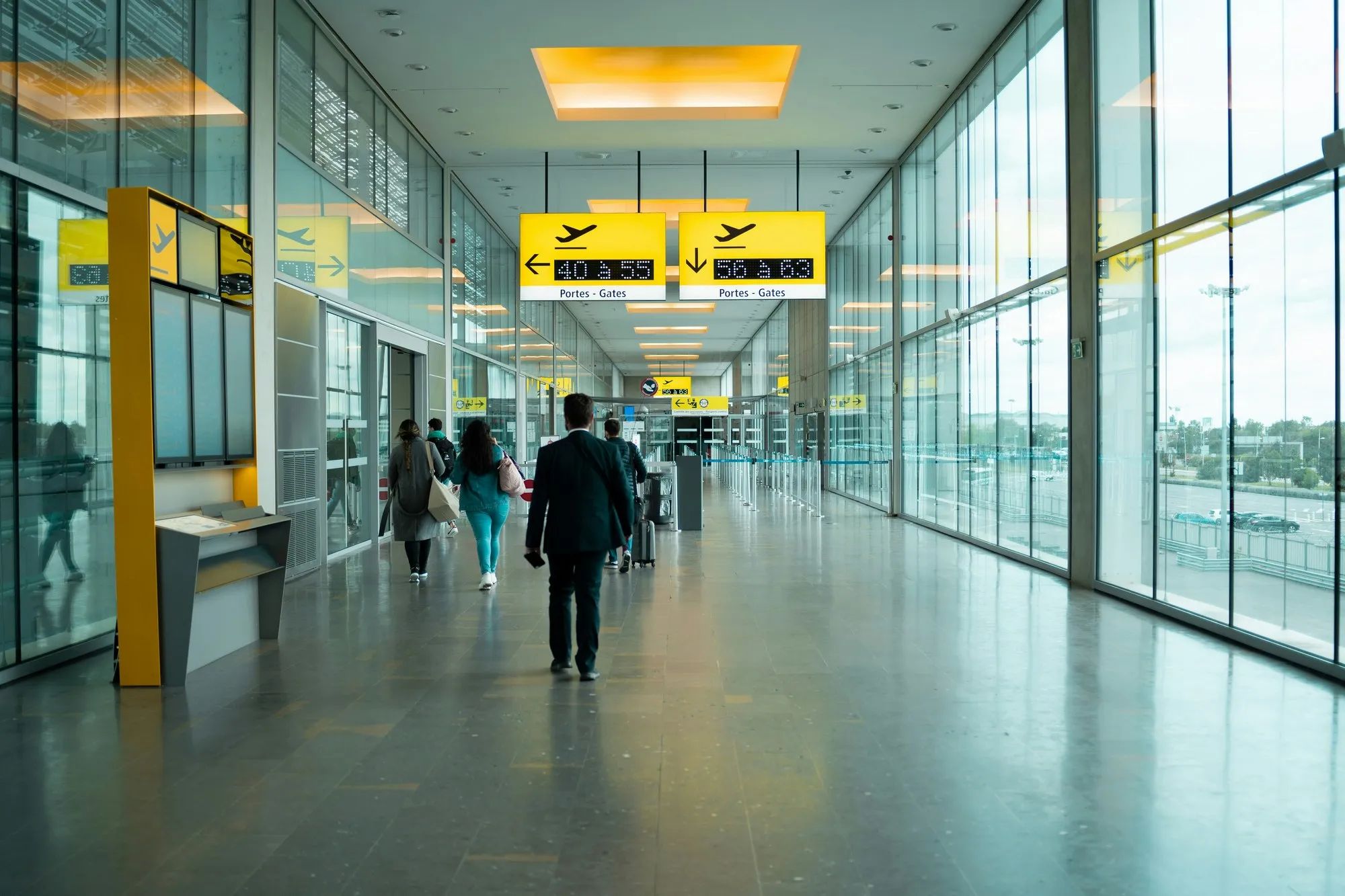
First, find your gate. The gate might change at the last moment. Go to it, check the flight number on the board.
Only when you’ve seen the gate with your own eyes (“Aha, it’s here, a 5-minute walk”), can you relax and look for food. It often happens that gate #40 is in another wing, a 20-minute brisk walk away.
Psychological First Aid Kit
If logic doesn’t help and you’re still shaking, let’s engage with your brain.
OCD Phototherapy. Afraid you didn’t turn off the iron, gas, or lights? Before leaving, take a photo of the unplugged socket and closed valve. When panic strikes in the taxi, just look at your phone’s gallery.
“Catastrophizing” Method. Take your fear to the absurd. Ask yourself: “What’s the worst thing that will happen if I’m late?”
Thought: “Everything will be lost, life is over.”
Reality: You will lose money for the ticket (and not always). You’ll have to buy a new one for the next flight.
Conclusion: This is a solvable financial problem, not a lifelong tragedy. No one will die. The Earth won’t stop.
Noise cancellation. An airport is acoustic chaos. Announcements, crying children, squeaking wheels — all of this overloads the nervous system. Wear noise-canceling headphones or just earplugs. Silence instantly reduces stress levels.
Checklist Before Leaving (Take a Screenshot)
Passport (in the “Sacred Pocket”).
Phone charged to 100% + power bank and cable (in carry-on, not checked luggage!).
Photo of iron/stove taken.
Boarding pass saved on phone and available offline.
First aid kit (your personal medications + mild sedative).
Water (buy immediately after security).
Remember: your main task is to get yourself from point A to point B. Everything else is fuss. Breathe deeply, you’re doing great.