Cut on the beach: what to do?
 Yasya
YasyaEven on the most idyllic beach, you can encounter an unpleasant surprise — a cut. Sharp stones, shell fragments, or glass sticking out of the sand can spoil your vacation. But don’t panic! The main thing is to treat the wound correctly and quickly to avoid infection. We’ve compiled a simple guide and a list of what to take with you to the sea.

What to do if you get cut on the beach
The mishap has already occurred. First, you need to compose yourself, stop blaming yourself, other people, or circumstances — there will be time for all that later. And immediately proceed with providing first aid.
Stop the bleeding
- Apply a clean cloth or towel. Pressure will help stop the blood. If the cloth continues to soak through, do not remove it; instead, apply another layer on top.
- Elevate the injured limb above heart level.
- Remember that minor bleeding cleanses the wound naturally. Do not try to stop it too quickly.
Rinse the cut
- With clean, running water. Ideally, use boiled water cooled to a comfortable temperature. If that’s not possible, use bottled water.
- Do not rub the skin. Just gently rinse to remove sand and other contaminants.
- Sea water should not be used for initial wound treatment. It may contain bacteria and other microorganisms that can cause infection.
Treat the cut with antiseptic
- Chlorhexidine or hydrogen peroxide (preferably a 3% solution) will work. Apply the antiseptic to the wound and the skin around it.
- Do not apply iodine or alcohol directly to the injured area: they can damage tissues and slow healing. They can only be used to treat the skin around the wound.
Apply a dressing
- It will protect it from dirt and bacteria. Use a sterile bandage or gauze dressing.
- If the cut is small, a regular adhesive bandage will suffice.
Monitor the situation
- Change the dressing regularly — 1–2 times a day or more often if it gets wet.
- Watch for signs of infection. If the wound is red, swollen, painful, or discharging pus, consult a doctor. You should also see a doctor if you develop a fever.
What to take to the beach
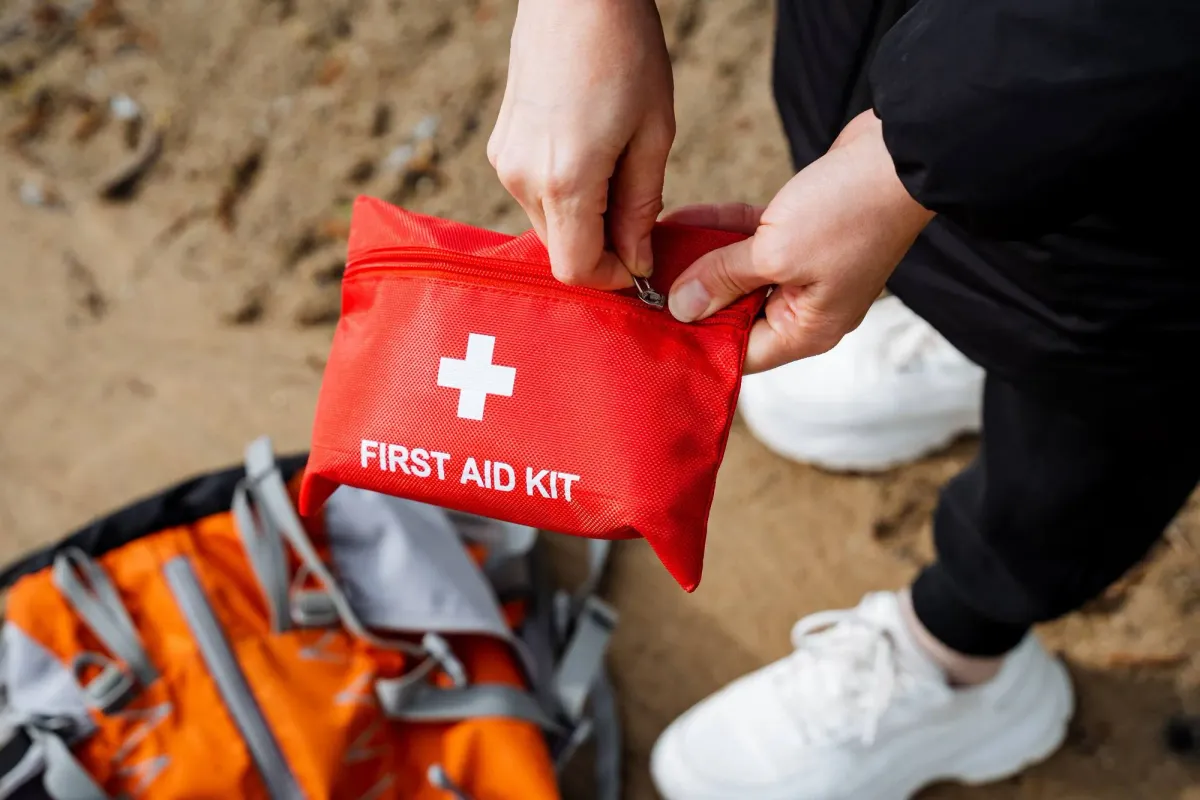
As we’ve found, a cut on the beach might require many different things. Therefore, it’s worth preparing a personal first aid kit. With proper skill, everything can fit into a small cosmetic bag, for which there will always be space in your beach bag. You should definitely add it to your packing list. So, you will need:
- Antiseptic solution (such as chlorhexidine)
- Sterile bandage
- Adhesive bandages (preferably a couple of different sizes, in case you also get a blister from new sandals)
- Iodine (marker form is optimal)
- Pain relievers (e.g., ibuprofen)
- Antihistamines (in case of an allergic reaction)
- Tweezers (for removing splinters or small fragments)
When to see a doctor
In some cases, qualified help is essential. Do not delay a visit to the doctor; it’s better to contact lifeguards, a medical station, or go to a hospital immediately. Rush to medical professionals if:
- The wound is deep or bleeding heavily.
- You cannot stop the bleeding on your own.
- There are foreign bodies in the wound (glass shards, shell fragments) that you cannot remove.
- Signs of infection appear (redness, swelling, pain, pus).
- You are not vaccinated against tetanus (especially if the cut was caused by a rusty object).
- You have chronic conditions, such as diabetes, which can slow wound healing.
What you definitely should not do
- Use ‘folk’ remedies, such as applying plantain. Yes, its juice does slightly stop bleeding and heal wounds, but the effect will be insufficient in case of serious skin damage.
- Disinfect wounds with alcohol. An antiseptic will work better, and if you don’t have one, just rinse the wound. The alcohol percentage in vodka, for example, is insufficient for disinfection, but it will quickly evaporate from the skin’s surface and make it rougher, which will only prolong healing.
How to avoid cuts
- ‘Look before you leap.’ Do not swim in unfamiliar or poorly explored places, or in bodies of water not designated for swimming.
- Wear coral shoes. They can be worn not only on pebble beaches and near coral reefs.
- Watch your step on beaches. Walking barefoot is pleasant, but it should still be done with caution.
Remember, correct and timely wound treatment will help avoid serious complications and allow you to continue enjoying your beach vacation. Take care and be attentive!