How to become a flight attendant?
At first glance, becoming part of a crew is no easy task: airlines have a queue of people eager to combine work with travel, and before taking flight, one must undergo serious training and a medical examination. In reality, learning the profession is not that difficult if you meet the established requirements and truly want it. We tell you what it takes to become a flight attendant.
Peculiarities of the flight attendant profession
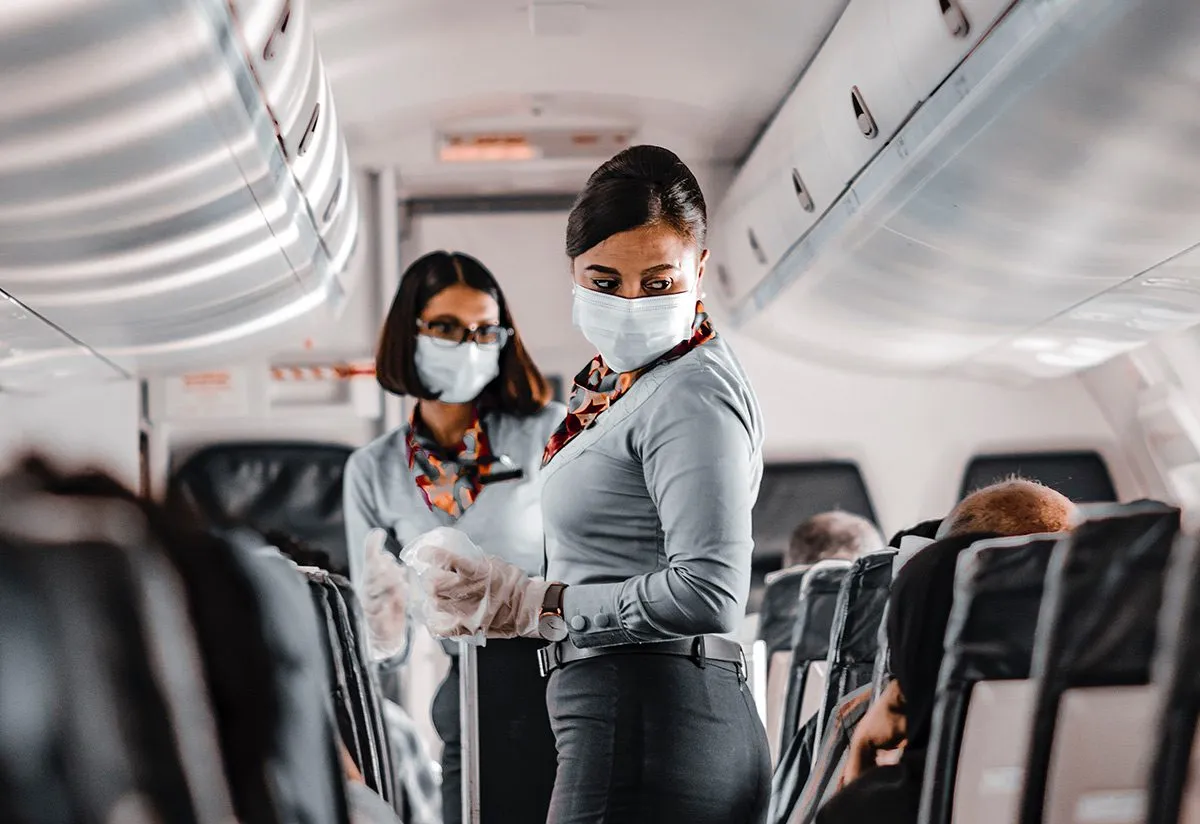
Stewards and stewardesses work in non-standard conditions and take on several roles at once: instructor, waiter, psychologist, doctor.
Among the duties of stewards and stewardesses:
• explaining safety measures and rules of conduct on board;
• preparing passengers for the flight, assisting with seating;
• maintaining cleanliness in the cabin;
• serving food and drinks;
• providing first aid and psychological support;
• checking the cabin before and after the flight.
The profession involves significant physical exertion, stress, frequent changes in climate and time zones, requires responsibility, stress resistance, and robust health, which is why early retirement, a good social package and benefits, and a decent salary are provided.
Requirements for training at flight attendant courses
If you’ve wondered how to become a flight attendant, the answer is to enroll in special courses. As a rule, to enroll in courses, you need to be over 18 and pass a medical examination, but there are more selection criteria for employment — think about this in advance. Both women and men can be flight attendants, but the requirements for them will differ.
So, here’s what you need to become a flight attendant.
The first requirement is height: for women, it’s typically 165–175 cm, for men — 170–185 cm. These limits are strictly observed: flight attendants who are too short will not be able to independently check for foreign objects on luggage racks, which are quite high in large aircraft. There are also clothing size restrictions: for women — 42–46, for men — 46–54.
Age: flight attendants without experience are accepted from 18 to 26 years old.
All candidates undergo an interview and a medical commission (VLEK), and therefore must possess excellent health — sharp vision, normal blood pressure, and a good vestibular system. Stewardesses, even if they are fragile girls, must be strong enough to open an emergency exit door.
In addition, a flight attendant must know English at a pre-intermediate level or higher — the airline will inform you of the exact level required for the job. Knowledge of other foreign languages will be a big plus.
A presentable appearance and articulate speech are also important, as a flight attendant is the face of the airline. Traditionally, you would not be hired if you had visible tattoos or brightly colored hair, but recently airlines have been moving away from conventional standards. For example, some airlines have recently relaxed requirements and allowed flight attendants to wear bright hairstyles and tattoos, male stewards to wear beards, and female stewardesses to swap heels for flat shoes.
Documents required include: a foreign passport, a health certificate, a certificate of no criminal record, and for men — a military ID.
Where to get flight attendant training
There are several ways to become a flight attendant: a special school or courses at a specific airline can provide the profession.
To study at a flight attendant school, you will have to pay. After graduation, they help you with employment, but do not guarantee it, but you can try to get a job with any company.
Many airlines have their own training and training centers. Its advantage is that you immediately adopt the experience and standards of a specific airline, can study for free and receive a scholarship, and you won’t be left without a job: often, recruitment for such courses opens with the specific goal of filling vacant positions. After completing the courses, you will be obliged to work for the airline for several years.
The first stage of selection for the courses is an interview. At the first stage, candidates talk with the commission, tell about themselves, and answer questions: for example, why they decided to become a flight attendant and chose this particular airline.
The next step is an English proficiency exam. When checking their foreign language level, candidates must pass a short grammar test, complete a listening task, and converse with the examination board.
If you pass the interview, you receive a referral for a medical examination with a list of necessary tests, doctors, and certificates. As a rule, you have to see a therapist, ophthalmologist, otolaryngologist, neurologist, surgeon, dentist, dermatologist, and gynecologist. With the VLEK conclusion on suitability for flight attendant work, you can begin training courses.
Courses for flight attendants without work experience last about three months. The training schedule is quite intensive: as a rule, classes are held daily, including Saturday, from morning until evening. The course includes theory and simulator training. In all classes, it is necessary to look presentable, neatly tie hair, and adhere to a business dress code — just like on a real flight.
The courses teach how to behave correctly in emergency situations (fire, depressurization, emergency landing), provide medical assistance, and deliver babies. Then future stewards and stewardesses study the basics of aerodynamics and learn about aircraft structure.
Special aviation English is also studied. Great attention is paid to the study of psychology: a flight attendant must be able to find an approach to people in critical situations: calm a passenger afraid of flying, identify a terrorist, and take appropriate measures.
In addition, flight attendants study law, office management, and etiquette. Etiquette classes teach service standards in the aircraft cabin: how to handle a trolley, carefully pour water, and arrange cutlery.
What to do after training
Don’t rush to pack for a flight after completing training — first, you’ll have to pass an exam that will determine if you are ready to work in the new profession. The exam is conducted in the form of testing and tickets. If you succeed, you receive a testing protocol and flight documents — a flight attendant certificate — and only then can you start working. The first 30 hours of on-board practice are completed by a novice with an instructor-mentor — and after that, they become a truly independent flight attendant.
If you completed courses at an airline, employment will not be long in coming. You can immediately get a job in a city that needs personnel.
Career
Not all airlines have their own training centers, but many recruit for open vacancies and publish them on their websites. The salary increases depending on experience and the number of working hours.
A flight attendant’s job is unpredictable, and the schedule is not standardized. Where and when a flight attendant flies is planned at the airline level: these can be round trips, overnight flights, or several short flights in one day. Flights to different climatic zones can follow one another, so it’s important to always be ready to fly in both heat and severe cold.
Despite these drawbacks, working in aviation has several advantages:
• 70 calendar days of vacation;
• free resort and sanatorium holidays;
• medical insurance;
• discounted ticket prices for flight attendants and their relatives;
• accommodation in hotels at the company’s expense during business trips;
• and of course, travel and new acquaintances!
With 10 years of aviation experience and 20 years of total work experience, flight attendants have the right to retire at 45. But retirement does not mean leaving the profession: many former flight attendants become instructors and help new generations learn what it’s like to work in the sky and how to provide the best service to passengers.