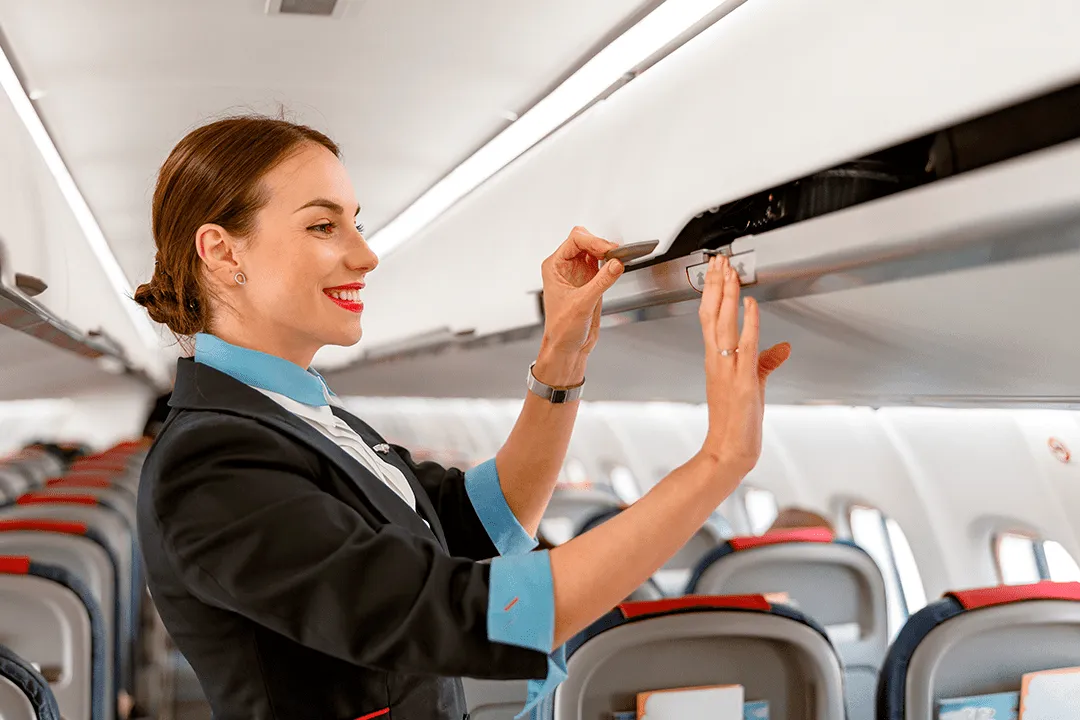
When and where did flight attendants appear?
The presence of a flight attendant on board an airplane is no longer surprising, although 80 years ago, the appearance of flight attendants became one of the decisive factors in popularizing civil air travel. The first flight attendants appeared on airships, but this position was not provided for on airplanes. Airplanes of that time were very cramped, and there simply wouldn’t have been room for another crew member besides the pilot. Flight attendants appeared on airplanes in the 1920s; the first airline to introduce this position was British Imperial Airways. Then flight attendants also appeared at the American airlines Western Airlines and Pan Am. By the way, Pan Am was the first airline whose flight attendants’ duties included providing passengers with food and drinks.
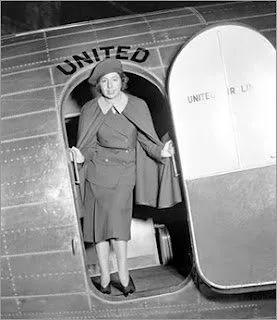
The first woman on board was 25-year-old nurse Ellen Church. In 1930, she approached the management of Boeing Air Transport (now known as United Airlines) with a request to hire her as a pilot. The company refused, but Ellen did not give up and suggested hiring a nurse to accompany passengers during the flight. The fact is that the first airplanes were not very comfortable for passengers; they flew quite low to the ground, which caused significant turbulence. Most passengers felt unwell during the flight, and a nurse’s help would not have been superfluous. Moreover, many passengers were afraid to fly, and the sight of a fearless, fragile young woman could calm them. The first flight accompanied by a flight attendant took place on May 15, 1930, from San Francisco to Chicago. The flight took 20 hours and made 13 stops along the way. The young woman in the sky caused a sensation, and Ellen was offered to recruit a group of seven nurses, no older than 25 and weighing no more than 115 pounds (about 52 kg), ready to become flight attendants for a decent salary by the standards of the time of $125 per month. As we mentioned above, the airplanes were small, and the women had to be as miniature as possible to move around the cabin and serve passengers.
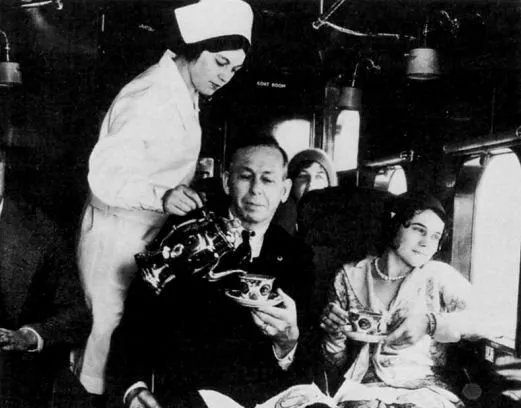
The first flight attendant uniform was a regular nurse’s smock, but a little later, again thanks to Ellen Church, a special uniform appeared. Flight attendants’ duties included cleaning the aircraft, loading luggage, and even assisting pilots with refueling and rolling the aircraft out of the hangar. In addition, flight attendants of that era acted as guides and entertained passengers by showing and telling them about the places they were flying over. In the next 3 years, almost all American airlines acquired flight attendants.
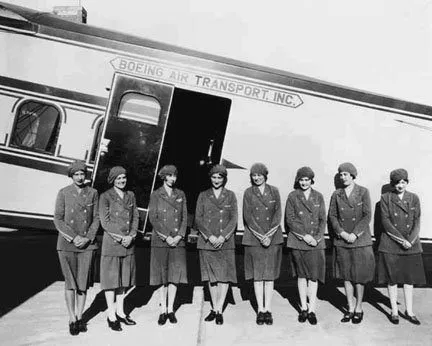
Despite strict requirements, such as an age limit of 25 to 30, a ban on marriage and having children, the profession of flight attendant was very popular. In 1935, when Transcontinental and Western Airlines announced recruitment for flight attendants, more than 2000 nurses applied for the position. During World War II, most nurses went to the front, and carriers decided to recruit not only those with medical diplomas but also any suitable young women as flight attendants. Strict age requirements were only abolished in the 1970s, and the ban on marriage and children in American airlines lasted until 1980.