Will they let you on a plane with a cast?
Nowadays, even when going out for bread, you have to be extra careful. It’s slippery in winter and spring, and in summer and early autumn, our enemies are racers on skateboards, rollerblades, bicycles, scooters, and so on. What if someone accidentally pushes you on vacation while chasing the last portion of omelet from the buffet or on the way to the pool? In the worst case, you’ll break an arm or a leg; in the best, you’ll cannonball into the water and drench your assailant from head to toe. Serves them right! But seriously: be careful, because with a cast, they might not let you on the plane.
Is a cast an obstacle to flying?
Not always. Some airlines do not allow passengers on board if they have a fresh cast. But this restriction is aimed at safety and customer care. Let’s figure it out.
Suppose you broke your leg shortly before departure. In this case, you need to see a doctor as soon as possible to determine what kind of cast you will need.
The thing is, during a flight, due to pressure changes, even healthy people’s legs swell, and in casted limbs, blood circulation can be impaired, and swelling will cause significant discomfort.

Slab or bandage?
There are two types of casts:
slab/splint
bandage (commonly known as a traditional cast)
A slab/splint is applied for acute injuries. It is usually a plate or a splint that is bandaged to the limb. It does not compress, and therefore flights are tolerated calmly with it.
However, it’s different with a traditional cast. It completely encases the limb, and removing it is not as simple (in the case of a slab/splint, it’s enough to unwrap the bandages). So, consider this. The first days of wearing a cast are already not very pleasant, and if you also have a long flight, it will be extremely uncomfortable, and impaired blood flow will not lead to anything good.
How to find out if you’ll be allowed on the flight?
It depends on the airline and the size of the cast. If you have a traditional cast, contact the airline to clarify the rules for flying in such cases.
If the cast was applied less than 48 hours before departure, many carriers require a slit along its entire length. If more than two days have passed since the cast was applied, a slit is not necessary. But still, take a doctor’s note with you: it may be required during boarding.
However, if you had a cast applied less than 24 hours before departure, you may be denied boarding. And don’t be offended, it’s for your own health!
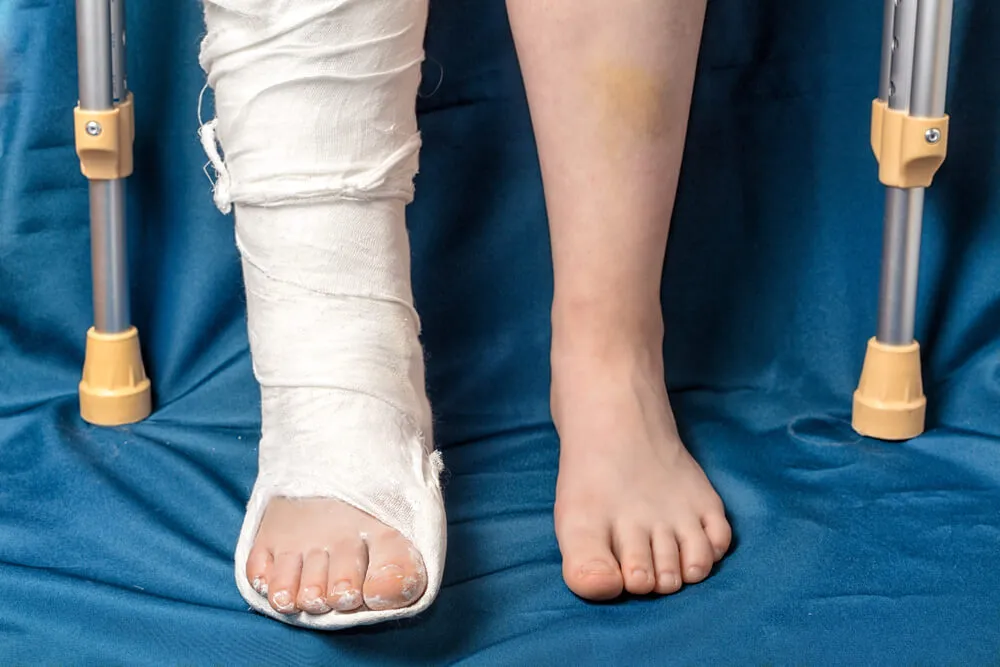
Regarding the size of the cast. If only a part of the limb is casted and it does not restrict usual movements, there will be no problems with boarding. Is the limb fully “dressed”? Then you will need assistance with boarding and deplaning and a new seat with more space for you and your cast. You cannot do without the airline’s recommendations here — and you are obliged to notify them about this.