Russian Federation

About

Russia is a country of immense expanses and amazing contrasts, stretching across two continents, from the Baltic Sea in the west to the Pacific Ocean in the east. This destination attracts travelers with its rich cultural heritage, diverse natural landscapes, and unique atmosphere where history meets modernity. Every region of Russia is unique, offering guests the chance to discover something new, whether it be majestic cities or pristine nature.
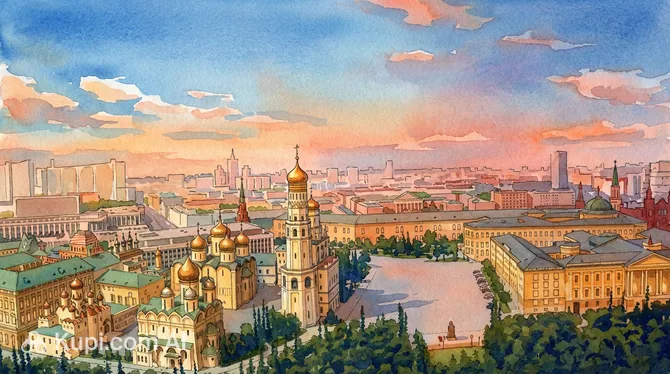
Illustration.
Source: Kupi.com AI

The heart of the country is its capital — Moscow, a dynamic metropolis where ancient Kremlin walls stand alongside modern skyscrapers. Russia is famous for its deep history, reflected in numerous architectural monuments, world-class museums, and literary masterpieces. From the imperial splendor of Saint Petersburg to the unique historical and architectural complex of the Kazan Kremlin, the country offers endless opportunities for cultural enrichment.

Russia's natural diversity is breathtaking: from the snow-capped peaks of the Caucasus Mountains and endless Siberian forests to the picturesque shores of the Black Sea and the unique Lake Baikal. The climate varies from arctic in the north to subtropical in the south, making it possible to find the perfect place to relax at any time of year. A trip to Russia is always a discovery full of vivid impressions and unforgettable moments, an opportunity to experience a centuries-old culture and enjoy the hospitality of its residents.

Currency

The national currency of Russia is the Russian ruble (international code: RUB). Banknotes of various denominations are in circulation, such as 100, 500, 1000, 2000, and 5000 rubles, as well as coins. Modern banknotes depict landmarks of various Russian cities and regions. For example, the 2000 ruble bill features the Vostochny Cosmodrome and the bridge to Russky Island, while the 5000 ruble banknote shows iconic sites of Khabarovsk.

Foreign currency can be exchanged for rubles at banks or official exchange offices; a passport is usually required for the transaction. Try to avoid exchanging money with private individuals or in questionable places. Please note: as of 2025, international bank cards (such as Visa and Mastercard) issued outside of Russia are not accepted in the country. Therefore, foreign tourists should mainly rely on cash rubles for all transactions. The national payment system "Mir" operates in Russia, but for foreign guests, cash remains the primary means of payment. It is recommended to have a sufficient supply of cash to cover all expenses during the trip, including shopping, dining, transport, and visiting attractions.

Visa Requirements

To enter Russia, most foreign citizens, including citizens of the European Union and the USA, generally require a visa. Most often, a tourist visa is issued for travel, which must be obtained in advance at a Russian consular office in your country of residence. Citizens of some CIS countries may enter Russia without a visa, but conditions may vary, so it is recommended to clarify this information individually.

To apply for a visa and cross the border, you will need a valid foreign passport, the expiration date of which must exceed the duration of your intended stay. You may also need return tickets, confirmation of a hotel reservation, and medical insurance. Since visa rules can change, it is strongly recommended to check the latest information on the official website of the Russian embassy or consulate in your country, or at an accredited visa center, before your trip.

We'll let you know if you need a visa

Enter your destination or
Your nationality
Destination

Timezones

Russia is a country with a vast territory, stretching across 11 time zones, from UTC+2 to UTC+12. This large number of time zones is due to the country's significant extent from west to east. Each region lives by its local time.

When planning a trip across Russia, especially if it includes travel between distant regions, for example, from Moscow to Vladivostok, it is critically important to take the time difference into account. This will help you correctly plan your itinerary, avoid missing transportation, and adapt to the change in time zones. Always check the local time at your destination.

Getting There

There are several ways to get to Russia, and the choice depends on your location, budget, and preferences. The most popular and often fastest option is air travel. Numerous international airports operate in the country, the largest of which are located in Moscow and Saint Petersburg. These cities serve as major hubs, receiving flights from most countries in Europe, Asia, the Middle East, as well as North and South America, both direct and with convenient connections.

For travelers from neighboring countries or those who prefer land routes, Russia is accessible by rail and bus. A developed network of railway connections links Russia with countries in Europe and Asia. International bus routes are also an economical way to reach many Russian cities, especially from nearby states. Additionally, for some destinations, maritime transport is relevant: ferry services exist with a number of countries on the Baltic and Black Seas, although this method is less common for long-distance travel.

When planning your trip, especially during the peak tourist season (summer months, New Year holidays), it is recommended to book tickets in advance. This will not only help you save money but also guarantee the availability of seats on your preferred flights or trains. Also, do not forget to check the visa requirements for citizens of your country well in advance.

AirportCityIATA
SheremetyevoMoscowSVO
PulkovoSaint PetersburgLED
AdlerSochiAER
TolmachevoNovosibirskOVB
KoltsovoYekaterinburgSVX

Russia is a country of vast expanses and incredible diversity, offering travelers both metropolises with rich history and culture and picturesque resort areas. The absolute center of attraction is the capital – Moscow, a city where ancient Kremlin walls stand alongside modern skyscrapers, and cultural life buzzes around the clock. Here, everyone will find something for themselves: from world-famous museums and theaters to lively parks and gastronomic discoveries.

Illustration.
Source: Kupi.com AI

No less attractive is Saint Petersburg, the cultural capital of Russia, famous for its magnificent palaces, canals, and white nights. For those dreaming of a holiday by the sea, the resorts of the Black Sea coast, such as Sochi, which offers not only beaches but also mountain landscapes, or Anapa, popular for family holidays, open their arms hospitably. And if you want to immerse yourself in a unique atmosphere with Eastern flavor, you should head to Kazan, the capital of Tatarstan, with its impressive Kremlin and rich history. Each of these cities and resorts is unique in its own way and ready to provide unforgettable impressions.

Top Attractions

Russia is a country with a very rich history and culture, offering travelers an incredible variety of experiences. Among its iconic sites, Red Square in Moscow stands out. It is the heart not only of the capital but of the entire country, where world-famous symbols such as St. Basil's Cathedral, the Kremlin, and GUM are concentrated. Walking on the cobblestones of this square allows you to touch centuries of Russian history.

Illustration.
Source: Kupi.com AI

Traveller photos:

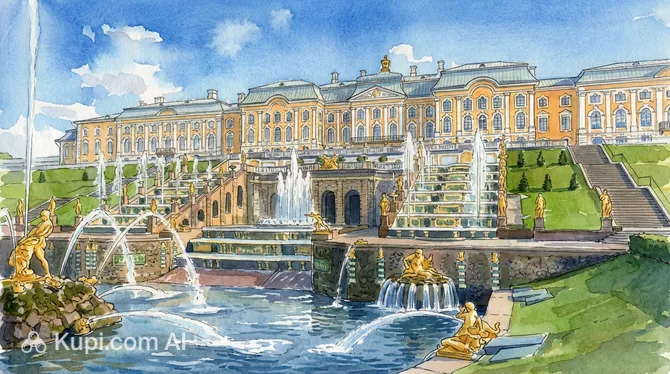
No less famous and magnificent is Peterhof, located near Saint Petersburg. This palace and park ensemble, often called the "Russian Versailles," impresses with its luxurious palaces, gilded statues, and, of course, its world-famous fountains. The Grand Cascade is particularly impressive, creating an unforgettable sight.

Illustration.
Source: Kupi.com AI

Traveller photos:

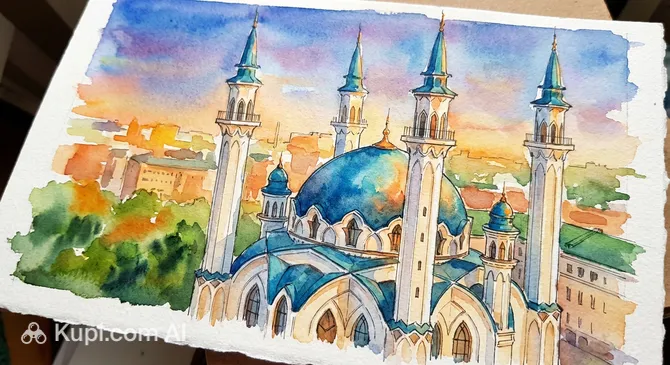
In the heart of Tatarstan lies the Kazan Kremlin — a unique historical and architectural complex included in the UNESCO World Heritage list. Here, Orthodox churches, such as the Annunciation Cathedral, and Muslim shrines, including the famous Kul Sharif Mosque, harmoniously coexist. This site is a symbol of the peaceful coexistence of different cultures and religions.

Illustration.
Source: Kupi.com AI

Traveller photos:

For lovers of nature and active recreation, Sochi National Park is a must-visit. It is a vast territory with unique subtropical landscapes, mountain peaks, relic forests, picturesque waterfalls, and canyons. The park offers many tourist routes of varying difficulty, allowing you to enjoy the beauty of the Caucasian nature.

Best Time to Visit

Russia is a country with a vast territory, so the choice of the best time to visit largely depends on your plans and the specific region. Traditionally, the high season falls in the summer, from June to August. During this time, most regions, including Moscow and Saint Petersburg, experience warm, often sunny weather, ideal for excursions, walks, and open-air festivals. However, this is also the period of the highest tourist influx and, consequently, higher prices for accommodation and flights. For winter sports enthusiasts or those dreaming of seeing a real Russian winter with snow and frost, the period from December to February can also be a high season, especially at ski resorts or in cities with a rich New Year's program.

The shoulder season, covering spring (April-May) and autumn (September-October), attracts travelers with fewer tourists and more affordable prices. The weather during these periods can be changeable: from pleasant warm days to cool and rainy ones. In spring, nature comes to life, and in autumn, it delights with a riot of colors during the "golden autumn", which is especially beautiful in central Russia and the Urals, for example, in the vicinity of Yekaterinburg. One of the iconic events attracting tourists to Saint Petersburg at the beginning of summer is the famous "White Nights". At the end of winter and the beginning of spring, Maslenitsa is widely celebrated across the country, offering a unique cultural experience.

Given the climatic diversity, from the subtropics of Sochi to arctic latitudes, it is strongly recommended to check the weather conditions for your chosen region before your trip. For example, the beach season on the Black Sea coast, in cities such as Anapa or Gelendzhik, lasts from May to September or October, while the best time to observe the northern lights on the Kola Peninsula is from September to March. A trip to Kazan or Kaliningrad will be comfortable from late spring to early autumn, while for a trip to the Far East, for example, to Vladivostok, the characteristics of the monsoon climate should be taken into account.

Traditions

When planning a trip to Russia, it is useful to get acquainted with some local cultural characteristics to make your communication with residents as comfortable and pleasant as possible. Upon meeting, Russians usually exchange a handshake (especially men), and direct eye contact is important, symbolizing openness and sincerity. It is customary to address strangers and older people using the formal "You" (Vy). Hospitality is one of the key traits of Russian culture. If you are invited to a home, it is a great honor, and it is customary to arrive with a small gift for the hosts — this could be flowers (always an odd number!), a box of chocolates, or something symbolic. Be prepared for a generous treat, as refusing it can be perceived as impolite.

In everyday life, there are no strict dress requirements, but when visiting Orthodox churches and monasteries, it is worth showing respect: women are recommended to cover their heads with a scarf and wear clothes that cover the shoulders and knees, while men should be without headwear and also in modest clothing (no shorts or tank tops). There are no particular difficulties at the table, but Russian gatherings are often accompanied by toasts. It is considered impolite to whistle indoors (according to belief, this leads to a lack of money), and it is customary to remove outdoor shoes when entering a house. Smiling at a stranger on the street is less common here than in some Western cultures, but this is not a sign of unfriendliness, but rather a cultural feature implying that a smile is a sincere expression of emotion towards acquaintances.

Among the many holidays in Russia, two stand out in particular. New Year (the night from December 31 to January 1) is perhaps the most beloved and main family holiday, celebrated with a decorated tree, gifts, a feast, and a belief in miracles. Another deeply revered and significant holiday is Victory Day (May 9), which is celebrated on a grand scale, including military parades and honoring veterans, and is an important part of national identity and memory.

Entertainment

Russia offers an incredible variety of entertainment to suit every taste. Fans of active recreation will find plenty of opportunities here: from hiking along scenic mountain trails in the Urals, Caucasus, or Altai to exciting downhill skiing and snowboarding at numerous resorts. In summer, water sports on lakes and seas are popular, including diving and surfing on the Black Sea coast. For those who prefer a more tranquil outdoor experience, fishing, horse riding, and river rafting are available.

Cultural life in Russia is rich and multifaceted. The country is famous for its theaters, where you can enjoy world-class ballet, opera, and dramatic productions, especially in cultural centers like Moscow and Saint Petersburg. Numerous museums and art galleries house priceless collections of artworks and historical artifacts. In the evening, major cities come alive: nightlife is buzzing in stylish bars, trendy clubs, and cozy restaurants, offering entertainment until dawn. Nightspots in Moscow, Saint Petersburg, and the resort city of Sochi are particularly famous for their atmosphere.

Shopping in Russia is an opportunity to purchase not only modern goods in large shopping centers but also unique souvenirs. Traditional Russian gifts include matryoshka dolls, items with Khokhloma and Gzhel paintings, Palekh lacquered boxes, Orenburg down shawls, and amber jewelry. For family holidays, there are also many options: from visiting zoos, aquariums, and circuses to amusement parks and children's theaters, which can be found in many large cities. Some resort areas, for example, in Sochi or Kazan, offer modern water parks and themed entertainment complexes for children of all ages.

Currency rates

Planning a trip? Wonderful! To make sure the financial side of your journey holds no surprises, it's worth remembering that exchange rates are constantly changing. That's why we strongly recommend keeping an eye on current rates both before departure and throughout your trip. To help with that, you can use the data provided below — we monitor exchange rates 24/7 and strive to provide the most up-to-date information.

RUB exchange rate for 15/08/2026

1 AED
~ 22.73 RUB
4.38 AMD
~ 1 RUB
1 AUD
~ 59.07 RUB
1 AZN
~ 49.11 RUB
1 BYN
~ 27.60 RUB
1 CAD
~ 60.09 RUB
1 EUR
~ 96.48 RUB
1 GBP
~ 112.89 RUB
3.76 HUF
~ 1 RUB
1.14 INR
~ 1 RUB
1.05 KGS
~ 1 RUB
16.95 KRW
~ 1 RUB
5.56 KZT
~ 1 RUB
1 PLN
~ 22.40 RUB
1 SAR
~ 22.23 RUB
1 SGD
~ 65.26 RUB
1 TRY
~ 1.74 RUB
1 UAH
~ 1.87 RUB
1 USD
~ 83.48 RUB
142.82 UZS
~ 1 RUB

Reached the bottom of the page?

Looks like you know this route inside out

We use cookies and services to collect user information. This is essential for the functioning of the site and for marketing purposes. You can find out more in .