Belarus

About

Belarus is an amazing country in Eastern Europe, often called "blue-eyed" because of its countless lakes and rivers. It attracts travelers with its calm, peaceful atmosphere, the hospitality of its locals, and its rich history. The capital, Minsk, is a modern city with wide avenues, well-kept parks, and interesting museums, harmoniously combining Soviet heritage with new trends.
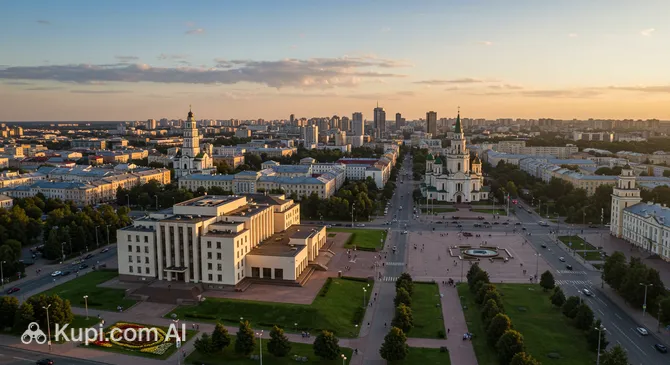
Illustration.
Source: Kupi.com AI

Belarus is famous for its ancient castles and estates, such as the famous Nesvizh Castle, a UNESCO World Heritage site. The country carefully preserves its cultural traditions, which are reflected in folk crafts, music, and festivals. The nature of Belarus is its main treasure: dense forests, including Belovezhskaya Pushcha, picturesque lakes like the Braslav Lakes, and national parks offer endless opportunities for ecotourism and outdoor activities.

A trip to Belarus is an opportunity to touch a unique culture, enjoy the beauty of untouched nature, and take a break from the city bustle. Besides the capital, it's worth visiting cities like the heroic Brest with its memorial complex. Here, everyone will find something for themselves: from historical excursions to peaceful relaxation in nature, leaving warm memories of the hospitable Belarusian land.

Currency

The national currency of Belarus is the Belarusian ruble (international code: BYN). Modern banknotes, introduced after the 2016 denomination, have a bright design and are dedicated to various regions of the country, depicting famous architectural monuments and cultural sites. Coins of various denominations are also in circulation, replacing small bills.

You can exchange foreign currency for Belarusian rubles at bank branches and official exchange offices, which are widespread in cities, including airports and train stations. It is strongly recommended to avoid exchanging money with private individuals or in unauthorized places. Credit and debit cards of international payment systems (such as Visa and Mastercard) are widely accepted in most shops, restaurants, hotels, and service centers, especially in large cities like Minsk. However, when traveling to smaller towns or for paying at markets, cash may be required.

Visa Requirements

When planning a trip to Belarus, it is important to check the visa requirements in advance, as they can vary depending on your citizenship and the purpose of your visit. For citizens of many countries, including CIS countries, a visa-free regime often applies. Also, for citizens of a number of states, including EU countries and the USA, there is a possibility of visa-free entry for a certain period under certain conditions, for example, when arriving and departing through Minsk National Airport. If a visa is required, it is usually a tourist visa, which can be obtained at the Belarusian embassy or consulate in your country.

Regardless of the visa requirements, you will need a valid passport to enter Belarus. It is also recommended to have return tickets, proof of hotel reservation, and a medical insurance policy with you. As visa rules can change, we strongly advise checking the most up-to-date information on the official websites of the Ministry of Foreign Affairs of Belarus, embassies, or visa centers before your trip.

We'll let you know if you need a visa

Enter your destination or
Your nationality
Destination

Timezones

When planning a trip to Belarus, you won't have to worry about changing time zones within the country. A single time zone operates throughout Belarus, which corresponds to UTC+3. This means that the time in Minsk, Brest, Gomel, and other cities will be the same.

This state of affairs significantly simplifies planning travel around the country and flight connections, allowing tourists to focus on exploring Belarusian culture and attractions without being distracted by adjusting their watches.

Getting There

You can get to Belarus in several convenient ways, and the choice depends on your location and preferences. The fastest and most popular option is air travel. The country's main international air hub is Minsk National Airport, which receives flights from many cities in Europe, Asia, and the CIS. Direct air links or convenient connections are most often available from major European capitals and Russian cities. Besides the capital's airport, other international airports operate in regional centers, which may be convenient for travelers heading to specific regions.

Thanks to its geographical location in the center of Europe, Belarus is also easily accessible by land transport. The country has a developed railway network with international trains linking it to Russia, Poland, Lithuania, Latvia, and other neighboring states. This is a comfortable and often scenic way to travel. In addition, bus services are widespread, offering regular trips from many European cities. Whichever method you choose, it is recommended to book tickets in advance, especially if your trip is planned during the peak tourist season or on holiday dates, to guarantee the best prices and seat availability.

For clarity, here is summary information on the main international airports in Belarus:

AirportCityIATA
Minsk National AirportMinskMSQ
Gomel AirportGomelGME
Brest AirportBrestBQT
Vitebsk AirportVitebskVTB
MogilevMogilevMVQ

Belarus attracts travelers with the diversity of its cities and resort areas. Here, everyone will find something to their liking: from lively metropolitan avenues to peaceful lake landscapes and ancient castles. The country is rich in historical centers, modern cities, and corners of untouched nature, ideal for relaxation and wellness.

Illustration.
Source: Kupi.com AI

The heart of the country is, of course, its capital—Minsk. This dynamic city wonderfully combines wide avenues, monumental Soviet-era architecture, and cozy historical quarters like the Trinity Suburb. Another iconic city is Brest, known for its heroic Brest Fortress, attracting those interested in military history. For lovers of palace and park ensembles, Nesvizh with its magnificent Radziwill Castle, a UNESCO World Heritage site, is a must-visit.

Vitebsk, the birthplace of Marc Chagall, where the famous "Slavianski Bazaar" festival takes place annually, is often called the cultural capital. Nature lovers and active recreation enthusiasts should pay attention to Braslav and its lake district, which offers excellent opportunities for fishing, boating, and ecotourism. Ancient Polotsk, one of the oldest cities in Eastern Europe, will charm you with its rich history and spiritual shrines. Each of these cities and regions has its own unique atmosphere and is ready to offer tourists unique experiences.

Top Attractions

Belarus offers travelers many interesting places where history intertwines with modernity, and city bustle gives way to peaceful natural landscapes. Here, everyone will find attractions to their liking, be it majestic memorials, ancient park ensembles, or colorful local markets.

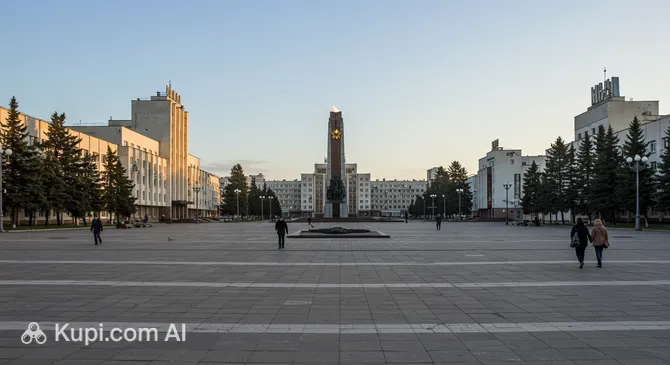
One of the iconic attractions is Victory Square in Vitebsk. This is not just the largest square in the country, but also an important memorial site dedicated to the events of the Great Patriotic War. Here you can see the Eternal Flame, monuments, and stroll along well-kept alleys, feeling the spirit of history.

Illustration.
Source: Kupi.com AI

Traveller photos:

In Gomel, be sure to visit the Palace and Park Ensemble surrounding the magnificent Rumyantsev-Paskevich Palace. This extensive park with picturesque ponds, ancient trees, and cozy gazebos is an ideal place for leisurely walks and exploring one of the country's most beautiful architectural complexes.

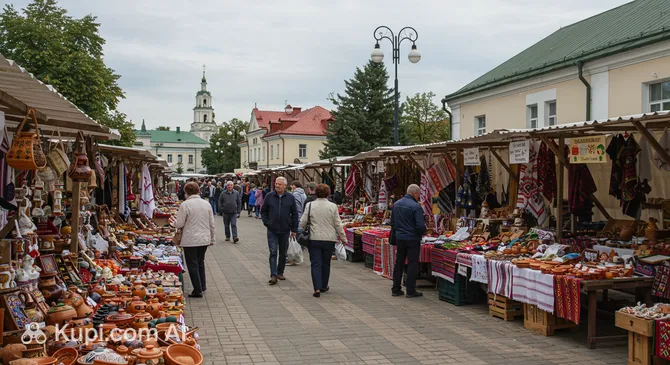
To feel the authentic atmosphere and try local products, stop by Komarovsky Market in Minsk. This is the most famous and largest indoor market in Belarus, where you can find fresh farm products, national delicacies, and souvenirs. Visiting the market is a great opportunity to plunge into the daily life of the city and chat with locals.

Illustration.
Source: Kupi.com AI

Traveller photos:

Best Time to Visit

Belarus welcomes guests with a temperate continental climate, where every season has its own charm. High season traditionally falls in the summer, from June to August. At this time, the weather is warm and sunny, ideal for walking around cities like Minsk, relaxing in nature by numerous lakes and rivers, and attending iconic cultural events, such as the famous "Slavianski Bazaar" festival in Vitebsk. The pros are obvious: comfortable temperatures and maximum opportunities for outdoor activities. However, you should be prepared for more tourists and potentially higher prices for accommodation.

Shoulder season—spring (April-May) and autumn (September-October)—attracts with its beauty and fewer travelers. In spring, nature awakens, delighting with fresh greenery and blossoms, while in autumn, the forests of Belarus turn gold and crimson, creating a unique atmosphere for photo shoots and peaceful walks. The weather during these periods can be changeable, from warm sunny days to cool and rainy ones, so it's worth bringing a variety of clothes. Also, in spring and summer, you can catch traditional folk festivities, such as Kupalye (Ivan Kupala) in early July. Winter (from December to February) is the time for lovers of snowy landscapes and winter sports, although some tourist sites may have shorter opening hours.

Overall, the choice of the best time to visit Belarus depends on your preferences. Summer is ideal for active holidays and festivals. If you value solitude, the beauty of nature in its transitional moments, and more affordable prices, consider spring or autumn. The climate across the country is fairly uniform, so general recommendations apply to most regions. Regardless of the season, Belarus will offer you hospitality and interesting discoveries.

Traditions

Belarusians are known for their friendliness and openness. When getting acquainted and meeting, a handshake is the standard greeting, especially between men, and direct eye contact is important. It is customary to address strangers and older people using formal forms of "you." Hospitality is one of the most important traits of the Belarusian character. If you are invited to visit, it is considered a sign of special respect, and it is customary to bring a small gift for the hosts, such as flowers (an odd number), sweets, or a drink. Refusing offered treats may be perceived as impolite. Also, punctuality and a respectful attitude toward the older generation are valued in Belarus.

In everyday life, there are no strict dress codes; however, when visiting Orthodox churches and monasteries, women are recommended to cover their heads and shoulders, and wear a skirt or dress below the knees; men should wear trousers and remove their headwear upon entering. At the table, it is customary not to start eating before the hosts and to keep your wrists on the table. Among the main holidays deeply rooted in the culture are New Year, which is traditionally celebrated with the family, Victory Day (May 9th), observed with special solemnity, and the colorful folk festival of Kupalye (the night of July 6th to 7th), associated with the summer solstice and accompanied by ancient rituals. Showing sincere interest in local traditions will always be received by Belarusians with warmth and cordiality.

Entertainment

Belarus offers tourists a variety of leisure and entertainment options to suit all tastes. Active lifestyle enthusiasts will appreciate the country's picturesque nature: numerous lakes and rivers are perfect for water sports, fishing, and simply relaxing by the water, while dense forests are ideal for hiking and cycling. In winter, cross-country skiing trails can be found in some regions. Agro-ecotourism is also gaining popularity, offering immersion in rural life and traditions.

Cultural life in Belarus is rich and multifaceted, especially in large cities like the capital Minsk, Brest, or Vitebsk. Here you will find many theaters, philharmonics, museums, and art galleries offering both classical and modern programs. In the evening, the cities come alive: numerous cafes, restaurants with national and European cuisine, as well as bars and clubs invite guests to have a pleasant time. Nightlife is most active in the capital and regional centers, where you can find venues for every taste.

For those who love shopping, Belarus can offer interesting options. Traditional souvenirs include linen products, Belarusian knitwear, ceramics, straw and wood crafts, as well as famous sweets and strong drinks. Large shopping centers and department stores are located mainly in big cities, offering a wide range of goods. Families with children will also find plenty to do: many cities have well-kept parks for walks and amusement rides, zoos, and children's entertainment centers that make the holiday interesting for all ages.

Currency rates

Planning a trip? Wonderful! To make sure the financial side of your journey holds no surprises, it's worth remembering that exchange rates are constantly changing. That's why we strongly recommend keeping an eye on current rates both before departure and throughout your trip. To help with that, you can use the data provided below — we monitor exchange rates 24/7 and strive to provide the most up-to-date information.

BYN exchange rate for 13/08/2026

1.24 AED
~ 1 BYN
123.57 AMD
~ 1 BYN
1 AUD
~ 2.09 BYN
1 AZN
~ 1.74 BYN
1 CAD
~ 2.13 BYN
1 EUR
~ 3.42 BYN
1 GBP
~ 4.00 BYN
106.75 HUF
~ 1 BYN
32.22 INR
~ 1 BYN
29.54 KGS
~ 1 BYN
478.41 KRW
~ 1 BYN
157.33 KZT
~ 1 BYN
1.26 PLN
~ 1 BYN
27.95 RUB
~ 1 BYN
1.27 SAR
~ 1 BYN
1 SGD
~ 2.31 BYN
16.13 TRY
~ 1 BYN
15.12 UAH
~ 1 BYN
1 USD
~ 2.96 BYN
4027.52 UZS
~ 1 BYN

Reached the bottom of the page?

Looks like you know this route inside out

We use cookies and services to collect user information. This is essential for the functioning of the site and for marketing purposes. You can find out more in .