Estepona Travel Guide (Spain)

About

Estepona is a charming resort town located in the province of Malaga, in the heart of the famous Costa del Sol. Unlike bustling metropolises, there is an atmosphere of tranquility and comfort here, which attracts travelers who want to enjoy the true spirit of southern Spain. The city harmoniously combines the azure waters of the Mediterranean Sea and the majestic mountain landscapes of Sierra Bermeja.

Estepona. Illustration.
Source: Kupi.com AI

The coastline stretches for more than 21 kilometers, offering tourists magnificent beaches, many of which are awarded the Blue Flag for cleanliness and safety. At the same time, Estepona has preserved the appearance of a traditional Andalusian settlement: white houses, narrow cobbled streets, and squares teeming with flowers and decorated with fountains. Due to such an abundance of vegetation and care for the appearance of the streets, the city is often called the "Garden of the Costa del Sol."

Cultural life here is no less rich than the beach life. Estepona's history is uniquely intertwined with modern trends: walking through the neighborhoods, you can see a route of artistic murals on the facades of buildings and original street sculptures. The city's population is about 74 thousand people, which creates a comfortable environment — there is a well-developed infrastructure here, but without the excessive hustle and bustle characteristic of large tourist centers.

Estepona is an ideal choice for those looking for a balance between a relaxed holiday by the sea, sports (the region is famous for its golf courses), and educational walks. The city warmly welcomes everyone, promising unforgettable impressions of the authentic culture and natural beauty of Andalusia.


Weather Overview

Thanks to its fortunate location between the sea and the Sierra Bermeja mountain range, Estepona delights guests with a unique microclimate. Here you can enjoy the sun for more than 300 days a year, making the city an attractive destination in almost any season. Expect hot, dry summers and mild winters with occasional rain.

The summer months are ideal for beach lovers and sunbathers. From June to August, the average temperature ranges from 21.5°C to 25.6°C, with maximum figures often reaching 30°C. This is the driest period: in July and August, rainfall tends to zero, and rainy days are very rare.

Winter in this region is very comfortable and not at all harsh. In January and February, the air warms up to 14–15°C during the day, and night temperatures rarely drop below 8°C. However, it is the winter period that has the highest number of wet days (up to 9 per month). To choose the optimal dates for your trip and avoid the rain, we recommend checking what weather in Estepona is expected during your vacation in advance.

The off-season is a great time for excursions and long walks. In May it is already summer-like warm (up to 22°C), and September and October bring a pleasant coolness after the summer heat with an average temperature of about 19–22°C.

Average monthly temperature

Average monthly precipitation

Interesting Facts

In addition to its main attractions, Estepona holds many fascinating secrets and unique features that make it truly interesting to explore. This city is capable of surprising even experienced travelers with its artistic projects and hidden corners.
  • The city can safely be called an open-air museum: the facades of houses are decorated with about 30 giant murals. Among them are works in the trompe-l'oeil technique — skillful painting that creates an incredible optical illusion of three-dimensional space and literally brings the walls of buildings to life.

  • More than 25 original sculptures are installed on the streets of Estepona. One of the most memorable is the "Dragon in the Sun's Rays" in Calvario Park, and the famous monument to the tourist greets guests on the Estepona Promenade — a favorite place for walks by the sea.

  • The historical heritage of bullfighting here has intertwined with urban aesthetics: the old bullring has been transformed into the picturesque Flower Square, where the scents of orange trees now reign. You can learn about the traditions of the ancient Spanish ritual in the special Bullfighting Museum.

  • Nature lovers should climb the Los Reales mountains surrounding the resort. Local observation decks offer fantastic views of the coast and the Mediterranean Sea, and on a clear day, the outlines of the African continent are clearly visible on the horizon.

  • Every Sunday, a colorful market comes to life in the sports marina, where an authentic Andalusian atmosphere prevails. Here you can purchase fresh local products and artisan crafts, which is a great way to get to know the culture of the region.

Estepona Promenade. Illustration.
Source: Kupi.com AI

Traveller photos:

How to Get There

When planning a trip to the Costa del Sol, it is important to think about logistics in advance, as the city does not have its own airport. However, getting here is quite easy thanks to the region's developed transport network. You can find all ways to get to the city in more detail on a separate page, and below we will look at the main arrival options.

There is no airport in the city of Estepona itself, but most tourists fly into the international Malaga Airport (IATA: AGP), located in the city of Malaga. This is the main transport hub of the coast, located about 65 km from Estepona. The journey by taxi or transfer will take about 50–60 minutes, and by bus — a little over an hour and a half. Another convenient option is North Front Airport (IATA: GIB) in Gibraltar, which is only 35 km away. However, it is worth considering the need to cross the border with the UK. You can also consider Jerez Airport (IATA: XRY) in the city of Jerez de la Frontera, located 89 km from the resort.

For clarity, here is a summary of the main airports:

AirportPassenger trafficDistance
North Front Airport474,00035 km
Malaga Airport24.9 m65 km
Jerez Airport948,93689 km
Sania Ramel187,77793 km
Tangier Ibn Battouta Airport2.4 m104 km

If you prefer ground transportation, it is important to know that there is no railway station in Estepona itself. The nearest major railway hub is Maria Zambrano Station (IATA: YJM), located in the city of Malaga, approximately 72 km from Estepona. High-speed AVE trains from Madrid and other major Spanish cities arrive here. From the station to the resort, you can get there by direct bus or taxi in about an hour and a bit. You can also use the Jerez Railway Station in the city of Jerez de la Frontera (about 92 km) if your route passes through the western part of Andalusia.

Below are the nearest railway stations that can be used as intermediate points:

StationPassenger trafficDistance
Algeciras train station743 km
Málaga-María Zambrano Railway Station1772 km
María Zambrano Station8.9 m72 km
Málaga Centro-Alameda railway station1072 km
Jerez Railway Station1.9 m92 km

Main Attractions

Estepona offers tourists not only a relaxed beach holiday but also a glimpse of unique architectural and natural sites. The undisputed crown jewel of the city is the Estepona Orchidarium. This impressive futuristic building with three glass domes has become a modern symbol of the resort. Inside lies a real tropical forest with a 30-meter waterfall and the largest collection of orchids in Europe. A visit to this botanical garden will provide aesthetic pleasure and allow you to see thousands of rare species of exotic flowers.

Orchidarium Estepona. Illustration.
Source: Kupi.com AI

Traveller photos:

History buffs and city walkers should check out the heart of the old town, where Antonia Guerrero Square is located. This lively public space, which became an important center of cultural life in Estepona after its reconstruction, is frequently used for festivals and events. Surrounded by beautiful buildings, the square perfectly conveys the atmosphere of hospitable Andalusia.

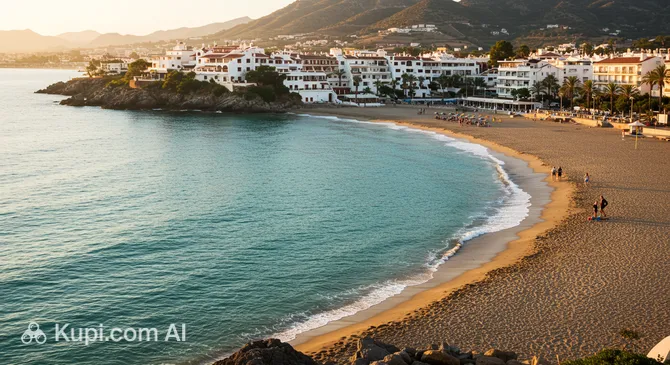
The main swimming area within the city limits is La Rada Beach. It stretches for more than two kilometers along the central promenade and regularly receives the Blue Flag award for cleanliness and safety. Tourists appreciate it for its fine sand, developed infrastructure, and walking distance to the city's best cafes and shops.

Playa del Cristo. Illustration.
Source: Kupi.com AI

Traveller photos:

If you are looking for a more cozy place protected from the winds, head to Playa del Cristo. This picturesque bay, located just west of the marina, is famous for its calm waters and gentle entrance to the sea, making it ideal for families with children. Furthermore, thanks to the orientation of the beach, it is one of the best places to watch spectacular sunsets on the coast.

Local Cuisine

Estepona's cuisine is a true feast for gourmets, incorporating the best traditions of Andalusian gastronomy. The local menu is based on fresh seafood and fish caught daily in the Mediterranean waters. One of the main dishes that is definitely worth trying is aromatic paella. Here it is prepared according to recipes passed down from generation to generation, generously adding rice, vegetables, and seafood.

For hot summer days, "salmorejo" — a thick cold soup made from tomatoes and bread — is perfect, refreshing and satiating. An equally important part of the food culture is tapas — small snacks that accompany drinks in bars. This is a great way to get to know the variety of local flavors in one evening, moving from one establishment to another.

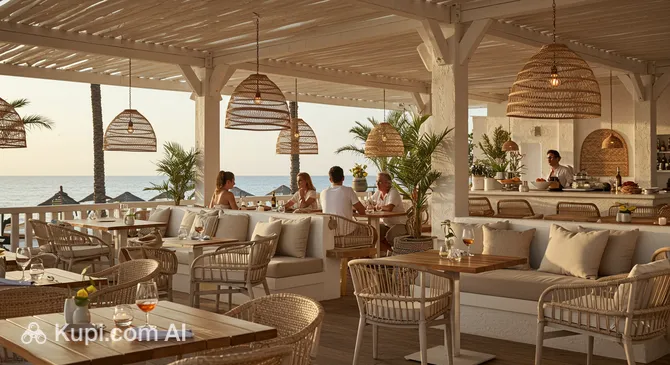
Nido Beach Club & Restaurant. Illustration.
Source: Kupi.com AI

Traveller photos:

If you want to enjoy an exquisite lunch with a sea view, you should visit Nido Beach Club & Restaurant. This place combines a relaxed beach club atmosphere with haute cuisine. For those who prefer meat dishes, Grillhouse Restaurante is an excellent choice, where you can appreciate the skill of local chefs in grilling.

The gastronomic experience in Estepona would be incomplete without visiting the markets. On Sundays, a lively trade unfolds in the sports marina, where you can buy fresh olives, jamon, farm cheeses, and traditional sweets. Drink lovers should pay attention to local wine and the famous Andalusian sherry liqueur. And you can end the evening at the cozy Bar Chanchalay, enjoying cocktails and the lively atmosphere of the resort town.

Travel Tips

A trip to Estepona promises to be relaxed and full of vivid impressions, as this city is famous for its comfort and true Andalusian character. To make your holiday as comfortable as possible and without unexpected surprises, we have prepared a list of useful recommendations to help you feel at home here.

  1. Clothing and comfortable shoes. The climate in Estepona is mild, but it can be very hot in summer, so prefer natural breathable fabrics (linen, cotton). Be sure to bring a hat and sunglasses. The most important tip concerns shoes: the historical center is paved with beautiful but uneven cobblestones, so flat shoes are strongly recommended for walks, while heels are best left for dinner at a restaurant, which can be reached by taxi.
  2. Transport nuances. The historical center of the city is compact and partially pedestrian, so it is best to move around it on foot. Public transport is represented by buses, which are convenient for trips to neighboring cities (for example, Marbella or Malaga). If you rent a car, be prepared for the fact that street parking in the center is very rare; it is better to head straight for paid underground car parks to save time and nerves.
  3. Finances and tipping. The local currency is the Euro (€). Credit cards are accepted almost everywhere, from supermarkets to small souvenir shops. However, having some cash ($5–$11 in bills) is useful for paying bus fares, shopping at the Sunday market, or tipping. In Spain, tipping is not a strict obligation, but leaving 5–10% of the bill or simply rounding up the amount is a sign of good manners if you liked the service.
  4. Health and safety. Estepona is a very quiet and safe city where you can walk without fear even late in the evening. Nevertheless, observe basic precautions and do not leave things unattended on the beach. Pharmacies are indicated by a green flashing cross (Farmacia). Most of them close for siesta, but there is always a duty pharmacy (Farmacia de Guardia), the address of which is usually indicated on the doors of the others.
  5. Communication and language. The main language is Spanish. In tourist areas, hotels, and restaurants, staff often speak English, but in small tapas bars, knowing simple phrases like "Hola" (Hello) and "Gracias" (Thank you) will be received with great warmth. Wi-Fi is available in many cafes and public places. If you need mobile internet, a SIM card can be bought at mobile phone stores or official operator shops (a passport will be required).
  6. Local etiquette and rhythm of life. Remember the siesta: many shops, pharmacies, and even some institutions close from approximately 2:00 PM to 5:00 PM. Plan your shopping for the morning or evening. Locals dine late — restaurants only start to fill up after 8:30 PM–9:00 PM. When entering small shops or elevators, it is customary to greet those present.
  7. What to avoid. Do not enter shops, restaurants, or public transport in beach clothes or shirtless — this is considered bad manners and may cause a remark (in some places, fines are even provided). Also, do not rush the waiters: service in Andalusia is often leisurely, which is part of the relaxed local culture.
  8. Navigate by colors. A unique feature of Estepona that will help you not get lost in the labyrinth of the old town: pay attention to the flower pots hanging on the walls of the houses. Each street has its own specific color and pattern of pots. This is not only beautiful but also serves as an excellent landmark: if you forget the street name, just remember the color of the pots on it.

Estepona is a city that reveals itself to those who are in no hurry and ready to enjoy the moment. By following these simple tips, you can easily join the measured rhythm of life in the "Garden of the Costa del Sol" and take home only the warmest memories of Spanish hospitality.

Entertainment & Nightlife

Estepona's nightlife is noticeably different from the noisy parties of neighboring Marbella or Puerto Banus. A more relaxed and friendly atmosphere prevails here, devoid of excessive pretension, yet full of fun and music. The epicenter of evening entertainment is rightfully considered the Puerto Deportivo (Sport Marina). This is where tourists and locals flock after sunset to enjoy cocktails, dance, or simply stroll along the yachts to the sound of music coming from numerous venues.

In the port, you will find many bars for every taste. One of the most popular places to start the evening is the Reinaldo club. This establishment is famous for its lively terrace and excellent cocktail menu. The crowd here is diverse, from young people to respectable couples, and the atmosphere is conducive to casual communication. The dress code in most port venues is "smart casual": elegant but comfortable, without strict requirements for evening attire.

Louie Louie. Illustration.
Source: Kupi.com AI

Traveller photos:

For lovers of live music and more high-energy recreation, the Louie Louie bar has become a cult spot. This venue is known for its concerts: rock bands, bluesmen, and cover bands frequently perform here. If you want to dance to live guitar riffs rather than electronic beats, this is definitely the place for you. Parties here often last until morning, gathering true music lovers.

If you want to spend the evening in the historic center, the atmosphere there will be more intimate. The narrow streets of the old town are perfect for a "tapas tour" — moving from one bar to another. A great option for a fun group is Tacos y Tequila, where you can not only try various drinks but also have a snack in a colorful setting. The city center is safe for night walks; the streets are well-lit, and there are always many families walking around.

Practical tips: remember that the Spanish night starts late. Bars only fill up with people after 11:00 PM, and clubs closer to 1:00 or 2:00 AM. Prices for drinks in Estepona are moderate compared to other Costa del Sol resorts: a cocktail costs on average $8–$11, and a beer is about $3.30–$4.40. Getting home at night is easy: taxis are always on duty at the port entrance, and you can call a car through apps or by simply raising your hand on the main street.

Regarding daytime entertainment, Estepona offers a rich selection of activities besides the beach. The city is known for its museums, such as the Archaeological Museum or the Paleontology Museum. Families with children should visit the Selwo Aventura adventure park, located nearby, where animals live in conditions close to their natural habitat. Boat trips from the port for dolphin watching and games of golf on world-class courses surrounding the resort are also popular.

Parks & Museums

Estepona rightfully bears the title of "Garden of the Costa del Sol," and it's not just a beautiful epithet. The city pays great attention to landscaping, turning its streets into blooming alleys and public spaces into oases of tranquility. For tourists tired of the beach heat, there are many shady parks and cultural centers where you can get acquainted with the rich history of the region.

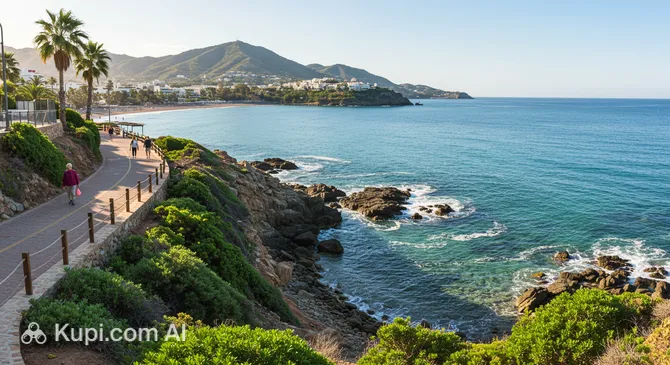
The main green attraction of the city is undoubtedly the Estepona Orchidarium. This impressive botanical garden under glass domes has become an architectural icon of the resort. Inside, a real tropical forest awaits you with waterfalls and thousands of orchid species blooming all year round. If you feel like getting out into nature without leaving the coast, take a walk along the Estepona Seashore Path (Senda Litoral). This picturesque pedestrian path stretches along the sea, connecting beaches and offering magnificent views of Gibraltar and the African coast, especially at sunset.

Estepona Coastal Path. Illustration.
Source: Kupi.com AI

Traveller photos:

For lovers of picnics and mountain landscapes, Los Pedregales Park (Parque de los Pedregales), located in the foothills of Sierra Bermeja, is an excellent choice. This is an ideal place for family recreation in the lap of nature, where the chapel of San Isidro — the patron saint of the city — is also located. Here you can enjoy silence, fresh mountain air, and panoramic views of the coast from local observation decks.

Cultural life in Estepona is concentrated in several unique museums. Be sure to visit the Archaeological Museum, located in the building of the old town hall (Casa del Aljibe). Its exhibition spans millennia of history, and its main treasure is the "Venus of Estepona" — a small clay figure more than 5,000 years old. No less interesting is the Paleontology Museum, which is located in an unusual place — right in the building of the bullring. It houses one of Europe's best collections of Pliocene fossils and dinosaur replicas, which young travelers especially like.

The city itself is an open-air museum thanks to the famous Murals Route. More than 60 huge artistic paintings decorate the facades of residential buildings in different neighborhoods, turning an ordinary walk into an exciting quest for art. The center of cultural events is often Antonia Guerrero Square, where concerts and exhibitions take place, bringing together locals and visitors.

For those seeking truly unique experiences, we recommend visiting the Corominas Necropolis (Necrópolis Prehistórica de Corominas). This is the only underground museum of its kind, built inside a megalithic dolmen. And if you want to see the "soul" of the old town, walk along the Poetry Route: ceramic tablets with poems by Spanish and foreign poets are laid out on the walls of houses in the historical center, adding romance to the narrow Andalusian streets.

Getting Around

Estepona's transport system is quite simple and convenient for tourists, although there is no metro or trams typical of metropolises. Since the historical center of the city is compact and mostly a pedestrian zone, walking remains the main way to move around it. However, for trips to the port, remote urbanizations, or beaches located on the outskirts, you will need transport.

The main type of public transport is city buses, operated by the Avanza company (buses are often marked as Portillo). There are two main lines in the city: L-1 (Circular), which makes a circular route through the center and main residential areas, and L-2 (Mar y Sierra), connecting the coast with the higher areas of the city. The buses are modern and equipped with air conditioning, which is especially important in the summer heat. They run according to a schedule that can be found at stops or in Google Maps, usually with an interval of 20–30 minutes.

Fares on city buses are paid mainly in cash to the driver upon entry. The cost of a single trip is about $1.30–$1.65. It is important to have small coins or low-denomination bills (up to $5 or $10) with you, as the driver may not have change from large banknotes. If you plan to travel a lot not only in Estepona but also along the coast (for example, to Marbella or Malaga), it is profitable to purchase a Consortium transport card (Tarjeta de Transporte) at tobacco kiosks (Tabacos). It gives a significant discount on fares.

Taxis in Estepona are a popular and affordable alternative to buses. Official cars are white with a blue diagonal stripe on the front doors and a green light on the roof (when free). They can be found at special ranks (paradas de taxi) located at major attractions and in the port, or called by phone through the Radio Taxi Estepona service. Uber and Cabify apps also work in the region, but waiting times may vary depending on the season.

A unique feature of Estepona, highly appreciated by road travelers, is the municipal parking network. Unlike many resorts where leaving a car is an expensive problem, there is a "Parking for $1.10" system here. This is a network of underground car parks (for example, in Antonia Guerrero Square or by the promenade) where you can leave your car for the whole day for a symbolic fee of just $1.10. This was done to relieve the streets and for the convenience of guests.

For lovers of active recreation, renting a bicycle or electric scooter is a great option. Thanks to the long promenade and the Senda Litoral (Seashore Path) project, you can comfortably ride along the sea through the entire city, enjoying the views and the sea breeze. Rental points are located in the port area and along the promenade.

Accommodation

The choice of accommodation in Estepona will pleasantly surprise you with its diversity: from cozy family guesthouses in the labyrinth of old streets to luxurious five-star complexes on the first line. The city offers options for every taste and budget, harmoniously combining traditional Spanish hospitality with a high level of service. Both classic hotels and numerous tourist apartments are widely represented here, which are especially popular among those planning a long holiday.

When choosing a place to stay, you should be guided by the purpose of your visit. If you want to immerse yourself in the atmosphere of authentic Andalusia, choose the Historical Center (Casco Antiguo). Life here flows slowly, and all the main attractions and the best tapas bars are within walking distance. For lovers of beach holidays and sea landscapes, the areas along the promenade and the Sport Marina are ideal. Those looking for privacy and premium service should pay attention to the so-called "New Golden Mile" — a zone of elite resorts on the outskirts of the city towards Marbella.

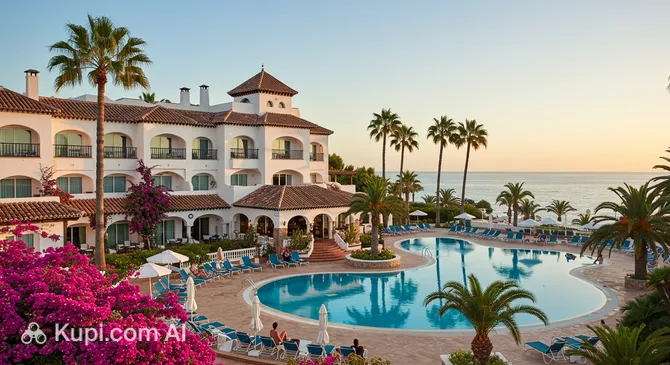
Among specific accommodation examples worthy of attention, Hotel Bahia stands out. This resort hotel is well-located and offers guests comfortable conditions, combining proximity to the sea with easy access to city infrastructure. Such complexes often have their own swimming pools and green areas, making them an excellent choice for a family vacation.

Hotel Bahía. Illustration.
Source: Kupi.com AI

Traveller photos:

The price range in Estepona varies depending on the season and the category of accommodation. Budget travelers can find inexpensive hostels and guesthouses (hostales) in the city center. The middle segment is widely represented by three- and four-star hotels, as well as apartment rentals. The luxury segment includes spa hotels and villas with golf courses.

Booking tip: Estepona is an extremely popular destination, especially at the peak of the summer season (July–August). To guarantee the best view from the window and a reasonable price, it is recommended to book accommodation in advance, preferably 3–4 months before the trip. For searching and booking, it is most convenient to use large international online platforms, although in the case of small apartments, it is sometimes more profitable to contact the owners directly.

Nearby Cities

For those who want to explore the surroundings, Estepona serves as an excellent starting point for day trips to several interesting nearby places:

Just a half-hour drive away is the famous Marbella. This city combines the glitz of luxury living in the Puerto Banus area, where the most expensive yachts are moored, and the charm of the traditional Andalusian old center with its Orange Square and white alleys. It is an ideal place for shopping, gastronomic discoveries, and walks along the promenade.

Slightly further, in the mountains, lies the picturesque Mijas — a classic example of a "white village" (pueblo blanco). The town is famous for its panoramic views of the coast, traditional donkey taxis, and craft workshops. A trip here will allow you to plunge into an atmosphere of tranquility and see Andalusia from a bird's-eye view.

Also worth noting is the city of Fuengirola, which is perfect for a family visit. Here you can visit the famous Bioparc, explore the medieval Sohail Castle, or just spend a day on one of the wide sandy beaches.

CityPopulationDistance
Manilva17,15711 km
Benahavís8,76314 km
San Pedro35,00016 km
Marbella150,72526 km
Santa Margarita12,77630 km

These nearby destinations provide an insight into the diverse culture and landscapes of the region.

Shopping & Souvenirs

Shopping in Estepona is not a marathon through giant malls, but rather a pleasant and relaxed pastime that perfectly complements walks around the city. You won't find endless rows of luxury brands here like in neighboring Marbella, but you will discover many cozy boutiques, family shops, and stores with unique goods. The city is famous for high-quality local leather footwear, original boho-style clothing, and gastronomic delicacies.

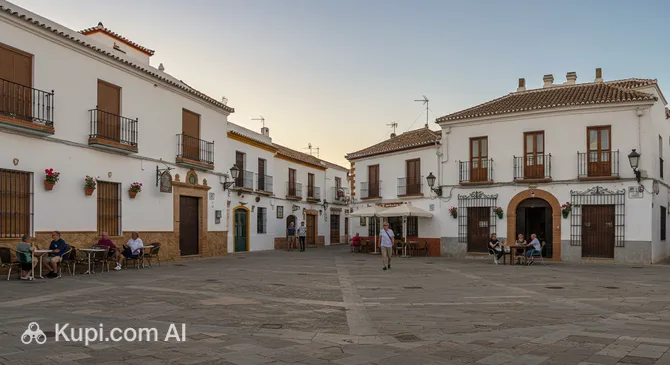
The heart of the resort's commercial life is its historical center. The main shopping arteries are the pedestrian streets Calle Real and Calle Terraza. Walking here, you will find shops of famous Spanish mass-market brands (such as Mango) adjacent to colorful private shops. This area is very picturesque: shop windows are harmoniously integrated into the architecture of white houses decorated with flowers. An important point of attraction here is Antonia Guerrero Square, around which many cafes and shops are concentrated, creating a lively atmosphere.

Plaza Antonia Guerrero. Illustration.
Source: Kupi.com AI

Traveller photos:

As for large shopping centers, there are none directly in the center of Estepona — the city format involves street trade. However, on the outskirts and entrances to the city, there are large supermarkets (for example, Carrefour) and retail parks with sports goods and electronics stores. If your goal is large-scale shopping with visits to dozens of international brand boutiques under one roof, locals and tourists usually head to the famous El Corte Inglés shopping center in neighboring Puerto Banus, which is about a 20-minute drive away.

Estepona's markets deserve special attention as they are an integral part of local culture. The most popular among tourists is the Sunday Port Market (Mercadillo del Puerto). Here, among the rows of clothing, accessories, and handicrafts, a cheerful atmosphere reigns. On Wednesdays, a large street market unfolds on the city streets, where you can buy fresh fruit, vegetables, nuts, and textiles at very pleasant prices. This is a great opportunity to feel like a local and practice your Spanish.

As souvenirs from Estepona, it is worth bringing something authentic. Pay attention to leather goods (bags, belts, shoes) — Andalusia is famous for its tanning quality. A great gift would be local ceramics with bright patterns, hand-painted fans, or castanets. Gourmets should definitely buy a bottle of extra virgin olive oil (Virgen Extra), jamon, local cheeses, or sweet wine from the Malaga region.

When planning a shopping trip, remember the siesta, which is sacred to Spaniards. Most small shops close for a break from approximately 1:30 PM–2:00 PM until 5:00 PM–5:30 PM. Large chain stores and supermarkets usually work without a break from 10:00 AM to 9:00 PM or 10:00 PM. Most shops are closed on Sundays, except for small souvenir shops and duty supermarkets.

Card payments (Visa, Mastercard) are accepted almost everywhere, even in small kiosks, but for visiting markets, it is better to have cash in euros with you. If you live outside the European Union, do not forget about the Tax Free (VAT refund) system. When buying goods for a certain amount in stores marked with a Tax Free sticker, ask for a special receipt (DIVA) to get some of your money back when leaving the country.

Reached the bottom of the page?

Looks like you know this route inside out

We use cookies and services to collect user information. This is essential for the functioning of the site and for marketing purposes. You can find out more in .