Support

Khost

About the Airport

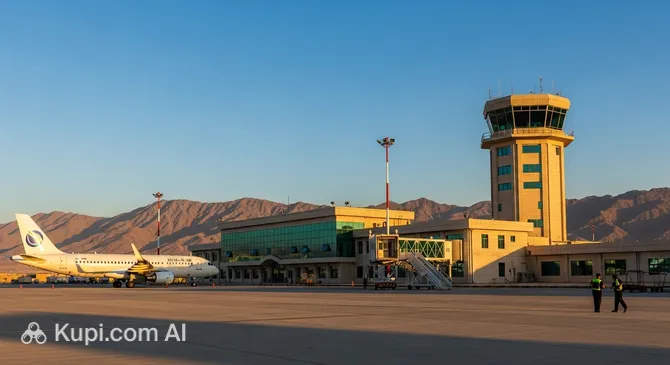
Khost. Source: Kupi.com Binoculars

Khost Airport is not merely a transport hub, but a key aerial gateway opening the path to the picturesque landscapes of the country's eastern region. Located in a valley surrounded by majestic mountain ranges, it offers travellers breathtaking views as soon as the aircraft begins its descent. Having recently undergone a large-scale modernisation, this airport has become a symbol of the region's renewal, connecting it with the outside world and making travel here more accessible and comfortable for all guests.

IATA Code KHT
ICAO Code OAKS
City Khost
Distance to City Centre ~4 km
Status International
Annual Passenger Traffic No official data

Khost Airport possesses a number of features that make it an important facility for travellers:

Modern Infrastructure: Following recent reconstruction and the opening of a new terminal, the airport now meets modern civil aviation requirements. Passengers can look forward to renovated waiting halls and more efficient service compared to the old airfield.

Convenient Location: The airport is located just a few kilometres from the city centre, making transfers as quick and tireless as possible. The journey to major city locations takes mere minutes, which is particularly valuable after a flight.

Scenic Views: Thanks to its geographical position, take-off and landing in Khost allow passengers to enjoy a panorama of mountain peaks and green valleys of the province. For photography and nature enthusiasts, the view from the window will be a unique experience of the trip.

Developing Route Network: Its status as an international airport opens up new perspectives. In addition to regular flights to the capital, the air harbour is gradually establishing connections with foreign destinations, simplifying logistics for international travellers and business people.

Contact Information

Finding direct and up-to-date contact details for Khost Airport can be challenging, as it is a small regional airport. It is recommended to resolve most queries through your airline or directly upon arrival. Below is general information:

  • Official Airport Website: At present, Khost Airport does not have an official website. Information should be sought on the websites of airlines operating flights to this airport.
  • Information Desk Phone: There is no single, publicly available enquiry number. For flight information, please contact your air carrier directly.
  • Airport Address: Khost Airport, Khost City, Afghanistan.
  • Email: There is no official email address for general enquiries.
  • Airport Social Media: The airport does not have official pages on social networks.
  • Lost Luggage Information: For issues regarding lost or damaged luggage, you should contact the representative of the airline you flew with.
  • Passenger Support Contacts: Passenger support is primarily provided by the airlines. Upon arrival at the airport, you can speak to staff at the check-in counters or ground service representatives.

How to Get to the Airport

Getting to Khost Airport from the centre of the eponymous city is quite simple, as it is located very close by. The main modes of transport are taxis or private cars, as the public transport system familiar to tourists is poorly developed in the region. The journey usually takes no more than 15–20 minutes depending on traffic conditions.

Taxis and Private Transfers are the most convenient and recommended methods for travellers. You can hail a car in the city or, which is preferable, book a transfer through your hotel or guest house. This guarantees a fixed price and a reliable driver. Always agree on the price with the driver in advance, before the journey begins. The cost is usually low but depends on your bargaining skills and current demand.

Regarding public transport, there are generally no regular bus routes to the airport. Locals often use shared taxis or communal cars, but for a tourist without knowledge of the language and local customs, this method can prove difficult and unpredictable. We recommend this option only for experienced travellers ready for the unexpected.

Car Rental for self-driving in Khost is not a common practice for foreigners and is generally not recommended due to safety considerations and the specifics of local traffic. A much more sensible alternative would be renting a car with a local driver, which is essentially a form of private transfer for a longer duration. The airport likely has basic parking, but it is more suitable for quick drop-offs and pick-ups rather than long-term vehicle storage.

Terminals and Map

Khost Airport (KHT) is a small regional airport, so its layout is simple and easy for passengers to understand. It consists of one passenger terminal, which serves both domestic flights and a limited number of international destinations.

Since there is only one terminal at the airport, navigation presents no difficulties. Arrival and departure zones are located in the same building, eliminating the need for long walks or shuttle buses. Immediately after entering the terminal building, passengers find themselves in a general hall from where they can proceed to the check-in counters. The airport layout is intuitive: all main zones—check-in, security screening, the waiting lounge, and boarding gates—are within walking distance of each other.

The time required to complete all pre-flight formalities is generally short. Check-in and security procedures at Khost Airport usually take significantly less time than at major international hubs. Nevertheless, it is recommended to arrive at the airport in advance, at least 1.5–2 hours before a domestic flight departure, to pass through all control stages without rushing.

For convenient navigation through the terminal, simply follow the signs, which are duplicated in several languages. Airport staff are always ready to help and suggest the right direction. Thanks to its compact size, it is practically impossible to get lost here, making the stay at the airport comfortable and predictable.

Airport History

The Khost Airport (KHT) is a key transport hub for the eastern part of Afghanistan, playing a vital role in connecting the province with other regions of the country and the world. The history of the airport is inextricably linked with its gradual transformation into a modern civil facility.

Although an airfield existed at this site previously, the key stage in its history was a massive reconstruction completed in the early 2020s. This project aimed to create a modern civil airport capable of meeting international standards. During the works, a new asphalt runway was built, a new passenger terminal was erected, and modern navigation systems were installed.

The official opening of the renovated airport for civil flights took place in 2021, which became a landmark event for the entire Khost province. The main achievement was the transformation of the facility into a full-fledged hub for passenger and cargo transport. The launch of regular flights has not only simplified travel for the local population but also opened new opportunities for economic development and humanitarian missions in the region.

Services and Facilities

Khost Airport (KHT) is a small regional airport providing passengers with a basic set of services necessary before departure. Given its size and status, travellers should prepare in advance for the fact that the range of amenities will be limited compared to large international hubs.

Dining and shopping options at the airport are generally modest. Usually, one can find small kiosks or retail points selling light snacks, bottled drinks, and essential items. Specialised high-comfort lounges or VIP services are not provided here. There are also no business centres or conference rooms within the terminal.

Passengers should expect limited internet access; a stable Wi-Fi connection may be absent. The number of power outlets for charging electronic devices may also be small, so it is recommended to carry a portable power bank. Banking services, ATMs, and currency exchange points are likely not provided within the airport building, so it is best to handle all financial matters in advance in the city.

A medical point is provided at the airport for emergency assistance. However, specialised facilities, such as mother and child rooms or comprehensive infrastructure for passengers with reduced mobility, may be absent. Travellers requiring special assistance must contact their airline well in advance to coordinate support. There are no hotels directly on the airport grounds; the nearest accommodation options should be sought in Khost itself.

Where to Eat

When planning a journey through Khost Airport (KHT), it is important to consider that this is a small regional airport, and its infrastructure, including food outlets, is quite limited. Passengers should not expect the variety of restaurants and cafes typical of major international aviation hubs.

On the premises of Khost Airport, there are generally no full-service restaurants, coffee shops, or snack bars. Opportunities for a snack may be represented by a small kiosk or vending machine selling packaged snacks (crisps, biscuits) and bottled drinks, such as water or soda. The assortment at such points is usually minimal and does not include hot meals.

Specialised dietary options, such as vegetarian, vegan, or gluten-free dishes, are practically impossible to find at the airport. Although food in Afghanistan is predominantly Halal, special labelling or certified establishments may be absent within the airport. If you wish to taste authentic local cuisine, it is best to do so in the city of Khost before travelling to the airport.

Key Recommendations for Travellers:

  • Full Meal: It is recommended to eat in the city before leaving for the airport.
  • Quick Snack: The best solution is to bring your own snacks and water. This is especially important if you are travelling with children or following a specific diet.
  • Opening Hours: Any retail points, if present, operate according to the flight schedule and may be closed during quiet periods.

Thus, for a comfortable wait for your flight at Khost Airport, the most reliable strategy is advance preparation and having your own supply of food and drinks.

Travel Tips

Planning is the key to a stress-free journey through the airport in Khost. To avoid rushing and unforeseen situations, it is important to familiarise yourself with the basic rules and recommendations in advance. These tips will help you navigate the airport and make your journey more comfortable.

Arrival and Check-in: It is recommended to arrive at the airport at least 2-3 hours before your flight departure. This will give you enough time to complete all formalities without haste. Check-in and security control procedures may take longer than expected. Keep all necessary documents—passport, visa, and ticket—to hand to speed up the verification process.

Luggage and Customs: Carefully study your airline's hand luggage regulations. Standard restrictions apply to liquids (usually up to 100 ml in one container), sharp objects, and other prohibited items. When passing through customs control in Afghanistan, be prepared to declare currency and valuable items if required by law. It is better to check current customs regulations beforehand to avoid misunderstandings.

Seat Selection and Transfers: When choosing a seat on the plane, consider your preferences: a window seat will offer you beautiful views during take-off and landing, while an aisle seat provides more freedom of movement. If you have a connecting flight, check with the airline in advance whether you will need to collect and re-check your luggage at the transit airport.

Savings and Unexpected Situations: To save money, try not to exceed the luggage weight allowance, as excess baggage fees can be substantial. It is also useful to carry a small amount of local currency for minor expenses. In case of a flight delay, first contact your airline representative for information on the new departure time and possible options for further action. Carry a phone charger and a book or music to pass the waiting time.

Reached the end of the page?

That means the route is fully explored