Support

Djelfa

About the Airport

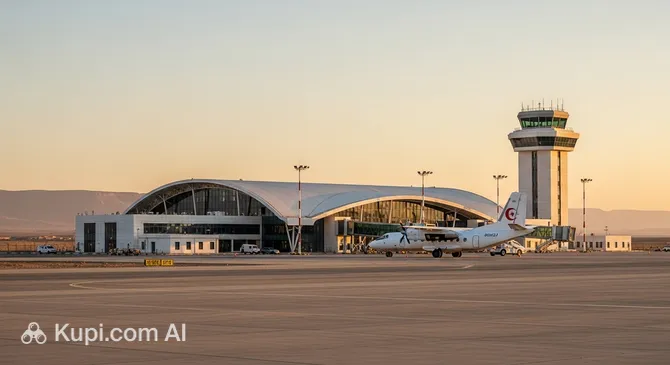
Djelfa. Illustration.
Source: Kupi.com AI

Djelfa Airport, also known as Tsletsi Airport, is a compact and modern aviation hub serving as the main gateway to the city of the same name and the picturesque region of Algeria. Located in the heart of the country, it plays a key role in the development of local tourism and business connections. For travellers eager to explore the unique landscapes of the high plateaus, prehistoric rock art, and salt lakes, this airport serves as a convenient starting point, allowing them to avoid long hours of travel by car.

PropertyValue
IATA CodeQDJ
ICAO CodeDAFI
CityDjelfa
CountryAlgeria
TimezoneAfrica/Algiers
ScheduleOnline Timetable

The main advantage of Djelfa Airport is its compactness and well-thought-out organisation. Passengers do not need to spend much time on pre-flight formalities, making arrival and departure as fast and comfortable as possible. The airport primarily handles domestic flights, mainly linking the region with the country's capital, Algiers. Despite its modest size, it holds strategic importance, offering travellers access to the unique cultural and natural treasures of the Djelfa province.

Contact Information

Djelfa Airport (QDJ) is a small regional airport serving the city of Djelfa and its surroundings. Due to its size and operational specifics, most standard contact details common for large international airports are not published in the public domain. It is recommended to resolve most inquiries through the operating airline.

  • Official Website: Currently, the airport does not have its own official website. Information regarding flight status should be verified directly via airline resources.
  • Information Desk Phone: A public telephone number for inquiries is not provided. For all questions related to your flight, please contact your airline.
  • Address: Tsletsi Airport, located near the city of Djelfa, Algeria.
  • Email: There is no official email address for passenger inquiries.
  • Social Media: The airport does not maintain official social media accounts.
  • Lost Luggage Information: Issues regarding lost or damaged luggage are handled by the services of the respective airline. Please contact a representative of your carrier.
  • Passenger Support Contacts: Passenger support regarding booking, ticket changes, and other flight aspects is provided by the airlines.

How to Get to the Airport

Djelfa Airport (Tsletsi Airport) is located in close proximity to the city of Djelfa, making the journey there quick and convenient. Travellers can choose the most suitable method to reach the terminal — from taxis to rented cars. Typically, the trip from the city centre takes no more than 15-20 minutes; however, it is always advisable to allow extra time in case of unforeseen delays.

Taxi and Private Transfer — the most popular and reliable way to get to the airport. You can flag a car down in the city or order one by phone. The cost of the trip is moderate, but it is strongly recommended to agree on the price with the driver before starting the journey to avoid misunderstandings. For greater comfort, especially if you are travelling with a lot of luggage or with family, you can book a private transfer in advance. This option is slightly more expensive but guarantees you a pickup at the appointed time and a fixed cost.

Car Rental — the ideal choice for those who value independence and plan to explore not only the city but also its surroundings. Local and international rental companies operate in Djelfa. By renting a car, you can easily reach the airport at your convenience and return it at the appropriate point right before departure. Do not forget that to rent a car in Algeria, an International Driving Permit will likely be required.

Regarding public transport, there may not be a direct bus service to the airport. City buses and shared taxis (minibuses) run along the main streets, but their routes may not pass close to the terminal. This option is suitable for budget-conscious tourists without bulky luggage who are ready to walk part of the way. There is no train or metro connection to the airport.

For travellers arriving at the airport in their own or rented vehicle, parking is provided. Options for both short-term and long-term parking are usually available. This is a convenient option allowing you to leave the car in a safe place during your absence. Rates are generally reasonable, but it is better to verify them on-site.

Terminals and Map

Djelfa Airport (QDJ), also known as Tsletsi Airport, is a small regional aviation hub characterised by a simple and clear structure. Its compactness is one of the main advantages for passengers, as all procedures here are completed quickly and without unnecessary fuss.

The airport operates with just one terminal, which handles both domestic and rare international charter flights. This single building houses all necessary zones: for departing and arriving passengers. Thanks to this, there is no need to transfer between terminals, which significantly simplifies navigation.

The terminal layout is intuitive. Upon entry, you find yourself in the general hall where check-in counters are located. After completing check-in and dropping off luggage, passengers proceed to the security screening area, followed by a small departure lounge. The arrival area is also arranged as simply as possible: after disembarking the aircraft, passengers enter the baggage claim hall, and from there — directly to the airport exit. It is practically impossible to get lost here; all signs are easy to read and lead along the only possible route.

The main feature and advantage of the terminal in Djelfa is the speed of completing formalities. Unlike large international hubs, long queues are rare here. The process of flight check-in and passing security control usually takes no more than 20-30 minutes. Nevertheless, it is recommended to arrive at the airport approximately 1.5 hours before departure to calmly go through all procedures without rushing.

Airport History

Djelfa Airport (QDJ), also known as Tsletsi Airport, is an important transport hub for the city of Djelfa and the province of the same name in Algeria. Unlike major international airports with centuries of history, its creation and development are inextricably linked with the modern history of the region and plans for its economic growth.

The emergence of the airport was part of Algeria's national strategy to develop internal infrastructure, which was actively implemented in the second half of the 20th century. The main task was improving transport accessibility to remote administrative centres and strengthening ties between the provinces and the capital. Creating a "gateway to the sky" in Djelfa was a logical step in this direction, designed to stimulate business activity and ensure population mobility.

Since its opening, the airport was designed as a functional facility, oriented predominantly towards domestic flights. Its history is not marked by loud events or records; it lies in systematic and stable operation. Any modernisations and renovations were aimed at maintaining high flight safety standards and increasing comfort for passengers, rather than radical expansion. The airport's main mission has always remained unchanged — to serve as a reliable link for the region.

Thus, the history of QDJ Airport is primarily the history of its contribution to the daily life and economy of the Djelfa province. It is a bright example of how modern infrastructure serves the goals of regional development, ensuring stable and safe air travel over many years.

Services and Amenities

Djelfa Airport (QDJ) is a small regional air terminal serving domestic flights. The range of services here corresponds to its size and is focused on meeting the basic needs of passengers before departure.

For the convenience of travellers, the terminal usually features a small cafe or snack bar where one can have coffee and a bite to eat. A kiosk selling newspapers, drinks, and essential items may also be present. The selection of shops is generally limited.

In the waiting hall, passengers can find seating for rest. Regarding modern amenities, the availability of public Wi-Fi and mobile charging stations is not guaranteed, so it is recommended to carry a portable charger. Information about VIP lounges or business centres is absent; typically, such services are not provided in airports of this scale.

Regarding financial services, an ATM may be installed in the airport, but full-service bank branches and currency exchange points are rarely found. A medical point is provided for first aid. Passengers with children and people with disabilities are provided with necessary assistance by airport staff, though special play areas or mother-and-child rooms may be absent. It is recommended to notify the airline in advance regarding the need for special assistance.

There are no hotels within the airport territory itself. If you require accommodation, it is worth considering hotel options in the city of Djelfa, which is a short distance from the terminal. For business meetings or conferences, it is also better to utilise the city's infrastructure.

Where to Eat

When planning a departure from Djelfa Airport (QDJ), it is worth noting that this is a small regional airport, and the choice of dining establishments here is quite modest, focused on the basic needs of passengers. There is no great variety of restaurants here as in large international hubs, but having a snack or drinking coffee before a flight is quite possible.

Typically, in the main hall of the airport, accessible before security control (landside), a small cafeteria operates. This is the main place where you can refresh yourself. Here, travellers are offered a standard set: coffee, tea (you can often find traditional Algerian mint tea), bottled water, juices, as well as fresh pastries, sandwiches, and light snacks. This is an ideal option for a quick bite.

After passing security (airside), in the departure zone, the selection may be even more limited or non-existent. Sometimes a small kiosk with drinks and packaged snacks is located here. The opening hours of establishments are directly tied to the flight schedule — they open shortly before departures and close after the last plane leaves.

Regarding special dietary requests, finding vegetarian, vegan, or gluten-free dishes here will be extremely difficult. All products are likely to be Halal, which is the standard for Algeria. If you have strict dietary restrictions, it is strongly recommended to bring food with you. For a full lunch or dinner, it is best to choose one of the establishments in Djelfa itself before travelling to the airport.

Tips for Travellers

To ensure your journey through the airport of Djelfa city is as comfortable and hassle-free as possible, make use of our tips. These simple recommendations will help you save time, nerves, and even money.

Arrival time at the airport. The golden rule of the traveller is to arrive early. For international flights, it is recommended to be at the airport 2-3 hours before departure, and for domestic flights within Algeria1.5-2 hours. This will give you enough time to check in, drop off luggage, and pass pre-flight security without rushing.

Check-in and Security Control. To speed up the process, use online check-in if your airline offers this option. Keep your passport and boarding pass ready. Before passing security, remove metal objects from your pockets, take off your belt and outerwear, and remove your laptop from your bag in advance.

Choosing a seat on the plane. If it is possible to choose a seat during check-in, think about your preferences. A window seat is for those who love gazing at clouds and landscapes. An aisle seat is for those who want the freedom to stand up and stretch their legs. Seats in emergency rows often offer more space but may cost more.

Hand Luggage. Carefully study your airline's hand luggage rules, especially regarding weight and dimensions. Remember the standard restrictions: liquids in containers no larger than 100 ml, packed in a transparent bag; no sharp objects or flammable substances.

Passengers with transfers. If you have a connecting flight, clarify at check-in whether your luggage will be transferred automatically or if you need to collect it and check it in again. Calculate the time to transfer between gates; even in a small airport, it is better to have a buffer.

Customs Control. When arriving from abroad, you will have to pass customs control. Familiarise yourself with the customs regulations of Algeria in advance to know which goods need to be declared and what restrictions exist on the import of currency, alcohol, or tobacco products.

Saving Time and Money. Besides online check-in, travelling light helps save money by avoiding excess baggage fees. Take an empty water bottle with you and fill it after the security zone — this is cheaper than buying expensive water at the gate. Airport transfers may also be more cost-effective if booked in advance.

If the flight is delayed. The main thing is not to panic. Contact your airline representative for information on the flight status and your rights. Depending on the length of the delay, you may be provided with drinks, meals, or even hotel accommodation. Having travel insurance can also significantly simplify the resolution of many problems.
Reached the end of the page?

That means the route is fully explored