Support

Resistencia Airport

About the Airport

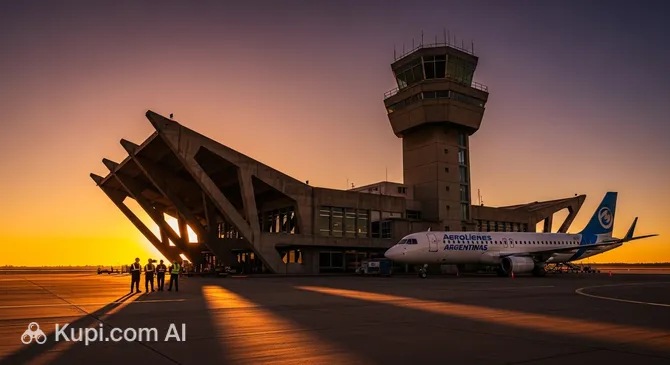
Resistencia Airport. Source: Kupi.com Binoculars

Resistencia International Airport, proudly bearing the name of General José de San Martín, serves as the main aerial gateway to the distinctive Chaco province. This aviation hub welcomes travellers not with the hustle and bustle of a metropolis, but with a calm and hospitable atmosphere that sets the mood for exploring the "City of Sculptures" from the very first minute. Thanks to thoughtful logistics and a convenient location, the airport becomes an ideal starting point for those wishing to explore the culture and unique nature of north-eastern Argentina.

IATA Code RES
ICAO Code SARE
City Resistencia
Distance to Centre 8 km
Status International
Passengers per Year ~300,000 (based on recent data)
Schedule Available on the official website

The airport possesses a number of important features that make it convenient for tourists:

  • Dual Purpose: A unique feature of the airport is its strategic position. It serves not only Resistencia but also the neighbouring city of Corrientes, located just a 20–30 minute drive away on the other bank of the Paraná River. This gives travellers flexibility when planning routes around the region.
  • Speed of Service: Thanks to the compact size of the terminal, the processes of check-in, security screening, and baggage claim take place here much faster than in large capital hubs, saving precious holiday time.
  • Modern Infrastructure: Following modernisation under the management of a major operator, the terminal building offers comfortable waiting conditions with an effective air conditioning system, which is particularly important in the hot climate of the Chaco province.
  • Transport Accessibility: Proximity to the city (only 8 km) allows you to reach the centre quickly and inexpensively, whether by taxi or rented car, without long traffic jams or complex interchanges.

Contact Information

Below you will find the main contact information for Resistencia International Airport (RES), which serves the city of Resistencia and the Chaco province.

  • Official Website: Up-to-date information on flights, services, and regulations can be found on the airport's official page on the operator Aeropuertos Argentina 2000 website: www.aa2000.com.ar/resistencia.
  • Information Desk Phone: For general enquiries, you can call: (+54 362) 444-5991 / 444-5992.
  • Address: Ruta Nacional 11, Km 1003.5, H3506 Resistencia, Chaco, Argentina.
  • Email: To contact the airport administration, it is recommended to use the feedback form available on the official website.
  • Social Media: News and updates are published on the official accounts of the operator Aeropuertos Argentina 2000 on major social networks (e.g., X/Twitter, Facebook, Instagram).
  • Lost Luggage Information: Issues related to lost or damaged luggage are handled exclusively by the airlines. Please contact your airline representative directly at the airport.
  • Passenger Support Contacts: For assistance, you can use the information desk phones or visit the information counters directly in the airport terminal.

How to Get to the Airport

Getting to Resistencia International Airport (RES), located just 8 km west of the city centre of Resistencia, is quite simple. The journey usually takes from 15 to 25 minutes depending on the chosen transport and traffic conditions. Travellers can choose between public transport, taxis, or a rented car to comfortably begin or end their journey through this corner of Argentina.

The most budget-friendly way to get to the airport is to use city buses (colectivos). Several routes pass near the airport, making this option affordable, though not the fastest. A bus ticket costs significantly less than a taxi ride, making this method ideally suited for those travelling light. However, it may not be very convenient if you have a lot of luggage. Be sure to check current routes and schedules in advance.

The most comfortable and fastest option is a taxi or a pre-booked transfer (remis). Counters of official carriers are located right in the terminal building. A taxi ride to the city centre will take about 15 minutes and ensure maximum convenience, especially after a long flight. The cost will be higher than the bus — roughly, the trip will cost several thousand Argentine pesos. We recommend using "remis" services with a fixed fare to avoid price surprises.

For those who value independence and plan to explore the surroundings, car rental will be the best solution. Representatives of several international and local rental companies operate at Resistencia airport. By booking a car in advance, you can set off on your journey immediately upon arrival, without depending on public transport schedules.

If you are travelling to the airport in your own or a rented car, a convenient car park is at your disposal, located directly in front of the terminal. It provides zones for both short-term and long-term parking, allowing you to leave the car for the duration of your absence.

When planning your route, it is worth noting that there are other airports in the region that may offer more convenient flights. The nearest one is Camba Punta Airport in the neighbouring city of Corrientes, located just 29 km away. You can also consider flights to El Pucú Airport (Formosa, 160 km) or even to Silvio Pettirossi International Airport in the capital of Paraguay, Asunción. Slightly further away are Posadas Airport and Ruben Berta Airport.

Terminals and Map

Resistencia Airport (RES), also known as Resistencia International Airport, is a compact and passenger-friendly aviation hub. Its structure is simple and intuitive, making a stay here comfortable even for those travelling for the first time.

The airport operates one passenger terminal, which serves all flights — both domestic and international. Thanks to this, you do not have to worry about transfers between buildings or complex navigation. All main zones and services are located under one roof in a logical sequence.

The terminal is nominally divided into two main parts: the departure zone and the arrival zone. Upon entering the building, you find yourself in the general hall where airline check-in counters are located. After receiving a boarding pass and dropping off luggage, passengers proceed to the security screening area, and then to a small but cosy waiting lounge with boarding gates. The arrival zone is located separately and includes baggage claim belts and customs control counters for passengers on international flights.

Going through pre-flight procedures at Resistencia Airport usually takes little time due to its small size and moderate passenger flow. Check-in and security screening rarely take more than 20-30 minutes, but, as with any airport, it is recommended to arrive in advance — approximately 1.5-2 hours before the departure of a domestic flight. This will allow you to avoid rushing and wait for your flight calmly.

To navigate the terminal, simply follow the clear and easy-to-understand signs. Due to the compactness of the building, it is practically impossible to get lost here. All key points — from check-in counters to boarding gates — are within walking distance of each other. This makes RES airport particularly convenient for travellers who value simplicity and speed of service.

Airport History

Resistencia International Airport (RES), officially known as Aeropuerto Internacional de Resistencia «José de San Martín», is a key air hub for the Chaco province in Argentina. Its history began on 22 April 1965, when it was inaugurated to replace the old airfield and meet the region's growing needs for air connectivity. Named after the national hero José de San Martín, the airport became an important part of the infrastructure of the city of Resistencia from the very beginning.

The first years of the airport's operation were dedicated to establishing regular flights and developing ground services. By 1971, a new passenger terminal was built and put into operation, which significantly improved the quality of passenger service and throughput capacity. This stage laid the foundation for future growth and the transformation of the airport into a modern transport hub.

An important turning point in the airport's history was 1998, when it came under the management of the company Aeropuertos Argentina 2000. This step marked the beginning of a large-scale modernisation of the infrastructure: the runway, navigation equipment, and the terminal building were renovated. Thanks to these investments, the airport was able to meet international safety and comfort standards, allowing it to accommodate larger aircraft.

One of the interesting facts about Resistencia airport is its dual purpose. Besides civil aviation, it is also the base for the III Air Brigade (Spanish: III Brigada Aérea) of the Argentine Air Force. Such proximity of civil and military services does not hinder the airport's operation but only highlights its strategic importance for the entire north-eastern region of the country.

Today, Resistencia Airport continues to develop, serving important domestic routes. It is not just a transport facility, but a symbol of growth and a connecting link that opens up access for travellers to the unique culture and nature of the Chaco province, making a significant contribution to its economic development.

Services and Amenities

Resistencia Airport (RES) is a compact but well-equipped aviation hub offering passengers all necessary services for a comfortable wait for their flight. Despite its size, the terminal is designed to ensure convenience for both arrivals and departures.

Before your flight, you can refresh yourself in one of the cafes serving snacks and drinks, or visit the shops. Here you can purchase souvenirs, newspapers, and other travel goods. The airport has general waiting lounges, and special comfort zones may be available for business class passengers or loyalty card holders.

Free Wi-Fi is available throughout the terminal, allowing you to stay connected or work while waiting for your flight. Special stations and sockets are provided for charging mobile phones and other gadgets. ATMs and currency exchange points are also located in the airport building for your convenience.

For passengers travelling with small children, a mother and child room is equipped. The airport is also adapted for the needs of passengers with reduced mobility: there are ramps, accessible toilets, and staff are ready to provide necessary assistance and accompaniment upon prior request.

Although there are no hotels or large business centres directly on the airport grounds, a wide selection of hotels and conference halls is available in the city of Resistencia, which is just a few kilometres from the terminal. If necessary, you can also contact the medical unit located in the terminal building.

Where to Eat

Resistencia Airport (RES), being a regional air hub, offers passengers basic but convenient options for a snack. Most catering establishments are concentrated in the main hall of the terminal, in the public area before security control, making them accessible to both departing passengers and those seeing them off. If you are starting your journey through Argentina from the city of Resistencia, you will have the opportunity to quickly have a coffee or a snack before your flight.

The main establishment in the airport is typically a café-confectionery (confitería), where you can try classic Argentine snacks. For a quick bite, a cup of coffee with a medialuna (a local equivalent of a croissant) or other fresh pastries (facturas) is ideal. If you are looking for a more substantial option, pay attention to empanadas — traditional patties with fillings, usually meat or cheese. Also popular are "de miga" sandwiches (sándwiches de miga) — light multi-layered sandwiches without crusts, which are excellent for satisfying hunger before a flight.

Options for passengers with special dietary needs are quite limited. Vegetarians may find options with cheese or possibly vegetables. However, specialised vegan, gluten-free, or Halal dishes are most likely not represented here. If you have strict dietary restrictions, it is strongly recommended to bring food with you. Prices in the airport cafes are moderate, slightly higher than in the city, which is typical for airports.

Opening hours of establishments are usually tied to the flight schedule — they open before the first morning flights and close after the departure of the last evening one. Thus, for a full meal with a wide choice of dishes, it is better to eat in the city, while the cafes and kiosks at Resistencia Airport are quite suitable for a convenient and quick snack right before departure.

Travel Tips

To ensure your journey through the airport of Resistencia goes smoothly, several points should be considered. Plan your arrival at the airport in advance: approximately 2 hours before a domestic flight and 3 hours before an international one. This will give you enough time to complete all formalities without rushing. Many airlines operating in Argentina offer online check-in, which allows you to save time and select a seat on the plane in advance.

The security screening procedure at the airport is standard. Remember the restrictions on carrying liquids in hand luggage: they must all be in containers with a volume of no more than 100 ml and packed in one transparent bag. It is prohibited to carry sharp objects, weapons, and flammable substances in the cabin. If you are in doubt about whether you can take a particular item, it is better to check this in advance on your airline's website or check it in as luggage.

When choosing a seat on the plane, be guided by your preferences: window seats will offer beautiful views during take-off and landing, while aisle seats will allow you to stand up freely without disturbing neighbours. To save money, take an empty water bottle with you and fill it after passing security control. Also, booking a taxi or transfer from the airport in advance often works out cheaper than finding a car on the spot.

If you have a connecting flight, check in advance whether you will need to collect and re-check your luggage at the intermediate airport. In case of a flight delay, the first thing to do is contact your airline representative for information on the new departure time and possible compensation options (for example, provision of meals or hotel accommodation). Keep all important documents, medication, and valuables in your hand luggage.

Upon arrival in the country, customs control awaits you. As a rule, there are two channels: "green" — for those who have no goods subject to declaration, and "red" — for those who need to declare certain goods (for example, large sums of cash, expensive electronics, or goods in commercial quantities). If you are unsure whether any of your luggage falls into this category, it is better to choose the red channel to avoid possible fines.

Reached the end of the page?

That means the route is fully explored