Support

San Julian

About

San Julián (or Puerto San Julián) is a picturesque port city located on the Atlantic coast of Patagonia. It is a place where the rugged beauty of nature intertwines with the spirit of great maritime expeditions of the past, creating a unique atmosphere for a thoughtful journey. The city is located in the province of Santa Cruz, in the southern part of Argentina.

Its geographical position determines the local climate: it is often windy, and the air is always fresh and cool, which is characteristic of the Patagonian steppes. Despite its small population of about 8,000 people, the city offers guests comfort and hospitality, providing a peaceful escape from the hustle and bustle of major metropolises.
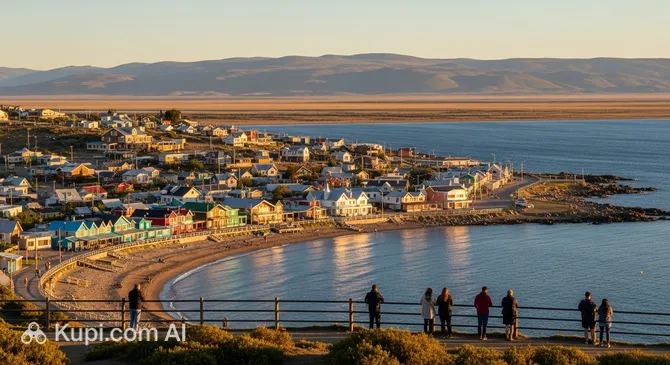
San Julian. Illustration.
Source: Kupi.com AI

The city is famous for its rich past. The fascinating history of San Julián is inextricably linked with the name of Ferdinand Magellan. It was in this bay in 1520 that his fleet stopped for the winter, and it was also here that the first Catholic Mass on Argentine soil took place. Half a century later, the famous privateer Francis Drake also visited these waters.

The main point of attraction for tourists is the museum ship Nao Victoria — a full-size replica of Magellan's vessel, allowing visitors to experience the daily life of 16th-century sailors. In addition, the coast of San Julián is a true paradise for wildlife lovers. During boat trips, you can observe playful Commerson's dolphins (known for their black-and-white coloring) and visit Magellanic penguin colonies on nearby islands.

A visit to San Julián will be an unforgettable experience for those who value historical heritage and want to enjoy the pristine landscapes of Patagonia far from noisy tourist routes.

Weather Overview

The climate in San Julián can be described as cool and dry, typical of coastal Patagonia. The most comfortable time to travel is during the local summer (December to February), when the average temperature is about 16–17°C, and during daytime hours, the air warms up to 20–21°C. This is an ideal period for long walks and nature observation.

The winter months (June, July, August) are quite harsh here. Average thermometer readings drop to 3–6°C, and night temperatures often approach 1°C. There is very little precipitation throughout the year, although overcast days with light drizzle occur regularly. Detailed weather in San Julián will help you pack your bags properly, considering the variability of the winds.

Expect a moderately warm summer and cold, predominantly dry winters with minimal precipitation.

Average monthly temperature

Average monthly precipitation

Interesting Facts

Beyond the main attractions, San Julián holds many fascinating secrets and historical coincidences that will surprise even seasoned travelers. Here are a few facts that reveal the unique character of this place:
  • Birthplace of the name "Patagonia". It is believed that it was in these parts that Ferdinand Magellan first encountered the indigenous inhabitants—the Tehuelche. Struck by their tall stature and the massive tracks left by their fur-covered footwear, he called them "Patagones" (which can be translated as "big-footed"), thereby giving the name to the entire legendary region.

  • The Mystical Coincidence of Two Captains. San Julián Bay became a fateful point for mutineers of two different eras. In 1520, Magellan executed conspirators from his crew here. Remarkably, 58 years later, the famous privateer Francis Drake, upon entering the same bay, tried and executed his companion Thomas Doughty for treason in almost the same spot where Magellan's scaffold had once stood.

  • Charles Darwin's Discovery. During his famous voyage on the HMS Beagle, the young naturalist conducted research in the city's surroundings. It was here that Darwin discovered the fossilized remains of the Macrauchenia—a mysterious prehistoric herbivore resembling a hybrid of a camel and a tapir, which was a significant contribution to paleontology.

How to Get There

When planning a trip to this remote corner of Patagonia, it's worth thinking through the logistics in advance, as the city is located far from the country's main transport hubs. To learn about all the nuances and plan the optimal route, we recommend reading more about how to get to San Julián, where all available travel options are collected.

There is no airport in San Julián itself that accepts regular passenger flights. The nearest major air hub is Río Gallegos International Airport (IATA: RGL), located in the city of Río Gallegos. It is about 280 km from San Julián. This is an important regional transport hub that receives flights from Buenos Aires and other Argentine cities. The journey from the airport to San Julián by rental car or long-distance bus along the famous Route 3 takes about 4–5 hours, allowing you to enjoy the rugged landscapes of the Patagonian steppe along the way.

For your convenience, here is a summary of the nearest airport:

AirportPassenger trafficDistance
Rio Gallegos International Airport250 613280 km

Railway service is not developed in this part of Argentina, and it is impossible to reach San Julián by train. Motor vehicles remain the primary way to move around the region. Tourists often use comfortable long-distance buses that run along the Atlantic coast or rent cars for greater freedom of movement throughout the province of Santa Cruz.

Main Attractions

San Julián is a real treasure trove for history and wildlife enthusiasts. Although the city is small, the concentration of significant sites here is surprising. A walk through the local attractions literally allows you to touch the era of the Great Geographical Discoveries and enjoy the rugged beauty of the Patagonian coast.

The absolute highlight of the tourist route is the Nao Victoria Museum. This is an exact full-size replica of the ship on which Magellan's expedition completed the first circumnavigation of the globe. Visitors can climb aboard, descend into the hold, and see historically accurate interiors, navigation instruments, and figures of sailors. The museum vividly illustrates the cramped and harsh conditions in which the 16th-century explorers lived.

Nature lovers should head to the Peninsula San Julián Nature Reserve (Reserva Natural Península San Julián). This is a vast protected area with picturesque beaches such as La Mina and Los Caracoles. Here you can observe a rich variety of wildlife: from colonies of Magellanic penguins and cormorants to guanacos and rheas (ostriches) roaming freely across the steppe. The lookout points offer breathtaking views of the bay and the Atlantic Ocean.

Another landmark site is the Monument to the First Mass. It is erected on the very spot where, on April 1, 1520, by order of Magellan, the first Christian service was held in what is now Argentina. Located at the end of Avenida San Martín near the coast, the monument is an important historical and spiritual point symbolizing the encounter of cultures and the beginning of a new era for the region.

For a deep dive into local culture, visit the Rosa Novak Regional Museum. The museum's exhibits tell the story of the indigenous people of these lands, the first European settlers, and the city's development. It houses an impressive collection of archaeological finds, everyday items from Patagonian pioneers, and geological specimens that help visitors better understand the complex and fascinating destiny of this region.

Local Cuisine

The cuisine of San Julián is a harmonious blend of Atlantic seafood and traditional meat dishes characteristic of Patagonia's harsh climate. Local gastronomy is defined by simplicity, large portions, and an emphasis on exceptionally fresh ingredients. Here, food is a way to warm up after a windy day and share the joy of companionship.

The main culinary symbol of the region is rightfully considered Patagonian lamb (cordero patagónico). This is a dish for which many gourmets travel to Santa Cruz province. The meat is usually cooked "al asador" (on a spit or cross) over an open fire, which gives it a crispy crust while keeping it incredibly tender inside. You should also try local seafood: fresh mussels, squid, and various types of fish caught right off the coast.

A special place in the diet is occupied by homemade preserves and marinades known as escabeche. Locals masterfully marinate guanaco meat, hare, chicken, or seafood with vegetables, vinegar, and spices. This appetizer is often served with homemade bread before the main course.

As for drinks, in San Julián, as in the rest of Argentina, there is a cult of wine, especially the Malbec variety. However, in recent years, craft beer has been gaining increasing popularity. Many types of beer are produced in Patagonia using the local pure water and hops, so be sure to order a glass of regional ale or stout in one of the bars.

The dining culture here is relaxed and unhurried. Tourists and locals alike prefer to dine in cozy family restaurants called "parrillas" (steakhouses), where you can watch the process of grilling meat. Street food is less developed due to the windy weather, but you can always find excellent empanadas with meat fillings in small cafes, which are perfect for a quick snack.

Travel Tips

Preparing for a trip to San Julián requires attention to detail, as it is a remote corner of Patagonia where the weather is changeable and nature dictates its own rules. To ensure your acquaintance with this historic bay is as comfortable as possible and without surprises, we have prepared a list of important practical recommendations.

  1. Clothing and Equipment. The main rule for traveling in the region is layering (the "onion principle"). Even in summer, strong, piercing winds blow here, so a high-quality windbreaker or windstopper jacket is a must. For excursions to the reserve and the coast, you'll need comfortable closed shoes with non-slip soles. Don't forget sunglasses and sunscreen with high SPF—the southern sun is very active despite the cool air.

  2. Transport. The city itself is compact, and the center is easy to get around on foot. There is no public transport (buses) within the city. For trips to remote beaches or nature reserves, it's better to rent a car—this will give you freedom of movement. If you're without a car, use local taxi services, which are called remises here. Note that popular taxi apps do not work in the city.

  3. Finances. The official currency is the peso. In San Julián, cards are accepted in supermarkets, gas stations, and museums, but small cafes and souvenir shops often require cash (efectivo). There are few ATMs in the city, and they may run out of money on weekends or holidays, so we strongly recommend having a supply of cash before you arrive.

  4. Health and Safety. San Julián is a very quiet and safe city where you can walk without fear even in the evening. Medical care is provided by the local hospital (Hospital Distrital), but for specific medications, it's better to have your own first-aid kit: local pharmacies may close for siesta and do not operate 24/7.

  5. Communication. The primary language is Spanish. In tourist areas (Nao Victoria Museum, hotels), staff may speak English, but you might not be understood in shops or on the street. We recommend downloading an offline translator and learning a few phrases. SIM cards from major operators (Claro, Movistar) can be bought at kiosks; 4G coverage in the city is good but disappears outside its limits.

  6. Local Etiquette. Residents of Santa Cruz province are friendly and unhurried. When entering any establishment, it is customary to say hello ("Hola" or "Buen día"). Take the strict siesta into account: many shops and institutions close for a break from approximately 1:00 PM to 4:00 PM or 5:00 PM. During this time, the city literally stands still.

  7. What to Avoid. Strictly avoid disturbing wild animals. In the reserves, you must not approach penguins, cormorants, or guanacos closely, try to touch or feed them—it is stressful for the animals and carries a risk of a heavy fine. Also, do not set out on long trips around the area with a half-empty tank: distances between gas stations in Patagonia are enormous.

  8. Tide Schedule. Since San Julián is located on the shore of a bay with strong tides, always check their schedule (a tide table can be found at your hotel or online). This is important for coastal walks: some beautiful spots are only accessible during low tide, while during high tide, the water comes right up to the cliffs.

San Julián is a place with a special character, where the rugged beauty of the edge of the world is combined with the warm hospitality of the locals. By following these simple tips, you can avoid everyday inconveniences and fully focus on the amazing history and nature of this corner of Argentina.

Entertainment & Nightlife

Nightlife in San Julián differs from the loud parties of major metropolises. You won't find huge nightclubs with electronic music until dawn here; however, the city offers a cozy and authentic atmosphere for evening relaxation. Most activity is concentrated in the center, where locals and travelers gather to discuss the day's events, enjoy Patagonian cuisine, and have a glass of wine.

The epicenter of evening life is Avenida San Martín. This is where the city's main establishments are located, along with the adjacent streets. The atmosphere in bars and restaurants is casual and relaxed. There is virtually no dress code: tourists in trekking gear feel just as comfortable here as dressed-up locals. Establishments usually come to life after 9:00 PM, following the Argentine tradition of late dinner.

For those seeking classic entertainment, the main attraction is the Casino Club San Julián. This is not just a gambling venue but a true leisure center where, in addition to slot machines and roulette, musical shows and performances often take place. It features a bar with a good selection of drinks and is one of the few places in town open late into the night.

Lovers of a lively atmosphere should check out Naos. This is a popular resto-bar where you can not only have a delicious dinner but also spend the evening in pleasant company. The menu offers various drinks, pizza, and snacks, while the background music creates a great mood for relaxing after a long day of traveling. Another option for a quiet evening could be the bar at the Municipal hotel, where city guests often gather to exchange stories of Patagonian roads.

Practical tips for evening walks:

  • Safety: San Julián is a peaceful city. Walking here in the evening is safe, especially in the central area. Street crime is practically non-existent, but as everywhere, it's better not to leave personal belongings unattended.
  • Transport: The city is compact, and most places in the center can be reached on foot. If you stay out late or the weather turns bad, it's better to use a taxi (remis). It is difficult to hail a car on the street at night, so ask the establishment's staff to call one for you.
  • Prices: The cost of dining and entertainment here is moderate, often lower than in more popular tourist centers like El Calafate.

Regarding cultural leisure, look out for the historic Cine Teatro Talía. This building with its beautiful facade is an important cultural center for the city. It screens current films and hosts theatrical productions. It’s an excellent way to spend time if the strong Patagonian wind starts to blow outside.

Parks & Museums

In this corner of Patagonia, cultural heritage and natural beauty are intertwined in a wonderful way. Although the harsh climate of the steppes is not conducive to lush botanical gardens, San Julián offers travelers well-maintained urban spaces for relaxation and museums that serve as true portals to the era of great geographical discoveries.

The heart of city life and the main green oasis is Plaza San Martín. This is a classic central square where, despite the windy weather, a cozy atmosphere is maintained thanks to carefully planted trees and shrubs. Here you can relax on the benches, observing the measured rhythm of city life, or admire the central fountain, which is particularly beautiful with its evening lighting.

The role of the main promenade and natural recreation area is fulfilled by the Waterfront (Costanera). This is a large, landscaped area along the bay, ideal for morning jogs or evening strolls. There are no thick forests here, but there is something more—an endless view of the Atlantic and the chance to breathe the purest sea air. Benches and observation decks are installed along the route, from which it is convenient to watch sea birds.

Among the cultural institutions, the Nao Victoria Thematic Museum holds a special place. This is not just an exhibit, but an interactive immersion into history. Visitors can walk the deck of a full-size replica of Magellan's ship, peek into the captain's cabin, and descend into the hold. Audio guides and realistic figures of sailors help imagine the daily life of 16th-century explorers, making history tangible for adults and children alike.

For those who want a deeper understanding of the region's history, the Rosa Novak Regional Museum (Museo Regional Rosa Novak) opens its doors. Its walls house a unique collection spanning several eras: from the arrowheads of the ancient Tehuelche to the household items of the first European settlers. The exhibition also includes a rich paleontological section with fossils found in the vicinity, making the museum interesting for natural history buffs.

Archaeology and history lovers should visit the ruins of the Florida Blanca settlement, located near the city. These are the remains of a Spanish colony founded in 1780 by decree of King Charles III. Today, archaeological work is being carried out here, and visitors can see the foundations of ancient buildings, testifying to Spain's attempts to gain a foothold in these harsh lands long before the formation of Argentina.

If you are looking for an unusual angle for photos and a moment of silence, climb up to the Via Crucis (Way of the Cross) monument. This is not only a religious site but also one of the city's best observation points. From here, a panoramic view of San Julián Bay, the city rooftops, and the endless Patagonian steppe opens up, especially impressive in the rays of the setting sun.

Getting Around

Given the compact size and small population of San Julián, there is no complex public transport system typical of major metropolises. There is no metro, tram, trolleybus, or extensive network of city bus routes. Most tourist sites, hotels, and restaurants in the center are within walking distance of each other, making walking the primary and most pleasant way to explore the city.

If you need to get to remote points or the weather is not conducive to walking, the main means of transport are taxis and so-called "remises." These are private transport services that are very popular in small Argentine cities. Unlike a classic taxi, a "remis" is usually not hailed on the street; it is customary to order them by phone or ask the front desk of your hotel or a restaurant to call a car. Cars arrive quickly, and the drivers are usually local residents who know every corner of the city well.

Regarding payment, San Julián adheres to a traditional approach. Unified transport cards (such as SUBE, which is valid in the capital and large centers) are not used for inner-city travel here, as there are no regular buses. To pay for taxi and "remis" services, you will need cash (pesos). Bank card terminals in cars are extremely rare, so tourists are strongly recommended to always carry small bills for payments to drivers.

For travelers wishing to explore the surroundings, including nature reserves on the coast, renting a car is the best alternative to public transport. This will give you complete freedom of movement and independence from schedules. Car rental offices are located in the city center, but the fleet may be limited, so it is worth booking a vehicle in advance. Bicycle infrastructure is poorly developed, but the low traffic allows for comfortable riding through the streets; some hotels may provide bicycles to their guests.

It is important to note that the city has a bus terminal (Terminal de Ómnibus), but it exclusively serves intercity routes connecting San Julián with Río Gallegos, Comodoro Rivadavia, and other settlements in the region. Tickets for these buses are purchased at the terminal's ticket offices, and you may need your passport for long-distance trips.

Accommodation

The choice of accommodation in San Julián is modest, which is to be expected for a city with a population of less than 10,000. You won't find luxury five-star resorts or high-rise international hotel chains here. Instead, guests are offered a cozy and homey atmosphere. The backbone of tourist accommodation consists of small inns (hosterías), family-run mid-range hotels, and the cabin complexes (cabañas) popular in Patagonia. The latter are particularly convenient for travelers with cars or large groups, as they are often equipped with their own kitchens and parking spaces.

In terms of location, practically all accommodation options are in the city center, which is very compact. The most convenient and popular area for tourists is the zone along the main Avenida San Martín and its adjacent streets, as well as the blocks near the waterfront. Staying here, you will be within walking distance of restaurants, shops, and main attractions. Staying near the bay will allow you to enjoy beautiful views of the Atlantic and the fresh sea breeze.

Accommodation prices in San Julián are generally more affordable than in the more popular tourist centers of the region. The price range varies from budget to mid-range. For budget travelers and outdoor enthusiasts, a municipal campsite operates during the summer season, located right on the seashore. It offers basic amenities at a very affordable price and is an excellent option for those traveling with a tent or in a motorhome.

Booking Tips:

  • Plan Ahead: During the high season (December to February), the demand for housing increases. Since the number of rooms in the city is limited, it is recommended to book your stay several weeks before arrival to guarantee a comfortable spot.
  • Payment Methods: Many hotels are listed on popular online platforms; however, small family guest houses often prefer direct booking. Keep in mind that some places may ask for payment in cash in the local currency, so it's worth clarifying this point before checking in.

Nearby Cities

For those looking to explore the surroundings, San Julián serves as a strategic point on a route along the Atlantic coast of Patagonia. Given the vast scale of the region, the term "nearby" is relative here, but there are several significant cities worth visiting as part of a continued journey or a long trip.

The most accessible destination is Río Gallegos — the administrative center of Santa Cruz province. The city is interesting for its museums dedicated to the pioneers of southern exploration and its picturesque estuary, where you can go birdwatching. It is an important transport hub for those heading further to Tierra del Fuego or the glaciers.

Another important point on the map is Comodoro Rivadavia, located to the north. It is the region's largest city, known as the national capital of oil. Here you can visit the National Oil Museum, climb Mount Cerro Chenque for panoramic views of the ocean and the city, and relax on the beaches of the neighboring resort, Rada Tilly.

Below is information about the nearest major cities, their population, and distance from San Julián:

CityPopulationDistance
Comandante Luis Piedra Buena6 405114 km
Gobernador Gregores4 497194 km
Puerto Deseado14 183219 km
Rio Gallegos100 000278 km
Pico Truncado20 889280 km

These destinations allow for a more complete understanding of the diverse culture and landscapes of the Argentine south, from industrial centers to the gateway to Antarctica.

Shopping & Souvenirs

Shopping in San Julián has its own unique provincial charm. You shouldn't expect giant malls or high-fashion boutiques here; trade in this Patagonian town is focused on the basic needs of residents and heartfelt souvenirs for guests. This is a place where purchases are made slowly, often accompanied by a friendly conversation with the shop owner, allowing you to dive deeper into the atmosphere of life at the edge of the world.

The center of all commercial activity is Avenida San Martín. Most shops are concentrated on this main city artery and its adjacent blocks. Here, tourists can find everything they need: from supermarkets and pharmacies to outdoor clothing stores, which is particularly relevant if you need to warm up before an excursion due to the famous Patagonian winds. A walk along the avenue is the easiest way to get acquainted with the local storefronts.

There are no large shopping centers or entertainment complexes in the conventional sense in San Julián. The role of main shopping points is played by chain supermarkets and small galleries that combine several shops under one roof. The lack of globalization in trade gives the city a cozy feel: instead of standard food courts and brands, you will find family bakeries and shops with handmade goods.

The local artisanal markets (Ferias de Artesanos) deserve special attention. They don't work around the clock but are often organized on weekends or holidays in the central square or cultural centers. Here, local craftsmen display their work: knitted items made of sheep's wool, leather and wood products, and ceramics. This is the best opportunity to acquire a unique item that holds the warmth of the master's hands.

When choosing souvenirs, pay attention to the gastronomic symbols of the region. Be sure to buy a jar of jam or liqueur made from the Calafate berry. According to legend, anyone who tastes this berry is bound to return to Patagonia. Souvenirs related to the history of Magellan and the Nao Victoria ship are also popular: miniature ship models, maps, and books on maritime history. Good gifts also include items made from local wool—ponchos, hats, or scarves that will keep you warm in any cold.

When planning a shopping trip, it is important to remember the siesta. In San Julián, as in many cities in Argentina, life stops in the middle of the day. Most private shops close around 1:00 PM and only reopen after 4:00 PM or 5:00 PM, then work until 8:30 PM–9:00 PM. Large supermarkets usually work without a break.

As for payment, cash pesos (efectivo) remain the most reliable means of payment. Although supermarkets and some souvenir shops accept cards, small kiosks or fairs may not have terminals. The Tax Free system (VAT refund) is practically non-existent in San Julián due to the lack of stores belonging to the Global Blue international system; it is better to arrange tax refunds for purchases in large shopping centers in Buenos Aires before flying out of the country.

Reached the end of the page?

That means the route is fully explored