Support

Balgo Hills

About the Airport

Balgo Hills Airport is not just a runway, but a true "lifeline" in the heart of the Australian desert. Located in a remote Aboriginal community, it serves as a vital link to the outside world. For the traveler seeking an authentic experience, arriving here is the first step towards discovering the ancient culture and harsh yet mesmerizing landscapes of Western Australia.
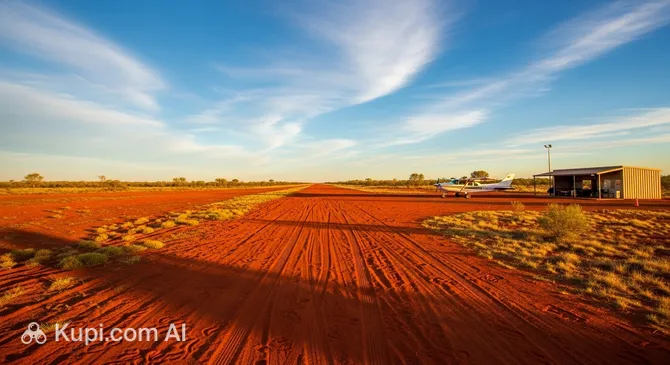
Balgo Hills. Source: Kupi.com Binoculars
IATA Code BQW
ICAO Code YBGO
City Balgo
Distance to centre Within the settlement
Status Regional
Passengers per year Small, exact data not published
Popular Airlines Aviair, Skippers Aviation (charter flights)

The main feature of Balgo Hills Airport is its functionality and vital importance to the local population. There are no familiar terminals with shops and cafes here. It is a simple but reliable unsealed runway ensuring the delivery of mail, essential goods, and medical evacuation by the Royal Flying Doctor Service.

For tourists, the airport is the only fast way to reach the community of Balgo, known for its art centres where unique Aboriginal artworks are created. The airport mainly serves charter flights, which must be booked in advance through specialized operators. Its operation can depend heavily on weather conditions, especially during the wet season.

Contact Information

Balgo Hills Airport (BQW) is a small airfield serving a remote community, so a standard set of contacts is not provided. Most issues are resolved through airlines operating charter flights or local authorities.

  • Official website: Balgo Hills Airport does not have an official website.
  • Inquiry service phone: There is no direct public phone number. For flight information, it is recommended to contact the air carrier directly.
  • Address: The airfield is located near the community of Balgo (Wirrimanu), Western Australia.
  • Email: A specialized email address for contacting the airport is not provided.
  • Social media: The airport does not have official social media accounts.
  • Lost luggage information: For all questions related to lost or damaged luggage, please contact the airline that operated the flight.
  • Passenger support contacts: There is no separate passenger support service at the airport. Support is provided by airline representatives.

How to Get to the Airport

When planning a trip to Balgo, it is important to understand that this is a remote community in the very heart of Australia, and the transport infrastructure here differs radically from urban centres. Balgo Hills Airport (BQW) is essentially a runway serving mainly charter flights, and standard ways to get to it, as found in major cities, do not exist.

Public transport in the form of regular buses, trains, or metro in Balgo and its surroundings is completely absent. The main and practically only way to get from the runway to the community itself is a pre-arranged transfer. Typically, a meet-and-greet at the airport is organized by the party you are visiting, whether it is a local cultural centre, your tour organizer, or community representatives. It is crucial to discuss and confirm all transfer details before your flight.

Car rental directly at Balgo Hills Airport is impossible. If you plan to move around independently, you will have to rent a vehicle, and strictly a four-wheel drive (4WD), in a larger regional centre, for example, in Halls Creek or Alice Springs, and undertake a long journey on unsealed roads such as the famous Tanami Track. This option requires serious preparation, reserves of fuel, water, food, and off-road driving experience.

As for taxis, there are no commercial taxi services in Balgo. All transportation is carried out privately or through community organizations by prior arrangement. The trip from the runway to the community centre takes only a few minutes, as they are in close proximity. The cost of the transfer is usually included in the total package of your visit or negotiated individually. Parking near the runway is informal and free, but leaving a car here for a long time without coordination with locals is not recommended.

The main recommendation for travelers to Balgo is to plan everything in advance. Your transport from the airport and back must be confirmed even before purchasing tickets. Ensure you have a permit to visit Aboriginal lands, as this is a mandatory requirement for visiting the community. Traveling to this unique part of the world requires thorough preparation but offers unforgettable impressions in return.

Terminals and Map

Balgo Hills Airport (BQW) represents a classic example of a small regional air hub of the Australian outback. Here you will not find confusing mazes of corridors or multi-level transitions. All airport infrastructure is designed as simply and functionally as possible to meet the basic needs of travelers arriving in this remote corner of Western Australia.

The terminal complex consists of one small passenger terminal. This compact single-story building serves both arriving and departing flights. Thanks to its modest size, navigation here is intuitive: getting lost is simply impossible. All necessary zones are within direct line of sight of each other, creating a relaxed and calm atmosphere not found in large international hubs.

The interior space of the terminal is organized as a single hall. The check-in counter is usually located right at the entrance. The waiting area is equipped with seats where passengers can comfortably spend time before boarding. Since the airport serves primarily charter flights and small aviation, there is no strict separation into "clean" and "dirty" zones in the way customary for large airports.

Features of arrival and departure zones:

  • Departure: Registration and baggage drop-off procedures are very fast. The absence of long queues is one of the main advantages of this airport. Passengers do not need to allocate hours for formalities; usually, arriving shortly before departure is sufficient.
  • Arrival: Baggage claim is usually organized as simply as possible — often suitcases and cargo are handed out directly from carts or in a designated area next to the drop-off zone.

There are no transfers between terminals, as all operations are concentrated in one point. The distance from the aircraft to the terminal building is minimal and is covered on foot across the airfield. This allows passengers to immediately feel the unique climate and atmosphere of the Tanami Desert upon landing.

For successful navigation at Balgo Hills Airport, it is sufficient to follow the instructions of the ground handling staff. Given the intimate setting, employees are always ready to personally guide you or help with luggage. The main recommendation for tourists is to enjoy the absence of hustle and the calm pace of life, which begins right from the aircraft steps.

Airport History

The history of Balgo Hills Airport (BQW) is primarily a history of survival and connection with the outside world for one of the most remote communities in Australia. Unlike large commercial airports, its creation was dictated not by tourist flows, but by vital necessity. The airfield was built to serve the isolated Aboriginal community of Wirrimanu, better known as Balgo. The exact founding date is not widely documented, but its development is inextricably linked with the growth of the community itself, which began to form around a Catholic mission in the mid-20th century.

The main stage of the airfield's development has always been maintaining it in working condition to ensure critical functions. From the very beginning, it became a key point for the Royal Flying Doctor Service of Australia. This service uses the airfield for emergency medical evacuation, delivery of medicines, and conducting regular medical check-ups, which is a crucial element of healthcare in such remote areas. Therefore, any improvements to the runway were aimed at ensuring the safety of precisely such vital flights.

Balgo Hills Airport cannot boast passenger traffic records or large-scale reconstructions with the construction of modern terminals. Its modernization has always been of a purely practical nature: leveling and strengthening the runway, installing basic lighting for night flights in emergencies, and providing minimal necessary infrastructure. The history of this airfield is not a history of growth, but a history of constant support and reliability.

One of the most interesting facts related to the airport is its role in the emergence of the world-famous Balgo Aboriginal art movement. It was through this air artery that the works of local artists began to reach exhibitions in major cities and abroad, and collectors and art historians were able to fly into the community. Thus, the humble airfield played an invaluable role in making the unique art of the desert a part of world culture.

Services and Amenities

Balgo Hills Airport (BQW) is a small regional airfield serving the remote community of Balgo in Western Australia. It is important to understand that its infrastructure is oriented towards performing basic transport tasks, so passengers are provided with only a minimal set of amenities. When planning a trip through this airport, you should take care of most of your needs in advance.

There are no restaurants, cafes, or shops in the usual sense at the airport. Passengers are recommended to have their own snacks and water with them. The waiting area is a simple space for protection from weather conditions, and VIP halls or lounges of increased comfort are absent.

Public Wi-Fi access is not provided at the airport, and the number of power outlets for charging electronic devices is extremely limited or may be absent altogether. Travelers are strongly advised to bring fully charged portable chargers (power banks) with them.

Specialized services such as bank branches, currency exchange points, business centres, or conference rooms are unavailable on the airport territory. All financial operations should be completed in advance in larger cities. Also, there is no permanent medical point here; in case of emergency, assistance is provided by calling general emergency services.

Services for passengers with children (for example, mother and child rooms) or for people with disabilities are not a standard part of the airport's infrastructure. If you require special assistance, it is necessary to contact your airline in advance to coordinate support. There are no hotels directly at the airport or within walking distance; accommodation options should be sought in the community of Balgo itself.

Dining

Balgo Hills Airport (BQW) is a small regional airfield that serves the remote community of Balgo in Western Australia. Travelers need to consider that due to its size and remoteness, dining options here are practically non-existent. There are no permanent restaurants, cafes, or bars in the airport building.

Passengers are strongly recommended to purchase food and drinks in advance, before arriving at the airport. The terminal infrastructure is very basic and does not include food service points or even vending machines. Therefore, if you want to have a snack before or after your flight, it is best to bring everything necessary with you.

Accordingly, at Balgo Hills Airport, there is no opportunity to order local cuisine, and there are no special offers for vegetarians, vegans, or passengers with dietary restrictions (gluten-free, Halal dishes). Planning a trip through this airport requires a certain level of self-sufficiency regarding food.

Travel Tips

Traveling through Balgo Hills Airfield is a unique experience that differs radically from flights from standard airports in Australia. It is important to understand that this is not a terminal with waiting lounges and shops, but essentially just a runway in a remote area. The key to a successful trip is thorough preparation and complete self-sufficiency.

Main tip: all details of your trip, including arrival time at the airfield and the boarding procedure, must be coordinated in advance and directly with your air carrier (charter company). There are no information boards, check-in counters, or airport staff here. Boarding is often informal and takes place right at the aircraft in coordination with the pilot.

Remember that there are absolutely no amenities at the airfield in Balgo. You need to be prepared and bring everything necessary with you.

  • Water supply: this is absolutely necessary. In desert climate conditions, having a sufficient amount of drinking water is vital.
  • Food and snacks: there will be no opportunity to buy food on site.
  • Sun protection: waiting for the flight will likely take place under the open sky, so a head covering, sunglasses, and sunscreen are mandatory.

Although there are no familiar security checkpoints here, general aviation security rules remain in force. Prohibited items and substances cannot be taken in carry-on or checked luggage. Be sure to clarify with your airline the strict restrictions on baggage weight and size, as they are often stricter for small aircraft flying to remote areas.

In case of a flight delay, your only source of information will be the airline representative, with whom you need to maintain contact. Be prepared to wait in the same field conditions. Having a book, a charged power bank, and headphones will help pass the time.

Balgo Hills Airfield serves exclusively domestic flights and is not used as a transit hub, so customs or border control procedures are not conducted here. A flight from here is a real adventure in the heart of the Australian outback, and proper preparation will make it comfortable and safe.

Airports in nearby cities

Reached the end of the page?

That means the route is fully explored