Support

Cape Byron Lighthouse

About

Cape Byron Lighthouse is not just a navigational structure, but a true symbol of Byron Bay and one of the most photographed landmarks in Australia. Located on Cape Byron, it stands proudly at the easternmost point of the mainland, offering visitors breathtaking views of the vast Pacific Ocean.
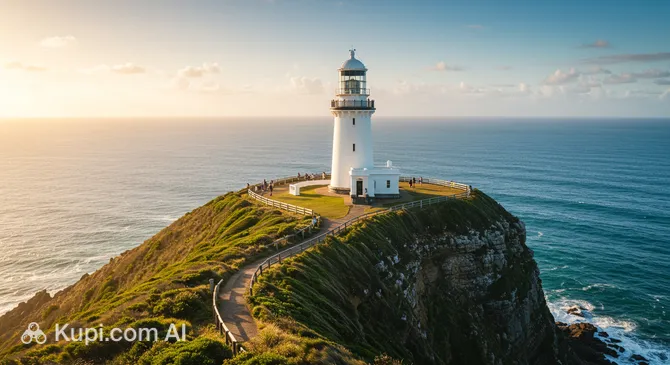
Cape Byron Lighthouse. Illustration.
Source: Kupi.com AI

Traveler photos:

Built in 1901, this historic lighthouse is a striking example of the architectural heritage of New South Wales. Its design was developed in the characteristic style of colonial architect James Barnet. Constructed from concrete blocks, the structure still looks majestic today, serving as a reminder of the importance of maritime routes in the region's history.

Cape Byron Lighthouse remains active today and plays a key role in ensuring maritime safety. For tourists, the site is attractive not only for its history but also for the chance to enjoy incredible panoramas, especially at sunrise or sunset. The area surrounding the lighthouse is part of a conservation zone where you can walk along scenic trails, spotting dolphins, turtles, and, during the migration season, even whales.

Contacts

For the most accurate and up-to-date information regarding opening hours, ticket prices, and available tours of the Cape Byron Lighthouse, it is recommended to consult official sources. You can contact representatives of the National Parks and Wildlife Service, which manages the site, by phone or through their website.

How to contactContact
AddressLighthouse Rd, Byron Bay NSW 2481, Australia
Phone number+61 2 6639 8300
Websitewww.nationalparks.nsw.gov.au

What to Do

Visiting Cape Byron Lighthouse is primarily an opportunity to enjoy breathtaking panoramic views of the ocean and the scenic mountain landscapes. Well-maintained walking trails wind around the lighthouse, leading to various viewpoints. Walking these paths is a wonderful activity in itself, allowing you to appreciate the beauty of the coastline from different angles. It is the perfect spot for taking stunning photographs, especially at sunrise or sunset.

One of the main highlights of this location is whale watching. Between May and October, travelers have a unique chance to see humpback whales migrating along the coast. The observation decks at the lighthouse are considered one of the best spots in Australia to watch these majestic marine giants. Don't forget to bring binoculars for a better view.

On-site, you can also visit a small lighthouse museum to learn about its history and how it works. Information boards provide interesting facts about the local flora and fauna. For those who want to spend more time here, there are cozy picnic areas. At the foot of the cape lie the famous beaches of Byron Bay, where you can surf, swim, or simply relax on the sand after your walk.

Getting There

Getting to Cape Byron Lighthouse is easy, as it is located very close to the center of the town of the same name. The most popular and fastest way is by car. The drive from the center of Byron Bay to the parking lot at the foot of the cape, where the lighthouse stands, takes only about 5 minutes. After leaving your car in the parking area, you can continue on foot or take a shuttle.

The ascent to the lighthouse is a highlight in itself. You can choose to walk along the scenic coastal path, which offers stunning views of the ocean and the coastline. This route is perfect for nature lovers and photography enthusiasts. Alternatively, especially for those looking to save time and energy, a free shuttle runs during certain hours, taking you directly to the landmark. You can also always take a taxi to the foot of the cape.

If you are traveling along the east coast of Australia and staying in nearby cities like Brisbane or the Gold Coast, an organized excursion is a convenient option. Many tour companies offer day trips to Byron Bay, which always include a visit to the Cape Byron Lighthouse. This is a great opportunity to see the region's main attraction without having to plan the logistics yourself.

Nearest city: Byron Bay

History & Facts

Cape Byron Lighthouse is more than just a picturesque landmark; it is an important historical monument in Australia, crowning the easternmost point of the mainland. Its history began at the turn of the 19th and 20th centuries, when there was an urgent need for a navigational beacon for ships passing along the coast. The project was designed by architect Charles Harding in a classical style characteristic of James Barnet, and construction was completed in 1901 after two years of preparatory work to level the site.

One of the lighthouse's most remarkable features is its unique optical system. The heart of the structure is a giant lens weighing eight tons, consisting of 760 meticulously polished glass prisms. This complex mechanism was manufactured in Paris, France, by the renowned company "Societe des Establissements" Henry Lepaute. At the time of its installation, it was one of the most advanced optical devices in the world, and its engineering remains impressive to this day.

Throughout its more than century-long history, the light source at the lighthouse has been modernized several times. It originally featured a concentric kerosene burner with six wicks. In 1922, it was replaced by a more advanced kerosene model. The real breakthrough came in 1956 when the lighthouse was connected to the power grid. This significantly increased the intensity of the light beam, making it visible for many miles around and improving maritime safety in the area.

Today, Cape Byron Lighthouse is not only an active navigational aid but also one of the primary tourist icons of Byron Bay. It is heritage-listed and attracts thousands of visitors who come to admire the stunning ocean views, watch the sunrise, and connect with maritime history.

Time Needed

For a standard visit to the Cape Byron Lighthouse, it is recommended to set aside 1 to 2 hours. This is generally enough time to walk up to the lighthouse at a leisurely pace, enjoy the breathtaking panoramic views of the ocean, visit the small museum inside, and, of course, take some memorable photos at the easternmost point of mainland Australia.

If you want a more comprehensive experience of this scenic location in Byron Bay, consider planning more time. For instance, walking the famous Cape Byron walking track, which leads to the lighthouse through rainforest and along cliffs, can take an additional hour or two. If you plan to have a picnic on the grass overlooking the ocean or want to catch the sunrise or sunset here, feel free to allocate 2.5–3 hours or even more to fully soak in the atmosphere of this unique place.

Working Hours

The grounds around the Cape Byron Lighthouse are open to visitors 24/7, allowing you to enjoy walks and spectacular ocean views at any time, especially at sunrise or sunset. However, access inside the lighthouse itself and its small museum is limited. They are typically open to the public daily from 10:00 AM to 4:00 PM.

No prior booking is required to walk around the surrounding territory. Nevertheless, the opening hours of the indoor facilities may vary depending on the season or weather conditions. Therefore, it is highly recommended to check current information on the attraction's official website before your visit, especially if you plan to go inside the lighthouse or join a guided tour.

10:00 – 16:00

Nearby

A visit to the famous Cape Byron Lighthouse is undoubtedly a highlight of any trip to Byron Bay. However, to get a complete sense of this amazing corner of Australia, it is worth exploring the surrounding area. There are many other interesting places near the lighthouse — from scenic beaches and nature trails to cozy spots that will help you dive deeper into the town's relaxed atmosphere.

Exploring the neighborhood will not only add variety to your itinerary but also provide new experiences. Below is a list of attractions in the immediate vicinity of the lighthouse that may interest you.

NameDistance
Cape Byron (Most Easterly Point of the Australian Mainland)0.3 km
Cape Byron Walking Track0.4 km
The Pass0.8 km
Main Beach1.7 km
No Bones2.2 km
Moonlight Japanese2.2 km
Chihuahua Taqueria2.2 km

Have you reached the end of the page?

So the route has been studied inside and out