Support

Byron Bay

About

Byron Bay is a true Australian magnet for dreamers, surfers, and anyone seeking harmony with nature. The town is nestled on the easternmost coast of Australia, in the state of New South Wales, washed by the azure waters of the Pacific Ocean. Byron Bay takes its name from the bay of the same name, which in turn was named after Cape Byron—the easternmost point of the Australian mainland.

Byron Bay. Illustration.
Source: Kupi.com AI

With a population of just over 5,500 people, Byron Bay miraculously combines the atmosphere of an intimate, almost village-like coziness with the vibrant energy brought by tourists from all over the world. While the town is not an administrative center, its significance as a cultural and natural hub for the region is undeniable. An atmosphere of relaxation and acceptance prevails here, where bohemian traditions, a modern eco-friendly lifestyle, and a love for music, yoga, and outdoor activities harmoniously intertwine.

The main gems drawing travelers to Byron Bay are its magnificent white-sand beaches, perfect for surfing and relaxation, and the crystal-clear ocean water. A visit to the famous Cape Byron Lighthouse is a must, offering breathtaking panoramic views and a chance to watch whale migrations in season, as well as spot dolphins and sea turtles. Walking along the picturesque coastal trails will complete your impression of the incredible local nature.

Byron Bay is more than just a point on a map. It is a place of energy where people come for unique experiences, a spirit of freedom, and that unmistakable "Australian vibe." If you are looking for a corner where time flows a little slower and every day promises new discoveries and a connection with nature, Byron Bay will undoubtedly charm you.

You can find more interesting facts on the Byron Bay city history page.

Weather Overview

The weather in Byron Bay is characterized by warm and humid summers, as well as mild and drier winters. Average summer temperatures (December-February) hover around 23-24°C, with highs reaching 26-27°C, and frequent but not very heavy rainfall. In winter (June-August), the average temperature is about 15-16°C; nights can be cool (around 11-12°C), and rainfall is minimal, especially in August. Spring and autumn are transitional seasons with comfortable temperatures and a moderate number of rainy days, with March standing out for having the highest number of wet days.

Expect a warm summer with occasional rain and mild, relatively dry winters. To learn more about the climate conditions, you can check the detailed Byron Bay weather forecast and climate.

Average monthly temperature

Average monthly precipitation

Interesting Facts

Beyond its famous beaches and relaxed atmosphere, Byron Bay hides many amazing stories and features that not everyone knows about. This corner of Australia is full of surprises ready to be revealed to the curious traveler.

Cape Byron Lighthouse. Illustration.
Source: Kupi.com AI

Traveler photos:

  • It is here, at Cape Byron, that the easternmost point of mainland Australia is located. Watching the sunrise at the famous Cape Byron Lighthouse is considered a special ritual, as this is where the sun first touches the Australian continent.

  • It’s hard to believe, but Byron Bay was once a busy whaling station. Today, however, it is a recognized capital of alternative culture, where the spirit of freedom from the 1960s is still felt, and street musicians with bongos and didgeridoos are a common sight.

  • Byron Bay is a true paradise for marine life lovers. Bottlenose dolphins, sea turtles, and rays can be found in its waters year-round, and from June to November, majestic humpback whales migrate past the shores, sometimes visible right from the beach or during a kayak trip.

  • The town has long been a favorite of world-class celebrities, such as Chris Hemsworth and Zac Efron, who appreciate it for its privacy and unique atmosphere. Additionally, Byron Bay is famous for its music and arts festivals, attracting creative people from all over the world.

How to Get There

You can reach this picturesque corner of Australia's east coast in various ways, enjoying the views along the way. Since Byron Bay is a popular tourist destination, transport links are fairly well-developed, though they have their own specifics. You can find more details on how to get to Byron Bay, and below we look at the most convenient options for arrival via airports and land transport.

The most convenient way to reach the region is by air. The closest hub is Ballina Byron Gateway Airport (BNK). It is important to note that it is not in Byron Bay itself, but in the neighboring town of Ballina, approximately 21.8 km from the resort center. A taxi or transfer will take about 55 minutes. This is a small but very convenient airport that handles many domestic flights.

Many travelers also choose Gold Coast Airport (OOL), located in the city of Gold Coast. It is about 54 km from Byron Bay. The journey from here takes approximately 1 hour and 40 minutes. It is a major transport hub with high passenger traffic, handling both domestic and some international flights.

For those flying from afar or on international airlines, the main arrival point is often Brisbane Airport (BNE). It is located in the capital of Queensland, Brisbane, 147.6 km from Byron Bay. A transfer or bus trip from here can take about 4 hours. This is the largest airport in the region, offering the maximum number of connections.

For clarity, here is a summary of the main airports used to reach the resort:

AirportPassenger trafficDistance
Ballina Byron Airport650 32322 km
Gold Coast Airport6.3 mln54 km
Brisbane Airport22.6 mln148 km
Coffs Harbour Airport396 917192 km
Toowoomba Wellcamp Airport112 000215 km

Regarding rail travel, Byron Bay itself does not have an active station for long-distance trains (there is only a local solar-powered tourist train). The nearest major rail hub is the station in Casino, located inland. Travelers usually take the NSW TrainLink train from Sydney or Brisbane to Casino station, where they transfer to a connecting bus that takes them directly to the center of Byron Bay.

Additionally, the town is easily accessible by car or long-distance bus. Byron Bay is located just a few kilometers from the main east coast highway, the Pacific Highway. A car trip from Brisbane takes about two hours, while from Sydney, it is about nine hours. Regular bus services by Greyhound and Premier Motor Service also link the town with major coastal centers.

Main Attractions

Byron Bay, a charming coastal town in Australia, is famous not only for its beaches and relaxed atmosphere but also for a number of unique attractions. Here are a few places you should definitely visit during your trip.

One of the most iconic landmarks is the Cape Byron Lighthouse. This active lighthouse, located at the easternmost point of mainland Australia, offers breathtaking panoramic views of the ocean and surrounding landscapes. It is especially beautiful here at sunrise or sunset, and it’s also an excellent spot for whale watching during their migration season.

Cape Byron Lighthouse. Illustration.
Source: Kupi.com AI

Traveler photos:

Leading directly to the lighthouse and around the headland is the picturesque Cape Byron Walking Track. This trail winds through rainforest, along rocky cliffs, and past sandy beaches, revealing stunning views at every turn. A walk here is a great way to enjoy nature and perhaps encounter local wildlife, such as wallabies or dolphins in the ocean.

Cape Byron Walking Track. Illustration.
Source: Kupi.com AI

Traveler photos:

For those interested in local produce and a unique experience, The Farm Byron Bay will be a true discovery. This is not just a farm, but a whole complex featuring restaurants, a bakery, a flower shop, and educational programs. Here you can learn about the principles of sustainable agriculture, taste the freshest produce, and simply enjoy the idyllic atmosphere.

The Farm Byron Bay. Illustration.
Source: Kupi.com AI

Traveler photos:

And, of course, you cannot overlook Cape Byron itself, which is the easternmost point of the Australian mainland. This place holds not only geographical significance but is also a symbol of Byron Bay. Standing on the edge of the continent, feeling the power of the ocean, is an unforgettable experience for any traveler.

Cape Byron (Most Easterly Point of the Australian Mainland). Illustration.
Source: Kupi.com AI

Traveler photos:

Craft beer enthusiasts should stop by the Byron Bay Brewery. Here you can not only sample various types of local beer but also learn about the production process. It’s a great place to relax after a day spent at the beach or exploring the surroundings.

Local Cuisine

The gastronomic scene in Byron Bay is a true kaleidoscope of flavors, where the freshness of local produce meets culinary traditions from around the world. The town is famous for its emphasis on healthy eating, organic ingredients, and a creative approach to cooking. Here you will find an abundance of fresh seafood, juicy fruits, and vegetables grown on local farms.

Be sure to try the region's signature dishes: fresh oysters, grilled fish, and various dishes featuring avocado, which has become a symbol of the healthy lifestyle in Byron Bay. Many restaurants and cafes offer modern Australian cuisine, as well as vegetarian and vegan delicacies. You can easily find venues specializing in Mexican, Italian, or Asian cuisine, such as Chihuahua Taqueria, offering authentic tastes of Mexico.

As for drinks, Byron Bay will delight fans of both refreshing non-alcoholic options and high-quality local alcohol. Freshly squeezed juices, exotic fruit smoothies, and organic coffee are popular. Beer lovers should check out local craft breweries, such as the Byron Bay Brewery, where you can sample unique varieties brewed with soul.

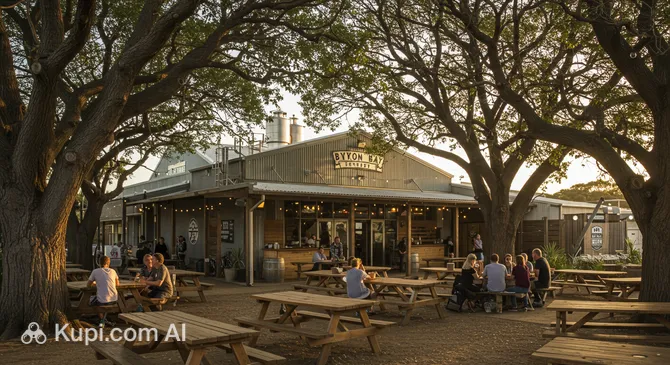
Byron Bay Brewery. Illustration.
Source: Kupi.com AI

Traveler photos:

The food culture in Byron Bay is very diverse. Locals and tourists enjoy spending time in numerous cafes with a relaxed atmosphere, stylish oceanfront restaurants, or lively farmers' markets. The Byron Markets hold a special place, where you can not only buy the freshest produce from local farmers—fruits, vegetables, craft cheeses, and pastries—but also enjoy live music and a unique festive atmosphere. This is a great opportunity to get to know the local culture and try real Australian delicacies straight from the stall.

Byron Markets. Illustration.
Source: Kupi.com AI

Traveler photos:

Byron Bay is a paradise for foodies who value quality, freshness, and originality. The town regularly hosts food festivals where you can meet the region's best chefs and discover new flavors. Everyone will find something to their liking here, whether it's an exquisite dinner in a restaurant, a quick and tasty beach snack, or a leisurely tasting at a farmers' market.

Travel Tips

Planning a trip to sunny Byron Bay? Wonderful! To ensure your journey through this iconic Australian town goes smoothly and leaves only the best impressions, we have prepared some practical tips.

  1. What to pack: Byron Bay is famous for its subtropical climate, so light and breathable clothing is your best choice for most of the year. In summer (December-February), swimwear, shorts, T-shirts, a hat, sunglasses, and strong sunscreen are essential. Even in winter (June-August), days can be warm, but evenings can be cool, so bring a sweater or a light jacket. Don't forget comfortable shoes for walking and the beach (sandals or flip-flops—known here as "thongs"), a reusable water bottle to stay hydrated, and a Type I power adapter if you are not from Australia or New Zealand. The dress code is mostly very relaxed.
  2. Getting around: The center of Byron Bay is quite compact and easy to explore on foot or by bike—this is the most popular and eco-friendly way to get around. Bicycle rentals are available everywhere. There is a local bus service (Blanch's Bus Company) connecting the center with the outskirts, but the schedule may not be very frequent. Taxis and ridesharing services (like Uber) are available, though demand is high during peak season or festivals. Renting a car makes sense if you plan to explore the picturesque hinterland and national parks, but remember that parking in Byron Bay itself can be a real challenge and is often paid.
  3. Financial matters: The official currency is the Australian Dollar (AUD). You can exchange money at banks or exchange offices, but it's often more cost-effective to withdraw cash from ATMs, which are widely available. Credit and debit cards (Visa, Mastercard) are accepted almost everywhere; contactless payments are very popular. Check your bank's international usage terms before you travel. Tipping in Australia is not mandatory but is always appreciated for good service in restaurants (usually 5-10% or rounding up the bill). Byron Bay can be quite expensive, especially for accommodation and some restaurants, so budget accordingly.
  4. Health and safety: There are several pharmacies (chemist) in town where you can buy over-the-counter medications; opening hours are standard. For serious cases, there is Byron Central Hospital. Be sure to get travel insurance. Byron Bay is generally safe, but take usual precautions: don't leave valuables unattended on the beach or in your car. Most importantly, water safety: always swim between the red and yellow flags on patrolled beaches and be careful with strong currents (rips). The Australian sun is very strong, so use high SPF sunscreen, wear a hat, and drink plenty of water.
  5. Language and connectivity: The official language is English. You'll have no trouble communicating. For convenience, you can buy a local SIM card (e.g., Telstra, Optus, Vodafone) for mobile data and calls; they are sold in supermarkets, phone stores, and at the airport. Wi-Fi is available in most hotels, cafes, and some public spaces. Map apps, weather forecasts (like BOM Weather), and tide information apps can be useful, especially if you plan to surf.
  6. Local etiquette and atmosphere: Byron Bay is known for its laid-back and friendly vibe. Greetings are usually informal ("G'day", "Hi"). Locals highly value nature and environmental awareness, so try not to litter and use reusable bags and bottles. If you surf or just swim, respect water etiquette and other beachgoers—this will help avoid misunderstandings. In general, be polite and smiling, and you'll easily get along with everyone. Going barefoot is common for many, though some establishments (cafes, shops) might require shoes and a shirt for entry.
  7. What to avoid: To ensure your holiday is trouble-free and you don't cause disapproval among locals, try not to leave rubbish on beaches and in public areas—Byron locals are very proud of their town's cleanliness. Also, never ignore water safety rules: do not swim beyond the buoys at unpatrolled beaches and always listen to the lifeguards' instructions. And, of course, avoid excessive noise in residential areas late at night.
  8. Special tip for Byron Bay: Definitely plan to catch the sunrise at the Cape Byron Lighthouse. It is the easternmost point of mainland Australia, and the views from there, especially at sunrise, are simply unforgettable. Also, visit one of the famous local markets (like the Byron Community Market or the Farmers' Market) to buy unique souvenirs, fresh produce, and soak up the town's creative atmosphere. And remember "Byron time"—no one is in a hurry here, so relax and enjoy the slow pace of life.

Byron Bay is a place with a special atmosphere of relaxation and connection with nature. By following these simple tips, you can fully enjoy its unique spirit and beauty. Have a great trip!

Entertainment & Nightlife

Byron Bay, known for its beaches and laid-back atmosphere, comes alive after sunset, offering various options for evening and night leisure. Although the town is small, its nightlife centers around several key streets where you can find venues for every taste—from cozy bars with live music to places where you can dance.

The main hub of nightlife in Byron Bay is Jonson Street and its surrounding lanes, such as Bay Lane. Most bars, restaurants, and clubs are concentrated here. The atmosphere in the venues is usually very casual, reflecting the town's bohemian spirit. The crowd is mixed: locals, surfers, and tourists from all over the world. The dress code is generally relaxed—shorts and flip-flops won't surprise anyone here, even in the evening. Most bars are open until midnight or 1:00 AM, while some clubs stay open later, especially on weekends.

Among the popular spots for evening relaxation, several venues stand out. For example, the bar No Bones attracts people with its atmosphere and drink selection. Another interesting place is Moonlight Japanese, which offers a unique experience. If you are looking for a stylish restaurant for dinner that seamlessly transitions into evening fun, check out Light Years, known for its modern Asian cuisine and lively vibe.

No Bones. Illustration.
Source: Kupi.com AI

Traveler photos:

Practical tips for Byron Bay nightlife:

The best time to start the evening is after 9:00 PM, when the bars begin to fill up. Drink prices can vary but generally align with Australian standards. You can get around the town center on foot at night, as the main venues are located compactly. For trips to more distant areas or back to your hotel, it’s better to use taxis or ridesharing apps. Byron Bay is considered quite safe; however, as with anywhere, basic precautions should be taken, especially late at night. Try to stick to well-lit and busy streets.

While the main focus here is on nightlife, during the day Byron Bay also offers plenty of entertainment. You can visit the famous Cape Byron Lighthouse, walk the Cape Byron Walking Track, or explore the local Byron Markets. For nature lovers, The Farm Byron Bay is an interesting destination. The town doesn't have large theaters or a high number of traditional museums, as its charm lies in nature, beaches, and its unique atmosphere.

Parks & Museums

Byron Bay, a gem of the Australian coast, offers guests not only magnificent beaches but also the chance to immerse themselves in a unique atmosphere of unity with nature in its parks and conservation areas, as well as to discover local culture through small but characterful galleries and historical sites.

The main natural attraction that is a must-visit is the Cape Byron State Conservation Area. This is where the famous Cape Byron Walking Track is located, leading to the easternmost point of mainland AustraliaCape Byron. A walk along the trail offers unforgettable ocean views and, during whale migration season, a unique opportunity to observe these giants. Nearby lies Arakwal National Park, managed jointly with the Arakwal indigenous people, where you can enjoy the beauty of coastal heaths and secluded beaches. Of course, the beaches of Byron Bay themselves, such as Main Beach or Wategos Beach, serve as natural parks for relaxation and outdoor activities.

While Byron Bay is more famous for its bohemian atmosphere and natural beauty than for large museum complexes, you can still find interesting cultural corners. The town abounds with small private art galleries exhibiting works by local artists that reflect the spirit of this unique place. To gain a deeper understanding of the region's history, you can visit the Byron Bay Historical Society Museum, which houses artifacts and photographs telling the story of the town's past. A special place in cultural life is held by the Byron Markets, which are held regularly and represent a vibrant mix of crafts, local produce, street food, and live music—a kind of open-air museum.

The main historical and architectural symbol of the city is undoubtedly the Cape Byron Lighthouse. Built in 1901, it still serves mariners and attracts tourists with its classic architecture and stunning views from its observation deck. It is one of the best places to watch the sunrise or sunset.

For those looking for unusual cultural experiences, a visit to The Farm Byron Bay is worthwhile. It is not just a farm, but a complex promoting ideas of sustainable agriculture and healthy eating. Here you can walk around the grounds, see how organic products are grown, visit restaurants and a bakery, and learn more about the "farm-to-table" concept.

For a truly authentic experience, step off the beaten tourist path and explore small craft workshops in the Byron Bay hinterland or head for a walk on the less-known beaches to enjoy the peace and quiet. Also, don't miss the chance to visit one of the many festivals that often take place in the town and its surroundings, reflecting the creative and free-spirited nature of Byron Bay.

Getting Around

Getting around Byron Bay is fairly easy, although the public transport system is not as extensive as in major metropolises, which perfectly suits the relaxed pace of life in this resort town. The core of public transport consists of buses that connect key areas of the town, the beaches, and the immediate surroundings.

Bus services in Byron Bay are provided by several local operators. Routes cover main tourist destinations and residential zones. It is best to check schedules and exact routes on the official websites of transport companies or at bus stops, as they can change depending on the season. The fare usually depends on the distance. Tickets can generally be purchased directly from the driver when boarding. Some regional New South Wales buses may accept the Opal card or contactless bank cards, but it is worth checking this option in advance for specific routes in Byron Bay.

It is useful for tourists to know that buses usually run from early morning until evening; however, the frequency of service may be reduced on weekends and public holidays. When planning trips, especially outside the central part of Byron Bay, it is recommended to check the schedule beforehand.

One of the unique transport features of Byron Bay is the Byron Bay Train—the world's first fully solar-powered train. This restored train runs on a three-kilometer historical section of railway between the town center (Bayshore Drive station) and the North Beach area. This is not only an eco-friendly way to get around but also an interesting local attraction.

In addition to public transport, alternative ways of moving around are very popular in Byron Bay. Due to the compact size of the town center, many people prefer walking. Bicycle rentals are also extremely popular—a great way to explore the town and its picturesque surroundings at your own pace. Numerous rental points offer bicycles for every taste.

For more comfortable or longer trips, taxis and ridesharing services (such as Uber) are always available and can be ordered via mobile apps or found at designated ranks. If you plan to explore the region beyond Byron Bay, you might consider renting a car.

Accommodation

Byron Bay offers a wide variety of accommodation options to suit the needs of any traveler. You will find everything here: from budget backpacker hostels and cozy guesthouses to mid-range hotels, stylish apartments, and luxury oceanfront resorts. Many tourists prefer staying in the central part of town, near Main Beach and Clarkes Beach, as well as along Fletcher Street and Jonson Street, where shops, cafes, and restaurants are concentrated. The areas of Wategos Beach and Suffolk Park are also popular for a more secluded stay.

Notable options include, for example, the Elements of Byron resort, which offers luxury villas and first-class service.

Elements of Byron. Illustration.
Source: Kupi.com AI

Traveler photos:

When planning a trip to Byron Bay, especially during peak season (summer months, school holidays, and during festivals), it is recommended to book accommodation in advance. This will allow you to choose the best value-for-money option and avoid the lack of availability. Accommodation prices range from budget to luxury, depending on the type of stay, location, and season. Most hotels, hostels, and apartments can be booked through popular online platforms or directly on the hotels' websites.

Nearby Cities

For those looking to explore the surroundings, Byron Bay serves as an excellent starting point for day trips to several interesting nearby locations:

CityPopulationDistance
Ballina8 65525 km
Goonellabah12 90034 km
Lismore3 57937 km
Banora Point16 16748 km
Tweed Heads8 17652 km

These nearby destinations offer wonderful opportunities to experience the diversity of the region. For example, a trip to the Gold Coast, located about an hour's drive away, will delight outdoor enthusiasts with its famous surfing beaches, numerous theme parks, and lively atmosphere. A journey to Brisbane, the capital of Queensland, allows you to immerse yourself in big-city life with its cultural attractions, art galleries, botanical gardens, and the vibrant South Bank waterfront.

Shopping & Souvenirs

Shopping in Byron Bay is a fascinating immersion into an atmosphere of creativity, bohemian chic, and surf culture. The town is famous for its independent boutiques, local designer shops, organic food stores, healthy lifestyle goods, and unique handmade products. You won't find huge, soulless shopping malls here, but you will be able to find truly original items with a soul.

The main shopping life of Byron Bay is concentrated on Jonson Street and its adjacent lanes, such as Fletcher Street and Lawson Street. Numerous clothing stores, surf shops, jewelry boutiques, art galleries, and souvenir shops are located here. Walking along these streets, you can find everything from stylish beachwear and accessories to unique decor items and works by local artists.

Byron Bay doesn't have large shopping centers in the traditional sense. Instead, there are several small shopping arcades and complexes that house interesting boutiques and cafes. The atmosphere here is more relaxed and intimate, matching the general spirit of the town.

Markets hold a special place in the town's shopping scene. Be sure to visit the famous Byron Markets, which are held regularly. This is a vibrant event where you can find fresh farm produce, handmade goods, clothing from local designers, vintage items, and jewelry, as well as enjoy live music and street food. There are also specialized farmers' markets and artisans' markets operating on different days of the week.

As souvenirs from Byron Bay, it is worth bringing back items from local craftspeople—ceramics, handmade jewelry, or paintings. Surf-related items, bohemian-style clothing made from natural fabrics, organic cosmetics, and local delicacies like macadamias or coffee are also popular. Many products reflect the town's commitment to an eco-friendly lifestyle.

Most shops in Byron Bay are open daily, usually from 9:00 or 10:00 AM to 5:00 or 6:00 PM. Some boutiques and souvenir shops may stay open longer, especially during the tourist season. On Sundays, opening hours may be reduced. Bank cards are accepted almost everywhere, and you can also pay with cash.

For tourists shopping in Australia, a goods and services tax (GST) refund system is available, known as the Tourist Refund Scheme (TRS). If you spend 300 Australian dollars or more (including GST) in one store within 60 days before your flight, you can claim a partial tax refund when leaving the country. Check the conditions and required documents in stores and on the official TRS website.

Reached the end of the page?

That means the route is fully explored